
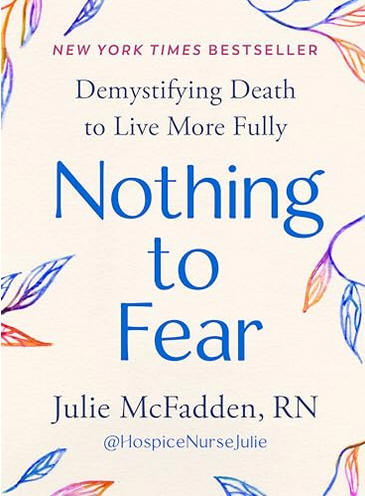
Click the link below the picture
.
There are some people who just know when they’re going to die. I don’t know how they know, but they know. There are others who even seem to choose when they’ll die. Of course, not everyone appears to have control over their time of death, but when they do, I often see one of three things happen:
- The person waits to die until every last one of their family members or friends arrives to be present with them.
- The person waits to die until every last family member or friend leaves the room or the house.
- The person waits to die until after a milestone has occurred.
All of these scenarios are so common in my experience, and I’ve seen each of them play out many, many times. Let’s take a closer look at them.
The Person Dies When Everyone Has Arrived
Sometimes a person will wait until all of their loved ones have flown or driven in from other places to say goodbye before they die. Or they’ll wait for every person to be physically present in the room with them, and then they’ll let go. This most often happens with a person who’s social and extroverted, who thrives off the energy of others.
Rachel had turned one hundred just five months before I met her when she came on hospice. At that time, a huge crowd of children, grandchildren, great-grandchildren, and even a few great-great-grandchildren gathered to celebrate the life of the family matriarch.When I evaluated Rachel, it was very evident that she was in the stage of actively dying. All the signs were there. I saw it in the pallor of her skin. I heard it in her breathing. I noticed it in her lack of interest in or ability to eat food. The end was near.“So,” I explained to Rachel’s two daughters who were in the home when I stopped by to do the admission. “What I’m seeing is that she’s actively dying. That means that in the next few days, she’ll die. So whoever needs to be here, get them here.”
Nodding, the sisters, who were in their seventies, agreed to mobilize everyone who’d want to come and say goodbye to Rachel.
Rachel had turned one hundred just five months before I met her when she came on hospice. At that time, a huge crowd of children, grandchildren, great-grandchildren, and even a few great-great-grandchildren gathered to celebrate the life of the family matriarch.
When I evaluated Rachel, it was very evident that she was in the stage of actively dying. All the signs were there. I saw it in the pallor of her skin. I heard it in her breathing. I noticed it in her lack of interest in or ability to eat food. The end was near.
“So,” I explained to Rachel’s two daughters who were in the home when I stopped by to do the admission. “What I’m seeing is that she’s actively dying. That means that in the next few days, she’ll die. So whoever needs to be here, get them here.”
Nodding, the sisters, who were in their seventies, agreed to mobilize everyone who’d want to come and say goodbye to Rachel.
.
.
.
Click the link below for the article:
.
__________________________________________
 James' World 2
Leave a comment