
Click the link below the picture
.
It was 3 A.M., and my seven-month-old would not stay asleep. She didn’t want to nurse. She cried when I offered her a bottle. I bounced her in my arms, softly singing the Cure’s Just Like Heaven. That didn’t help, either.
With a sigh, I put her in her crib, left the room, and set my phone timer for 15 minutes. I would check on her again after my alarm buzzed.
I was sleep-training my baby.
Sleep training has become the third rail of parenting conversations, with fierce defenders and opponents on either side. Some claim it’s a miracle. Others liken it to torture—for both the baby and the parent. Still, others aren’t convinced it will actually “work.”
Sleep training is a catchall term for any behavioral intervention intended to improve a child’s ability to fall and stay asleep independently, often as it relates to sleep in infants (those under one year old). The idea is to avoid reinforcing the baby’s cries and yells for attention at bedtime, ultimately allowing those behaviors to fade, or go extinct, over time. Practices vary, from setting a structured bedtime routine to what is commonly referred to as “cry it out” (considered full extinction), where caregivers allow a baby to cry until the baby falls asleep. My family chose a version of the Ferber method (called graduated extinction), where we initially comforted our baby when she cried but slowly increased the amount of time between her cry and when we intervened.
Parents may not ask for or take advice regarding sleep training their child for many reasons. The dread of enduring crying or fears around bonding with one’s baby are often cited as main barriers for parents to sleep train. Conflicting information abounds, as one study found that parenting advice books about sleep had authors with a broad range of backgrounds, nearly half lacking professional credentials in medicine, counseling or academic research; the books’ advice varied widely as well, with some endorsing full extinction and others opposing it.
Overall the evidence suggests that sleep training (broadly defined) is safe and effective at addressing sleep difficulties. Multiple reviews that summarize all the available research on sleep training show that these practices improve sleep in children, from those under six months through five years old. “Cry it out” is particularly effective, though the evidence supports a range of practices that vary in how much crying a parent wants to tolerate.
Despite the evidence, maybe there’s a question still nagging at you: Am I a bad parent if I let my baby suffer just so I can get some shut-eye?
I’m here to convince you that sleep is not a luxury and a desire for sleep is anything but selfish.
Poor sleep during the first year of a baby’s life is related to an increased risk of mothers developing postpartum depression, a condition that affects approximately one in six women. Postpartum depression can involve feelings of sadness, guilt, and lack of enjoyment in everyday things, making it difficult for moms to take care of themselves and their children. To make matters worse, depression can lead to insomnia, which exacerbates depression, creating a terrible catch-22. When moms are depressed, babies sleep worse, too. Further, when moms get poor sleep, other caregivers suffer: One study found that when mothers had poor sleep at six months postpartum, both mothers and fathers reported more depression symptoms six months later.
.
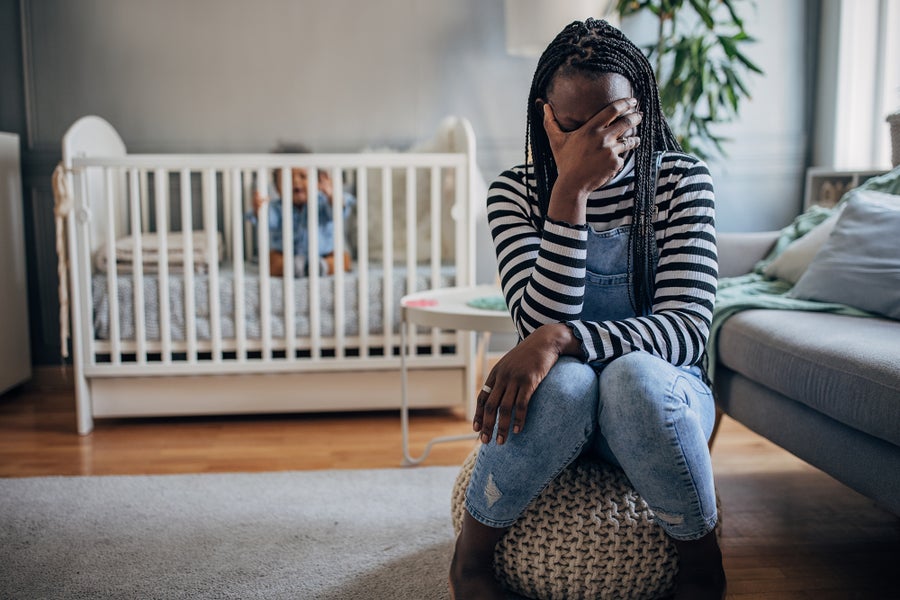
Having a baby can be exhausting, especially when they won’t go to sleep. South_agency/Getty Images
.
.
Click the link below for the article:
.
__________________________________________
 James' World 2
Leave a comment