Infrastructure across the U.S. is struggling under the climate crisis. Dramatic examples include torrential rains turning New York City’s subway entrances into waterfalls, record cold temperatures shutting down Texas’s power grid, and the rising Pacific Ocean eating away at coastal highways.
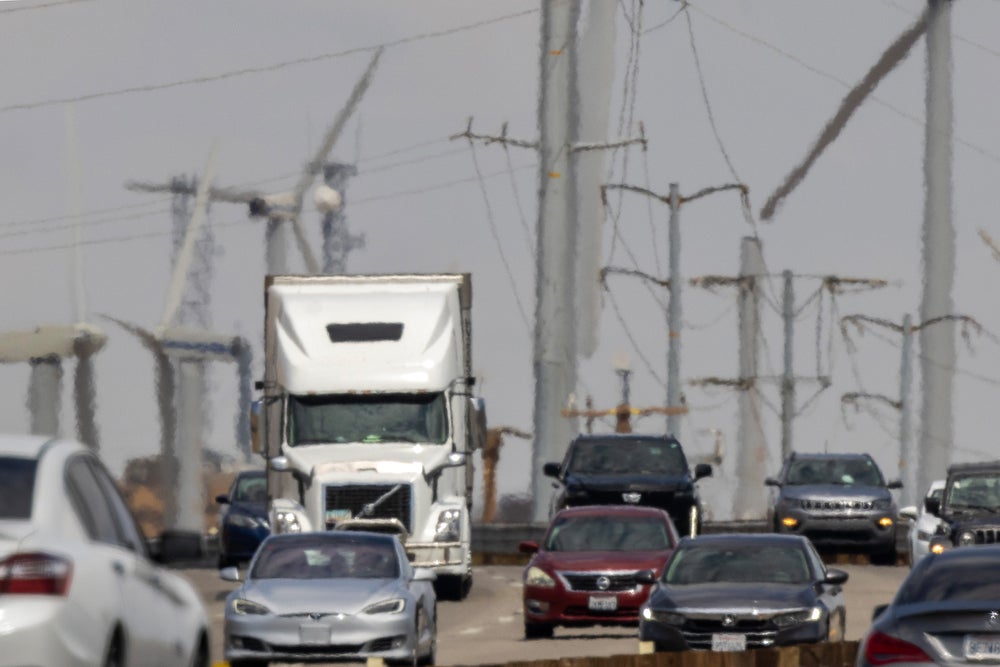
Extreme heat is leaving its own, more subtle mark on the built environment. Roads, power lines, transportation systems, and hospitals are being harmed. For some types of infrastructure, researchers are just beginning to understand what heat is doing.
“Heat itself is sort of an invisible hazard,” says Sara Meerow, an urban planner at Arizona State University. “Compared to flooding, hurricanes, wildfires, you don’t immediately see the impacts. But they are there.”
Heat-induced infrastructure problems can arise not only in places such as Arizona, where temperatures can be brutal, but also in traditionally cooler locations such as the Pacific Northwest that are seeing warmer temperatures than ever before. That’s because local infrastructure was not designed to withstand a changing climate. It’s not the absolute temperature that matters so much as how far the temperature is outside of engineers’ expectations when infrastructure was built.
For example, roads across the U.S. are made with several different asphalt recipes, depending on climate conditions. No matter the recipe, when a road faces hotter temperatures than it can handle, the asphalt softens. Heavy vehicles can then push down into the asphalt as if it were mud, leaving behind ruts; overheated asphalt can also crack.
Many heat disruptions arise from ruthless physical realities, such as that most materials expand when warmed. “We don’t need to be engineers to know that when materials are subjected to temperature variations, they deform,” says Alessandro Rotta Loria, an architecture engineer at Northwestern University.
Overheated train rails can kink and bridges can buckle or lose the ability to operate as they should. For example, a New York City swing bridge got stuck open last month. Airlines struggle because it’s more difficult for planes to generate lift in thinner air, and they need extra runway. They are also more likely to encounter turbulence.
Some infrastructure can be hit by compound issues. Power lines at full capacity can sag in high heat, which becomes a fire risk if the wire touches a tree or other impediment. To lessen the risk, grid managers reduce the amount of energy flowing through the lines. Coal-fired and nuclear power plants rely on safety mechanisms that use water to keep systems cool. But in hot weather, this water starts out much warmer and can’t absorb as much heat, forcing managers to slow energy production to keep the system safe.
“The heat is actually making it harder for power plants to supply the electricity they might supply on a normal day,” says Kristina Dahl, a climate scientist at the Union of Concerned Scientists. “It’s difficult for plants to keep up with the average load when it’s extremely hot, just because of the way that the plants and energy lines function.” At the same time, energy demand soars because people rely on power-hungry air-conditioning to stay safe from the heat.
Film and Writing Festival for Comedy. Showcasing best of comedy short films at the FEEDBACK Film Festival. Plus, showcasing best of comedy novels, short stories, poems, screenplays (TV, short, feature) at the festival performed by professional actors.

 James' World 2
Leave a comment