
Click the link below the picture
.
-
Scientists have the most convincing evidence yet of an underground cave on the moon.
-
The large cave could be a safe, warm place for astronauts to work and live on the moon.
-
The researchers want to use radar technology to identify even more caves under the lunar surface.
In the ongoing effort to establish a permanent lunar base where humans can live and work on the moon, scientists have discovered a possible game changer: a large underground cave.
For decades, scientists have suspected the moon may harbor caves below its surface. Now, a new paper from a team of Italian researchers offers the most convincing evidence yet.
“Lunar caves have remained a mystery for over 50 years. So it was exciting to be able to finally prove the existence,” authors Leonardo Carrer and Lorenzo Bruzzone of the University of Trento told The Associated Press.
The team speculates that, given how they think this cave formed, there could be hundreds more hidden under the lunar surface. Instead of building homes on the moon, we could inhabit the existing caverns beneath it.
Judging from the data, the researchers estimate the cave is approximately 150 feet wide and up to 260 feet long, which is slightly smaller than an American football field with the end zones cut off.
The cave sits deep within a pit, called the Mare Tranquillitatis pit, which likely formed when a lava tube collapsed. The moon has no active volcanoes today, but billions of years ago, its surface was covered with lava that flowed down and through valleys, carving tubes across the lunar surface.
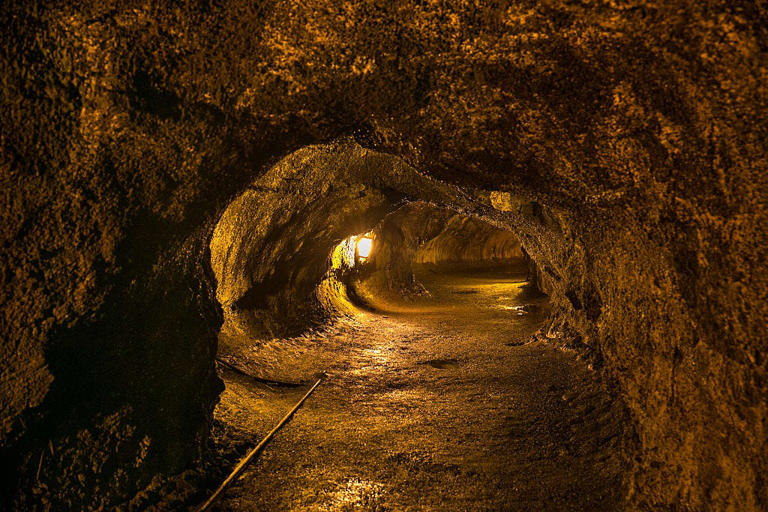
Over millennia, some of those tubes became unstable and collapsed, creating pits, like the one the research team studied from radar images taken by NASA’s Lunar Reconnaissance Orbiter. We don’t have a clear picture of what the caves look like inside, but lava tubes, like those in Hawaii, can offer some idea.
NASA’s LRO has identified over 200 of these pits on the moon, suggesting there could be hundreds of underground caves, too. These caves could offer future astronauts protection against the extreme conditions on the moon’s surface, the researchers reported in the paper published Monday in the peer-reviewed journal Nature Astronomy.
The pros and cons of living in moon caves
“The thick cave ceiling of rock is ideal to protect people and infrastructure from the wildly varying day-night lunar surface temperature variations and to block high energy radiation which bathes the lunar surface,” Katherine Joy, a professor in earth sciences at the University of Manchester who wasn’t involved with the study, told The Guardian.
.
.
.
Click the link below for the article:
.
__________________________________________
 James' World 2
Leave a comment