
Click the link below the picture
.
Colossal Biosciences has generated a flurry of headlines in recent years, as the ‘de-extinction’ company announced plans to resurrect the woolly mammoth, the Tasmanian tiger, and, most recently, the dodo bird, developing a bioengineering toolkit along the way that has prompted investment from outfits like In-Q-Tel, a CIA-funded venture capital firm. Colossal has also acquired a stellar lineup of geneticists, including leading paleogeneticist Beth Shapiro, to help it in its quest to see these proxies of extinct species walk the Earth.
Last month, Shapiro—author of How to Clone a Mammoth: The Science of De-Extinction (2015) and Life As We Made It (2021)—leveled up her involvement with the company from an advisory capacity to its chief science officer.
While an exact version of an extinct animal cannot be created, scientists hope they can (to paraphrase the line from Moneyball) recreate the creatures in the aggregate. That means endowing Asian elephants with the long hair and cold resistance of a mammoth, and making facsimile dodos spring forth from chicken eggs. Just last month, Colossal said it had engineered elephant stem cells that can be converted into an embryonic state, a big step toward its beyond-elephantine goal. In April, the company said it would give $7.5 million in 2024 to academic institutions undertaking ancient DNA research.
Shapiro recently spoke with Gizmodo about Colossal’s goals and her new role at the company. Below is our conversation, lightly edited for clarity.
Isaac Schultz, Gizmodo: Things are moving so fast. When we last spoke, the dodo project had not even been announced. There was this open question of, well, how do you even go about de-extinction with birds? Colossal CEO Ben Lamm recently said that he thinks it’s more likely that we’ll have a dodo before a mammoth, just due to the artificial womb issue.
Beth Shapiro, Colossal: Artificial womb technology seems pretty hard. But that is so cool. Like, the ability to try to figure out the placental interface and really understand some really foundational biology is exciting to me. I mean, that’s a field that I’ve never imagined that I would be in. And then, when I look at that team that’s working on the artificial womb, it’s engineers and developmental biologists and people who really care about trying to figure this out. It’s impressive. But yes, that’s probably a long time frame. The timing of a different species really varies. For every species that’s a candidate for de-extinction, there are different technical and ethical, and ecological challenges associated with them. If we’re just focusing on the technology to get us to a gene-edited embryo, there are different hurdles with birds, as you say.
.
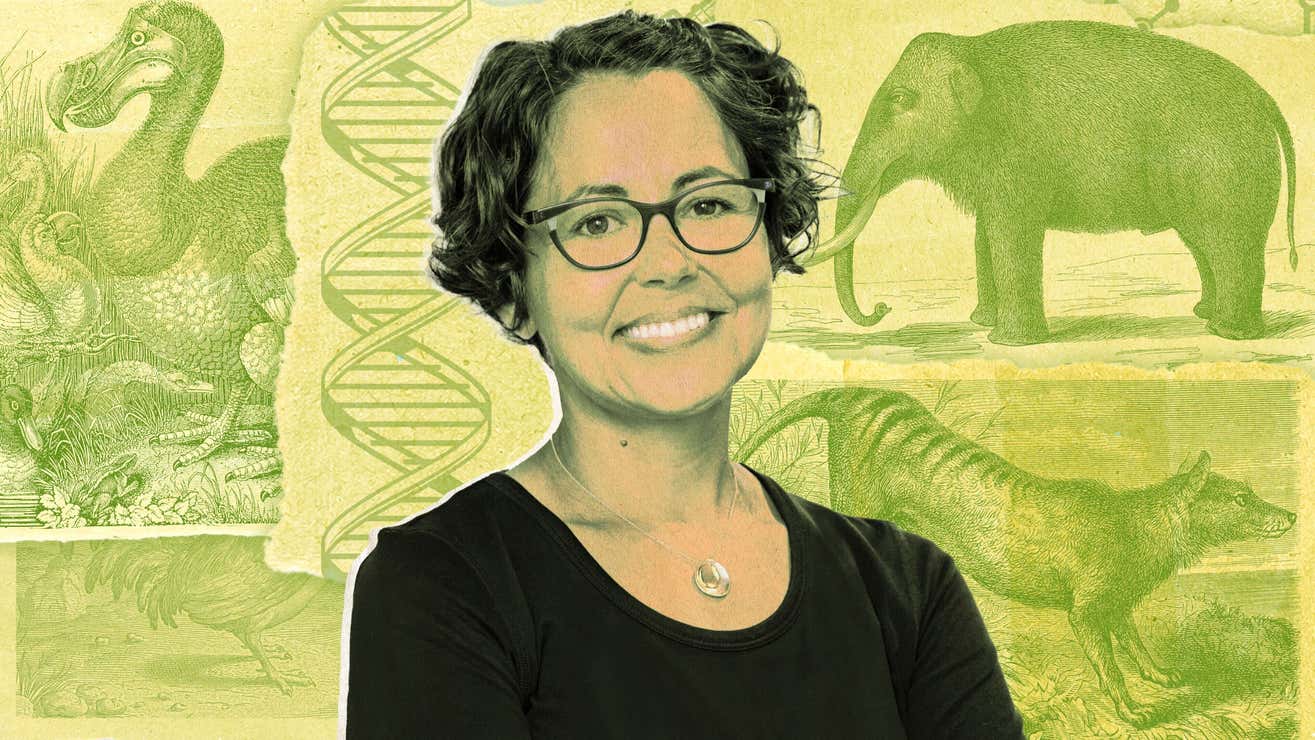 Beth Shapiro
.
.
Click the link below for the article:
.
__________________________________________
 James' World 2
Leave a comment