
Click the link below the picture
.
In the weeks since the U.S. Department of Agriculture announced a bird flu outbreak in dairy cows that had gone undiagnosed for months, bystanders have wondered why it took so long to identify. Experts say there are key scientific and political reasons why the dairy industry was caught off guard by the H5N1 avian influenza virus—and that understanding those factors will be vital to controlling the disease on dairy farms and preventing an outbreak in humans.
“The dairy industry has never had to deal with something like this before,” says Keith Poulsen, director of the Wisconsin Veterinary Diagnostic Laboratory and a former dairy veterinarian. “This is probably going to be the most important outbreak in my professional career.”
After weeks of uncertainty—fueled by the unnerving revelation that the outbreak likely began last December and took months to recognize—the federal government is taking some action. The USDA has mandated testing for lactating cows that are being transported across state lines in the hopes of squashing the spread of the virus, which has so far been confirmed in 36 herds across nine states. One human case has been reported this year, but the infection was mild, and more than a month has passed with no new cases confirmed. Epidemiologists have called for more human testing to better monitor the situation, however. Meanwhile, Food and Drug Administration testing has shown that viral particles that were found in pasteurized milk were not infectious, suggesting little threat to consumers.
Authorities’ scramble to understand and control the situation is particularly concerning because scientists have long worried about the potential for an H5N1 strain to jump into humans and cause a pandemic. And bird flu has been devastating poultry farms around the world for years now. Veterinarians and epidemiologists have been on high alert since 2022, when a new strain began tearing through wild birds and even mammals, killing or forcing U.S. farmers to cull some 90 million domestic birds. How could it take months to notice the same virus was spreading in dairy cows?
One reason the outbreak went undetected for so long is that people thought it was unlikely that the virus would jump into cows. Avian influenza is, after all, most common in birds, whereas flus in general have been rare in cows. “The chances of it going from migratory birds to cows were so low,” Poulsen says. “And then it happened.”
.
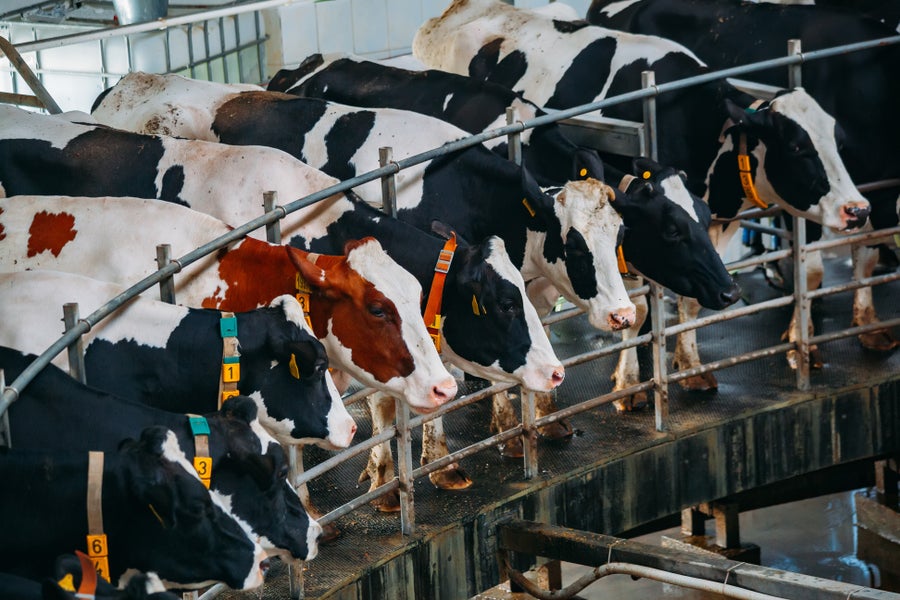 Vladimir Zapletin/Getty Images
.
.
Click the link below for the article:
.
__________________________________________
 James' World 2
May 13, 2024 @ 07:50:31
💛
LikeLike