
Click the link below the picture
.
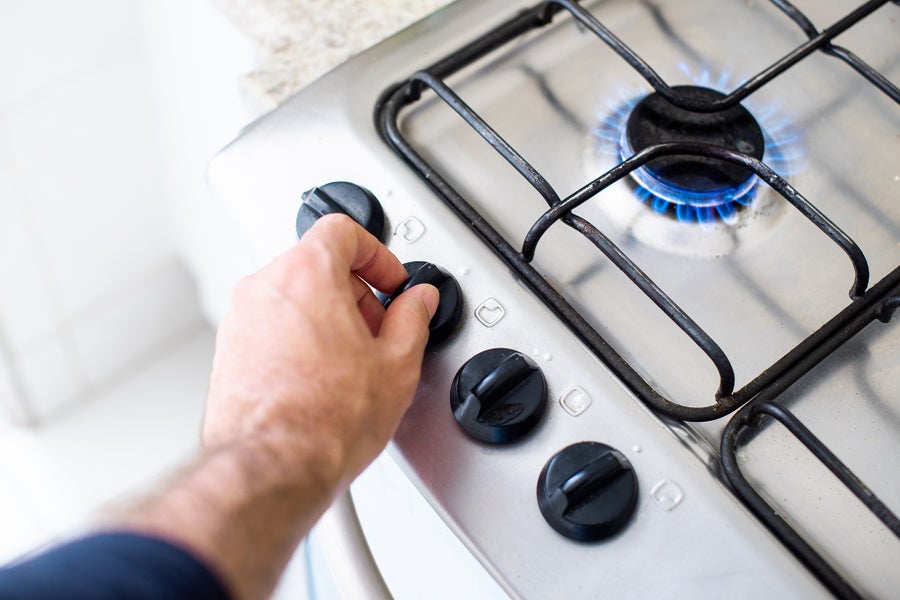
Nearly 40 percent of U.S. homes have gas stoves, which spew a host of compounds that are harmful to breathe, such as carbon monoxide, particulate matter, benzene, and high quantities of nitrogen dioxide.
Decades of well-established research have linked nitrogen dioxide, or NO2, to respiratory conditions such as asthma and chronic obstructive pulmonary disease, which especially affect children and older adults. This harmful link is so well established that some states have begun banning gas appliances in new construction. And now a new study has shown in stark detail just how long and far this gas spreads and lingers in a home. By sampling homes across the U.S., the researchers found that in many, levels of exposure to NO2 can soar above the World Health Organization’s one-hour exposure limit for multiple hours—even in the bedroom that is farthest from the kitchen.
“The concentrations [of NO2] we measured from stoves led to dangerous levels down the hall in bedrooms … and they stayed elevated for hours at a time. That was the biggest surprise for me,” says Rob Jackson, a sustainability researcher at Stanford University and senior author of the study, which was published on May 3 in Science Advances.
The researchers collected real-world data on NO2 concentrations before, during, and for several hours after the use of gas and propane stoves in houses and apartments in California, Colorado, Texas, New York State, and Washington, D.C. In six homes, they tested the levels of NO2 in the bedroom farthest from the kitchen for a basic “bread baking” scenario: they set the gas or propane oven to 475 degrees Fahrenheit (245 degrees Celsius) and left it on for an hour and a half. The team continued sampling the air for up to six hours after the oven was turned off.
In all six homes, the NO2 concentration in the bedroom quickly exceeded the WHO’s chronic exposure guideline of about five parts per billion by volume. And in three of the bedrooms, the levels soared even above the Environmental Protection Agency’s and the WHO’s respective one-hour exposure guidelines, which both set the limit at about 100 parts per billion by volume. (The EPA’s guidelines are intended for outdoor air exposure because the agency does not regulate indoor air pollution.)
.
 Lucas Ninno/Getty Images
.
.
Click the link below for the article:
.
__________________________________________
 James' World 2
Leave a comment