
Click the link below the picture
.
In late 2016 U.S. diplomats and family members based in Cuba began reporting a wide swath of neurological symptoms, including dizziness, headaches, deafness and difficulty concentrating, following exposure to ear-splitting noises around their homes. This “Havana syndrome” outbreak disrupted U.S. relations with Cuba, spawned congressional hearings on the “attacks” and left some people with years of disabling symptoms. Reports from people with these symptoms also occurred in other countries, and the U.S. government labeled these cases as “anomalous health incidents” (AHIs).
The abrupt onset of these symptoms led to years of debate among scientists and those affected about possible causes, which ranged from pesticides to group psychology to noise from crickets. Now two medical studies that were conducted by the National Institutes of Health and released on Monday morning might finally have an answer. The researchers compared more than 80 of these affected individuals with similar healthy people. The results, detailed in the Journal of the American Medical Association, show no clinical signs or brain image indications to explain those widely varied symptoms. The JAMA findings follow the 2023 release of an intelligence community assessment that found that the injuries were not the result of foreign attacks. More likely, the assessment suggested, they were tied to previous injuries, stress, environmental concerns and “social factors” such as group psychology, in which illness symptoms reported by one individual in a community can spread serially among its members. Such outbreaks have been seen everywhere, from hiccupping in high schools to “repetition strain” cases among Australian typists in the 1980s.
“These individuals have real symptoms and are going through a very tough time,” said NIH rehabilitation medicine expert Leighton Chan, who led one of the studies, at a briefing for reporters last Friday. Nothing in the new medical findings contradicts the assessment of the injuries in the intelligence community report, he said.
In the first study, led by Chan, investigators examined 86 people with AHIs, 42 women and 44 men, who last experienced an incident 76 days prior, on average. The participants were U.S. government staff and family members who had been in locations that included parts of Cuba, China and Austria, as well as the U.S. (All of these areas were past sites of Havana syndrome outbreak reports.) A third of these affected participants were unable to work because of their symptoms. (According to Chan, a few of the cases dated to 2015, which was prior to the previously reported cases in Cuba.) Clinical tests for hearing, balance, cognition, eyesight and blood work were matched against the results from 30 people with similar working backgrounds but no symptoms. The researchers found that the only significant differences between the two groups were increased self-reported symptoms of fatigue, stress and depression in people with AHIs, as well as self-reported trouble with balancing that was confirmed through testing.
.
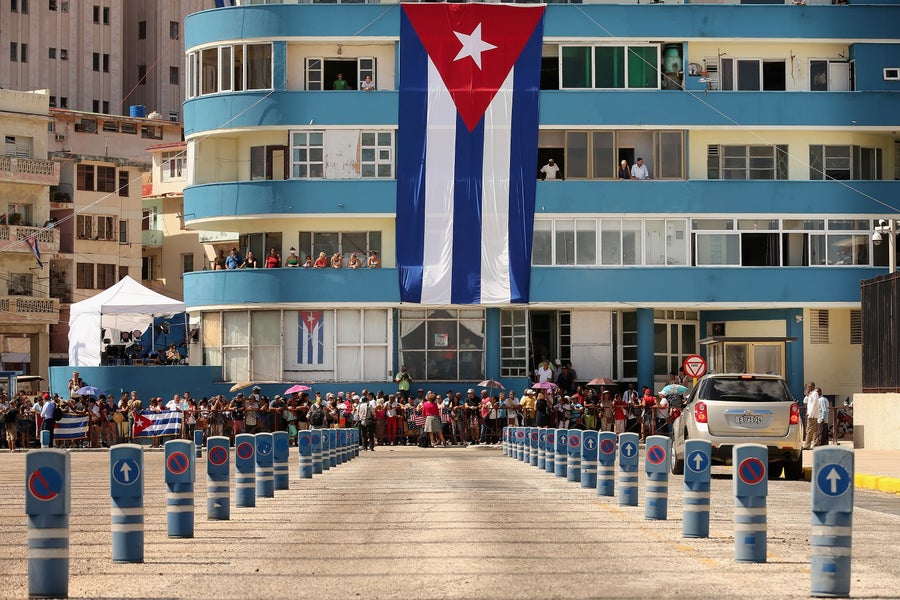
Hundreds of Cubans and visitors from other countries gather across the street from the newly reopened U.S. Embassy to observe the flag-raising ceremony August 14, 2015, in Havana, Cuba. Chip Somodevilla/Getty Images
.
.
Click the link below for article:
.
__________________________________________
 James' World 2
Leave a comment