
Click the link below the picture
.
Einstein correctly predicted that time slows when you’re flying fast, but to experience “time dilation” most spectacularly, you’d have to travel into a black hole, says astrophysicist Chris Lintott.
One of my favorite scientific experiments involved flying four clocks twice around the world. In 1971, physicists Joseph Hafele and Richard Keating took atomic clocks – capable of losing no more than one second every 30 million years – on a commercial jet, flying first west and then east around the globe before returning to their laboratory in Washington DC. There, they compared the time on their well-traveled timepieces to a set of clocks that had remained static. Remarkably, the clocks disagreed: the act of travel had seemingly altered the passage of time.
The experiment was a test of a core principle of Einstein’s theory of relativity, which is that time is not universal. The faster you travel, the slower time will pass for you. The effect is small – take a transatlantic flight from London to New York and your watch will be a ten-millionth of a second behind one left on the ground – but nonetheless, you’ll have aged a fraction more slowly than if you’d stayed at home. And Hafele and Keating’s clocks could measure it.
Another prediction of relativity says that gravity has an effect too. Get further from the Earth’s gravitational pull, and time will speed up. This affects our own bodies: it means your head is ever so slightly older than your feet. Once again, the effect is incredibly small, but at greater distances from Earth, it becomes important. The GPS system that we all depend on to navigate, with its satellites 20,000km (12,400 miles) above the Earth, needs to take this into account in order to work properly.
Despite these phenomena, the Earth is, at the end of the day, a small planet in a big Universe. Around black holes, massive objects whose gravitational pull dwarves that of any planet, these relativistic effects become far more pronounced.
To understand why, imagine falling toward a black hole. (We’ll assume you’re in some magical spacecraft which keeps you safe from the distressing effect of “spaghettification”, the terminal stretching that happens to anything that gets too close to a black hole.)
.
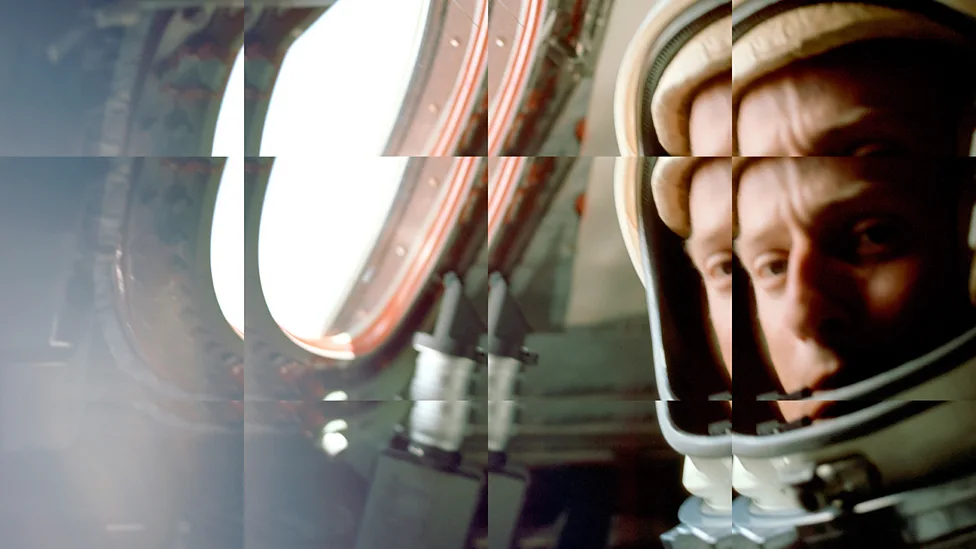 Traveling into a black hole would do strange things to time (Credit: Edouard Taufenbach/Bastien Pourtout)
.
.
Click the link below for the article:
.
__________________________________________
 James' World 2
Leave a comment