
Click the link below the picture
.
“Katastrofa. Katastrofa.”
A man named Piotr repeats this like a mantra. On a warm fall evening in Tijuana, he’s the first in a long line to request asylum in the U.S.
“Katastrofa,” he says again, on the verge of tears. It’s the Russian word for catastrophe. Piotr, a middle-aged man who requested that his last name be withheld to protect relatives back home, left Moscow more than six months ago with his immediate family — his wife and two teenage sons.
He says the war with Ukraine had made their lives unlivable in Russia, and he fears for his sons — military conscription there is obligatory. “Russia is so difficult,” he says. “I can’t describe it. It’s so difficult for me. Katastrofa!“
Piotr says he and his family first went to Mexico City, where they lived working odd jobs until they were approved for an appointment with U.S. Customs and Border Protection. This is the big day. He showed up six hours ahead of time. Piotr plans to ask the U.S. for asylum for his family and himself.
So do dozens of others who have been camping out in this line all day, waiting for their interviews. It’s mostly families. There are several interview slots throughout the day. These people are camping out for the late evening round, in hopes that by morning, they’ll be on the other side, in San Diego.
In the past year, the southwest border has received historic numbers of migrants. More than 2.4 million people. It’s been record-breaking numbers for the past few years. San Diego alone has received more than 230,000 people this year. That’s a 30% increase from the year before.
.
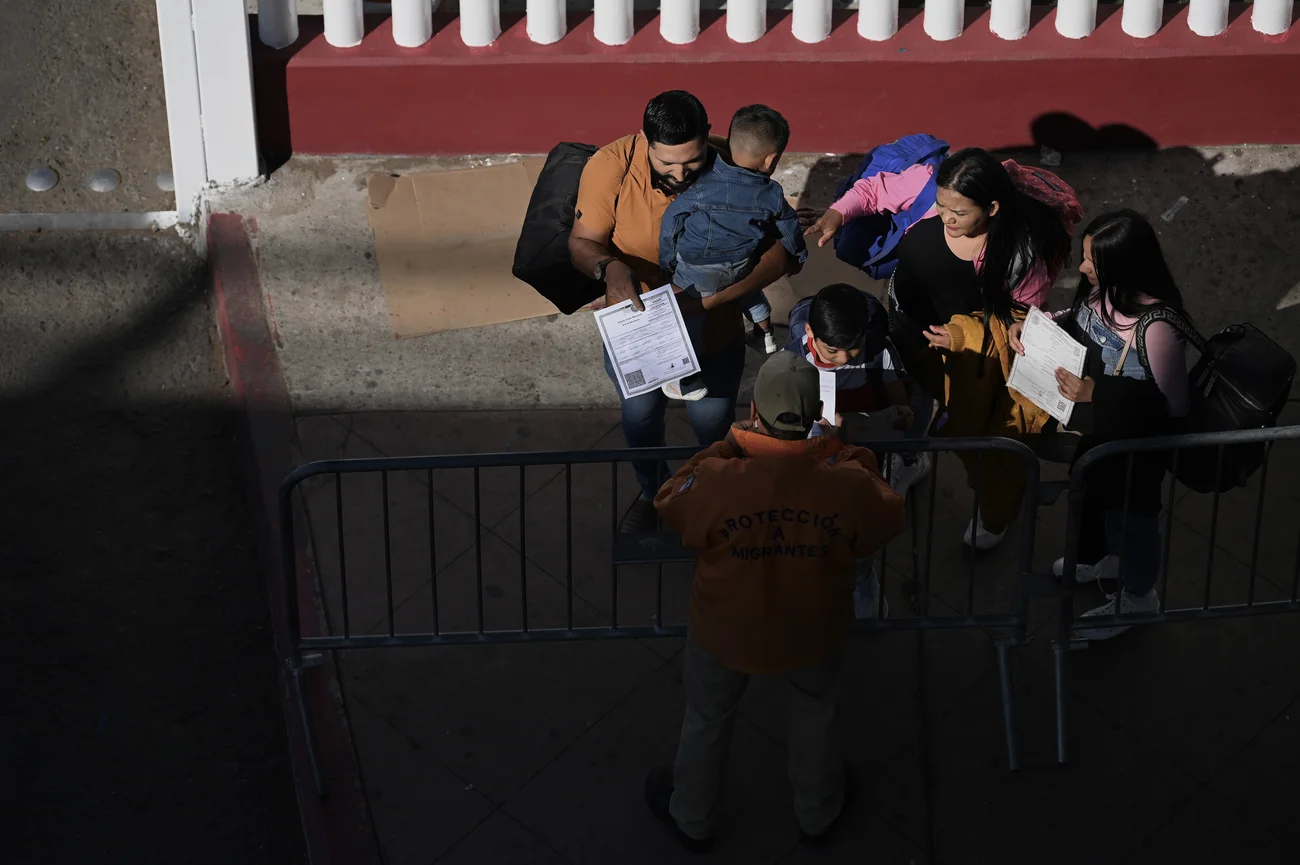
A migrant family shows their paperwork to Mexican immigration officials to proceed with their CBP One asylum appointments at the Chaparral pedestrian border in Tijuana, Mexico, to cross to the U.S. on Thursday. Carlos A. Moreno for NPR
.
.
Click the link below for the article:
.
__________________________________________
 James' World 2
Leave a comment