
Click the link below the picture
.
Burning Man, the transient bacchanal that attracts more than 70,000 partygoers to the remote Nevada desert for eight days every August, prides itself on its environmental bona fides. One of the festival’s main operational tenets is “leave no trace,” an essentially impossible feat for an event of its size. The Burning Man Project, the organization that runs the festival, has set a goal of becoming “carbon negative” — removing more emissions from the environment than the festival produces — by 2030.
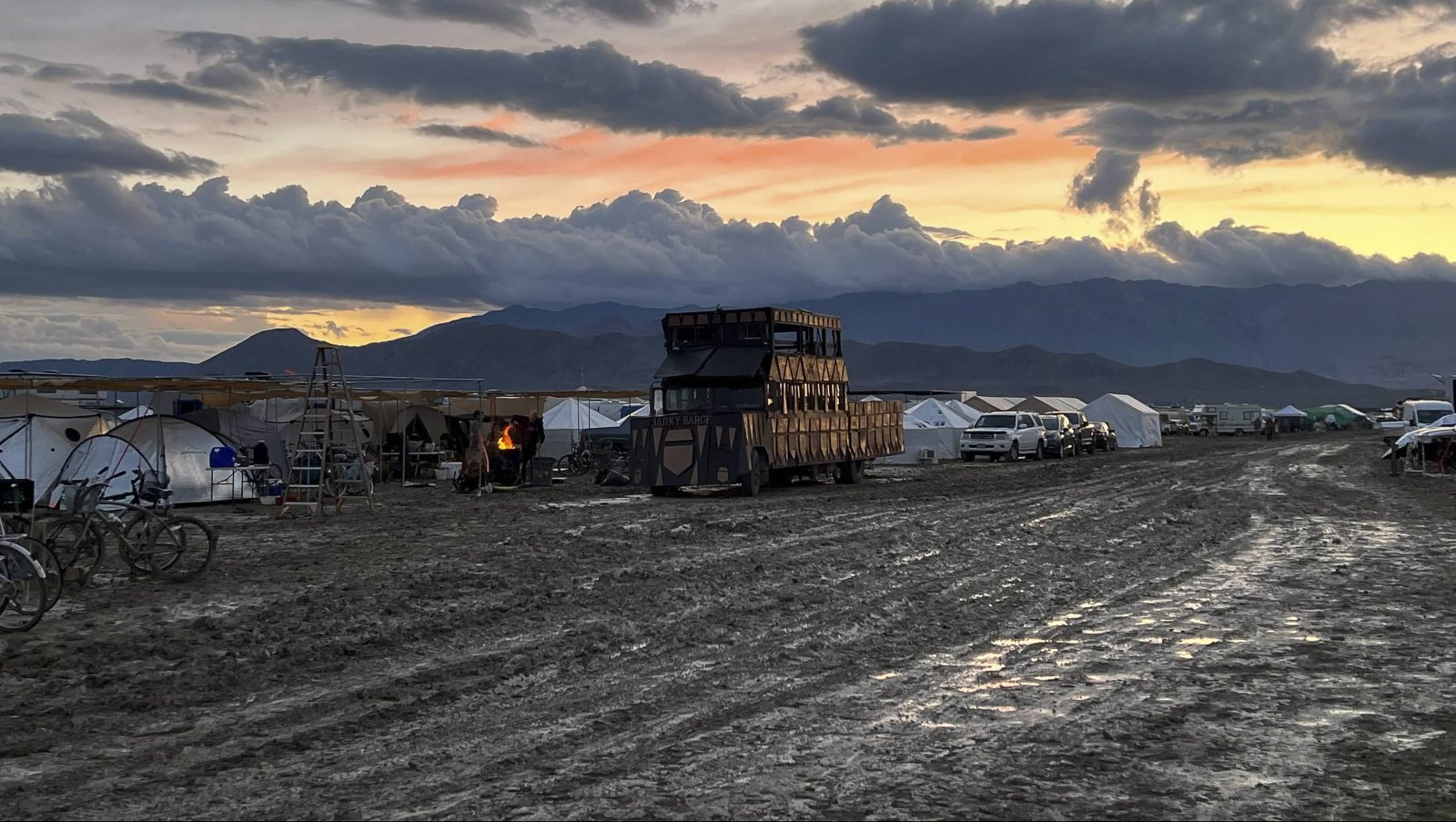
It’s a tall order: The festival generates around 100,000 tons of carbon dioxide every year, the equivalent of burning over 100 million pounds of coal. A series of disasters at this year’s festival have brought the gap between Burning Man’s rhetoric and reality into sharp relief: First, a half dozen protesters demanding stronger environmental commitments from the organization blocked the festival’s entrance for roughly an hour before they were forcibly removed. Days later, torrential rain — the kind of event made more likely and extreme by climate change — stranded revelers in a dystopian free-for-all. But the greatest irony of all may be Burning Man’s less-publicized opposition to renewable energy in its own backyard.
Burning Man’s problems began on August 27, the first day of this year’s festival, when a blockade of climate protesters created a miles-long traffic jam on the two-lane highway into the dry lakebed of the Black Rock Desert, about 120 miles north of Reno, Nevada, where Burning Man takes place. In addition to calling for “systemic change,” they demanded that festival organizers take immediate steps to decrease the event’s carbon footprint. Burning Man, which started out as a small gathering of artists on a beach in San Francisco in the 1980s, has grown into a massive event that attracts a growing percentage of the world’s ultra-wealthy every year. The protestors, who were ultimately dispersed by police, demanded the festival “ban private jets, single-use plastics, unnecessary propane burning, and unlimited generator use per capita,” among other requests.
.
.
.
Click the link below for the article:
.
__________________________________________
 James' World 2
Leave a comment