
Click the link below the picture
.
There are plenty of fair criticisms of Christopher Nolan’s Oppenheimer. The film’s frenetic pace can make the viewer feel a bit like an Adderall-addled college student blitzing through the physicist’s biography before a midterm. The score veers toward the overwrought. Nolan finds a way to make a sex scene between Cillian Murphy and Florence Pugh into one of the least titillating things I’ve ever witnessed. At stake in the first two acts is whether Americans or Nazis will be the first to bring hellfire to planet Earth; at stake in the third is the outcome of an administrative hearing concerning the renewal of a national security clearance.
Despite these flaws, I think it’s a good flick. In an age when superhero sequels dominate box offices, the fact that Nolan managed to turn a three-hour history lesson about one of the 20th century’s most important nerds into a blockbuster is a real achievement and a boon to America’s cultural life.
Nevertheless, the aesthetic critiques of Oppenheimer have been largely reasonable. The political ones have been less so.
The film has taken fire from both left and right. Critics in the former camp have derided the film’s failure to center the experiences of those harmed by J. Robert Oppenheimer’s work, from Native Americans displaced by atomic weapons tests to Japanese civilians incinerated in Hiroshima and Nagasaki. They deem the film’s decision to withhold any images from the aftermath of those bombings to be cowardly at best and tantamount to a “glorification of mass murder” at worst.
.
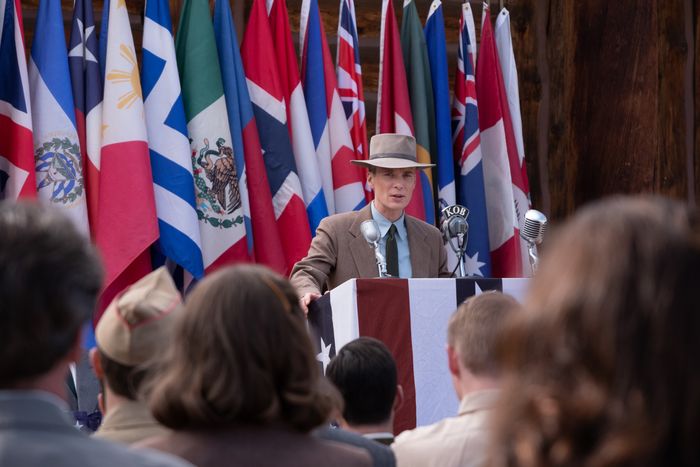 Photo: Melinda Sue Gordon/Universal Pic/Melinda Sue Gordon
.
.
Click the link below for the article:
.
__________________________________________
 James' World 2
Leave a comment