
Click the link below the picture
.
Reaching the source of the Tigris is not an easy task. Where a dirt road ends, a small path leads over the shoulder of a jagged mountain whose peaks are gnawed like fingernails. The path becomes a goat track, treacherously narrow, winding around the hillside until it is halted by a tumble of springs. These form a torrential stream that disappears into a vast, arched tunnel. When the nascent river emerges 1.5km later, it is tamed by whatever happened deep inside the cave.
The ancient Assyrians believed this to be a place where the physical and spiritual worlds collide. Three thousand years ago, their armies traveled upstream to offer sacrifices. A relief of Tiglath-Pileser, King of Assyria from 1114-1076 BCE, still stands at the mouth of the tunnel. Time has dulled his edges, but he remains upright and regal, pointing out across his empire.
The source of the Tigris lies in present-day Turkey, where it flows southeast out of the Taurus Mountains. It skims a pinched corner of north-east Syria and then passes through the cities of Mosul, Tikrit, and Samarra on its way to Baghdad. In southern Iraq, the sprawling Mesopotamian Marshes absorb the Tigris close to the confluence with its sister river, the Euphrates, and both flow together to the Persian Gulf.
Around 8,000 years ago, our hunter-gatherer ancestors settled in the great floodplain between these two rivers and developed agriculture and animal husbandry, leading many to call the area the “Cradle of Civilization”. From these early city-states – like Eridu, Ur, and Uruk – came the invention of the wheel and the written word. Codified legal systems, sailing boats, beer brewing, and love songs followed, among other inventions.
And yet, because of the decades of conflict that have plagued modern Iraq, the fact that the Tigris has guarded and shaped our shared human heritage is easily forgotten.
For 10 weeks in 2021, a small team and I traveled roughly 2,000km by boat and overland from the Tigris’ source to where it empties into the Persian Gulf – a journey one advisor told me likely hadn’t been attempted since the Ottoman era. My goal was to chart the river’s historical importance and tell its story through the voices of those who live along its banks, while also investigating the threats to its future. A combination of geo-political instability, poor water management, and climate change has led some to state that this once-mighty river is dying. I hoped our journey would be a reminder of what emerged from this land, and what we would collectively lose if the river that birthed civilization dried up.
.
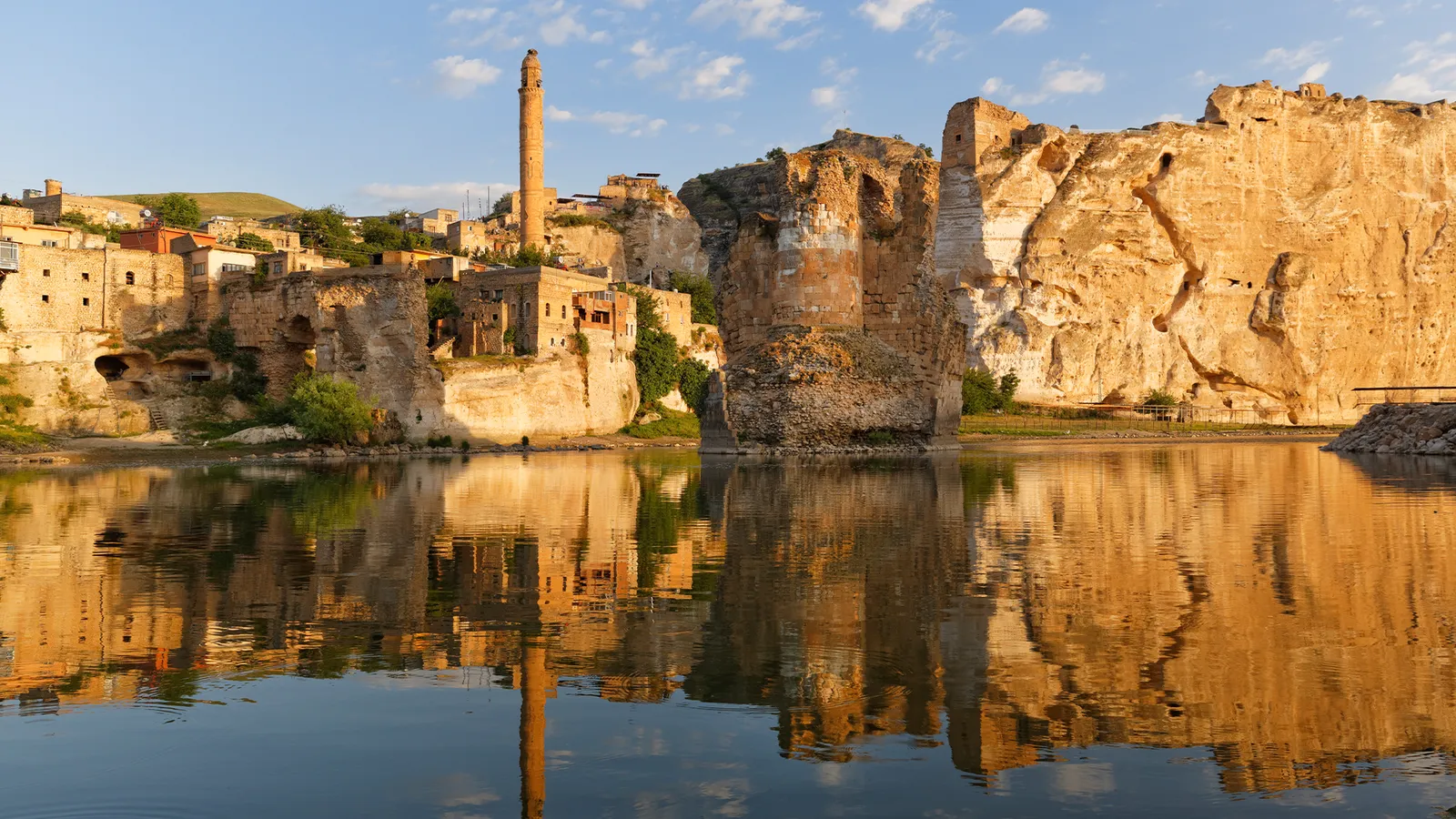 (Image credit: Westend61/Getty Images)
.
.
Click the link below for the article:
.
__________________________________________
 James' World 2
Aug 08, 2023 @ 18:00:37