
Click the link below the picture
.
In the forests of British Columbia, where recent wildfires have sent smoke across borders and dimmed blue summer skies, a series of studies from the past 30 years contends that large, old trees send resources and messages to the seedlings around them. The “mothering” could, hypothetically, help burned landscapes recover faster, boost the amount of carbon dioxide stores in soil, and improve the resiliency of natural systems overall.
The idea seems to borrow from bedtime tales about ancient trees and the enchanted forests they foster; to validate beliefs about all types of creatures nourish their young; to vouch for the inherent goodness of nature, where collaboration triumphs over competition.
But two papers have recently called into question the evidence supporting the “mother tree” explanation. Do these veterans of the forest act as guardians for newer generations, protecting them from drought, disease, and deforestation? Or is their relationship much more complicated?
What is a ‘mother tree’?
The term “mother tree” was coined in the 2000s by a Canadian scientist named Suzanne Simard, who grew up in a family of loggers in the Monashee Mountains in British Columbia. The old-growth forests on the range sustained a booming timber industry for more than a century.
.
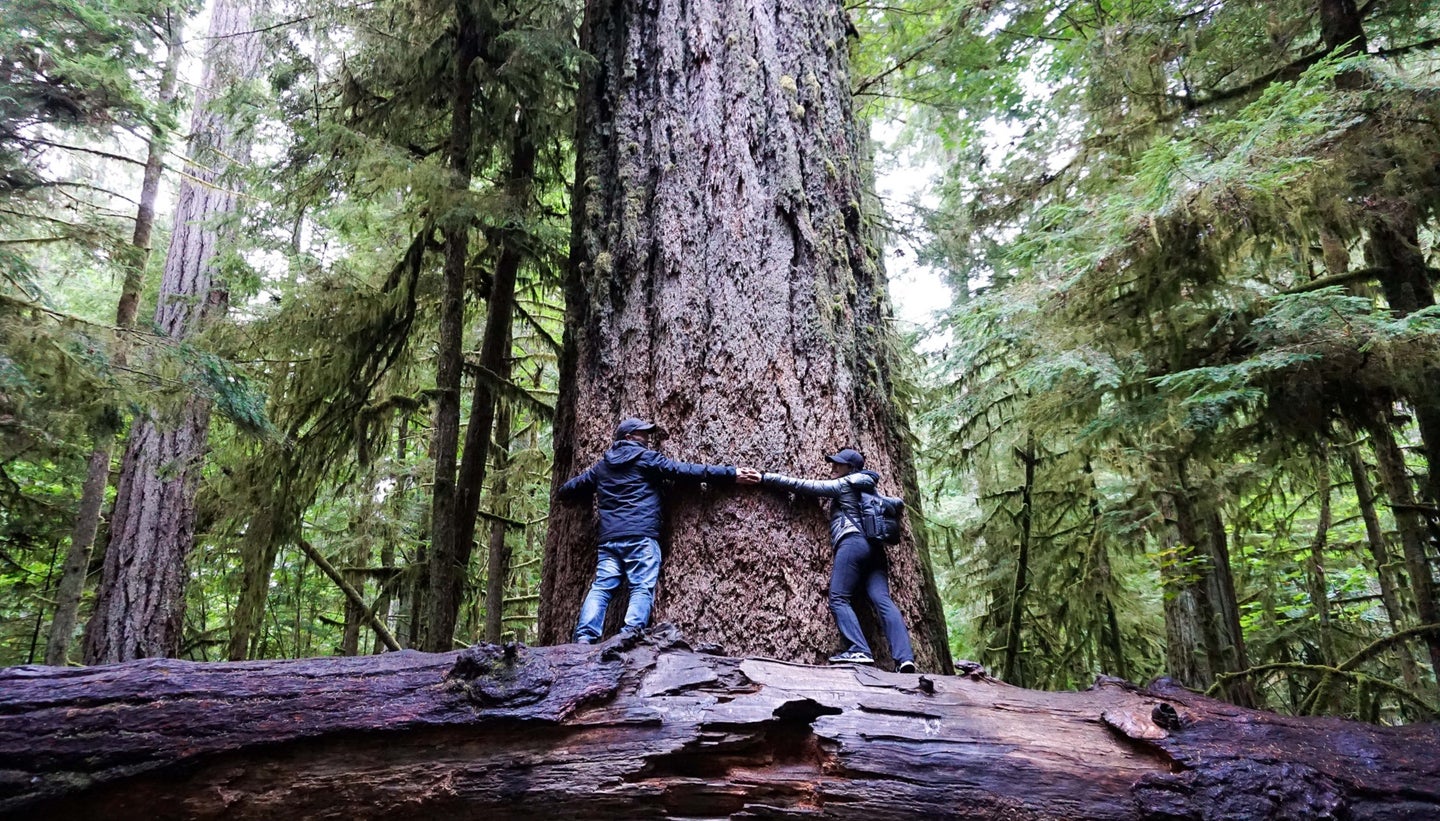 A couple tries to wrap their arms around a massive 800-year-old Douglas fir in British Columbia, Canada. Matthew Bailey/VWPics/Universal Images Group via Getty Images
.
.
Click the link below for the article:
.
__________________________________________
 James' World 2
Leave a comment