
Click the link below the picture
.
All of the organisms we can see around us—the plants, animals, and fungi—are eukaryotes composed of complex cells. Their cells have many internal structures enclosed in membranes, which keep things like energy production separated from genetic material, and so on. Even the single-celled organisms on this branch of the tree of life often have membrane-covered structures that they move and rearrange for feeding.
Some of that membrane flexibility comes courtesy of steroids. In multicellular eukaryotes, steroids perform various functions; among other things, they’re used as signaling molecules, like estrogen and testosterone. But all eukaryotes insert various steroids into their membranes, increasing their fluidity and altering their curvature. So the evolution of an elaborate steroid metabolism may have been critical to enabling complex life.
Now, researchers have traced the origin of eukaryotic steroids almost a billion years further back in time. The results suggest that many branches of the eukaryotic family tree once made early versions of steroids. But our branch evolved the ability to produce more elaborate ones—which may have helped us outcompete our relatives.
A confused timeline
To some extent, the new work involves testing an idea proposed decades ago by the biochemist Konrad Bloch. Bloch won a Nobel Prize for figuring out the biochemical pathways that allow cells to produce steroids from simpler precursors. In 1994, Bloch suggested that the chemical intermediates on the pathways he identified were, at some point in our evolutionary paths, the end products. Cells would make these less complex steroids, which played critical roles in their survival; over time, however, our branch evolved enzymes that further modified them in ways that were advantageous.
.
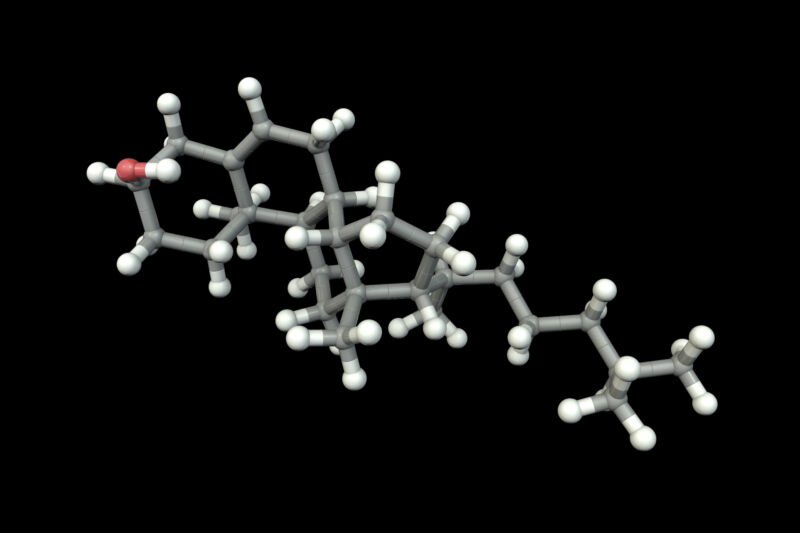 All steroids past and present share the complex ringed structure, but differ in terms of the atoms attached to those rings.
.
.
Click the link below for the article:
.
__________________________________________
 James' World 2
Leave a comment