
Click the link below the picture
.
The global ocean hit a new record temperature of 21.1 ºC in early April, 0.1 ºC higher than the last record in March 2016. Although striking, the figure (see ‘How the ocean is warming’) is in line with the ocean warming anticipated from climate change. What is remarkable is its occurrence ahead of — rather than during — the El Niño climate event that is expected to bring warmer, wetter weather to the eastern Pacific region later this year.
That means warmer-than-average ocean temperatures are likely to persist or even intensify, bringing with them more-extreme weather and marine heatwaves, which spell problems for marine life from corals to whales.
“We are probably looking at a string of record highs over the next year or so,” says Josh Willis, an oceanographer at NASA’s Jet Propulsion Laboratory in Pasadena, California. “This coming year is gonna be a wild ride if the El Niño really takes off.”
The El Niño Southern Oscillation (ENSO) is a natural, cyclical climate pattern. During the El Niño phase, winds over the Pacific are weakened or reversed, allowing warm waters to slosh eastwards in the Pacific. El Niño tends to coincide with warmer years, both in the ocean and on land. The previous record of 21.0 ºC, for example, occurred during a very strong El Niño event.
ENSO is currently in a neutral phase, coming out of a rare extended three-year period of La Niña (the opposite phase to El Niño). But El Niño is expected to kick in this year: according to the World Meteorological Organization, there is a 60% chance of it developing between May and July, and an up to 80% chance of it happening by October.
.
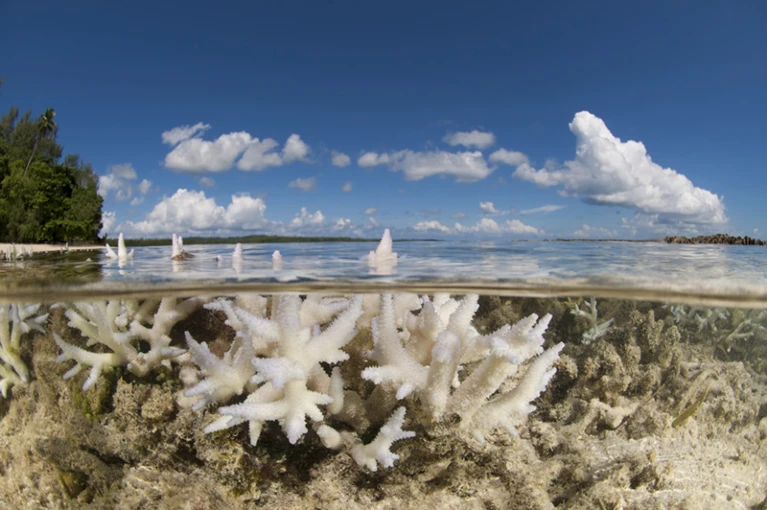
Warm oceans can bleach and kill corals. Credit: Juergen Freund/NPL
.
.
Click the link below for article:
.
__________________________________________
 James' World 2
Leave a comment