
Click the link below the picture
.
On the train to Laxton, I was facing backward, heading south from Scotland, with the fields of England rushing away from me. I searched their dark creases and their uneven hedges for something I didn’t know how to see, something I wasn’t even certain was visible. I was trying to locate the origins of private property, a preposterous pursuit. There in those hedges, I was looking for a living record of enclosure, the centuries-long process by which land once collectively worked by the landless was claimed by the landed. That land already belonged to the landed, in the old sense of ownership, but it had always been used by the landless, who belonged to the land. The nature of ownership changed within the newly set hedges of an enclosed field, where the landowner now had the exclusive right to dictate how the land was used, and no one else belonged there.
From my backward-facing seat, I saw a long stone wall on the crest of a cliff. “The Wall,” John Berger writes, “is the front line of what, long ago, was called the Class War.” Walls, fences, hedges, and ditches were all used to mark the boundaries of enclosed land, so that sheep could be kept there, or some other profit could be pursued. Enclosure is how nearly all the agricultural land in Britain came to be owned by less than one percent of the population. In “The Making of the English Working Class,” the historian E. P. Thompson writes that enclosure was “a plain enough case of class robbery, played according to fair rules of property and law laid down by a parliament of property owners and lawyers.”
.
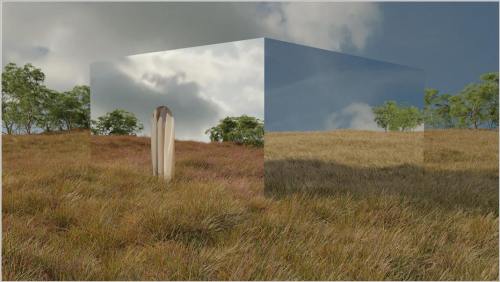 Illustration by Rebecca Lee
.
.
Click the link below for the article:
.
__________________________________________
 James' World 2
Leave a comment