
Click the link below the picture
.
The spectrum covers everything from radio waves and microwaves to the light that reaches our eyes, to X-rays and gamma rays. And humans have mastered the art of sending and receiving almost all of them. There is an exception, however. Between the beams of visible light and the blips of radio static, there lies a dead zone where our technology isn’t effective. It’s called the terahertz gap. For decades now, no one’s succeeded in building a consumer device that can transmit terahertz waves.
“There’s a laundry list of potential applications,” says Qing Hu, an electrical engineer at MIT.
But some researchers are slowly making progress. If they stick the landing, they might open up a whole new suite of technologies, like the successor to Wi-Fi or a smarter detection system for skin cancer.
Look at the terahertz gap as a borderland. On the left side, there are microwaves and longer radio waves. On the right side lies the infrared spectrum. (Some scientists even call the terahertz gap “far infrared.”) Our eyes can’t see infrared, but as far as our technologies are concerned, it’s just like light.
.
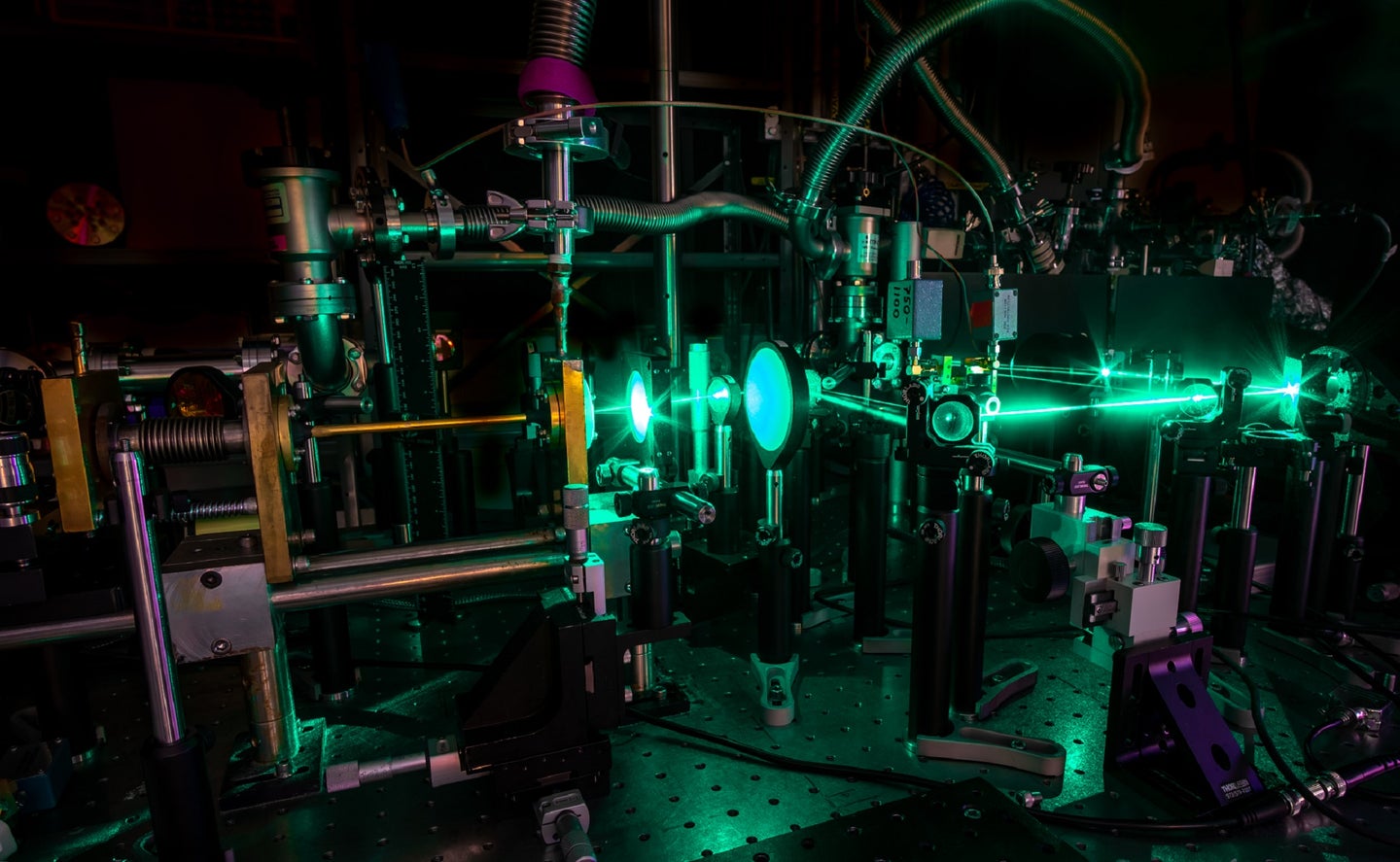 Engineers from Harvard, MIT, and the US Army created this experimental terahertz laser setup in 2019. They are among the few to do so. Arman Amirzhan, Harvard SEAS
.
.
Click the link below for the article:
.
__________________________________________
 James' World 2
Leave a comment