
Click the link below the picture
.
Black homeownership has declined in the city and nationally in the last 20 years, hindered by gentrification and inequitable lending policies.
Kirkland Lynch, a 35-year-old Black renter, has a six-figure job with Google, a law degree from Harvard, sterling credit and a mortgage pre-approval. But after a six-month house hunt in Brooklyn, with six unsuccessful bids, he is close to giving up, disheartened by slights that verge on discrimination.
“It doesn’t have anything to do with race,” he said. “Other than the fact it has everything to do with race.”
The pandemic has compounded the challenges of an already difficult housing market, particularly for Black home buyers, who face a range of additional obstacles, and it threatens to widen the gap between Black and white homeownership to levels not seen since housing discrimination was made illegal five decades ago.
After declining for much of the past 20 years, the national Black homeownership rate has stayed near 42 percent from 2016 to 2019, the lowest since 1970, while the rate of white homeownership reached 73 percent, a record high, according to the National Community Reinvestment Coalition, a fair-lending advocacy group. In 2019, 58 percent of Asians and 47.5 percent of Latinos were homeowners. (Black homeownership peaked in 2004 at 49 percent, before the 2008 housing crisis.)
.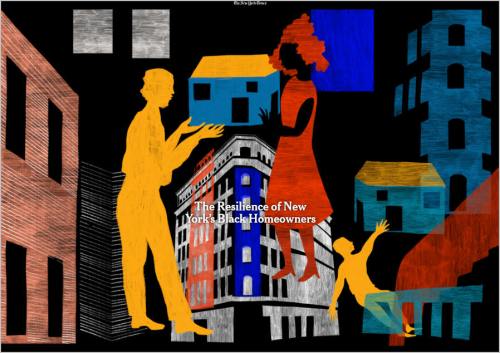 Diana Ejaita
.
.
Click the link below for the article:
.
__________________________________________
 James' World 2
Leave a comment