Home

For Workers, Mixed Signals. For the Public, Limited Impact on Shutdown’s First Day.

2 Comments

Click the link below the picture

.

The first government shutdown in nearly seven years left federal agencies in flux and many of their employees in a state of confusion on Wednesday, as they received last-minute and conflicting instructions from managers.

Even though the likelihood of a shutdown has been high for months, agencies were late to post their contingency plans compared with previous years, leaving employees and the public in the dark about what to expect. And internal guidance to work forces in some cases was not consistent with the official plans. Some employees who expected to be furloughed learned on Wednesday that they had to report to work.

But despite the uncertainty inside the government, the initial ripple effects across the country were scattered and limited.

There was no major disruption to air travel. The Internal Revenue Service answered calls from taxpayers. And federal agents arrested immigrants who showed up for routine court appearances in Lower Manhattan.

But the impact was felt elsewhere. The Jimmy Carter Presidential Library in Atlanta was closed, and visitors got a quick civic lesson: Presidential libraries are operated by the federal National Archives and Records Administration, which furloughed more than half of its staff.

“We thought it was privately funded, or we would have come yesterday,” said Cindy Mobley, 64, of Baltimore. Ms. Mobley and her husband were in town visiting their son, a freshman at nearby Emory University.

Not being able to visit the museum, Ms. Mobley said, “is a small price to pay if it leads to something better for all of our citizens.” She said she supported congressional Democrats who are refusing to agree to a spending plan that does not restore funding for Medicaid and extend health insurance subsidies.

For Chris Hill, of New York, the first day of the shutdown brought an unprompted message from the Department of Veterans Affairs. He said he had been working with the agency to resolve a benefits issue regarding his late father and was surprised to see the message informing him that the government was shut down, noting that some agency services would not be available.

The message also blamed Democrats for the shutdown, which Mr. Hill said also caught him by surprise.

“It was such a political and one-sided message sent out by a department that is supposed to deal equally with veterans, regardless of their political opinions,” he said in an interview.

Similar political responses have come from other agencies, marking what many believe to be the first time an administration has used the bureaucracy to deliver blatantly partisan messaging during a shutdown.

Legal experts say doing so violates a federal law, the Hatch Act, designed to ensure that the federal work force operates free of political influence or coercion. And many federal workers expressed discomfort about being drawn into the political morass.

More federal employees are working in the opening hours of this shutdown than in those of previous years, in part because of pockets of available funding for certain agencies that do not come from annual congressional appropriations. For the Departments of Defense and Homeland Security, some of the extra money is coming from President Trump’s signature domestic policy law, often called the One Big Beautiful Bill. That law prioritized spending for homeland defense and immigration enforcement.

.

The government shutdown has affected visits to some sites, like Everglades National Park and the Liberty Bell, and left some infrastructure projects in limbo. Credit…Alex Kent for The New York Times

.

.

Click the link below for the complete article:

https://www.nytimes.com/2025/10/01/us/politics/shutdown-federal-workers-agencies.html

.

__________________________________________

King Taharqa of the Kingdom of Kush 

Leave a comment

King Taharqa of the Kingdom of Kush 

Seven Black Women Attacked For Moving into White Neighborhood in Colorado

Leave a comment

Seven Black Women Attacked For Moving into White Neighborhood in Colorado

The U.S. Military Is Picking Up mRNA Vaccine Research That RFK, Jr., Defunded

Leave a comment

Click the link below the picture

.

The abrupt termination last month of nearly half a billion dollars in US government contracts for mRNA vaccine research rattled scientists working inside and outside industry. The cuts raised alarm about the country’s commitment to the Nobel-prizewinning technology, which is credited with saving millions of lives during the COVID-19 pandemic and is regarded as essential for fighting viruses in the future.

Yet not all large-scale research into mRNA vaccines in the United States is being dismantled. Nature has learnt that, even as the US Department of Health and Human Services (HHS) — led by vaccine critic Robert F. Kennedy Jr — pulls back, the country’s military continues to bankroll parts of the same research.

Among the beneficiaries are programmes developing vaccines against some of the world’s deadliest pathogens, including the virus that causes Crimean–Congo haemorrhagic fever (CCHF), a tick-borne disease that kills up to 40% of those infected. In the United States, the government considers such research crucial because these pathogens not only threaten soldiers deployed abroad, but could also ignite a global outbreak.

“A lot of us are at least relieved the Department of Defense [DoD] is not abandoning mRNA research,” says Amesh Adalja, an infectious-disease specialist at the Johns Hopkins Center for Health Security in Baltimore, Maryland.

Still, he cautions that the HHS’s rejection of the technology, combined with broader policy fractures across the government, threatens to hobble national — and global—readiness for emerging infectious threats.

“The whole biodefence structure is completely derailed,” Adalja says. “I’ve never seen it be disconnected like this.”

Turbulent times

Peter Berglund learnt that his company’s federally backed vaccine programme was being cut the same way that many other affected firms did in a 5 August notice from the HHS’s Biomedical Advanced Research and Development Authority (BARDA), which ordered an immediate shutdown of ongoing studies. For Berglund, chief scientific officer at HDT Bio in Seattle, Washington, the news was a gut punch, as he told colleagues at a conference on RNA-based therapeutics in Boston, Massachusetts, this month.

HDT had been developing a next-generation CCHF vaccine based on a form of RNA that can copy itself inside cells. The company had secured tens of millions of dollars in federal contracts, which it used first to test a shot in mice and monkeys, and then to begin a human trial in Texas this July. The BARDA memo brought everything to a halt the very next month.

But “that was mommy”, Berglund says. “Then daddy calls.”

Within days, HDT executives heard from project managers at the DoD’s Joint Program Executive Office (JPEO) for Chemical, Biological, Radiological, and Nuclear Defense, which had been co-funding the CCHF vaccine research. HDT was told to restart its trial, with the JPEO pledging support through at least this first phase of clinical evaluation.

“It’s been so turbulent,” Berglund says. The DoD funding, although substantial, is less than what had originally been pledged in conjunction with BARDA. “But, at least now we can advance it through phase I,” and worry about the rest later, he adds.

A ‘restructuring’ of resources

Others with projects co-funded by the JPEO also learnt of funding cuts and a “restructuring of collaborations” in the 5 August notice. But their situation is less clear.

Earlier this month, AstraZeneca, a pharmaceutical company headquartered in Cambridge, UK, began a human trial of two mRNA vaccines, despite the notice. Each is designed to protect against a different strain of avian influenza. Clinical-trial registries still list both BARDA and the JPEO as collaborators.

An AstraZeneca spokesperson declined to comment on the US government’s role in funding the trial against bird flu, which has been infecting US poultry and dairy cattle and raising the spectre of a leap into humans. The JPEO did not respond to requests for comment.

In a statement, HHS press secretary Emily Hilliard disputed suggestions that withdrawing from joint projects would weaken the nation’s pandemic preparedness, writing that “BARDA is prioritizing evidence-based, ethically grounded solutions.”

The JPEO and BARDA had also been jointly funding a preclinical-stage vaccine programme for biotechnology firm Moderna in Cambridge, Massachusetts. The mRNA shot is aimed at Marburg virus — a close but even deadlier relative of Ebola — which caused an outbreak earlier this year in northwest Tanzania, resulting in ten deaths. Neither Moderna nor its collaborator, the University of Texas Medical Branch in Galveston, responded to e-mails from Nature seeking comment on the project’s funding status.

.

https://static.scientificamerican.com/dam/m/6d3a197c620b835/original/soldier-vaccines.jpg?m=1759329961.848&w=900

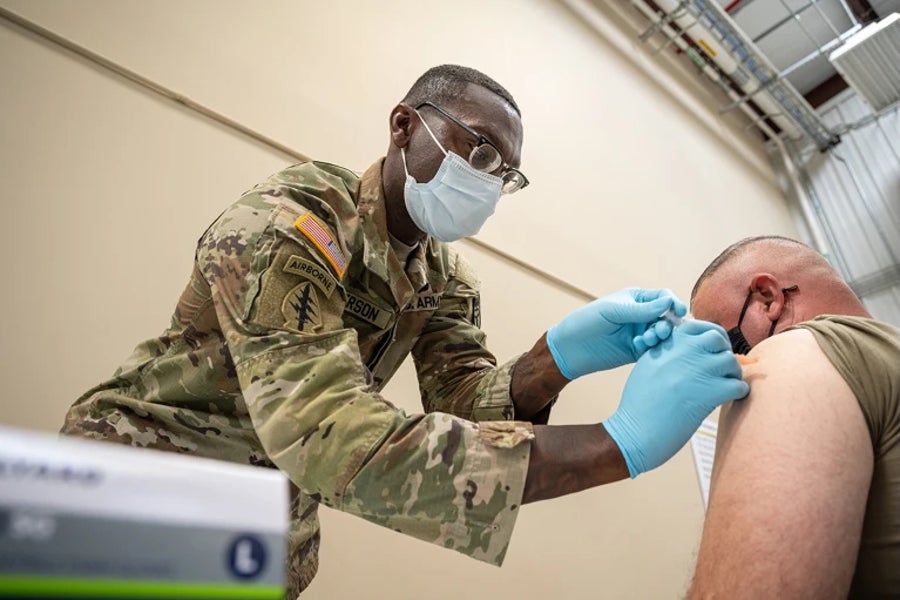
The U.S. government invests in vaccine development, in part, to protect soldiers from dangerous pathogens in various parts of the world.  Jon Cherry/Getty Images

.

.

Click the link below for the complete article:

https://www.scientificamerican.com/article/u-s-military-continues-mrna-vaccine-research-after-rfk-jr-cuts-funding/

.

__________________________________________

Jane Goodall, Eminent Primatologist Who Chronicled the Lives of Chimps, Dies at 91

Leave a comment

Click the link below the picture

.

Jane Goodall, one of the world’s most revered conservationists, who earned scientific stature and global celebrity by chronicling the distinctive behavior of wild chimpanzees in East Africa — primates that made and used tools, ate meat, held rain dances, and engaged in organized warfare — died on Wednesday in Los Angeles. She was 91.

Her death, while on a speaking tour, was confirmed by the Jane Goodall Institute, whose U.S. headquarters are in Washington, D.C.

The British-born Dr. Goodall was 29 in the summer of 1963 when the National Geographic Society, which was financially supporting her field studies in the Gombe Stream Chimpanzee Reserve in what is now Tanzania, published her 7,500-word, 37-page account of the lives of Flo, David Greybeard, Fifi, and other members of the troop of primates she had observed.

The article, with photographs by Hugo van Lawick, a Dutch wildlife photographer whom she later married, also described her struggles to overcome disease, predators, and frustration as she tried to get close to the chimps, working from a primitive research station along the eastern shore of Lake Tanganyika.

On the scientific merits alone, Dr. Goodall’s discoveries about how wild chimpanzees raised their young, established leadership, socialized and communicated broke new ground and attracted immense attention and respect among researchers. Stephen Jay Gould, the evolutionary biologist and science historian, said her work with chimpanzees “represents one of the Western world’s great scientific achievements.”

And in becoming one of the most famous scientists of the 20th century, Dr. Goodall opened the door for more women in her largely male field as well as across all of science. Women — including Dian Fossey, Biruté Galdikas, Cheryl Knott and Penny Patterson — came to dominate the field of primate behavior research.

On learning of Dr. Goodall’s documented evidence that humans were not the only creatures capable of making and using tools, Louis Leakey, the paleoanthropologist and Dr. Goodall’s mentor, famously remarked, “Now we must redefine ‘tool,’ redefine ‘man,’ or accept chimpanzees as humans.”Dr. Goodall’s willingness to challenge scientific convention and shape the details of her arduous research into a riveting adventure narrative about two primary subjects — the chimps and herself — turned her into a household name in the United States and overseas.

Long before focus groups, message discipline, and communications plans became crucial tools in advancing high-profile careers and alerting the world to significant discoveries in and outside of science, Dr. Goodall understood the benefits of being the principal narrator and star of her own story of discovery.

In articles and books, her lucid prose carried vivid descriptions, some lighthearted, of the numerous perils she encountered in the African rainforest — malaria, leopards, crocodiles, spitting cobras, and deadly giant centipedes, to name a few. Her writing gained its widest attention in three more long articles in National Geographic in the 1960s and ’70s and in three well-received books, “My Friends, the Wild Chimpanzees” (1967), “In the Shadow of Man” (1971) and “Through a Window” (1990).

Dr. Goodall’s gentle and knowledgeable demeanor — set against the beautiful yet dangerous Gombe preserve and its playful and unpredictable primates — proved irresistible to television. In December 1965, CBS News broadcast a documentary of her work in prime time, the first in a long string of nationally and internationally televised special reports about the chimpanzees of Gombe and the courageous woman steadfastly chronicling what she called their “rich emotional life.”Most of Dr. Goodall’s observations focused on several generations of a troop of 30 to 40 chimpanzees, the species genetically closest to humans. She named and grew to know each of them personally. She was particularly interested in their courtship, mating rituals, births and parenting.

Dr. Goodall was the first scientist to explain to the world that chimpanzee mothers are capable of giving birth only once every four and a half to six years, and that only one or two babies were produced each year by the Gombe Stream troop. She found that first-time mothers generally hid their babies from the adult males, prompting frantic displays by the males — leaping and hooting that could last five minutes. An experienced mother, however, she discovered, freely allowed males and other females to view her infant, satisfying their curiosity, in a far calmer introduction.

In her many articles, books, and documentaries, Dr. Goodall explored similar signal moments in her own life. In March 1964, after a nearly yearlong courtship, she married Mr. van Lawick. Three years later, she gave birth to Hugo Eric Louis van Lawick, her only child, whom she nicknamed Grub.

.

https://static01.nyt.com/images/2020/12/25/obituaries/00Goodall1/merlin_128947673_868c494e-de80-4755-9472-cd9c218364cd-superJumbo.jpg?quality=75&auto=webpJane Goodall, seen here in 2017, attracted immense attention and respect among researchers with her account of the lives of Flo, David Greybeard, Fifi, and other members of the troop of primates she observed in East Africa.Credit…Gabriela Herman for The New York Times

.

.

Click the link below for the complete article:

https://www.nytimes.com/2025/10/01/obituaries/jane-goodall-dead.html

.

__________________________________________
Archaeologists Discovered a 5,000-Year-Old Tomb Filled to the Brim With Ancient Treasures

Leave a comment

Click the link below the picture

.

Here’s what you’ll learn when you read this story:

  • Archaeologists uncovered a culturally rich ancient tomb in Spain.
  • The 5,000-year-old stone tomb in Malaga is an impressive 42 feet in length.
  • Full of cultural artifacts, experts believe the tomb will provide new information on ancient customs.

Researchers recently unearthed a 5,000-year-old stone-built monument tomb in Malaga, Spain, that’s comes in at an impressive 42 feet in length. Even better, it’s incredibly well preserved—and stuffed full of artifacts.

“We could be talking about one of the most monumental and complete dolmens in all of Andalusia [the southernmost autonomous region of Spain],” Serafin Becerra, professor at the University of Cádiz, said in a translated statement from the school. A dolmen refers to the stone megalith-style structure discovered at the site.

Project co-director Eduardo Vijande agreed. “The true potential of this structure,” he said, “lies in its extraordinary state of conservation, which will allow us to gain a detailed understanding of the lifestyles and beliefs of these communities.”

The stone tomb isn’t just long—it’s complex. With orthostat slabs (defined as upright stones) over six feet tall, the site features several internal compartments, each with the potential to expand our understanding of funerary practices across the southern Iberian Peninsula during the third millennium B.C.E.

Once inside, the researchers located several “prestigious” container rooms featuring the bones of deceased individuals and a range of grave goods—from exotic raw materials of ivory and amber to seashells and what the team is dubbing “sophisticated flint pieces.” The flint collection includes arrowheads, large-format blades, and an “exceptional halberd” (a two-handed axe-like weapon).

Across multiple excavation seasons, the researchers located multiple container rooms (known as ossuaries), showing that the site was likely a collective burial ground.

“The entire dolmen was also covered by horizontal large stone slabs, and on top of this covering, there was a tumulus [a human-made mound] of sand and small stones,” Eduarda Vijande Villa, an associated professor of prehistory at the University of Cádiz and co-director of the excavations, told Live Science.

Along with providing an understanding of the types of tools and cultural goods used 5,000 years ago, Juan Jesús Cantillo—a professor at the University of Cádiz—said that “the presence of seashells in an inland area reflects the importance of the sea as an element of prestige and the existence of long-distance exchange networks.”

The use of dolmens wasn’t relegated to just the southern Iberian Peninsula, and has cropped up across history in various time periods and regions of the world. In some cases, the sites were more than just tombs. Some held significant cultural or ritual meaning, others served as places to shelter, or and still others served as key territorial markers delineating land ownership.

Famed dolmens span from Europe to Asia, but new discoveries continue to expand our understanding of the practice of their creation. Some of the most well-known dolmens in Europe include Spain’s 7,000-year-old Dolmen of Guadalperal—dubbed the “Spanish Stonehenge” and typically submerged in water, though it will appear in times of drought—and the 5,000-year-old Arthur’s Stone in England, which features nine upright stones weighing an estimated 27 tons.

.

https://hips.hearstapps.com/hmg-prod/images/bryn-celli-ddu-burial-chamber-anglesey-north-wales-royalty-free-image-1759181153.pjpeg?crop=0.88994xw:1xh;center,top&resize=1200:*Photos by R A Kearton//Getty Images

.

.

Click the link below for the complete article:

https://www.popularmechanics.com/science/archaeology/a68060378/5000-year-old-tomb-ancient-treasures/?utm_source=firefox-newtab-en-us

.

__________________________________________

King Ewuare, Ewuare Became King in A Violent Coup Against His Brother

Leave a comment

King Ewuare, Ewuare Became King in A Violent Coup Against His Brother

Black Woman Arrested for Helping Black Man Avoid Lynch Mob

Leave a comment

Black Woman Arrested for Helping Black Man Avoid Lynch Mob

Can Your Microbiome Affect Your Mood?

Leave a comment

Click the link below the picture

.

This episode was made possible by the support of Yakult and produced independently by Scientific American’s board of editors.

Rachel Feltman: For Scientific American’s Science Quickly, I’m Rachel Feltman.

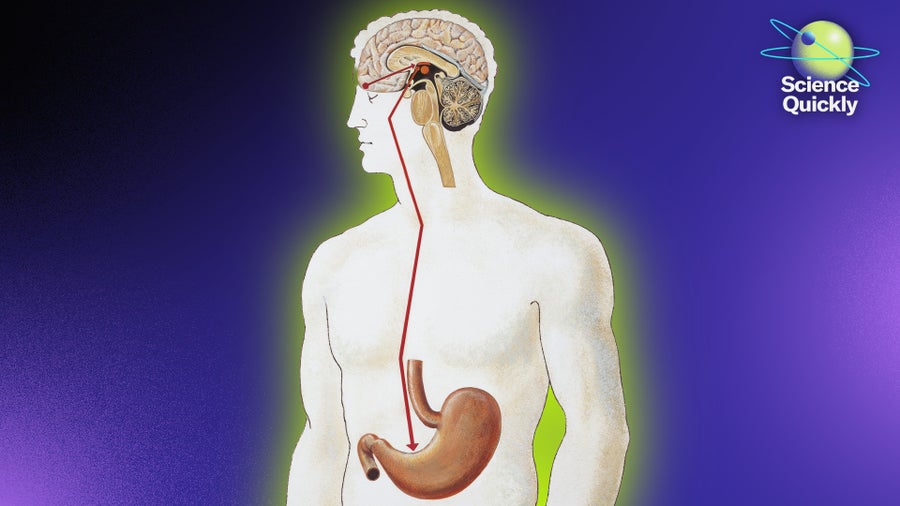
People often talk about having “gut feelings,” but new research suggests there may be more to the idiom than we thought. Scientists are finding that specialized cells in our intestines can send signals directly to the brain, potentially influencing appetite and even mood.

Recent studies hint that our microbiomes could play a role in this communication system, though researchers are still trying to understand exactly how these interactions work and what they mean for our health.

Here to walk us through the emerging science of the belly-to-brain connection is Maya Kaelberer, an assistant professor at the University of Arizona in the Department of Physiology.

Thanks so much for coming on to chat with us today.

Maya Kaelberer: It’s my pleasure. I’m happy to be here.

Feltman: So you recently co-authored a study that looks at the gut-brain connection a little bit. Could you tell us a little bit about why scientists are interested in that and what we know about it so far?

Kaelberer: Yeah, I mean, I think more than just scientists are interested in it; we have our gut feelings all the time. And so my work is really focused on understanding the biology behind those gut feelings and how is it that our gut can communicate to us. ’Cause we know, right, things like hangry exist. We know that how we feel or what food we eat or even what microbes are there is gonna affect overall how we feel in the world.

Feltman: Mm.

Kaelberer: And so understanding the molecular and cellular and neuronal connections between the gut and the brain is gonna help us better understand, like, this relationship that we have, that we have these gut feelings, right?

Feltman: Yeah.

Kaelberer: We know they’re there [laughs].

Feltman: Well, and beyond, you know, hanger, which is obviously a great example, what are some conditions that have been connected to the gut that might surprise people?

Kaelberer: So when I was in my postdoc we discovered that there was this direct connection between these cells in the surface of the gut, we call them neuropod cells, and neurons that communicate directly—they reach directly into the brain. And so we call this as—our “gut sense,” and the number-one question I would always get was: Who cares? Like, what [laughs], you know, what is our gut possibly telling us that our mouth and our nose did not already tell us about the food that we ate?

And so we delved into this a little bit more in some previous publications with regards to sugar sensing, and I use this example ’cause it’s really salient in my own life, which is that I like artificial sweetener in my coffee.

Feltman: Mm.

Kaelberer: And I don’t like regular sugar because regular sugar just feels heavy to me, and I want that, like, artificial sweetener. It kind of keeps me going. I can be caffeinated. I can be, like, on the go. I’m not gonna, like, sit down and take a nap afterwards. And so we know that these two stimuli feel different in our gut. And what we found is that these neuropod cells are actually distinguishing between the two stimuli, between real sugar and artificial sweetener. And they release different signals, and then the signal for sugar actually drives the animal to consume the sugar over the artificial sweetener.

So now we take it back to my coffee preference, and suddenly, I’m like, “Well, this makes sense. I like the artificial sweetener because I don’t want that heaviness.” And that heaviness is telling me that that food was gratifying or that food was satisfying; there was some kind of value associated with that that’s gonna help me survive in nature. And so then this is now this communication system of, like, “Oh, our gut sense is telling us something about the food we eat past whether or not it tastes good. It’s telling us a little bit about the value of what we’re consuming.”

.

https://static.scientificamerican.com/dam/m/56b72855a9cc4b9b/original/2509_SQ_WED_GUT_HEALTH-Podcast-Span-Art.jpeg?m=1758049242.69&w=900

An illustration of a man revealing his brain and stomach with an arrow drawn between them on a purple background  De Agostini/Getty Images

.

.

Click the link below for the complete text and podcast:

https://www.scientificamerican.com/podcast/episode/new-research-shows-gut-cells-communicate-directly-with-the-brain/

.

__________________________________________

Is Anyone Ever Financially Ready To Have A Baby?

Leave a comment

Click the link below the picture

.

Dear GEP,

I am trying for my first child, which is both exciting and making me anxious. I thought babies didn’t need much, but the more I talk to other people, the more I realize that having a child will be as expensive as it is wonderful. What do I actually need to support a kid? And is anyone ever financially ready to have a baby?

There is a saying widely repeated in my family that all you really need to have a baby is “a towel, and a drawer.” My father, who has had five children and eight grandchildren, is the origin of this statement – and I don’t doubt that when he had his first baby in the early seventies, at the age of 27, they didn’t have too much more than those advised essentials.

As I folded hand-me-downs last month with my younger brother, whose first baby is now just a few weeks old, we chuckled about our dad’s perhaps apocryphal advice. What did he know, anyway? What’s so wild about it, though, is that, a decade into parenting, the “towel-and-a-drawer” maxim feels both completely absurd and refreshingly wise.

A lot has changed since the seventies. When I was pregnant with my first child, my dad’s perspective on parenting preparation felt as silly as giving a colicky baby a finger of whiskey. First, the cost of living for families in this country has grown astronomically. My parents, for example, could afford a home in a diverse city on two therapist’s salaries. Now, the house I grew up in has been divided into luxury condos that I could only dream of affording. Childcare costs are real, and overwhelming: My husband and I calculated when our last child started public kindergarten that we had spent almost $200,000 on the first five years of care for our two children. Children need medical care, and medical care in this country is becoming more expensive and elusive by the day.

And, of course, there is the stuff. Fifty years ago, my dad, who I promise you did have a legit crib for my oldest sibling, had few options and little pressure to make baby-related purchases. Now, new parents like my brother and his partner are bombarded with ads and suggestions from other parents to buy high-tech strollers, specially designed tummy-time mats, and smart bottle-warmers. Even with older children, I find it difficult to turn down this constant thrum, the promise that if I just shell out a few more bucks, some aspect of life that I perhaps hadn’t even considered as a danger would be made easier for myself or my kids.

But what do our children, what do we really need??? Don’t get me wrong – the social and political child, so you’re not having to do that work during the first year of parenting.

“It allows you to prioritize, and then you’ll have a better sense of what you’re willing to let go of if you have to make trade offs as a new parent.” She also recommends worrying less about college savings and more about retirement, as you can borrow and scheme for the former but not the latter.

I would also add in that flexing your communal and collaborative muscles – getting to know your neighbors, sharing responsibilities with friends, getting comfortable asking for and offering help– will be enormously beneficial to you when you realize that even a teenaged babysitter can charge $25 an hour, and if you only need one car if you can arrange a daycare carpool. This, of course, takes work, but it is worth it. And it’s not only for your mental-health – childcare swaps, shared meals, and pooled resources can end up saving you money in the long run.

Who is ready to have a baby? No one. And also, mostly everyone. I’m sure you can find a towel and a drawer somewhere.

.

https://imgix.bustle.com/uploads/image/2025/8/25/eb8a542a/gep_finances_header.jpg?w=720&h=810&fit=crop&crop=focalpoint&fp-x=0.5&fp-y=0.4979Sure, there are the essentials, but a lot of it just isn’t necessary.

.

.

Click the link below for the complete article:

https://www.romper.com/romper-new-parent-finance

.

__________________________________________

Older Entries Newer Entries

Amor Entre Estrellas

¡Bienvenido de vuelta viajero!

Heart of Loia `'.,°~

so looking to the sky ¡ will sing and from my heart to YOU ¡ bring...

Michael Ciullo

CEO and Founder of Nsight Health

MRS. T’S CORNER

https://www.tangietwoods

Nelson MCBS

Catholic News, Prayers, HD Images, Rosary, Music, Videos, Holy Mass, Homily, Saints, Lyrics, Novenas, Retreats, Talks, Devotionals and Many More

Global geopolitics

Decoding Power. Defying Narratives.

Talk Photo

A creative collaboration introducing the art of nature and nature's art.

Movie Burner Entertainment

The Home Of Entertainment News, Reviews and Reactions

Le Notti di Agarthi

Hollow Earth Society

C r i s t i a n a' s Fine Arts ⛄️

•Whenever you are confronted with an opponent, conquer him with love.(Gandhi)

TradingClubsMan

Algotrader at TRADING-CLUBS.COM

Comedy FESTIVAL

Film and Writing Festival for Comedy. Showcasing best of comedy short films at the FEEDBACK Film Festival. Plus, showcasing best of comedy novels, short stories, poems, screenplays (TV, short, feature) at the festival performed by professional actors.

Bonnywood Manor

Peace. Tranquility. Insanity.

Warum ich Rad fahre

Take a ride on the wild side

Madame-Radio

Découvre des musiques prometteuses (principalement) dans la sphère musicale française.

Ir de Compras Online

No tiene que Ser una Pesadilla.

Kana's Chronicles

Life in Kana-text (er... CONtext)

Cross-Border Currents

Tracking money, power, and meaning across borders.

Jam Writes

Where feelings meet metaphors and make questionable choices.

emotionalpeace

Finding hope and peace through writing, art, photography, and faith in Jesus.

WearingTwoGowns.COM

The Community for Wounded Healers: Former Medical Students, Disabled Nurses, and Faith-Fueled Pivots

...

love each other like you're the lyric to their music

Luca nel laboratorio di Dexter

Comprendere il mondo per cambiarlo.

Tales from a Mid-Lifer

Mid-Life Ponderings

Creative

Travel,Tourism, Life style "Now in hundreds of languages for you."

freedomdailywriting

I speak the honest truth. I share my honest opinions. I share my thoughts. A platform to grow and get surprised.

The Green Stars Project

User-generated ratings for ethical consumerism

Cherryl's Blog

Travel and Lifestyle Blog

Sogni e poesie di una donna qualunque

Questo è un piccolo angolo di poesie, canzoni, immagini, video che raccontano le nostre emozioni

My Awesome Blog

“Log your journey to success.” “Where goals turn into progress.”

pierobarbato.com

scrivo per dare forma ai silenzi e anima alle storie che il mondo dimentica.

Thinkbigwithbukonla

“Dream deeper. Believe bolder. Live transformed.”

Vichar Darshanam

Vichar, Motivation, Kadwi Baat ( विचार दर्शनम्)

Komfort bad heizung

Traum zur Realität

Chic Bites and Flights

Savor. Style. See the world.

ومضات في تطوير الذات

معا نحو النجاح

Broker True Ratings

Best Forex Broker Ratings & Reviews

Blog by ThE NoThInG DrOnEs

art, writing and music by James McFarlane and other musicians

fauxcroft

living life in conscious reality

Srikanth’s poetry

Freelance poetry writing

JupiterPlanet

Peace 🕊️ | Spiritual 🌠 | 📚 Non-fiction | Motivation🔥 | Self-Love💕