Kiss of the Spider Woman is a musical drama written and directed by Bill Condon, based on the 1992 stage musical, which in turn was based on Manuel Puig’s 1976 novel (which had been adapted in 1985). It was released theatrically in the United States on October 10 by Lionsgate Films, Roadside Attractions, and LD […]
KISS OF THE SPIDER WOMAN (2025) – My rating: 9/10
KISS OF THE SPIDER WOMAN (2025) – My rating: 9/10
October 25, 2025
Weaver Ants Form Complex Chains to Pull More Than 100 Times Their Weight
October 25, 2025
Business, Food For Thought, Human Interest, Political, Science, Technical amazon, business, Business News, current-events, Future, Hotels, human-rights, medicine, mental-health, research, Science, Science News, technology, Technology News, travel, vacation Leave a comment

Click the link below the picture
.
Weaver ants’ feet have an incredibly strong grip—individual members of one species can, without slipping, hold an entire dead bird hanging off the edge of a table. And the mighty insects rarely work alone, often teaming up to haul and fold oversized leaves as they build their foliage-filled homes. Scientists have now found that as teams of Asian weaver ants gain more members, they strategically use their grippy feet to become ever more efficient at pulling leaf tips. In contrast to typical human behavior, ants work harder in larger groups than when alone to pull comparatively huge weights.
In a measurable phenomenon called the Ringelmann effect, the more humans join a team, the less effort each individual member tends to exert; researchers generally attribute this to reduced motivation and the difficulty of coordinating more people. “When you’re pulling on a rope, like a tug-of-war, it’s actually less efficient to have more people lined up,” says Macquarie University biologist Chris Reid, co-author on a new study in Current Biology.
Reid and his colleagues connected the tip of a paper leaf to a force-measuring device and filmed weaver ants pulling the tip back across the leaf to fold it. They found single ants pulled 59 times their weight on average, but individuals in groups of 15 pulled 103 times their weight. The more ants were included, the sharper the efficiency increase.
To make this happen, the ants assembled into chains of two to four, one behind the other. The front ants bent their legs and pulled hard at the leaf tip with their mandibles while the rear ants held the leaf still.
The researchers propose these pulling chains could act like force ratchets. The front ants are “active pullers,” and the rear ants are the “passive resisters”—they grab on to the front ants’ bodies, plant their sticky feet firmly on the leaf, and store the forces generated by the front ants so the leaf doesn’t fly backward.
“Examples of true superefficiency are very limited,” says ecologist Scott Powell of George Washington University, who was not involved in the study. Marching army ants, strictly following a pheromone trail to carry heavier loads, are another known example. But along with efficient coordination, weaver ants’ physical traits appear to give them an edge.
These ants’ unusually grippy feet make them “really well adapted to withstanding a strong pulling force in the other direction,” says biologist Helen McCreery of Tufts University, who also was not involved in the study. “The world is full of organisms solving problems in ways that are totally different from the way our brains would think to do it.”
.
 imageBROKER.com/Alamy Stock Photo
.
.
Click the link below for the complete article:
.
__________________________________________
The Peril of a White House That Flaunts Its Indifference to the Law
October 25, 2025
Business, Food For Thought, Human Interest, Political, Science, Technical amazon, business, Business News, current-events, Future, Hotels, human-rights, medicine, mental-health, research, Science, Science News, technology, Technology News, travel, vacation Leave a comment

Click the link below the picture
.
Since he returned to office nine months ago, President Trump has sought to expand executive power across numerous fronts. But his claim that he can lawfully order the military to summarily kill people accused of smuggling drugs on boats off the coast of South America stands apart.
A broad range of specialists in laws governing the use of lethal force have called Mr. Trump’s orders to the military patently illegal. They say the premeditated extrajudicial killings have been murders, regardless of whether the 43 people blown apart, burned alive or drowned in 10 strikes so far were indeed running drugs.
The administration insists that the killings are lawful, invoking legal terms like “self-defense” and “armed conflict.” But it has offered no legal argument explaining how to bridge the conceptual gap between drug trafficking and associated crimes, as serious as they are, and the kind of armed attack to which those terms can legitimately apply.
The irreversible gravity of killing, coupled with the lack of a substantive legal justification, is bringing into sharper view a structural weakness of law as a check on the American presidency.
It is becoming clearer than ever that the rule of law in the White House has depended chiefly on norms — on government lawyers willing to raise objections when merited and to resign in protest if ignored, and on presidents who want to appear law-abiding. This is especially true in an era when party loyalty has defanged the threat of impeachment by Congress, and after the Supreme Court granted presidents immunity from prosecution for crimes committed with official powers.
Every modern president has occasionally taken some aggressive policy step based on a stretched or disputed legal interpretation. But in the past, they and their aides made a point to develop substantive legal theories and to meet public and congressional expectations to explain why they thought their actions were lawful, even if not everyone agreed.
Around 15 years ago, intense legal controversy surrounded President Barack Obama’s drone strikes targeting Al Qaeda militants in ungoverned places where the United States did not have ground troops, like Yemen and tribal Pakistan. Those included the killing of a U.S. citizen, Anwar al-Awlaki, who was deemed an operational terrorist leader whose capture was infeasible.
Behind the scenes, Obama administration lawyers wrestled with the scope and limits of how the congressionally authorized armed conflict against Al Qaeda could apply to such scenarios. They developed lengthy and detailed memos citing Supreme Court precedents, and systematically worked through issues of domestic and international law.
The details of its legal rationale became known to Congress and the public not only through unauthorized disclosures and Freedom of Information Act lawsuits, but also because the administration delivered speeches and produced a white paper summarizing its reasoning, which it gave to Congress.
Today, the Trump administration is mostly behaving with audacious transparency about its boat attacks. Mr. Trump has posted surveillance videos of the deadly strikes, talked with relish about how “it is violent and it is very — it’s amazing, the weaponry,” and even acknowledged that he had authorized the C.I.A. to take covert actions in Venezuela.
But administration officials have clammed up when asked for the legal analysis to support their assertion that there is a legal state of armed conflict that makes the killings lawful.
Even in closed-door congressional briefings, according to people familiar with them, officials have provided no detailed legal answers. They are said to have cited drug overdose deaths of Americans, and stated that Mr. Trump decided the country was in an armed conflict with drug cartels. They are also said to have pointed to the part of the Constitution that makes the president the commander in chief of the armed forces, without much further elaboration.
Jack Goldsmith, a Harvard Law School professor and former top Justice Department lawyer in the George W. Bush administration, said Mr. Trump’s actions demonstrated an indifference to law that threatened to hollow it out.
“Nixon tried to keep his criminality secret, and the Bush administration tried to keep the torture secret, and that secrecy acknowledged the norm that these things were wrong,” Professor Goldsmith said. “Trump, as he often does when he is breaking law or norms, is acting publicly and without shame or unease. This is a very successful way to destroy the efficacy of law and norms.”
Anna Kelly, a White House spokeswoman, said in a statement that Mr. Trump promised during the campaign to take on drug cartels whose actions “resulted in the needless deaths of innocent Americans.” She suggested his “unprecedented action” would continue.
“All of these decisive strikes have been against designated narcoterrorists, as affirmed by U.S. intelligence, bringing deadly poison to our shores, and the president will continue to use every element of American power to stop drugs from flooding into our country and to bring those responsible to justice,” she said.
.

.
.
Click the link below for the complete article:
.
__________________________________________
What to know about Elon Musk’s Nashville tunnel project
October 25, 2025
Business, Food For Thought, Human Interest, Political, Science, Technical amazon, business, Business News, current-events, Future, Hotels, human-rights, medicine, mental-health, research, Science, Science News, technology, Technology News, travel, vacation Leave a comment

Click the link below the picture
.
The Boring Co., founded by Elon Musk, has begun work on an underground tunnel in Nashville.
Boring’s “Music City Loop” would function like a rideshare. Passengers will ride in individual Tesla cars on a fixed route connecting downtown Nashville to the city’s airport, with possible expansions in the future.
State officials have touted the project as a solution to traffic woes. Others worry about the tunnel’s possible impact on the environment and Nashville’s existing infrastructure.
Here’s everything we know about the project so far.
Function
Currently, the 8-mile journey from the airport to the Music City Convention Center can take anywhere from 12 to 30 minutes during peak traffic times. The Boring Co. estimates the same ride could take as little as 8 minutes with its fleet of underground Teslas.
There are plans for three stops along the Music City Loop: the Nashville International Airport (BNA), the Music City Convention Center, and the Tennessee State Capitol.
Despite talks with several other cities, The Boring Co. only has one other tunnel in operation. The Vegas Loop initially boasted 155 mph rides in self-driving Teslas when it was first announced. Since then, Boring has switched to driver-operated cars for the 2-mile tunnel that currently circles the Vegas strip.
With congestion, Vegas Loop riders have observed a top speed of 40 mph. Nashville’s tunnel would need Tesla drivers to maintain an average speed of 67 mph to deliver on the promise of an 8-minute trip.
In its pitch to Nashville, Boring has been less ambitious about the length and speed of its tunnel rides. Construction, on the other hand, will have a much faster timetable in Music City.
Timeline
The Boring Co. expects a quick turnaround on the project. The company initially estimated that Nashville’s tunnel would be operational by late 2026, but has now adjusted to early 2027. It’s still an ambitious timeline; it took the company nearly three years to complete a tunnel a tenth of that length in Las Vegas. Other tunnel pitches never got that far. Cities like Los Angeles, Chicago, Fort Lauderdale, and Washington D.C. never moved forward on proposed tunnels.
The project is still officially in the planning stages, and The Boring Co. has said that drilling won’t start until the last quarter of the year. However, excavation is already underway at a downtown parking lot.
Government transparency
Fences went up around the state-owned lot before lawmakers officially approved the deal with Boring, a move state officials say is common in construction projects like these.
Members of the State Building Commission, none of whom represent Nashville, voted unanimously to give The Boring Co. a no-cost lease for the tunnel’s starting point. The agreement with the state dictates that Boring has to leave the lot in the same condition or better. If not, the company could be on the hook for the cost of repairing it.
The greenlight came soon after the project was unveiled to the public. Days prior, Gov. Bill Lee and other state Republicans announced the deal, touting that the tunnel would come at no cost to the taxpayer.
“It’s 100% privately funded. There will be no cost to Tennessee taxpayers,” Lee said. “For those that live here, it means that there’ll be less congestion on our roads. There will be less wear and tear on our highways.”
State lawmakers from Nashville disagree. The city’s statehouse delegation has argued that the development will only serve tourists at the expense of locals.
Many, like Rep. Justin Jones, D-Nashville, have criticized the lack of input from both city and state officials who represent Nashville.
“You’re treating us like we’re a colony where you get to dictate to our constituents what is in their best interest. You keep their representation out of meetings,” Jones said. “You don’t even consider the impact to the health and safety of our community.”
State records do not show that there were any environmental reviews of the project — something that has served as a death knell for tunnel proposals in other cities.
.

The Boring Co.’s existing tunnel in Las Vegas.
.
.
Click the link below for the complete article:
.
__________________________________________

Boston Police Harass Black Neighborhoods After False Shooting Charge
October 25, 2025
Why Top CDC Experts Are Resigning, and What It Means for Public Health
October 24, 2025
Business, Food For Thought, Human Interest, Political, Science, Technical amazon, business, Business News, current-events, Future, Hotels, human-rights, medicine, mental-health, research, Science, Science News, technology, Technology News, travel, vacation Leave a comment
Click the link below the picture
.
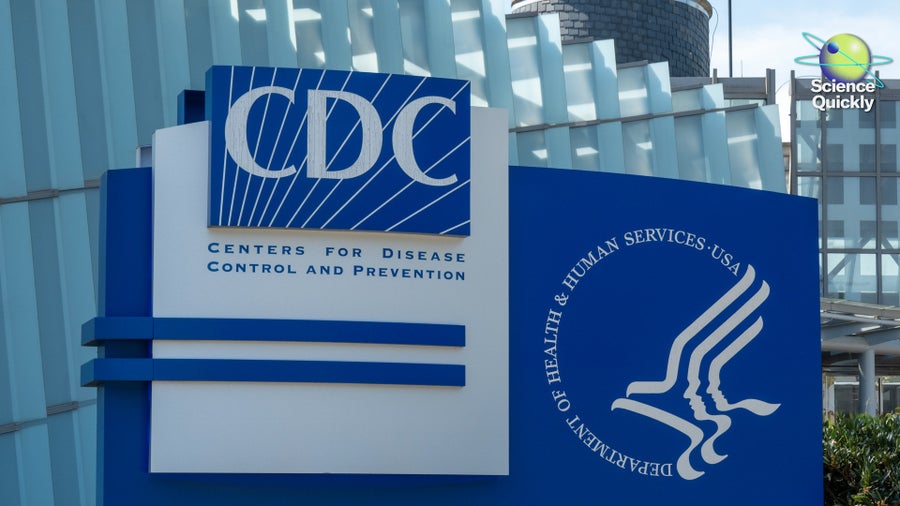
Rachel Feltman: For Scientific American’s Science Quickly, I’m Rachel Feltman.
In recent weeks, several prominent public health experts have resigned from the Centers for Disease Control and Prevention, citing concerns about the agency’s shift away from science-based decision-making.
Among them was Demetre Daskalakis, who until recently directed the CDC’s National Center for Immunization and Respiratory Diseases. He’s here today to tell us more about what’s going on at the CDC—and what concerned experts are doing to try to keep America healthy.
Thanks so much for, for joining us today.
Demetre Daskalakis: Thanks for having me.
Feltman: So, to start, could you tell me a bit about your former role at the CDC and what you did there?
Daskalakis: I, actually, in my five years at CDC had seven separate roles …
Feltman: Mm.
Daskalakis: So I will just focus on the last two years, where I was the center director for the National Center for Immunization and Respiratory Diseases.
So, you know, CDC is made out of centers—that’s what Centers for Disease Control and Prevention mean—and so the National Center for Immunization Respiratory Diseases, which we’ll call NCIRD for short, is the center that is responsible for a lot of vaccine policy and vaccine-preventable diseases for the country, as well as the jurisdictional immunization programs and the very important Vaccines for Children Program.
Feltman: And how have things been changing there over the last year or so?Daskalakis: I mean, not for the good. I think that with the installation of the new secretary of health, Robert F. Kennedy Jr., I was seeing a pretty significant shift away from sort of science-based work, more toward this ideologic, almost authoritarian-style leadership coming from the Health and Human Services secretary that didn’t really value or listen to any expert information or advice
Feltman: You recently resigned, as did several other prominent experts at the CDC. And the feeling in, in a lot of your resignation statements was that you felt that the CDC had become something so different from what it was supposed to be that you could do more work from the outside. What do you think that’s going to look like?
Daskalakis: I mean, unfortunately, I think my resignation letter was a little bit prophetic because, I mean, literally right after I resigned, you know, CDC put up a political manifesto as their mission statement that really, again, was all ideology and very light on science or public health. And then, you know, we’ve seen the Advisory Committee [on] Immunization Practices, where the firewall between science and ideology and politics completely broke down, and I feel like I’m sort of in a unique position: I really understand what is supposed to happen and what the normal process is. And so I feel like one of my main roles outside of CDC is going to be to sort of identify when there are glitches in the Matrix and when there are things happening that are atypical and things that aren’t sort of going through a process that value science before sweeping statements and policies are made. And so I will have that utility for as long as I sort of have the awareness; I can point at the chaos.
Feltman: Yeah, and what do you think some of the solutions look like for public health organizations outside of the CDC to keep America actually healthy [laughs]?
Daskalakis: Yeah, I think that this is, like, the key moment where, as someone who’s worked in governmental public health for over a decade and in health care for two decades-plus, it hurts me to say that I don’t trust what’s coming out of the CDC. And as an infectious disease doctor, when I see patients and I have a question, that’s where I go. And so, unfortunately, I think that we’re seeing the decay of the quality of information, and it’s not, like, a random decay; it is a specifically targeted decay to create an ideology propaganda machine that’s Orwellian, as opposed to a trusted health source …
Feltman: Hmm.
Daskalakis: So I think that the first is that this won’t last forever, but it’s what has to happen for now because of the way leadership is at HHS. So I think that, really, a lot of the onus and responsibility now falls on—I’m gonna call them “para-public health”—paragovernmental organizations that are actually using process and data to sort of generate sort of recommendations and, you know, in effect, replacement policies to make sure that the health machine of the U.S. continues to function even as people are trying to destroy it. I think that the answer is that those organizations are going to have to carry the water for a lot of this. They’re going to need to be the trusted voices for the folks at the front line, whether they’re public health practitioners or medical providers.
And what I hope is that they are forming deeper and stronger alliances so that they are gonna be more unified in what they say, because one of the scary parts is these states that are putting together coalitions, they’re doing the right thing, right—let’s just be clear. But it’s gonna create a tapestry across the U.S. that is about have and have-nots. So your California-Hawaii axis and your, like, Northeast axis, you know, they’re doing great. The question’s gonna be: Is there going to be something for the South and parts of the Midwest that may not have that political will that’s necessary to lift up [that works] to make sure that folks are protected? And if government funding—which could be taken away at any minute, and they have really created some levers where they’re going to be able to potentially pull funding with not a good reason from a lot of jurisdictions—like, how is that gonna play out in places that don’t have tax base to be able to cover what the federal government normally provides?
.
 aimintang/Getty Images
.
.
Click the link below for the complete article (sound on to listen):
.
__________________________________________
Bugonia Is Going to Be Nominated for All the Oscars. I Hated It.
October 24, 2025
Business, Food For Thought, Human Interest, Political, Science, Technical amazon, business, Business News, current-events, Future, Hotels, human-rights, medicine, mental-health, research, Science, Science News, technology, Technology News, travel, vacation Leave a comment

Click the link below the picture
.
The Greek-born director Yorgos Lanthimos likes to make movies that trap his characters in confined spaces where a different set of rules applies from those in the outside world. In his early feature Dogtooth, three adult siblings are trapped in an eternal childhood by their brainwashing parents. The Lobster imagines a bizarre dystopia where all newly single people are given 45 days to find a life partner or face being transformed into animals. The Favourite tracks the power struggles between two dueling ladies-in-waiting at the court of a rapidly deteriorating queen. Even the globe-trotting libertines of Poor Things are boxed in by that film’s deliberately artificial soundstage exteriors. Lanthimos enjoys pinning his characters in place and watching them wriggle their way toward escape as best they can.
The director’s latest, the unremittingly grim black comedy Bugonia, takes entrapment as both its explicit theme and its guiding aesthetic principle. This tale of a pharmaceutical-industry CEO who’s kidnapped by a low-wage worker at her company was inspired by the 2003 South Korean comedy Save the Green Planet!, a movie it structurally resembles enough to qualify as a remake. But in our current era of widespread social-media brain rot, the notion of a conspiracy theorist driven by his delusions to commit a violent crime hits different than it did at the turn of the millennium. Like Ari Aster’s Eddington earlier this year, Bugonia invites us inside the internet-poisoned imagination of a lonely male protagonist who has “done his own research”—and, as with Eddington, the result is an allegory about contemporary life that’s as nauseatingly gory as it is thuddingly obvious.
.
 Focus Features
.
.
Click the link below for the complete article:
.
__________________________________________
Truck driver in country illegally was under influence of drugs in California crash that killed 3: Police
October 24, 2025
Business, Food For Thought, Human Interest, Political, Science, Technical amazon, business, Business News, current-events, Future, Hotels, human-rights, medicine, mental-health, research, Science, Science News, technology, Technology News, travel, vacation Leave a comment

Click the link below the picture
.
The driver of a semi-truck that slammed into multiple vehicles, killing three people, on a California highway was allegedly under the influence of drugs, authorities said.
The driver — identified by authorities as 21-year-old Jashanpreet Singh — has been charged with gross vehicular manslaughter while intoxicated and driving under the influence of a drug causing injury in connection with Tuesday’s chain-reaction crash on Interstate 10 in Ontario, according to a criminal complaint.
He is in the United States illegally and an immigration detainer has also been placed on him, according to the Department of Homeland Security.
Authorities said Singh was driving a Freightliner semi-truck and failed to stop in time when traffic in his lane had slowed or stopped Tuesday afternoon. Three people were killed and at least three others injured in the multi-vehicle crash, according to the complaint.
Dash camera footage of the crash showed the truck slam into multiple vehicles in a fiery crash, then veer off into the shoulder and ram into additional vehicles before coming to a stop.
The San Bernardino County District Attorney’s Office, which filed charges against Singh on Thursday, said eyewitness and dashcam footage showed him “traveling at a high rate of speed into stopped traffic,” resulting in a “massive and chaotic scene.”
A 54-year-old man who was driving a Toyota Tacoma and two occupants in a Kia Sorento were killed in the crash, according to the California Highway Patrol.
A 43-year-old driver of a Dodge Avenger and a 59-year-old individual who was standing outside of a vehicle both suffered major injuries, while a 57-year-old passenger in a Chevrolet 2500 had a minor injury, police said.
Eight vehicles, including four commercial vehicles, were involved in the crash, according to the California Highway Patrol.
San Bernardino County District Attorney Jason Anderson called the incident a “heinous tragedy” that was “easily avoidable if the defendant was not driving in a grossly negligent manner and impaired.””Had the rule of law been followed by State and Federal officials, the defendant should have never been in California at all,” he added in a statement.
Singh, of Yuba City, was arrested at the scene under suspicion of DUI, officials said.
“This is sadly a reminder of how precious life is and how fast it could be taken away at the hands of somebody who is driving irresponsibly, somebody who is impaired,” California Highway Patrol Officer Rodrigo Jimenez told Los Angeles ABC station KABC.
The San Bernardino County District Attorney’s Office said it filed three counts of vehicular manslaughter with gross negligence and one count of DUI causing injury against Singh, noting additional charges may be filed pending further investigation.
He is being held without bail and his arraignment has yet to be scheduled. Prosecutors said they will continue to request no bail “based on the seriousness of the offense and his flight risk.”
Immigration and Customs Enforcement has also lodged an arrest detainer for Singh, according to DHS, which said he is in the U.S. illegally from India, entering through the southern border in 2022.
“This tragedy follows a disturbing pattern of criminal illegal aliens driving commercial vehicles on American roads, directly threatening public safety,” DHS said on X.
The department cited the arrest last week of a man, which it said is in the country illegally, over a deadly crash in Indiana. DHS said the man was driving a semi-truck without a valid commercial license when he swerved into oncoming traffic and collided with a vehicle, killing the driver.
Singh has a valid commercial driver’s license that expires in October 2026, KABC reported, according to the California Department of Motor Vehicles.
White House press secretary Karoline Leavitt confirmed in a press briefing Thursday that California issued him the commercial driver’s license.
.

.
.
Click the link below for the complete article:
.
__________________________________________
Europe’s Persistence in Supporting Ukraine Is Bearing Fruit
October 24, 2025
Business, Food For Thought, Human Interest, Political, Science, Technical amazon, business, Business News, current-events, Future, Hotels, human-rights, medicine, mental-health, research, Science, Science News, technology, Technology News, travel, vacation Leave a comment

Click the link below the picture
.
No one can know how long President Trump’s pique with President Vladimir V. Putin of Russia will last this time. But the past few days have been an important signal that European persistence in its support for Ukraine has paid off, at least for now.
Mr. Trump’s decision to impose sanctions on two of Russia’s largest oil companies, Lukoil and Rosneft, will have a significant impact on Russian income over time. Europe added its own new sanctions on Thursday and committed to funding Ukraine’s financial and military needs for the next two years.
An innovative but controversial proposal to use frozen Russian assets as the basis for a large new loan to Ukraine was blocked for now by Belgian concerns about liability. But the bloc will continue to work to find agreement on it. Otherwise, meeting the funding pledge made Thursday night would badly strain already indebted national budgets.
Even if the bloc finds the money, questions remain about whether these efforts will be enough to sustain Ukraine’s uneven fight against Russia. And, analysts say, they will do little to persuade Mr. Putin to stop the war in Ukraine or even agree to a rapid cease-fire, as Mr. Trump demands. But the sanctions put substance behind the European commitment to helping Ukraine stand up to Russia — ideally with, or if necessary, without — Mr. Trump at their side.
The European leaders can also feel some satisfaction that their repeated interventions with Mr. Trump on behalf of Ukraine have finally produced at least some American pressure on Moscow. They insist that they will support Ukraine for as long as required to ensure its survival as an independent state, though any real strategy for ending the war is certain to require serious American pressure on Russia.
After Mr. Trump’s decision to seek no new funding for Ukraine, the Europeans are struggling to find the money to back up their commitment, when their own national budgets are badly stretched
The loan plan that the bloc is trying to effect would use the billions of dollars of frozen Russian assets in Europe in a complicated legal maneuver that doesn’t seize them outright. The result would be a 140-billion euro loan ($163 billion) to Ukraine, interest free, that would only have to be paid back if Russia pays Ukraine reparations at the end of the war.
But Belgium, which hosts most of those assets, wants to ensure that it will not be liable and that the bloc shares the risks. Many details remain to be worked out to satisfy the Belgians and, the Europeans hope, to get the participation of other important players in the Group of 7 industrialized nations. A revised version is expected to be on the agenda at the next E.U. summit in December.
Still, the president of the European Council of member states, António Costa, announced confidently late Thursday night that the bloc “is committed to addressing Ukraine’s pressing financial needs for the next two years, including support for its military and defense efforts,” which are estimated to involve more than $150 billion.
Also on Thursday, the European Union passed another set of sanctions against Russia that hit the energy-dominated Russian economy, as the new American sanctions will do. The bloc advanced a ban on the purchase of Russian liquefied natural gas a year to begin in 2027. It also added another 117 vessels from Russia’s “shadow fleet” of oil tankers, which have circumvented earlier controls, to a sanctions list.
The Europeans also sanctioned Rosneft, but not Lukoil, which supplies cheap oil to Hungary and Slovakia in comparatively small amounts.
Europe has delivered more aid to Ukraine than the United States and has, in some ways, won the argument that Ukraine must be supported, at least so far, noted Jean-Dominique Giuliani, a French analyst and chairman of the Robert Schuman Foundation, a nonprofit research institution. Europe’s policy requirements had not changed despite Mr. Trump’s vacillation, he said, including an immediate cease-fire, no territorial concessions by Ukraine, reparations, and prosecution of war criminals.
“No agreement can be reached at the expense of Ukraine and without the Europeans,” who have imposed numerous sets of sanctions on Russia and hold most of Russia’s assets abroad, Mr. Giuliani wrote on Wednesday.
In another example of European commitment, the countries of the so-called “coalition of the willing” were meeting on Friday in London to discuss further military support for Kyiv.
Still, the Europeans are working hard to keep Mr. Trump onside, or at least less swayed by Mr. Putin’s blandishments.
.
 Soldiers in the Zaporizhzhia region of eastern Ukraine this month.Credit…Tyler Hicks/The New York Times
.
.
Click the link below for the complete article:
.
__________________________________________
 James' World 2