
Prince Sundiata Keita the Founder of the Mali Empire
Assorted human interest posts.
October 30, 2025
October 30, 2025

What does it mean to be a kid at heart? It means believing that we can be born again. It means having life in the Son. It means imagination is alive. It means rejoicing even when you don’t have much. It means loving your neighbor as yourself. It means loving God with all your being. […]
It means believing
October 30, 2025

   Christianity Is Not Even a Religion: It Is Finished! By WearingTwoGowns | October 2025 Hey friends— I’m slipping into my “two gowns” again: one for quiet faith and one for the questions that won’t let me sleep at night. The Three Words That Changed Everything “It is finished.” Three words. Spoken from […]
Christianity is not even a religion: “It is finished!”
October 30, 2025

True creativity blossoms in the quiet space where digital noise fades. Constant connectivity starves the brain of boredom, the essential ingredient for deep thought and original ideas. The new luxury is not the latest gadget, but a weekend retreat, no Wi-Fi, no notifications. This deliberate disconnection is a conscious investment in one’s mental clarity. It’s […]
True me.. Tap-2298..
October 29, 2025
Business, Food For Thought, Human Interest, Political, Science, Technical amazon, business, Business News, current-events, Future, Hotels, human-rights, medicine, mental-health, research, Science, Science News, technology, Technology News, travel, vacation Leave a comment

Click the link below the picture
.
About four years ago, Clifford Harper, then 85, announced to his wife that he was quitting alcohol. Harper wasn’t a heavy drinker but enjoyed a good Japanese whiskey. It was the first of a series of changes Linda Kostalik saw in her husband. After he’d cleared out the liquor cabinet, Harper, a prolific academic who has authored several books, announced he was tired of writing. Next, the once daily runner quit going to the gym. Kostalik noticed he also was growing more forgetful.
The behaviors were unusual enough that, at an annual physical, the couple’s physician recommended they consult a neurologist. A battery of medical tests and brain scans revealed that Harper’s surprising actions and memory loss were the result of dementia.
Harper’s neurologist at Oregon Health & Science University (OHSU) asked whether he might like to enroll in a long-running study of dementia in African Americans.* The study’s focus on Black health piqued Harper’s interest, and he decided to participate for as long as he could. “I hope it will help other men like me,” Harper says.
As a Black American, Harper faces a risk of Alzheimer’s disease and other dementias that is twice that of white Americans his age. The reasons for this disparity are still unclear, but researchers know Black Americans are particularly vulnerable to a number of confirmed risk factors, such as living in areas with higher rates of air pollution and encountering difficulties accessing healthy foods and high-quality education. Some studies suggest that experiencing racism and other forms of discrimination contributes to a higher risk of cognitive decline. Race or gender discrimination also raises a person’s risk of heart disease and, as a result, some forms of dementia.
That’s part of what prompted Harper to participate in OHSU’s study, called the African American Dementia and Aging Project (AADAPt), which was established in part to capture the unique history and experiences of Black communities in Oregon. The state’s first constitution banned nonwhite citizens from settling there. The ban was overturned by the early 1900s, and shipyard work during World War II brought an influx of Black workers to the region, but they still faced discrimination and racism in many forms. By the end of the war, racist lending practices—called redlining—led most of the Black community to live in segregated neighborhoods or those that were poor in resources needed for good health, such as parks and grocery stores.
Discrimination in the scientific world, along with other factors such as distrust of researchers, led to underrepresentation of Black communities in brain research. Even today, clinical trials for new treatments of Alzheimer’s include very few people of color. As a result, researchers and doctors are ill-equipped to understand the causes of dementia in these communities. “Not only are there health disparities around rates of Alzheimer’s, but we’ve understudied the Black population in relation to the causes,” says Andrea Rosso, an epidemiologist at the University of Pittsburgh.
Now that Alzheimer’s and some other dementias can be diagnosed early and their progress potentially slowed, figuring out who’s most vulnerable is even more critical. Diagnostic tests and interventions aren’t yet reaching all those who need them. Researchers should include historically minoritized communities in studies of these new frontiers in dementia diagnosis and treatment, says epidemiologist Beth Shaaban of the University of Pittsburgh. If adequate attention isn’t paid to diverse populations, communities that already experience disproportionate rates of dementia will be uninformed about their increased risk, how to lower it, and how to access diagnoses and care. “We are very concerned that these disparities and the rapid evolution of the new technology could leave people behind,” Shaaban says.
AADAPt and other studies aim to correct this inequity. The project seeks to understand the forces driving cognitive decline in Black Americans, identify protective factors that lead to healthy aging, and find practical solutions. The team hopes to eventually use the data to build predictive models that will catch cognitive decline early and potentially help people such as Harper access new medicines and treatments via clinical trials.
At the turn of the century, researchers projected that an aging baby boomer generation would drastically increase the incidence of Alzheimer’s and other forms of dementia. No treatments or protective strategies were known at the time, and the search for solutions focused largely on the tangles of proteins that jammed up brain circuits.
n the past two decades, scientists have discovered that certain drivers of Alzheimer’s may be controllable. In 2011, dementia researcher Deborah Barnes of the University of California, San Francisco, and her colleagues reported that poor education and smoking—things that could be addressed by behavioral changes and social reform—were among the greatest threats to aging brains. In a 2022 follow-up study, Barnes reported other modifiable risk factors for Alzheimer’s, such as midlife obesity and sedentary lifestyle, which can raise a person’s risk for heart disease.
.
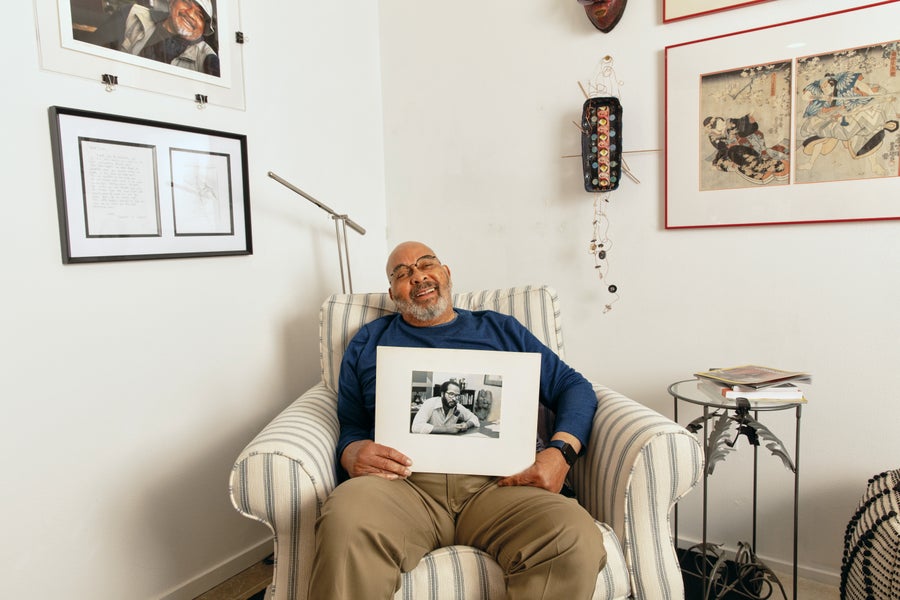
Clifford Harper, seen here holding a photo of himself as a professor, was told by his physician that his cognitive decline might have begun 15 or more years before his memory loss became evident. The delay may be attributed to his education and physical fitness. Gioncarlo Valentine
.
.
Click the link below for the complete article:
.
__________________________________________
October 29, 2025
Business, Food For Thought, Human Interest, Political, Science, Technical amazon, business, Business News, current-events, Future, Hotels, human-rights, medicine, mental-health, research, Science, Science News, technology, Technology News, travel, vacation Leave a comment

Click the link below the picture
.
It makes sense in principle: You exercise your muscles to make them stronger and prevent frailty and decline; shouldn’t your brain work the same way?
That premise launched multiple brain training websites and apps, and most likely contributed to the sale of countless Sudoku, crossword, and logic puzzle books over the past two decades. It also inspired numerous academic researchers to explore whether cognitive training really can make people smarter and even lower the risk for dementia.
But, as often happens in science, a seemingly straightforward idea is more complicated than it appears. Because the answer to, “is training your brain helpful?” depends on what type of exercises you’re doing and what benefits you’re seeking.
When psychologists conduct research on whether it’s possible to improve cognition, they mostly use computer games developed to enhance a specific aspect of how we think. Some brain training games teach people strategies to improve a skill or recognize patterns. Others gradually increase speed and difficulty to challenge the brain, said Lesley Ross, a professor of psychology at Clemson University.
Many studies have shown that playing these games can improve people’s cognitive abilities — not just on the specific task they’re working on, but related tasks, too. That “isn’t terribly surprising,” said Adrian Owen, a professor of cognitive neuroscience and imaging at Western University in Ontario, Canada, just as someone who practiced memorizing phone numbers would probably get better at remembering dates.
Evidence that playing one type of game will make you smarter overall or help you improve on a completely different kind of task is less compelling.
“Brain training works in the sense that, if you want to learn to play the violin,” you will get better if you practice the violin, Dr. Owen said. But if you learn to play the violin, “do you get any better at the trumpet? Well, the obvious answer is no.”
Some brain training companies have said that their games can also help stave off cognitive decline, but research investigating the connection is slim. One of the few studies that has looked at this found that healthy older adults who played a game designed to improve processing speed had a 29 percent lower risk of dementia a decade later. People who played two other games, a memory task or a problem-solving task, also had decreased risk, though the benefit wasn’t significant compared to people who didn’t play any games.
Experts said this study suggested that brain training games have promise, but additional clinical trials are needed.
There is more research on how everyday hobbies and behaviors — like doing crossword puzzles, playing board games, reading books or newspapers, or learning another language — may protect against cognitive decline.
Several studies have suggested that the more often people engage in cognitively stimulating activities, the lower their risk for cognitive impairment or the later they receive a dementia diagnosis. For example, one found that, among adults who developed dementia, those who regularly completed crossword puzzles delayed the onset of memory decline by more than two years compared to those who didn’t.
If something is mentally challenging, “chances are that’s probably pretty good for your brain,” Dr. Ross said. But, she added, those studies of everyday activities are not randomized controlled trials — the gold standard in science and medicine — that would provide a definitive link between cognitively stimulating hobbies and a lowered risk of dementia. In other words, the current evidence only shows an association, not a direct cause and effect.
When asked why either of these types of activities, whether it’s a specially designed game or a crossword puzzle, might help the brain, experts mentioned the theory of “cognitive reserve.” The idea is the more “mental muscle” someone has built up, the more resilient they are to dementia, said Dr. Joe Verghese, the chair of the neurology department at the Stony Brook University Renaissance School of Medicine.
These activities likely won’t prevent the brain damage that leads to dementia. But if someone does get Alzheimer’s disease, cognitive reserve “can mask the effect and delay the onset of symptoms for a few years,” Dr. Verghese said.
.
 Josie Norton
.
.
Click the link below for the complete article:
.
__________________________________________
October 29, 2025
Business, Food For Thought, Human Interest, Political, Science, Technical amazon, business, Business News, current-events, Future, Hotels, human-rights, medicine, mental-health, research, Science, Science News, technology, Technology News, travel, vacation Leave a comment

Click the link below the picture
.
To glimpse the future of homelessness policy in the age of President Trump, consider 16 acres of scrubby pasture on the outskirts of Salt Lake City where the state plans to place as many as 1,300 homeless people in what supporters call a services campus and critics deem a detention camp.
State planners say the site, announced last month after a secretive search, will treat addiction and mental illness and provide a humane alternative to the streets, where afflictions often go untreated and people die at alarming rates.
They also vow stern measures to move unhoused people to the remote site and force many of them to undergo treatment, reflecting a nationwide push by some conservatives for a new approach to homelessness, one embraced and promoted by Mr. Trump.
With outdoor sleeping banned, removal to the edge of town may become the only way some homeless Utahns can avoid jail. Planners say the facility will also hold hundreds of mentally ill homeless people under court-ordered civil commitment and the effort will include an “accountability center” for those with addictions.
“An accountability center is involuntary, OK — you’re not coming in and out,” Randy Shumway, chairman of the state Homeless Services Board, said in an interview. Utah will end a harmful “culture of permissiveness,” he said, and guide homeless people “towards human thriving.”
While the Utah effort began before Mr. Trump’s return to office, it mirrors his pledge to move the homeless from urban cores to “tent cities” with services. And it accelerated after Mr. Trump issued an executive order in July, calling for strict camping bans and expanded power to involuntarily treat homeless people.
Gov. Spencer Cox, a Republican, quickly praised Mr. Trump’s order and told Utah planners to follow it.
Critics of the new plan say that confining people to a site on the city’s outskirts threatens civil liberties and warn that the promised services may not materialize. The efforts coincide with deep cuts to Medicaid, which could thwart the project’s financing.
“I’m super anxious about it,” said Jen Plumb, a physician and Democratic state senator who calls the promise of high-quality medical care “pie in the sky.”
Utah already has a severe shortage of psychiatric beds, she noted. The legislature is unlikely to fund hundreds of new beds, she said, and even if it did, there is no work force to staff them.
Without enormous new spending, she said, the center could function less as a treatment facility than “a prison or a warehouse.”
The emerging portrait of the Utah center, scheduled to open in 2027, brings to life a vow that Mr. Trump made two years ago in an extraordinary campaign video.
Accusing homeless people of turning great cities into “unsanitary nightmares,” he pledged “to use every tool, lever and authority to get the homeless off our streets.” He said the administration would “open up large parcels of inexpensive land” where “dangerously deranged” people “can be relocated and their problems identified.”
.

The proposed site where Utah plans to place as many as 1,300 homeless people outside of Salt Lake City.
.
.
Click the link below for the complete article:
.
__________________________________________
¡Bienvenido de vuelta viajero!
so looking to the sky ¡ will sing and from my heart to YOU ¡ bring...
CEO and Founder of Nsight Health
https://www.tangietwoods
Catholic News, Prayers, HD Images, Rosary, Music, Videos, Holy Mass, Homily, Saints, Lyrics, Novenas, Retreats, Talks, Devotionals and Many More
Decoding Power. Defying Narratives.
A creative collaboration introducing the art of nature and nature's art.
The Home Of Entertainment News, Reviews and Reactions
Hollow Earth Society
•Whenever you are confronted with an opponent, conquer him with love.(Gandhi)
Algotrader at TRADING-CLUBS.COM
Film and Writing Festival for Comedy. Showcasing best of comedy short films at the FEEDBACK Film Festival. Plus, showcasing best of comedy novels, short stories, poems, screenplays (TV, short, feature) at the festival performed by professional actors.
Peace. Tranquility. Insanity.
Take a ride on the wild side
Découvre des musiques prometteuses (principalement) dans la sphère musicale française.
No tiene que Ser una Pesadilla.
Life in Kana-text (er... CONtext)
Tracking money, power, and meaning across borders.
Where feelings meet metaphors and make questionable choices.
Finding hope and peace through writing, art, photography, and faith in Jesus.
Eyasu
The Community for Wounded Healers: Former Medical Students, Disabled Nurses, and Faith-Fueled Pivots
love each other like you're the lyric to their music
Comprendere il mondo per cambiarlo.
Mid-Life Ponderings
Travel,Tourism, Life style "Now in hundreds of languages for you."
I speak the honest truth. I share my honest opinions. I share my thoughts. A platform to grow and get surprised.
User-generated ratings for ethical consumerism
Travel and Lifestyle Blog
Questo è un piccolo angolo di poesie, canzoni, immagini, video che raccontano le nostre emozioni
“Log your journey to success.” “Where goals turn into progress.”
scrivo per dare forma ai silenzi e anima alle storie che il mondo dimentica.
“Dream deeper. Believe bolder. Live transformed.”
Vichar, Motivation, Kadwi Baat ( विचार दर्शनम्)
Traum zur Realität
Savor. Style. See the world.
معا نحو النجاح
Best Forex Broker Ratings & Reviews
art, writing and music by James McFarlane and other musicians
living life in conscious reality
Freelance poetry writing
Peace 🕊️ | Spiritual 🌠 | 📚 Non-fiction | Motivation🔥 | Self-Love💕
 James' World 2