Being offline is the greatest luxury these days. Everyone is constantly caught up in digital noise, chasing false validation and cheap dopamine. They’re completely trapped in a glowing screen, broadcasting their lives instead of living them. A true and wise person understands that true power lies in disconnecting. By stepping away from this overwhelming digital […]
Unseasonably hot weather in Europe has already claimed at least 18 lives. And history shows more are likely on the way
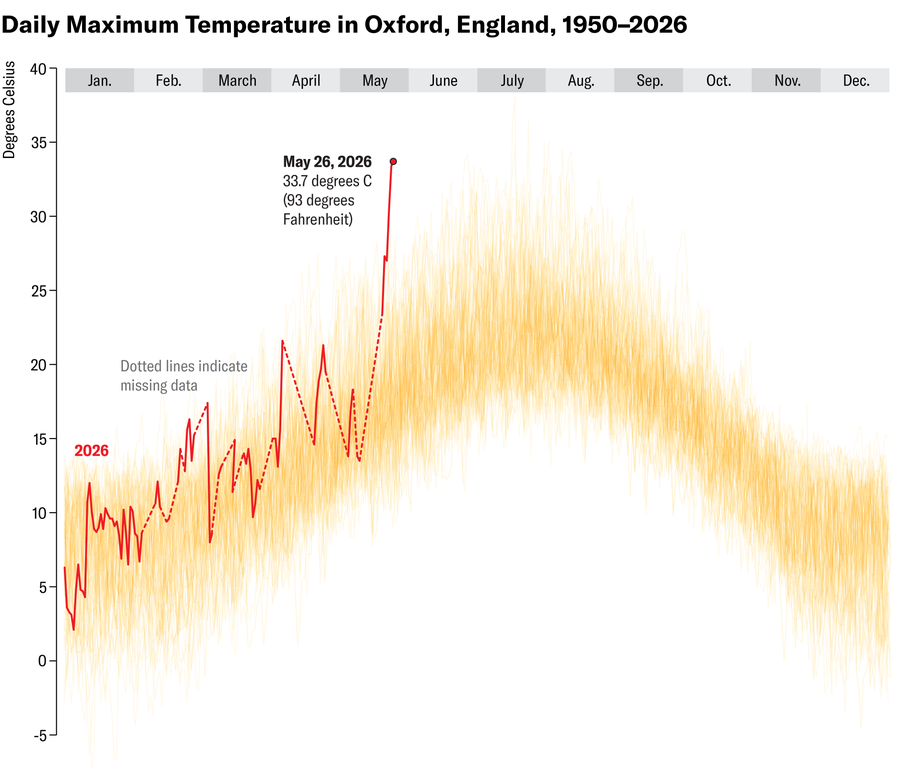
Stark new data show how much the spring heat wave that has been affecting much of Western Europe has shattered temperature records. The heat has been linked to 12 deaths in the U.K. alone. Three occurred on Wednesday and Thursday, when three teenage boys died in separate water incidents while they sought reprieve from temperatures that beat the previous records by several degrees in portions of the nation.
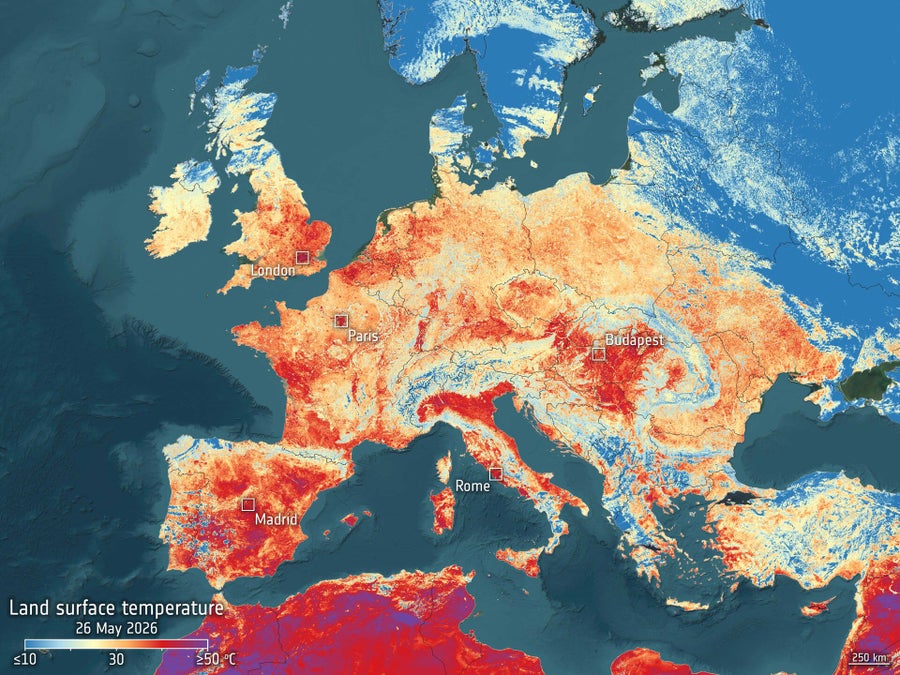
The gravity of the situation can be seen in an image captured by the European Space Agency’s Copernicus Sentinel-3 satellite, which is used to monitor surface temperatures, on May 26. The areas in red are indicative of temperatures well in excess of 30 degrees Celsius (86 degrees Fahrenheit) and include major European cities such as Madrid and Paris.
The heat wave has broken a “remarkable number” of records for temperature, the U.K.’s Met Office said in a statement. Some 23 weather stations across England, Wales, Scotland, and Northern Ireland have reported temperatures exceeding the previous U.K.-wide record of 32.8 degrees C (91 degrees F), which was set in 1922 and 1944. On Tuesday, a research station in London’s Kew Gardens recorded temperatures of 35.1 degrees C (95.2 degrees F), obliterating its previous record of 29.3 degrees C (84.7 degrees F) for the month.
Amanda Montañez; Source: Met Office, U.K.
.
At least seven other deaths in France, five from drowning, have also been tied to the sweltering conditions. May 26 was the hottest May weather in the country’s history, according to Météo-France, the French national weather service, with an average temperature of 24.9 degrees Celsius (76.8 degrees F). Two days later, daytime highs peaked at almost 40 degrees C (104 degrees F) in several regions.
“Such high temperatures have never been recorded in May since records began,” Météo-France said in a French-language statement.
The heat was bad enough to affect tennis’s French Open: top-ranked player Jannik Sinner was eliminated on Thursday after he took a medical time-out for cramping that was likely caused by dehydration.
The weather is being driven by a heat dome—a block of high pressure that traps hot air—hovering over Western Europe. But even with the heat dome factored in, temperatures have hit levels that are unusual at the peak of summer in several countries.
The heat seen since May 22 across much of France, Switzerland, Italy, Austria, Liechtenstein, Spain, Portugal, and the U.K. was likely made three to five times more likely because of the effects of climate change, according to Climate Central’s Climate Shift Index.
Recent experience suggest more deaths are likely: unlike in the U.S., where an estimated 90 percent of households are equipped with air-conditioning, Europeans lag behind at only 20 percent, according to the International Energy Agency. That can make high temperatures particularly dangerous on the continent—in 2025, a series of heat waves led to some 24,400 deaths, 16,500 of which were attributed to climate change, while more than 62,700 people died of heat-related causes the year before.
.
A map of temperatures across Europe captured by the Copernicus Sentinel-3 satellite on May 26, 2026. Contains modified Copernicus Sentinel data (2026), processed by ESA
Pensions aren’t as common as they used to be in the private sector, as more companies have shifted away from traditional pension plans in the past few decades.
According to the latest government data, only 15% of private-sector workers had access to defined benefit plans. Most employees now rely on 401(k)s and other similar retirement savings options.
Sponsored by employers or unions, pension plans offer a fixed and dependable income stream during retirement for life. They are also less risky than a 401(k) plan, as the investments are managed and insured by your company. Finally, pension plans have specific tax advantages that might make them more attractive to some folks.
That being said, some states are more tax-friendly than others when it comes to your pension. Here’s what you need to know to make the most out of your retirement savings.
Is my pension taxable?
When it comes to taxes, pensions can be a bit tricky. Generally speaking, pension income is taxable at the federal level, so you need to consider this when planning your retirement budget. For more information, see How the IRS Taxes Retirement Income.
However, as Kiplinger reports, taxes in retirement vary from state to state. For instance, some states tax pension income fully, while others offer partial or complete exemptions.
As you consider where you’d like to retire, you should know how your pension and other retirement income will be taxed in your state of choice. That way, you can avoid unwelcome surprises when it’s time to file your tax return.
Some states don’t tax Social Security
All this talk of pensions might have you wondering about states that tax Social Security.
As of 2026, eight states tax Social Security benefits, with rules varying by age and income, similar to pensions. Some states offer tax benefits for individuals under a certain age, while others provide exemptions based on adjusted gross income (AGI).
Meanwhile, many states either don’t tax Social Security income or offer specific exemptions.
16 states that don’t tax your pension income
Some states don’t tax your retirement income at all, but others might have certain exemptions on private or government pensions.
Here’s our list of the 16 states that will give you a tax break on some of your retirement income. (States are listed alphabetically.)
Click the link under the picture for the complete list of states
.
(Image credit: Getty Images)
.
.
Click the link belowfor the complete article (click link for list of states):
Oil prices, after falling last week, climbed on Monday as investors weighed a renewed exchange of military strikes between the United States and Iran against indications that both sides remain engaged in negotiations aimed at securing a lasting peace agreement.
Stocks were mixed, pulled higher in East Asia by the continued surge in interest in artificial intelligence, and lower in Europe.
The United States said it carried out a series of “self-defense” strikes in Iran over the weekend, the latest in a series of attacks in the past week. Iran’s Revolutionary Guard announced that it had struck a U.S. air base in retaliation for a U.S. attack on a communications facility.
Here is the latest:
Oil pushes higher.
Stocks are mixed.
Gasoline prices slide.
Oil pushes higher.
The price of Brent crude, the global benchmark for oil, rose nearly 3 percent to about $94 a barrel for August delivery, the most heavily traded contract.
West Texas Intermediate crude, the U.S. benchmark, jumped 3.5 percent to about $91 a barrel for July delivery, its most popular contract.
Stocks are mixed.
Futures on the S&P 500 pointed to a 0.3 percent increase when stocks resume trading in the United States on Monday.
Stocks in Asia, where countries import vast quantities of oil and gas, were mixed. South Korea’s benchmark KOSPI surged 4 percent higher, while Japan’s Nikkei 225 and Hong Kong’s Hang Seng index rose nearly 1 percent. Stocks in mainland China declined.
In Europe, stocks were mixed. The Stoxx 600, a broad-index that tracks the region’s largest companies, was down slightly. Germany’s Dax index was up 0.5 percent.
Gasoline prices slide.
Gas prices fell again on Monday, dropping to a national average of $4.32 a gallon, according to the AAA motor club. Still, the overall increase in gasoline prices has raised the cost for drivers by 45 percent since the war began.
Gas prices don’t move in lock step with crude, usually trailing increases or drops by a few days.
The average price of diesel pulled back three cents to $5.45 on Sunday, up 45 percent since the start of the war.
More on the Fighting in the Middle East
Iran’s Hard-Liners: A political fight is playing out in Iran, where the small but loud faction has used rallies, state media and private and public statements to try to undermine negotiations.
Eid al-Adha: From Iran to Gaza, the celebrations that mark the sacred Hajj pilgrimage to Mecca were muted as war dragged on and shortages of food and fuel roiled the region.
War Insurance: Many of the ships stranded in the Persian Gulf depend on coverage negotiated at Lloyd’s, the center of marine insurance for more than 300 years.
Iran’s Internet Blackout: Iran began restoring internet access for tens of millions of Iranians, a senior official said, lifting a blackout imposed after the United States and Israel launched military strikes on the country.
World Cup: The participation of Iran’s soccer team has been in doubt due to the war. With less than two weeks until the start of the tournament, Iran is continuing preparations at a training camp for three matches on the American West Coast.
.
How High Are Gas Prices Where You Live?
Here is a county-level look at where drivers are facing the highest costs.
Here’s one of the more unsettling schemes to recently emerge from Silicon Valley: human clones grown without a conscious brain. At least one biotech start-up reportedly has quixotic ambitions of breeding spare, unfeeling meat sacks as a way to clear the ethical path for procedures called “body transplants”—and, hypothetically, immortality. The idea seems to be that if these surrogate bodies are wholly unconscious, without even the faintest awareness of the world or themselves, then there’s no harm done.
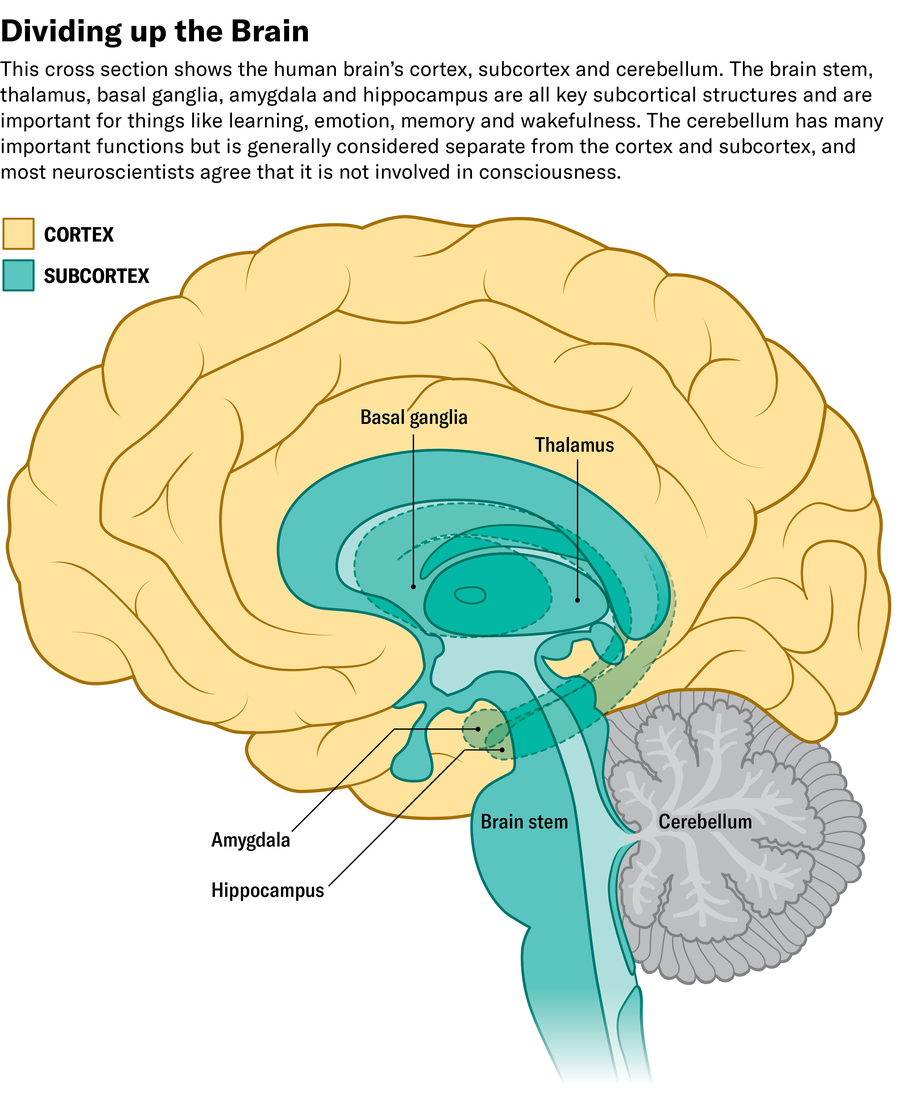
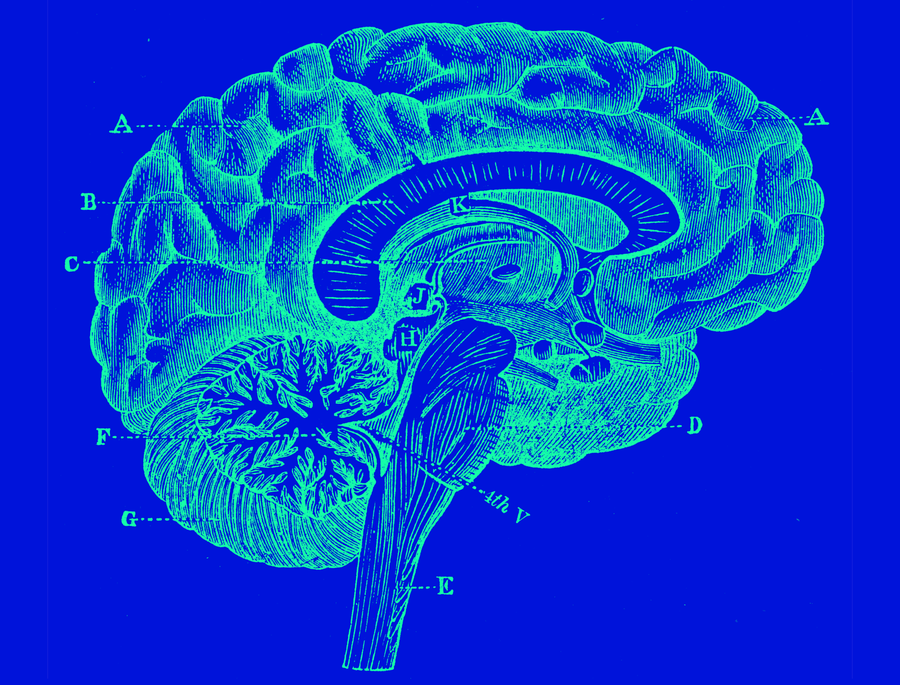
It isn’t clear how much—or how little—of a brain these clones would have, but they’d certainly lack a cerebral cortex, the wrinkly outer layer that’s responsible for sophisticated cognitive functions such as language, self-reflection, and abstract thought. Most theorists have long assumed that the cortex is where consciousness, or our subjective experience of the world, arises. If they’re right, an organism without one would have no thoughts, sensations, or emotions—no inner life at all.
But what if they’re wrong? A growing number of consciousness researchers are seriously considering the possibility that consciousness could originate deep within the brain’s most evolutionarily ancient realm: the subcortex. They argue that, just as astronomy once labored under a false geocentric model, consciousness research is in thrall to the mistaken notion that cortical processing lies at the center of all experience—the corticocentric model. The idea is “as old as any attempt to relate brain to mind” in neuroscience, says Mark Solms, a neuropsychologist at the University of Cape Town in South Africa. “It’s a foundational theory about where the mind is.”
Yet over the past several decades, Solms and others have marshalled counterevidence in hopes of forcing a Copernican upheaval in their field. The subcortical revolution, should it come to pass, would have massive implications for how we define and measure consciousness—and for which creatures we deem worthy of moral consideration.
The Brain in Two Parts
The cortex is neuroanatomy’s latest innovation, and it has done well for itself. Its size varies across species, but in humans and many other mammals, the cortex now swells to epic proportions—around 75 percent of brain mass, in our case—and envelops the older structures beneath it. The inmost region, the subcortex, holds more foundational responsibilities than the upstart upstairs: maintaining arousal, processing emotions, regulating the body, and relaying sensory information.
Amanda Montañez
The cortex and the subcortex are tightly interconnected. When most sensory information enters the brain, it flows through deep-brain relay points in the subcortex on its way up to the cortex, which then responds with feedback signals in an ongoing communication loop. Virtually all neuroscientists agree that, in healthy human brains, consciousness depends on this continuous dialogue between cortex and subcortex; it’s been clear for nearly a century that if certain parts of the subcortical brain stem get damaged, “the lights go out,” as Solms puts it. The question is whether the subcortex is merely a power supply keeping the cortex’s consciousness online, as corticalists hold, or whether it can sustain basic consciousness by itself.
Unconscious Zombies
The most intuitive evidence that the subcortex is more powerful than we thought is that many organisms without a cortex nevertheless seem conscious. We need not wait for Silicon Valley’s clones: children with a rare developmental disorder called hydranencephaly are already born sans cortex and, on that basis, are often classified as being in an unconscious vegetative state.
But in 2004, at what turned out to be a pivotal moment for how researchers think about the subcortex, Swedish neuroscientist Bjorn Merker joined five families that included children with hydranencephaly at Disney World.
He spent a week observing the children’s behavior. They giggled, played with toys, and generally showed “responsiveness to their surroundings in the form of emotional or orienting reactions to environmental events,” as he later wrote. They struck Merker as utterly normal, if developmentally delayed. Though they couldn’t speak and thus couldn’t report on their internal state, he simply could not believe he was in the presence of philosophical zombies—hypothetical beings that act like normal humans but have no felt experience.
Solms, following Merker’s example, also spent time around children with hydranencephaly. “The evidence that they are not ‘zombies’ is exactly the same evidence that your dog and your cat are not zombies,” he says. “They’re reporting by their behavior that they’re feeling things.”
Of course, the appearance of consciousness and consciousness itself are not the same thing. Strictly speaking, we can’t determine whether an organism is conscious unless it can somehow narrate its experience, leaving us to speculate about babies, brain organoids, and nonhuman animals. (What this means for large language models, which can narrate their “experience,” is another question.) So we seem to be at an impasse: How can nonverbal life-forms possibly prove they aren’t mindless automatons?
When language isn’t an option, most researchers will use other information to infer consciousness. Matthias Michel, a philosopher at the Massachusetts Institute of Technology, is prepared to attribute consciousness to other mammals, which have a cortex, and to birds, which have a functional equivalent in the pallium—but not to fish or insects, which do not.
There is a whirr, a flurry of dust, a pause as the grainy image recalibrates, and then a devastating blast.
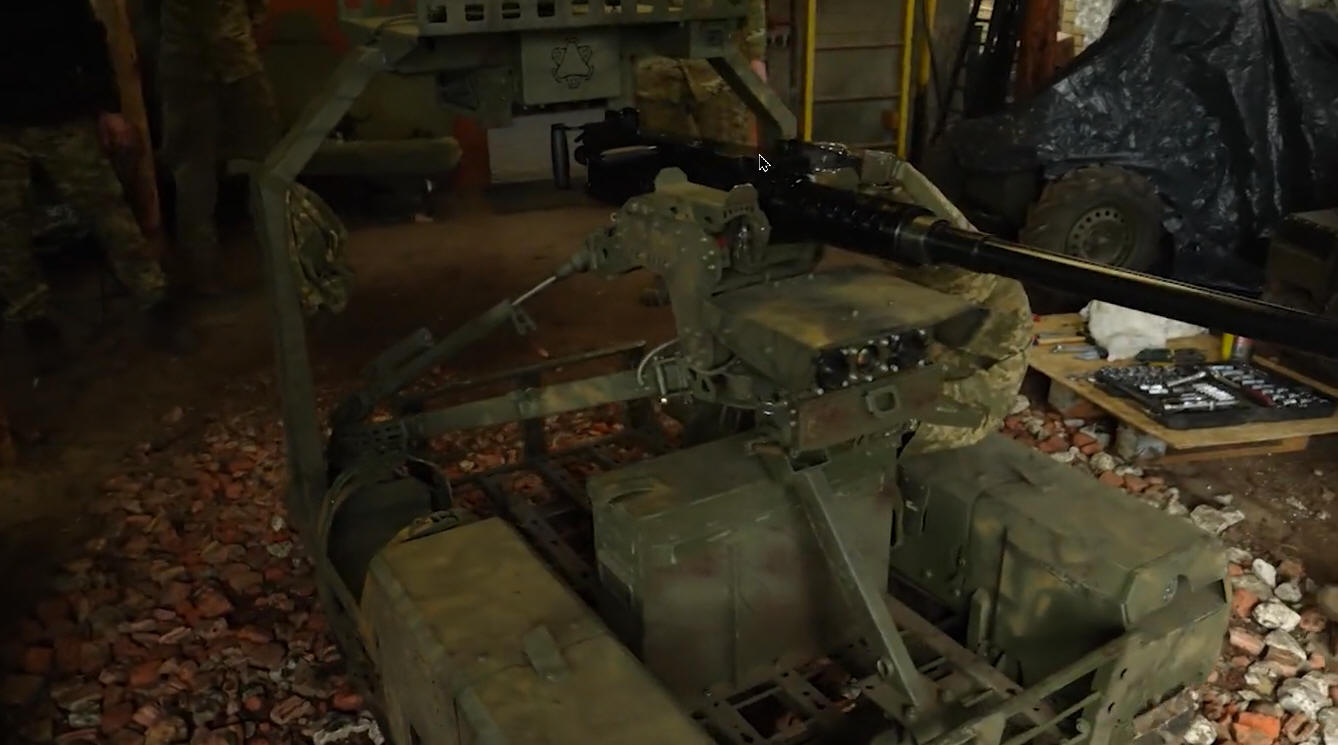
Underground, dozens of miles away, veterans of the most brutal urban battles in Ukraine, of Avdiivka and Bakhmut, are commanders in a new kind of killing – one they cannot feel, smell, or see up close. An entire mission directing six blasts against three Russian frontline targets in eastern Ukraine will involve no Ukrainian troops on the ground; the battle instead directed from gamer chairs, observed from reconnaissance drones above, run over dedicated livestreams.
Ukraine, suffering for months from manpower crises and uncertain backing from the United States, has undergone a remarkable evolution. Large parts of its war effort are now unmanned, the robots, drones, and remotely piloted tanks giving it a sudden, albeit fragile, edge over a lumbering and strained Russian invader. In April, President Volodymyr Zelensky claimed the first capture of a Russian position purely by robots and drones and added that since January, unmanned machines had conducted 22,000 missions.
Survival is the mother of invention, under the orange glow of computer processor fans and subtle overhead lighting. The unit here has learned from Russian prisoners of war that their enemy calls these robots – each carrying a huge payload of explosive on a four-wheel chassis – “silent death.” They can only hear their approach when they are 10 meters away – well within their blast radius.
The first robot stumbles on aluminum debris, its wheels furiously trying to get traction and move around the obstacle. Eventually, it navigates around the crater in its path, and from the observation drone above, the white heat of a small mushroom cloud flares up – the thermal footprint of the first blast. A second follows. The opening salvo of the assault is intended to distract the Russians and permit four other robots to get behind enemy lines.
The calculations here are simple: over 164 assaults, the “NC13” unit of the Third Assault Brigade has calculated they would have needed 2,300 troops for the same effect as their robot attackers. They would expect to have lost half their unit – dead or wounded – in the attacks, meaning the unmanned, doddering bombs on the screen in front of them are a technological advance that has saved a thousand Ukrainians.
“I couldn’t even imagine such a thing, back then”, said Bar, the unit’s deputy commander, of his time in brutal urban combat in Donbas. “But I realize that if such equipment had been available at the time… more of my comrades would have survived.”
For Mykola “Makar” Zinkevych, the unit’s commander, the new world is lacking. “Back then, war was somehow more, shall we say, masculine. It was your skills that mattered there – how well you’d trained, how disciplined you were, and so on. Now, technology decides everything. There is no going back.” It is simply a case of who can adapt and evolve faster in the world of unmanned, remote killing.
New warfare, new heroes
The Ukrainian approach is born of a manpower crisis, where a smaller population has been ravaged by a devastating toll from four years of Russian invasion. But Kyiv’s early embrace of drones, and the mass-industrialization of their accuracy and power, has begun to exact a defining toll on Moscow.
Ukraine’s policy now is to kill or injure 35,000 Russians a month, something they have achieved this year, the goal being to force the Kremlin into uncomfortable and unpopular recruitment from the urban center and the middle classes. An estimate from the British spy agency GCHQ released Wednesday put the total Russian death toll at 500,000, citing new information.
.
Technology is giving an advantage to Ukraine against a bigger enemy. CNN
For nearly three decades, Raquel Molina — an immigrant from El Salvador who has a valid Social Security number and permission to work in the United States — swabbed the toilets, wiped down the seats, and vacuumed the aisles of airplanes at Boston’s Logan International Airport.
But last summer, Ms. Molina, 65, was abruptly fired from her $19.75-per-hour cleaning job, alongside dozens of other immigrants who have long legally worked at Logan. Her supervisor told her she no longer had clearance to enter secure areas at the airport. The Trump administration had decided that only U.S. citizens, green card holders, and others with more permanent forms of residency should be granted access, according to a lawsuit that a labor union filed in federal court.
“I didn’t understand what was going on,” said Ms. Molina, who has been living legally in the United States under Temporary Protected Status, a humanitarian program that shelters people from troubled countries until they can safely return home. “I had worked hard at my job. This news put me in a state of shock.”
Her firing reflected a broader and methodically planned piece of President Trump’s hard-line strategy to make the United States less welcoming to those from other countries.
For more than a year, administration officials have sought to pull every bureaucratic lever possible to cut off immigrants — both documented and undocumented — from jobs, medical care, financial services, tax credits, and even from enrolling their children in day care. The goal has been to compel immigrants to leave the country, and, in the long run, to eliminate incentives that draw many people to the United States in the first place.
The initiative underscores the president’s ability to reshape immigration policy through executive orders and the vast power of federal regulations while sidestepping Congress. And it shows how the administration has pursued more creative — and lower-profile — tactics after Mr. Trump’s militarized deportation raids into major cities prompted political backlash earlier this year.
The changes range from structural shifts in the immigration system to small-scale, regulatory tweaks taking away jobs or services from just a few thousand people like Ms. Molina. In her case, the administration no longer considered T.P.S. a form of “authorized residency,” said Justin Long, a spokesman for Customs and Border Protection, meaning Ms. Molina could not be “given official government credentials and granted unescorted access to secure airport areas.”
The administration’s strategy, along with the threat of arrest and imprisonment, has helped drive many immigrants underground, intimidating them from filing taxes, visiting doctors and even traveling. So far, more than 116,000 people without permanent legal status have voluntarily left the United States, including some through a government self-deportation program, according to internal Department of Homeland Security figures reviewed by The New York Times. Many others are believed to have departed without telling the government.
“It has been immensely effective,” said Daniel Delgado, a former senior Department of Homeland Security official who served in both Republican and Democratic administrations and left government last year. “It’s truly widespread and far-reaching across all sides of the government. There are so many regulations that impact immigrant communities.”
.
A man and child exited the Annandale Immigration Court earlier this month in Annandale, Va. The Trump administration is pressuring immigrants to leave the country voluntarily by squeezing them financially. Credit…Salwan Georges for The New York Times
The Sheep Detectives is a mystery comedy directed by Kyle Balda and written by Craig Mazin, based on the 2005 novel Three Bags Full by Leonie Swann. The Sheep Detectives had preview screenings in May of 2026, and was released in the United States by Amazon MGM Studios and internationally by Sony Pictures Releasing International […]
In the world, human beings are facing various problems. People who are full of greed, anger, and ignorance are seen to be fighting with each other in words and deeds. As the fighting continues, various problems such as civil wars, wars of aggression, and wars of aggression are occurring. As world peace is being destroyed, humans are facing unbearable problems. Innocent children and women are not getting the rights they deserve and deserve. I can't think of one thing every time. What is it? The United Nations. If we look at the responsibilities and duties of the United Nations, I think it is not suitable for solving the problems that are happening in the world today. In fact, the United Nations and the World Security Council, such an organization must rule the world, must be able to give orders, and must have various ways to obey orders. There must be no organization that can influence more than that organization. There should be experts from each country. They can even dominate the superpowers like the US, China, and Britain. Only then will global peace be achieved quickly. Now, if a country with power develops more militarily, economically, or socially than its own country, then powerful countries will jealously seek out enemies and wage war. Or they will attack with fighter jets. In this, innocent people are losing their lives. No one understands the value of a life. You should think about how to achieve global peace by controlling these. If the US continues to be the permanent president of the UN, world peace will never be achieved. If you think carefully, no one sees that they are working for the common good, but for their own benefit, for the benefit of their own country. The permanent president of the UN and the Security Council has rejected this, As a young Rohingya, I have come to realize that only by electing the president and secretary from among the countries in the world through a secret ballot system and governing the world fairly can we achieve global peace. The United Nations and the Security Council are organizations in which any country must govern, give orders, and make them obey their orders. For example, only when a defendant is tried in court can we hold the leaders of the countries in check and control them, can we achieve global peace smoothly. Otherwise, it will not be easy for powerful countries to use various excuses to end this war every year, every year, for the benefit of themselves and their countries. No country's leaders pay any attention to the words of the United Nations and the Security Council. If we look at it in practice, look at the Rohingya issue. Myanmar is a small country. Even that country has been under siege for 8 years. What action can be taken? Why is the UN and the Security Council Powerless? Without such Power, how can the organization bring about global peace? Everyone should think about it. Whether there is a veto or a strong one, all countries in the world can only achieve global peace if they are subject to the UN and the Security Council. Seek peace in the quiet embrace of nature. Peace is an indispensable need of the human race. It is not as if one person can kill another person, and it is as if one country can attack another country, but instead of trying to build peace, we must try to destroy the peace now, and the world is getting hotter and is on the verge of collapse. I especially appeal to all the world experts to urgently try to bring about peace in all parts of the world. Mr, Noor Muhamed Arkhan Rohingya Youth Myanmar
Film and Writing Festival for Comedy. Showcasing best of comedy short films at the FEEDBACK Film Festival. Plus, showcasing best of comedy novels, short stories, poems, screenplays (TV, short, feature) at the festival performed by professional actors.



 (Image credit: Getty Images)


 THEPALMER/Getty Images