
Alabama Sheriff Advertises Planned Sale of Enslaved Black Man
Assorted human interest posts.
December 22, 2025
December 21, 2025
Business, Food For Thought, Human Interest, Political, Science, Technical amazon, business, Business News, current-events, Future, Hotels, human-rights, medicine, mental-health, research, Science, Science News, technology, Technology News, travel, vacation Leave a comment

Click the link below the picture
.
Amy Bies was recovering in the hospital from injuries inflicted during a car accident in May 2007 when routine laboratory tests showed that her blood glucose and cholesterol were both dangerously high. Doctors ultimately sent her home with prescriptions for two standard drugs, metformin for what turned out to be type 2 diabetes and a statin to control her cholesterol levels and the heart disease risk they posed.
The combo, however, didn’t prevent a heart attack in 2013. And by 2019, she was on 12 different prescriptions to manage her continued high cholesterol and her diabetes and to reduce her heart risk. The resulting cocktail left her feeling so terrible that she considered going on medical leave from work. “I couldn’t even get through my day. I was so nauseated,” she said. “I would come out to my car in my lunch hour and pray that I could just not do this anymore.”
Medical researchers now think Bies’s conditions were not unfortunate co-occurrences. Rather, they stem from the same biological mechanisms. The medical problem frequently begins in fat cells and ends in a dangerous cycle that damages seemingly unrelated organs and body systems: the heart and blood vessels, the kidneys, and insulin regulation, and the pancreas. Harm to one organ creates ailments that assault the other two, prompting further illnesses that circle back to damage the original body part.
Diseases of these three organs and systems are “tremendously interrelated,” says Chiadi Ndumele, a preventive cardiologist at Johns Hopkins University. The ties are so strong that in 2023 the American Heart Association grouped the conditions under one name: cardio-kidney-metabolic syndrome (CKM), with “metabolic syndrome” referring to diabetes and obesity.
The good news, says Ndumele, who led the heart association group that developed the CKM framework, is that CKM can be treated with new drugs. The wildly popular GLP-1 receptor agonists, such as Wegovy, Ozempic, and Mounjaro, target common pathology underlying CKM. “The thing that has really moved the needle the most has been the advances in treatment,” says Sadiya Khan, a preventive cardiologist at Northwestern University. Although most of these drugs come only in injectable forms that can cost several hundred dollars a week, pill versions of some medications are up for approval, and people on Medicare could pay just $50 a month for them under a new White House pricing proposal. The appearance of these drugs on the scene is fortunate because researchers estimate that 90 percent of Americans have at least one risk factor for the syndrome.
More than a century before Bies entered the hospital, doctors had noticed that many of the conditions CKM syndrome comprises often occur together. They referred to the ensemble by terms such as “syndrome X.” People with diabetes, for instance, are two to four times more likely to develop heart disease than those without diabetes. Heart disease causes 40 to 50 percent of all deaths in people with advanced chronic kidney disease. And diabetes is one of the strongest risk factors for developing kidney conditions.At present, around 59 million adults worldwide have diabetes, about 64 million are diagnosed with heart failure, and approximately 700 million live with chronic kidney disease.
The first inkling of a connection among these disparate conditions came as far back as 1923, when several lines of research started to spot links among high blood sugar, high blood pressure, and high levels of uric acid—a sign of kidney disease and gout.
Then, several decades ago, researchers identified the first step in these tangled disease pathways: dysfunction in fat cells. Until the 1940s, scientists thought fat cells were simply a stash for excess energy. The 1994 discovery of leptin, a hormone secreted by fat cells, showed researchers a profound way that fat could communicate with and affect different body parts.
Since then, researchers have learned that certain kinds of fat cells release a medley of inflammatory and oxidative compounds that can damage the heart, kidneys, muscles, and other organs. The inflammation they cause impairs cells’ ability to respond to the pancreatic hormone insulin, which helps cells absorb sugars to fuel their activities. In addition to depriving cells of their primary energy source, insulin resistance causes glucose to build up in the blood—the telltale symptom of diabetes—further harming blood vessels and the organs they support. The compounds also reduce the ability of kidneys to filter toxins from the blood.
Insulin resistance and persistently high levels of glucose trigger a further cascade of events. Too much glucose harms mitochondria—tiny energy producers within cells—and nudges them to make unstable molecules known as reactive oxygen species that disrupt the functions of different enzymes and proteins. This process wrecks kidney and heart tissue, causing the heart to enlarge and blood vessels to become stiffer, impeding circulation and setting the stage for clots. Diabetes reduces levels of stem cells that help to fix this damage. High glucose levels also prod the kidneys to release more of the hormone renin, which sets off a hormonal cascade critical to controlling blood pressure and maintaining healthy electrolyte levels.
At the same time, cells that are resistant to insulin shift to digesting stored fats. This metabolic move releases other chemicals that cause lipid molecules such as cholesterol to clog blood vessels. The constriction leads to spikes in blood pressure and heightens a diabetic person’s risk of heart disease.
The circular connections wind even tighter. Just as diabetes can lead to heart and kidney conditions, illnesses of those organs can increase a person’s risk of developing diabetes. Disruption of the kidneys’ renin-angiotensin system—named for the hormones involved, which regulate blood pressure—also interferes with insulin signaling. Adrenomedullin, a hormone that increases during obesity, can also block insulin signaling in the cells that line blood vessels and the heart in humans and mice. Early signs of heart disease, such as constricted blood vessel,s can exhaust kidney cells, which rely on a strong circulatory system to filter waste effectively.
The year before Bies’s car accident, when she was in her early 30s, her primary care doctor diagnosed her with prediabetes—part of metabolic syndrome—and recommended changes such as a healthier diet and more exercise. But at the time, the physician didn’t mention that this illness also increased her risk of heart disease.
Not seeing these connections creates dangers for patients like Bies. “What we’ve done to date is really look individually across one or two organs to see abnormalities,” says nephrologist Nisha Bansal of the University of Washington. And those narrow views have led doctors to treat the different elements of CKM as separate, isolated problems.
For instance, doctors have often used clinical algorithms to figure out a patient’s risk of heart failure. But in a 2022 study, Bansal and her colleagues found that one common version of this tool does not work as well in people with kidney disease. As a result, those who had kidney disease—who are twice as likely to develop heart disease as are people with healthy kidneys—were less likely to be diagnosed and treated in a timely manner than those without kidney ailments.
.
 Jennifer N. R. Smith
.
.
Click the link below for the complete article:
.
__________________________________________
December 21, 2025
Business, Food For Thought, Human Interest, Political, Science, Technical amazon, business, Business News, current-events, Future, Hotels, human-rights, medicine, mental-health, research, Science, Science News, technology, Technology News, travel, vacation Leave a comment

Click the link below the picture
.
Key Points
- Today’s teens are drinking and smoking less, but many are spending more time online, where risky behaviors can be harder for parents to spot.
- Experts say this shift from in-person rebellion to digital risk-taking may leave kids more isolated and struggling with anxiety and loneliness.
- Parents can help by staying connected to their child’s online world, setting clear screen limits, and encouraging face-to-face friendships and activities.
If you ever snuck home smelling like cheap wine and cigarettes in an act of teenage rebellion, well, you might be showing your age. Research suggests substance abuse isn’t the vice it once was for teenagers.
According to new data from consumer research platform Attest, 20% of 15- to 16-year-olds have tried alcohol, down from 71% of 10th graders in 2000. The same survey, based on results from 1,000 U.S. parents, revealed that cigarette and drug use is also lower, with 14% and 6% of teens trying them, respectively. Meanwhile, 44% of 10th graders in 2000 had tried marijuana, according to the report.1
While these figures are parent-led (and therefore potentially conservative), it’s reflective of an overall decrease in trends of substance use, says Joel Stoddard, MD, child and adolescent psychiatrist at Children’s Hospital Colorado. Previous research confirms substance use among adolescents is on the decline.2
But experts warn this doesn’t necessarily mean teenagers are making healthier choices. In fact, our youngest teens, Generation Alpha—those born between 2010 and 2024—as well as older ones, could be at risk of something else insidious.
“The rebellion has moved online, and it’s much harder for adults to see,” explains Saba Harouni Lurie, LMFT, ATR-BC, family therapist and owner and founder of Take Root Therapy. “When I was younger, rebellion was visible. Now, a teen can sit in their room looking perfectly compliant while they’re engaging in all kinds of boundary-pushing behavior on their phone.”
So, what does this mean for parents? Experts say there are a few things they need to be aware of.
A Generational Change
The new study is part of a bigger, generational picture. And it’s global.
For example, a recent study into more than 23,000 Australians by Flinders University found Gen Z (born between 1997 and 2012) are almost 20 times more likely to say “no” to alcohol compared to Baby Boomers (born between 1946 and 1964).3
While fewer teens engaging in substance use sounds like great news, Lurie says Gen Alpha may be avoiding one set of risks, while becoming vulnerable to another.
“What concerns me as both a clinician and a parent is that while substance use has declined, so has in-person socialization,” she says.
Teens are going out less, spending far less time with friends in person, and engaging in fewer unstructured social activities.
“So while the reduction in risky behavior is positive, I’m not sure we can conclude that Gen Alpha is simply choosing healthier lifestyles,” says Lurie.
Mackenzie Sommerhalder, PhD, assistant professor in child and adolescent psychiatry at Johns Hopkins School of Medicine, agrees, saying, “One might conceptualize increased use of social media and artificial intelligence (AI) as risk-taking behavior. The negative side-effects of these tools on adolescent development are well known, and yet adolescents continue to engage with the tools.”
.
:max_bytes(150000):strip_icc()/PARENTS-gen-alpha-rebels-70bbb50c365d49318de70fd56dacefc5.jpg) Photo: Parents/GettyImages/martin-dm
Photo: Parents/GettyImages/martin-dm
.
.
Click the link below for the complete article:
.
__________________________________________
December 21, 2025
Business, Food For Thought, Human Interest, Political, Science, Technical amazon, business, Business News, current-events, Future, Hotels, human-rights, medicine, mental-health, research, Science, Science News, technology, Technology News, travel, vacation Leave a comment

Click the link below the picture
.
More than a dozen photos — including one featuring President Trump — were removed without explanation from the large collection of files connected to the investigations of Jeffrey Epstein that the Justice Department released on Friday.
A total of 16 photos were taken down at some point on Saturday from the website that the department created to house files — among them, one of the few that contained Mr. Trump’s image. It was a photo of a credenza in Mr. Epstein’s Manhattan home, with an open drawer containing other photos, including at least one of Mr. Trump.
The Justice Department did not explain on the site why the images had been removed, and a department spokesman did not respond to a message seeking comment.
Democrats on the House Oversight Committee immediately seized on the missing photo of Mr. Trump, reposting it on social media and asking Attorney General Pam Bondi if it was true that the image had been removed.
“What else is being covered up?” the post said. “We need transparency for the American public.”
Twelve of the other missing photos pictured the infamous massage room on the third floor of Mr. Epstein’s mansion in New York. The room, which sat down the hall from Mr. Epstein’s bedroom, was where investigators say that many of his sexual assaults occurred — some of them against teenage victims. The shelves in the room were stocked with lubricants and a silver ball and chain, among other things.
The massage room images that were removed depicted paintings and photographs of nude women, some with their faces redacted. But other images and artwork featuring nude women remained on the site. And some photos of the massage room — including the nude imagery — also remained.
The missing photos were part of a vast collection of materials that the Trump administration was compelled to release after the passage last month of a law mandating that the Justice Department disclose all files in its possession related to Mr. Epstein, a convicted sex offender who died in jail in 2019 while awaiting trial on charges of trafficking minors.
Despite mounting expectations, the released files, which included thousands of photographs and investigative documents, were something of an anticlimax. They added little to the public’s understanding of Mr. Epstein’s conduct, and also did not provide much additional insight into his connections to wealthy and powerful businessmen and politicians who associated with him.
Mr. Trump has, uncharacteristically, said nothing about the files, which contained far more material about one of his political adversaries, former President Bill Clinton, than about him. Still, the Justice Department has said that more disclosures from its files about Mr. Epstein would be coming in the next few weeks.
On Saturday, the department released a second tranche of files that included transcripts from the closed-door grand jury proceedings in the federal investigations into Mr. Epstein and his close associate, Ghislaine Maxwell.
While those documents had never before been made public, they added little to what has already been known about the cases.
.
 A photo taken of a credenza in Jeffrey Epstein’s home — which contained at least one image of President Trump — was among the material removed from the site. Credit…Department of Justice
.
.
Click the link below for the complete article:
.
__________________________________________
December 21, 2025

At this time of year people are busy celebrating Christmas, as so many do not question why they do what they do and where it all originated. When we celebrate our birthday we know the date of our birth, how is it Christmas is held on a date someone picked out. Did our Lord forget […]
Why isn’t the word Christmas in the bible since so many celebrate it as gospel truth?
December 21, 2025
Bugonia is a black comedy directed by Yorgos Lanthimos and written by Will Tracy. An English-language remake of the 2003 South Korean film Save the Green Planet! by Jang Joon-hwan. Bugonia premiered in the main competition of the 82nd Venice International Film Festival and follows two young men who kidnap a powerful CEO, suspecting that […]
BUGONIA (2025) – My rating: 7.5/10
December 20, 2025
Business, Food For Thought, Human Interest, Political, Science, Technical amazon, business, Business News, current-events, Future, Hotels, human-rights, medicine, mental-health, research, Science, Science News, technology, Technology News, travel, vacation Leave a comment
Click the link below the picture
.
By the time Maggie May, an Arkansas resident in her 30s, was admitted to a psychiatric clinic in 2024, she had been struggling for years with atypical anorexia nervosa, an eating disorder that leads to severe food restriction and profound disturbances in body image. (Her name has been changed for privacy.) She had already tried traditional interventions with a psychotherapist and a dietitian, but they had failed to improve her condition. So when May heard about a trial of a new and unconventional therapy, she jumped at the opportunity.
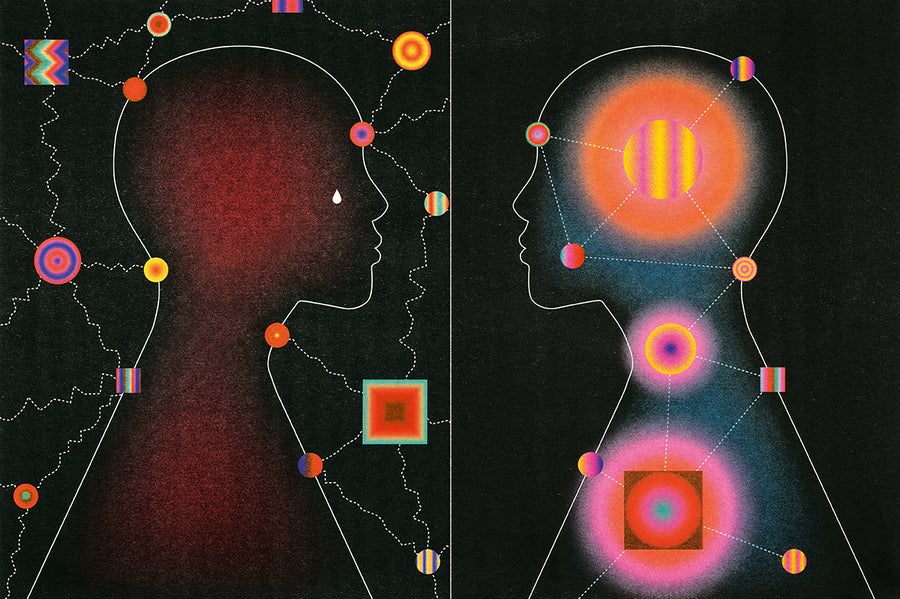
The treatment was unusual in that, alongside talk therapy, May underwent several sessions in a sensory-deprivation chamber: a dark, soundproof room where she floated in a shallow pool of water heated to match the temperature of her skin and saturated with Epsom salts to make her more buoyant. The goal was to blunt May’s external senses, enabling her to feel from within—focusing on the steady thudding of her heart, the gentle flow of air in and out of her lungs, and other internal bodily signals.
The ability to connect with the body’s inner signals is called interoception. Some people are better at it than others, and one’s aptitude for it may change. Life events can also bolster or damage a person’s interoceptive skills. Sahib Khalsa, a psychiatrist and neuroscientist at the University of California, Los Angeles, and his colleagues think a disrupted interoception system might be one of the driving forces behind anorexia nervosa. So they decided to repurpose a decades-old therapy called flotation-REST (for “reduced environmental stimulation therapy”) and launched a trial with it in 2018. They hypothesized that in people with anorexia and some other disorders, an underreliance on internal signals may lead to an overreliance on external ones, such as how one looks in the mirror, that ultimately causes distorted body image, one of the key factors underlying these conditions. “When they’re in the float environment, they experience internal signals more strongly,” Khalsa says. “And having that experience may then confer a different understanding of the brain-body relationship that they have.”
Studies have implicated problems with this inner sense in a wide variety of conditions, including anxiety disorders, post-traumatic stress disorder, and borderline personality disorder. Some researchers and clinicians now think that problems in interoception might contribute to many mental illnesses. Alongside this research, which itself is complicated by challenges in testing design and by a less than clear understanding of interoception, other groups are also developing therapies that aim to target this inner sense and boost psychological well-being.
This work is circling in on a central message: the body and mind are inextricably intertwined. “We have always thought about [mental health conditions] as being in the brain or the mind,” says Camilla Nord, a professor of cognitive neuroscience at the University of Cambridge. But clinicians have long noted that people with mental illness frequently report physical symptoms such as abnormalities in heartbeats, breathing, and appetite, she adds.
The idea that the body can influence the mind dates back centuries. In the 1800s, two psychologists on opposite ends of the globe independently proposed a then novel idea: emotions are the result of bodily reactions to a specific event. Called the James-Lange theory after its founders, American psychologist William James and Danish doctor Carl Lange, this view ran counter to the long-dominant belief that emotions were the cause, not a consequence, of corresponding physiological changes.
Although this notion has garnered critics, it inspired a slew of studies. The 1980s saw a surge of interest in the role of physiological signals in panic disorders. Researchers discovered that they could bring on panic attacks by asking people to inhale carbon dioxide–enriched air, which can increase breathing rates, or by injecting them with isoproterenol, a drug that increases heart rate.
Breathing rate can affect how someone perceives the intensity and unpleasantness of pain.
These findings led some psychologists to suggest that physical sensations were the primary trigger of panic attacks. In the early 1990s, Anke Ehlers, a psychologist then at the University of Göttingen in Germany, and her team examined dozens of people with panic disorders and reported that these patients were better able to perceive their heartbeats than healthy individuals—and that this greater awareness was linked to more severe symptoms. On top of that, a small, preliminary study by Ehlers of 17 patients revealed that those who were more skilled at this task were more likely to relapse and start having panic attacks again. These observations hinted at a two-way dynamic: not only could physical sensations within the body cause psychological effects, but the ability to perceive and interpret those signals—in other words, one’s interoceptive ability—could have a profound influence on mental health.
Over the years, a growing body of evidence has indicated that interoception plays an important role in shaping both emotions and psychological health. A large chunk of this work has focused on the heart. With every heartbeat, blood rushes into the arteries and triggers sensors known as baroreceptors, which shoot off messages to the brain conveying information about how strongly and rapidly the heart is beating.
In one pivotal 2014 study, Hugo Critchley, a neuropsychiatrist at Brighton and Sussex Medical School in England, and his team reported that this process can affect a person’s sensitivity to fear. By monitoring volunteers’ heartbeats while they viewed fearful or neutral faces, they found that people detected fearful faces more easily and judged them as more intense when their heart was pumping out blood than when it was relaxing and refilling. But participants with higher levels of anxiety often perceived fear even when their hearts relaxed.
Researchers have also demonstrated that bodily signals such as breathing patterns and gut rhythms can influence emotional reactions. People are quicker to react to fearful faces while breathing in than while breathing out, and breathing rate can affect how someone perceives the intensity and unpleasantness of pain.In more recent work, some neuroscientists have turned their attention to the gastrointestinal system. In 2021, Nord and her colleagues discovered that people given a dose of an antinausea drug that affects gut rhythms—processes within the stomach that help digestion—were less likely to look away from pictures of feces than they normally would have been. These disgust-related visceral signals, Nord speculates, may be relevant to eating disorders. “It’s possible that some of these signals contribute to feeling aversion to signals of satiety, making satiety very uncomfortable, a feeling you don’t want to feel,” she says.
.
 DTAN Studio
.
.
Click the link below for the complete article:
.
__________________________________________
December 20, 2025
Business, Food For Thought, Human Interest, Political, Science, Technical amazon, business, Business News, current-events, Future, Hotels, human-rights, medicine, mental-health, research, Science, Science News, technology, Technology News, travel, vacation Leave a comment

Click the link below the picture
.
The justices of the US supreme court – even its conservatives – have traditionally valued their institution’s own standing. John Roberts, the current US chief justice, has always been praised – even by liberals – as a staunch advocate of the court’s image as a neutral arbiter. For decades, Americans believed the court soared above the fray of partisan contestation.
No more.
In Donald Trump’s second term, the supreme court’s conservative supermajority has seized the opportunity to empower the nation’s chief executive. In response, public approval of the court has collapsed. The question is what it means for liberals to catch up to this new reality of a court that willingly tanks its own legitimacy. Eager to realize cherished goals of assigning power to the president and arrogating as much for itself, the conservative justices seemingly no longer care what the public or the legal community think of the court’s actions. Too often, though, liberals are responding with nostalgia for a court that cares about its high standing. There is a much better option: to grasp the opportunity to set right the supreme court’s role in US democracy.
Attention to the body’s legitimacy surged in the decades after the extraordinary discussion on the topic in Planned Parenthood of Southeastern Pennsylvania v Casey – the 1992 case that memorably preserved the abortion rights minted in Roe v Wade despite recent conservative additions to the court. “The Court’s power lies in its legitimacy,” former justices Anthony Kennedy, Sandra Day O’Connor and David Souter explained in their joint opinion, “a product of substance and perception that shows itself in the people’s acceptance of the Judiciary as fit to determine what the Nation’s law means and to declare what it demands”. The fact of popular acceptance of the institution’s role was itself a constitutional and legal concern.
Compared with the prior quarter-century, when they angled for just one justice (often Kennedy) to swing to their side, it was already clear as Trump’s first term ended how much was going to change with Amy Coney Barrett’s conservative substitution for Ruth Bader Ginsburg. Yet liberal justices generally proceeded as if their conservative peers would continue to take their own institution’s legitimacy seriously. They focused on warning conservatives against further eroding it. The dissent in Dobbs v Jackson Women’s Health Organization, which removed the federal right to abortion, is a classic example. The liberal justices lionized Kennedy and other conservatives for refusing to overturn Roe v Wade out of the need they cited in Casey to maintain the supreme court’s image.
That was then. In Trump’s second term, the court has ceded to him near total control over federal spending, even as the president is now openly threatening to withhold funds from “blue” states and projects not aligned with administrative “priorities. Authorized by the court to engage in racial profiling, masked federal agents continue to descend upon “Democrat-run” cities, subjecting Latinos and now Somalis to ongoing abuse.
Most recently, the court hinted at its plan to declare most, if not all, “independent” agencies unconstitutional, allowing Trump to fire members of the Federal Trade Commission and the National Labor Relations Board – though Chief Justice Roberts did suggest that the Federal Reserve might be different, drawing sighs from legal commentators (and sighs of relief from investors). The conservative justices appear wholly unbothered by the howls that the court is no more than a partisan institution, turning their destructive attention next to what remains of the Voting Rights Act.
Yet with the conservative justices shattering the supreme court’s non-partisan image during Trump’s second term, liberals are not adjusting much. The liberal justices – Ketanji Brown Jackson, Elena Kagan, and Sonia Sotomayor – have become much more aggressive in their dissents. But they disagree with one another about how far to concede that their conservative colleagues have given up any concern for institutional legitimacy. Encouragingly, Jackson pivoted to “warning the public that the boat is sinking” – as journalist Jodi Kantor put it in a much-noticed reported piece. Jackson’s fellow liberals, though, did not follow her in this regard, worrying her strategy of pulling the “fire alarm” was “diluting” their collective “impact”.
Similarly, many liberal lawyers have focused their criticism on the manner in which the supreme court has advanced its noxious agenda – issuing major rulings via the “shadow” docket, without full-dress lawyering, and leaving out reasoning in support of its decisions.
What appears to matter for such respectful institutionalists, most prominently the liberal professor Stephen Vladeck, is that the errant, reactionary justices rationalize their disastrous rulings. But aside from the fact that few Americans read their opinions in the first place, the objection presupposes that a more enlightened despotism ought to be the goal – that the justices trashing the respect Americans once had for them merely need to explain themselves, instead of giving up their power to inflict so much ongoing harm.
Some liberals worry that concluding the supreme court is beyond redemption is too close to “nihilism” about the constitution, or even about law itself. In the aftermath of Trump’s re-election, Professor Kate Shaw remarked: “I don’t think abandoning the constitution in the course of abandoning institutions is the right way forward or is something that we can survive.” Vladeck cautioned similarly against “doomerism”, warning the “rule of law” in the United States might “struggle to survive” the “emergence of any kind of popular consensus that law increasingly doesn’t matter”.
Such qualms suggest some can’t imagine an alternative to a legitimate supreme court, even once the institution itself has abandoned that role. Much like in the early 20th century, Americans today are responding to a series of institutional failures with an extended period of constitutional rethinking. Tracing many of those failures to the undemocratic features of our written constitution – the electoral college and the Senate, most notably – reformers are proposing creative solutions or workarounds that might move us in the direction of an actual democracy.
Similarly, progressives are increasingly converging on the idea of both expanding and “disempowering” federal courts. Attentive to the reality that the supreme court especially, is not and rarely has been their friend, left-leaning advocates are finding ways to empower ordinary people, trading the hollow hope of judicial power for the promise of popular rule.
To label as “nihilists” those sketching an alternate, more democratic future is, in other words, not only mistaken but outright bizarre. Rather than adhere to the same institutionalist strategies that helped our current crisis, reformers must insist on remaking institutions like the US supreme court so that Americans don’t have to suffer future decades of oligarchy-facilitating rule that makes a parody of the democracy they were promised.
In Trump’s second term, the Republican-appointed majority on the supreme court has brought their institution to the brink of illegitimacy. Far from pulling it back from the edge, our goal has to be to push it off.
Ryan Doerfler and Samuel Moyn teach law at Harvard and Yale
.
 ‘The supreme court is at the brink of illegitimacy. Far from pulling it back from the edge, our goal has to be to push it off. Photograph: Stefani Reynolds/AFP via Getty Images
.
.
Click the link below for the complete article:
.
__________________________________________
¡Bienvenido de vuelta viajero!
so looking to the sky ¡ will sing and from my heart to YOU ¡ bring...
CEO and Founder of Nsight Health
https://www.tangietwoods
Catholic News, Prayers, HD Images, Rosary, Music, Videos, Holy Mass, Homily, Saints, Lyrics, Novenas, Retreats, Talks, Devotionals and Many More
Decoding Power. Defying Narratives.
A creative collaboration introducing the art of nature and nature's art.
The Home Of Entertainment News, Reviews and Reactions
Hollow Earth Society
•Whenever you are confronted with an opponent, conquer him with love.(Gandhi)
Algotrader at TRADING-CLUBS.COM
Film and Writing Festival for Comedy. Showcasing best of comedy short films at the FEEDBACK Film Festival. Plus, showcasing best of comedy novels, short stories, poems, screenplays (TV, short, feature) at the festival performed by professional actors.
Peace. Tranquility. Insanity.
Take a ride on the wild side
Découvre des musiques prometteuses (principalement) dans la sphère musicale française.
No tiene que Ser una Pesadilla.
Life in Kana-text (er... CONtext)
Tracking money, power, and meaning across borders.
Where feelings meet metaphors and make questionable choices.
Finding hope and peace through writing, art, photography, and faith in Jesus.
Eyasu
The Community for Wounded Healers: Former Medical Students, Disabled Nurses, and Faith-Fueled Pivots
love each other like you're the lyric to their music
Comprendere il mondo per cambiarlo.
Mid-Life Ponderings
Travel,Tourism, Life style "Now in hundreds of languages for you."
I speak the honest truth. I share my honest opinions. I share my thoughts. A platform to grow and get surprised.
User-generated ratings for ethical consumerism
Travel and Lifestyle Blog
Questo è un piccolo angolo di poesie, canzoni, immagini, video che raccontano le nostre emozioni
“Log your journey to success.” “Where goals turn into progress.”
scrivo per dare forma ai silenzi e anima alle storie che il mondo dimentica.
“Dream deeper. Believe bolder. Live transformed.”
Vichar, Motivation, Kadwi Baat ( विचार दर्शनम्)
Traum zur Realität
Savor. Style. See the world.
معا نحو النجاح
Best Forex Broker Ratings & Reviews
art, writing and music by James McFarlane and other musicians
living life in conscious reality
Freelance poetry writing
Peace 🕊️ | Spiritual 🌠 | 📚 Non-fiction | Motivation🔥 | Self-Love💕
 James' World 2