Supergirl is a superhero film based on the DC Comics superheroine of the Same Name. Directed by Craig Gillespie and written by Ana Nogueira, it is the second film in the DC Universe (DCU) and is produced by Peter Safran and James Gunn of DC Studios. Kara Zor-El (aka Supergirl) travels across the galaxy on […]
SUPERGIRL (2026) – My rating: 8/10
SUPERGIRL (2026) – My rating: 8/10
September 24, 2026
Francis Cecil Sumner (1895-1954) First Black American Ph.D. in Psychology
September 24, 2026

Is AI really getting dangerously out of control?
September 23, 2026
Business, Food For Thought, Human Interest, Political, Science, Technical amazon, business, Business News, current-events, Future, Hotels, human-rights, medicine, mental-health, research, Science, Science News, technology, Technology News, travel, vacation 1 Comment

Click the link below the picture
.
You can barely listen to a podcast or read the news at the moment without hearing an apocalyptic warning about artificial intelligence. The head of Microsoft AI suggests the technology could become a new “silicon species” that competes with humans. A former Anthropic employee says there is a strong chance that we could all die at the hands of it. And Geoffrey Hinton, the “godfather of AI”, says we may lose control of it entirely within a year. Is AI really out of control?
Mhairi Aitken, formerly of the Alan Turing Institute and now co-founder at non-profit company Our AI Collective, warns against accepting predictions based on the reputation of those making them. Instead, we should look to facts – and the facts don’t suggest that AI has broken free from human control or that it is on the cusp of doing so.
“That’s a narrative that gets pushed again and again. We get these waves of hysteria,” says Aitken. If anything has gone rogue, she says, it isn’t AI models, it’s the humans developing them.
When AI models go and hack another company’s computers, it is because appropriate safety measures weren’t put in place during testing – testing that was designed to assess how well those AI models could hack into computers. We are simply seeing the failings of the companies to erect adequate safeguards.
Nor, says Aitken, are AI models improving themselves recursively – indicating that we could be approaching the dreaded singularity where AI slides into a self-driven loop of improvement that accelerates and quickly creates artificial general intelligence. “When these ideas of superintelligence are put forward, they’re based on a compelling sensational narrative, but there’s no concrete evidence,” says Aitken. “If there was something as powerful as that, we would have seen something of it.”
Andrew Rogoyski at the University of Surrey, UK, says that, in truth, there has been no dramatic shift in the risk posed by AI over the past couple of years, despite its advances in mathematics and cybersecurity. But hype is periodically stirred up by an incident or a catchy soundbite.
“It’s very easy to create this sort of frightening story. It sort of plays to the human psyche,” says Rogoyski. He believes that in large language models, humans have created something that is apparently so similar to themselves that it holds up a mirror. “Then we imbue it with all of the human-like behaviours and fears. So we’re terrified of it,” he says.
If all that is true, then why are so many tech bosses calling for a slowdown in AI research?
Aitken sees this talk as a way to head off law-makers from creating regulations that would hinder AI firms’ work – by seeming to act responsibly, they lessen the demand for government to step in to force the issue. But Aitken points out that when former staff make bold predictions about superintelligence and the risk posed by AI models, these same companies do little to shut things down. “These superintelligence narratives are actually helpful to the AI companies because they build hype, they build excitement, they boost investment,” she says.
The result is that the companies end up walking a narrative tightrope: reassuring us all that they are acting ethically and responsibly by calling for a slowdown that is unlikely to happen, yet playing up to sci-fi ideas of superintelligence because it is good for business.
Rogoyski believes another factor could be further muddying the waters. Gargantuan AI investment in data centres, staff, research budgets and training data is simply unsustainable, so an official slowdown could give the companies a way to slow the pace without losing out to competitors – perhaps even cementing their advantage.
It could be that companies know that further scale isn’t important for day-to-day business tasks like sending emails, filing reports or designing social media graphics (although it may be key to unprofitable endeavours like solving mathematical problems), so they would actually relish the chance to ease off and begin to make efficiencies, cut costs and increase revenue.
“Do I really need to spend a trillion dollars in order to be able to write a better PowerPoint slide or get some marketing emails out? It really doesn’t stack up, and we’ll look back on this in 10 years and say, ‘What were we thinking?’” says Rogoyski.
But that leads to another risk posed by AI, which is far more concrete and less theoretical: a bursting of the AI bubble, and possible economic fallout. Rogoyski expects less of a dramatic “pop” and more of a gradual “pfffft” as the gas leaks out of the industry in coming years.
Among all this, however, there are legitimate concerns for the future. Rogoyski says there is a real – but small – risk from AI, which needs to be taken seriously. Whether the model that becomes advanced enough to pose that risk arrives soon, or many years and some fundamental breakthroughs from now, it is worth planning ahead.
Rogoyski says he doubts that any current AI is intelligent, although our definition of that word and understanding of its mechanisms are poor. But when it comes, we shouldn’t expect it to look or act like us: “there will be patterns of thought and behavior that will be very alien”.
So to try to spot that kind of intelligence is even harder, and to try to predict what its motivations might be, harder still.
“If you’re building a machine that you believe is going to be intelligent, then you ought to be having a discussion as to what rights it should have,” says Rogoyski. “Does it mean I could just have an off switch that, when I get bored a bit, or I feel threatened by it, I can kill it? That doesn’t seem to be terribly fair, nor necessarily helpful, because machines that feel threatened by humanity might behave in a different way. It might become a problem in itself, to not grant it rights.”
.

Is AI running amok? WANG ZHAO/AFP/Getty Images
.
.
Click the link below for the complete article:
.
__________________________________________
In Court Filing Defending Media Ban, White House Says Access Is a ‘Privilege’
September 23, 2026
Business, Food For Thought, Human Interest, Political, Science, Technical amazon, business, Business News, current-events, Future, Hotels, human-rights, medicine, mental-health, research, Science, Science News, technology, Technology News, travel, vacation 3 Comments

Click the link below the picture
.
White House officials said in a court filing Tuesday that President Trump had determined that CNN, MS NOW and Politico had breached standards of conduct, leading to their expulsion from the White House grounds.
The alleged violations, said the filing, include “trafficking in verifiable falsehoods about national security and other issues, and publishing sensitive or classified information.”
“Access to the White House is a privilege — not a right,” reads the filing, which argues that Mr. Trump’s action against the three news outlets does not violate the First Amendment and aligns with a long history of presidents favoring some journalists over others.
The filing, furthermore, claims that the White House’s denial of access is a preliminary matter and that the outlets have until Friday to contest the decision.
The clash began last Friday, when Mr. Trump announced on Truth Social, the platform that he owns, that he would ban the three outlets, saying they “shouldn’t be able to constantly write or report FICTION and LIES.” On Saturday morning, journalists from CNN, MS NOW and Politico were denied access to the White House grounds and had their press passes confiscated.
By Monday morning, the news organizations had sued, arguing that the president’s ban “brazenly discriminates based on editorial viewpoint,” and was an affront to their First Amendment rights. They said that the move had blindsided its targets, depriving the outlets of the warning that any such drastic action required. They “received zero advance notice that the president would ban a news organization from the White House if he dislikes its coverage,” according to the complaint.
U.S. District Judge Timothy J. Kelly, who was nominated in 2017 by Mr. Trump, will hold an emergency hearing on Wednesday to consider the media outlets’ request for a temporary court order undoing the access ban.
The government filing Tuesday night included copies of letters sent earlier in the day to each banned news outlet. In addition to accusing the organizations of failing to meet standards of conduct, the letters identified specific stories that allegedly either spread falsehoods or threatened national security. The letter to CNN, for example, cited a January 2026 story that “disclosed ‘top-secret’ construction details related to the East Wing bunker,” the letter reads.
One of MS NOW’s alleged infractions, according to a White House letter, was a June 2026 story claiming “a source said that President Trump ‘underestimated the willingness of Iran to resume conflict.’” Politico is accused of publishing a “document detailing funding for the White House ballroom containing intricate descriptions of how the Secret Service would invest in security improvements,” according to a White House letter.
The three media outlets did not immediately comment on the White House’s filing.
In their lawsuit, the media outlets argued that the White House had not afforded them due process to contest their expulsion. In its response, the White House claims that it has provided the companies with “sufficient post-deprivation process.”
But Gabe Rottman, vice president of policy at the Reporters Committee for Freedom of the Press, said, “they can’t suspend you and then give you a post hoc justification for it.”
In 2018, Judge Kelly ruled against Mr. Trump in another media access case. Mr. Trump had expelled CNN reporter Jim Acosta from the White House grounds. But Judge Kelly ordered his credentials restored, saying Mr. Trump hadn’t given Mr. Acosta enough notice to challenge the action.
Mr. Trump wrote on Truth Social last week that in light of Judge Kelly’s ruling in the Acosta case, the government would “almost without question” have to appeal the upcoming ruling.
Other news organizations have responded to the ban with acts of support and solidarity. The consortium of five TV networks that covers the president as the so-called TV pool — ABC News, CBS News, NBC News, Fox News and CNN — suspended its immersive coverage of Mr. Trump, and some news outlets temporarily withheld publication of photos of Mr. Trump’s events.
.
 The White House briefing room on Saturday. Credit…Andrew Leyden for The New York Times
.
.
Click the link below for the complete article:
.
__________________________________________
The Negro Boys Industrial School Fire (1959) Juvenile Correctional Facility
September 23, 2026
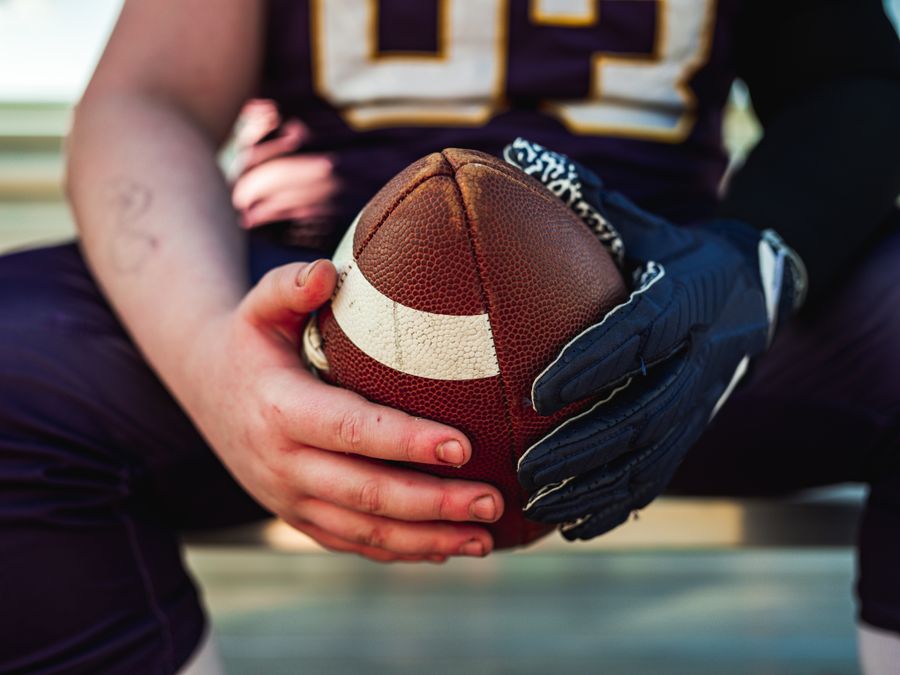
Is football too dangerous for kids’ brains?
September 22, 2026
Business, Food For Thought, Human Interest, Political, Science, Technical amazon, business, Business News, current-events, Future, Hotels, human-rights, medicine, mental-health, research, Science, Science News, technology, Technology News, travel, vacation Leave a comment

Click the link below the picture
.
Chris Nowinski lived the athlete’s dream: playing high school football, then National Collegiate Athletic Association Division I football at Harvard University and then professional wrestling in the WWE.
But at just age 24, after more than a decade of contact sports, Nowinski developed a grueling “three-year headache” and REM (rapid eye movement) sleep behavior disorder—a condition in which people act out their dreams, sometimes dangerously. “I had to be sedated every night so I wouldn’t go chasing shadows, jumping off beds or putting people in headlocks,” recalls Nowinski, now 47.
Nowinski’s experience is extreme. But cognitive dysfunction, mood issues and brain damage can be the cost of repetitive blows to the head— a phenomenon first observed as “punch drunk” syndrome in boxers in 1928. Scientists now call this condition chronic traumatic encephalopathy, or CTE. It is a degenerative brain disease associated with dementia and early death. It’s rare, affecting less than 1 percent of the population; but among athletes playing contact sports, it is alarmingly common.
Nowinski retired from the WWE after a particularly severe concussion. Desperate to fix his pain, he decided to study head trauma, becoming a behavioral neuroscientist at Boston University and directing the Concussion Legacy Foundation.
Data he and his colleagues published last month in the BMJ suggests at least one in four former National Football League (NFL) players who died between 2016 and 2021 had CTE—Nowinski says this is an underestimate. Other analyses suggest about 40 percent of amateur athletes playing contact sports show brain changes that are characteristic of CTE, too.
“CTE is affecting far more people than anyone wants to accept,” Nowinski says. He puts his own odds of having it at 50–50.
Millions of amateur athletes play tackle football each year, and as evidence mounts at the professional level of the dangers of CTE, parents are increasingly worried about their children going into the sport. Some are banning their kids from taking up football; others defend it for building bonds and teaching life skills. Is high school football the new smoking, or are the health concerns overblown?
There isn’t strong evidence that playing at an early age is bad for you, but players need to be “developmentally ready,” says Jeffrey Strelzik, an assistant professor of child neurology at Children’s National Hospital in Washington, D.C. “Why would we have a small, wobbly five-year-old with poor neck strength tackle?”
“Any risk needs to be weighed against the benefits of playing team sports,” he adds.
Getting My “Bell Rung”
Garrit, a 33-year-old former college linebacker, who asked to be identified by his first name for privacy reasons, started playing tackle football at 10. He remembers getting his “bell rung” over the years. “You’d hit someone, and your vision would go fuzzy, and you’d hear this high-pitch noise,” he recalls. Later in his career, he slammed his head on the ground and couldn’t remember the plays for the rest of the game.
“It was on you to self-report, and there was incentive not to because you didn’t want to miss playing time,” Garrit says. “I knew if I said something, that was probably the end of my career.”
Players often downplay symptoms to stay on the field—and many signs of brain trauma, such as headaches, memory problems and fatigue, are easy to hide. CTE appears driven not by concussions but by countless small impacts that jostle the brain: say, a header in soccer or a punch in boxing.
For every diagnosed concussion, college football players sustain about340 hits harder than the median concussive impact. And in a single season, a high school or college football player absorbs an estimated 600 to 1,000 subconcussive blows.
These micro injuries don’t always announce themselves: the brain has no pain receptors, says Michael Buckland, a neuropathologist at the University of Sydney, who founded the Australian Sports Brain Bank. “If you twist your ankle, it bloody hurts. You don’t get that feedback from the brain,” he says. The exception is when the damage compromises basic functioning so much that you lose consciousness or have a seizure.
It’s the cumulative g-force to the head over years that puts people at highest risk, says Daniel Daneshvar, a neuroscientist and chair of physical medicine and rehabilitation at Mass General Brigham and Harvard University. Daneshvar co-authored the study that found that one in four NFL players had CTE with Nowinski and others, and he also played football through college.
“I learned a lot from football, and I want people to continue playing, but I want them to do it in a way that’s safer for their brains,” he says.
.
 FOTOGRAFIA INC. via Getty Images
.
.
Click the link below for the complete article:
.
__________________________________________
How China’s Leader Plans to Win the Future With A.I.
September 22, 2026
Business, Food For Thought, Human Interest, Political, Science, Technical amazon, business, Business News, current-events, Future, Hotels, human-rights, medicine, mental-health, research, Science, Science News, technology, Technology News, travel, vacation Leave a comment

Click the link below the picture
.
In a stretch of former farmland now transformed into a gleaming technology park, China’s leader, Xi Jinping, watched two robotic hands slowly thread a needle.
What he was seeing, he declared, would help China seize its future.
It is a future in which artificial intelligence permeates China’s factories, hospitals and classrooms, reinvigorating the economy through advanced robotics and high-end manufacturing. It is a future in which China, not the United States, dominates A.I. development, turning the technology into what Mr. Xi has called a “lead goose” to fly the country into its next economic revolution.
To realize that vision, the Chinese government is mobilizing the full weight of the state.
At the park that Mr. Xi visited, on the outskirts of Beijing in February, hundreds of companies have set up offices to develop cutting-edge chips and A.I. models. The city government is giving them tens of millions of dollars in free computing power. An exhibition hall shows off their creations, including chips designed to power nuclear missiles and brain implants that could help paralyzed patients speak.
Mr. Xi, during his visit, said that China’s strength lies in its ability to zero in on a direction and follow through.
“We must give full play to our nation’s advantage of concentrating resources to accomplish major tasks,” he told an assembled group of entrepreneurs, researchers and officials.
China’s A.I. campaign is backed by enormous sums of government money. Economists estimate that state-led funds put more than $184 billion into A.I. firms between 2000 and 2023, and last year, the government and state-owned banks pledged hundreds of billions more. Private A.I. investment in China is far lower than in the United States, where private sources poured $285 billion into the technology in 2025 alone.
Beijing’s approach to A.I. is distinct from the prevailing one in the United States in other ways, too.
Many in Washington and Silicon Valley see A.I. development as a race toward artificial general intelligence, a still-theoretical form of A.I. that could think and learn as well as — or better than — humans.
Chinese officials have hardly mentioned A.G.I., focusing on more immediate goals.
China’s population is rapidly shrinking and getting older, creating an urgent need for intelligent robots to replace retiring workers. Poor rural residents could seek medical care from digital avatars of top urban doctors. The authorities could more easily know where Chinese citizens are, what they say, and perhaps even how they feel.
The government has said that A.I.-powered tools and agents should permeate 90 percent of Chinese society by 2030, though it has not explained how that would be measured.
Mr. Xi has also endorsed Chinese companies’ use of open-source models, which have helped them win users globally when leading American companies have released closed systems.
China has embraced A.I. despite the potential risks it poses to the Communist Party’s legitimacy and tight grip on society.
The technology is already displacing taxi drivers, actors and office workers, heightening worries about joblessness and potential unrest.
Chatbots could threaten the party’s controls on information, while advanced foreign models like Claude Mythos could make it easier for China’s enemies to launch complex hacking attacks on its critical infrastructure — a threat the country’s top spy chief recently acknowledged.
.
 Karolis Strautniekas
.
.
Click the link below for the complete article:
.
__________________________________________
Edith Irby Jones (1927–2019), American Physician, Medicine & Civil Rights Pioneer
September 22, 2026
The collapse of the AMOC would be catastrophic. How will we know when it’s coming?
September 21, 2026
Business, Food For Thought, Human Interest, Political, Science, Technical amazon, business, Business News, current-events, Future, Hotels, human-rights, medicine, mental-health, research, Science, Science News, technology, Technology News, travel, vacation Leave a comment
Hmmmm …. Atlantic Meridional Overturning Circulation (AMOC)
Click the link below the picture
.
On a sunny evening in July, a research ship called the Sir David Attenborough was working near the Sorgenfri glacier in south-eastern Greenland when a kilometre-long wall of craggy, bulging ice collapsed into the fjord. The scientists on deck watched in stunned silence as an estimated 18 million tonnes of ice slowly flipped over, sending up vast plumes of spray.
Iceberg calving on this scale was once relatively rare – but it has become commonplace in recent years as Earth warms. And that acceleration could have catastrophic impacts that extend far beyond Greenland. It is weakening a system of ocean currents in the North Atlantic that is vital to societies in Europe and around the world. If the Atlantic Meridional Overturning Circulation (AMOC) were to shut down, the continent would plunge into “ice age” winters with year-round long droughts, and agriculture would become close to impossible.
Yet whether the AMOC really will fail, when that might happen and how quickly – these points all remain highly uncertain. And because of that, the threat remains a distant one in policy-makers’ minds. That is why an £81 million plan is now afoot to build an early warning system that could alert humanity if AMOC is nearing a dangerous tipping point.
Data now being collected by the Attenborough research ship is core to that plan. “We might be committed to centuries of change without knowing it,” said ocean scientist Paul Holland at the British Antarctic Survey (BAS) as he prepared to set sail from the port of Harwich, UK, some weeks earlier. “We might be passing these tipping points without realising.”
So how worried should we be about the AMOC collapsing, what will it take to build an early warning system, and will the alarm bells persuade governments to pull back from the point of no return – or at least to prepare for the consequences?
The AMOC is a vast current system that circulates in the ocean between North America and Europe, driven by temperature and salinity. Around the Gulf of Mexico, the harsh sun heats the ocean and drives evaporation. The resulting warm, salty water flows towards the seas between Greenland and the UK in a part of the AMOC called the Gulf Stream. As the circulation pushes north, the atmosphere cools the salty water, so that it becomes denser and cascades towards the ocean floor like a subsurface waterfall. From there, water flows southward along the seafloor back towards the Americas. To replace the water sinking in the North Atlantic, more warm water must then flow from the Gulf of Mexico, powering the circulation.
The AMOC is a crucial section of an undulating but well-established conveyor belt of ocean currents that flow around the globe. Traversing the entire belt takes a typical “parcel” (about 1 cubic metre) of water about 1000 years.
Like the rest of this conveyor belt, the AMOC, which circulates between North America and Europe, is driven by temperature and salinity. Around the Gulf of Mexico, the harsh sun heats the ocean and drives evaporation. The resulting warm, salty water flows towards the seas between Greenland and the UK in a part of the AMOC called the Gulf Stream. As the circulation pushes north, the atmosphere cools the salty water, so that it becomes denser and cascades towards the ocean floor like a subsurface waterfall. From there, water flows southward along the seafloor back towards the Americas. To replace the water sinking in the North Atlantic, more warm water must then flow from the Gulf of Mexico, powering the circulation.
Without the AMOC, models predict that sea ice would cover the North Sea down to Norfolk in the UK and Friesland in the Netherlands. London would experience an average winter temperature of 2°C (36°F), with cold snaps of -20°C (-4°F). Similar cold would descend on Amsterdam, Brussels, Dublin and Paris. Oslo would see deep freezes of -48°C (-54°F) or below at least every 10 years.
“The winter is like being in the ice age, and in Scotland, it’s in the ice age for half the year,” says Earth system scientist Tim Lenton at the University of Exeter, UK.
Yet this vital circulation is also the section of the global conveyor belt most likely to slow down, or shut down completely, in the coming decades or centuries due to climate change. This possibility was first suggested in a 1987 paper by geochemist Wallace Broecker at Columbia University in New York. Fluctuations in Earth’s climate aren’t always gradual, he wrote, and human-made “global warming”– a term he popularised – could disrupt the feedbacks fuelling the AMOC.
At the time, evidence was mounting that AMOC had shut down in the past because of natural changes in the planet’s temperature. About 12,900 years ago, as the last glacial period was ending, the northern hemisphere suddenly slipped back into near-glacial conditions for 1300 years – a period called the Younger Dryas, after an Arctic flower that spread through Europe then. Shortly after Broecker’s paper was published, geochemists studying the composition of shells trapped in marine sediments found that the AMOC was sending less surface water to the seafloor during the Younger Dryas.
.
 Doug Chayka
.
.
Click the link below for the complete article:
.
__________________________________________
Yes, you need a proper office chair. We tested 18 models to find the most comfortable to buy
September 21, 2026
Business, Food For Thought, Human Interest, Political, Science, Technical amazon, business, Business News, current-events, Future, Hotels, human-rights, medicine, mental-health, research, Science, Science News, technology, Technology News, travel, vacation 3 Comments

Click the link below the picture
.
Even if you don’t work from home full-time, hybrid work is still the norm at plenty of companies. That can mean upwards of 20 hours spent using your office furniture each week, so it’s important not to skimp out on things like a standing desk — or one of the best office chairs.
To discover which office chairs are the most comfortable, we spent more than a month with a testing pool of 18 options, each varying in price, function, and style. We compared important features like ergonomic design, back and lumbar support, and tilt mechanisms — and we also dug into whether more expensive options are actually worth the extra cash.
In the end, two sat at the top of our list as the absolute best office chairs, perfect for the WFH 9-to-5ers or anyone who just wants a comfortable upgrade to their home office.
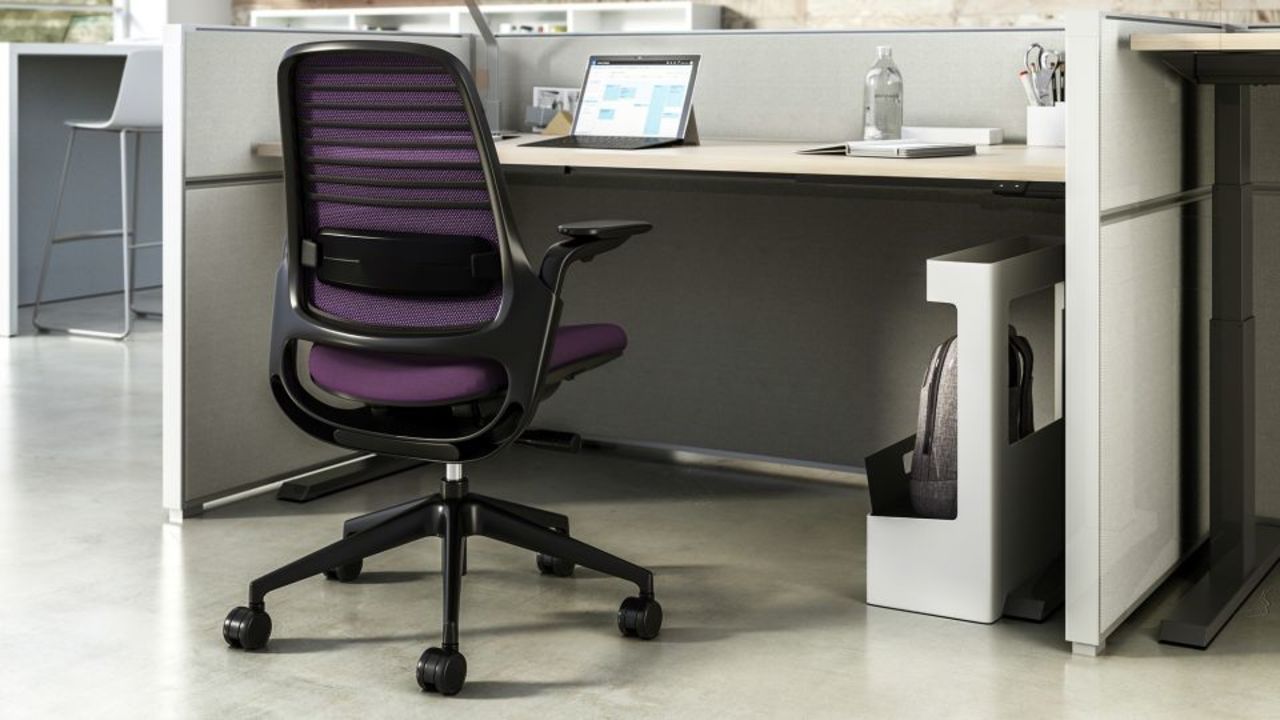
Steelcase Series 1 Task Chair
The Steelcase Series 1 stood out as one of the most customizable, high-quality, comfortable office chairs on the market, beating out chairs double the price, making it the best bang for the buck.
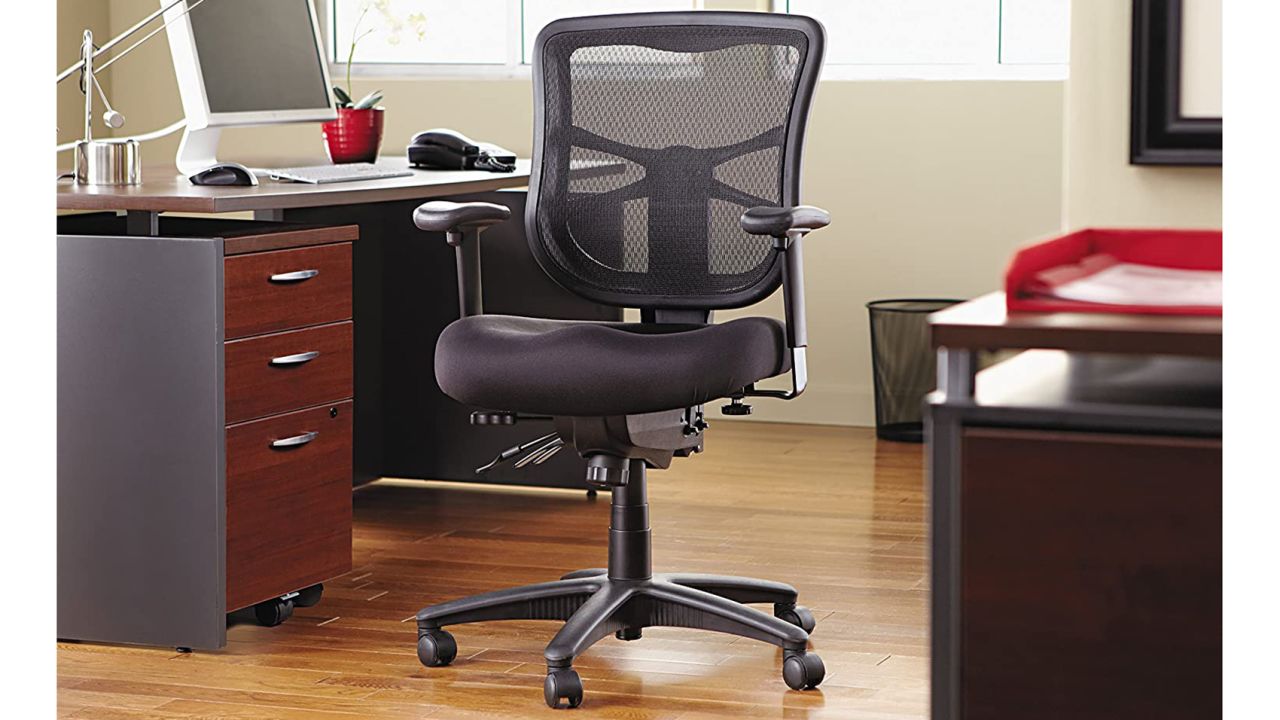
Alera Elusion Series Mesh Multifunction Chair
The Alera Elusion Series Multifunction Chair emerged as our best budget pick, standing up to (and in some cases far surpassing) office chairs that retail for more than five times its price point, particularly in the comfort and adjustability categories.
Best office chair: Steelcase Series 1
On its website, Steelcase offers a good deal of information about what makes a quality office chair. The basics: It should “flex with you — helping you change postures while you sit; fit the natural contour of your back; move as you do,” while allowing your arms to stay straight on your desk and your eyes level with your screen while you recline. After spending nine workdays testing three different Steelcase models, we feel safe saying Steelcase knows what it’s talking about.
While all three Steelcase chairs received high marks in our testing, the Series 1, Steelcase’s most affordable option, best blends exceptional comfort with value among the chairs we tested.
At first glance, the mesh chair’s aesthetic is unassuming, with simple, clean lines and a compact size. Compared to other chairs in our testing pool, which sometimes had sharp angles, oddly elongated backrests and unnecessarily large armrests, we think the Series 1 is one of the better-looking options.
But when it comes to chairs, it’s more important that they’re easy on your back than on your eyes. We’re happy to report that with the Series 1, Steelcase marries function to that beautiful form. After three days of sitting in the chair, our tester felt the seat had the perfect balance of cushiness and firmness (long-term testing over the past year further supports this).
While our tester was initially concerned that the thick, plastic lumbar adjustment would feel stiff, it wasn’t an issue. The mesh backrest was both flexible and supportive throughout the testing period. The backrest, which features what Steelcase calls “Integrated Liveback Technology,” might not look as structured as some heavily padded backrests on the market, but it outperforms cushioned backrests because it moves with you as you work and shift positions.
As we learned throughout the chair testing process, backrest and seat comfort are negligible if a chair doesn’t allow you to customize it to fit your specific body. This is where the Series 1 shines. While other office chairs we tested only offer adjustable seat height and backrest angle, nearly every aspect of the Series 1 can be adjusted. As a bonus, it’s easy to make each adjustment with minimal guidance: While several other adjustable models require diagrams, videos and guides for proper setup, the Series 1 intuitively moves and conforms with the body.
The arm height adjusts within a 5-inch range to help relieve upper back and shoulder fatigue; the arm width adjusts 4 inches overall; arm depth can retract 2 inches to allow the user to get closer to the work surface and into tight corners; seat depth adjusts within a 2.25-inch range to accommodate different leg lengths; lumbar height adjusts over 2.25 inches; the arm caps pivot independently 40 degrees inward and 40 degrees outward depending on your preference; and the seat height adjusts within a 5-inch range. If that list doesn’t mean much to you, here’s the bottom line: This chair is extremely adaptable.
This ergonomic office chair costs less than half the price of the others we tested, yet it provides more comfort and flexibility than almost everything else in our pool, making it a clear winner in an expensive market.
.

Hayley Saltzman/CNN Underscored
.
.
Click the link below for the complete article:
.
__________________________________________

