Home

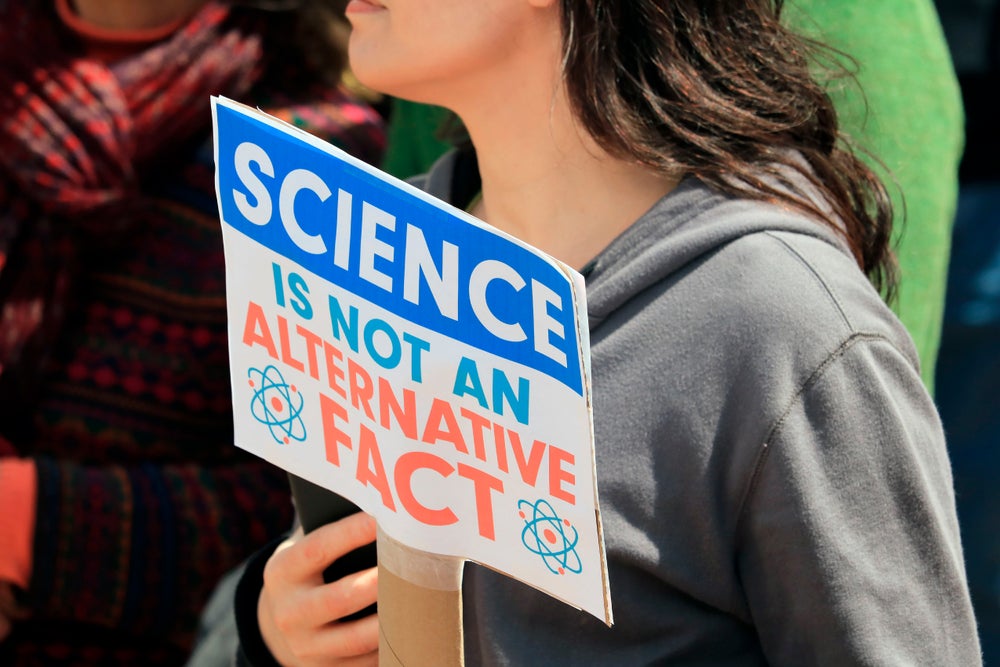
Take It From a Scientist. Facts Matter, and They Don’t Care How You Feel.

Leave a comment

Click the link below the picture

.

I am a physician and a scientist. Over 12 years, I had the privilege of serving Presidents Barack Obama, Donald Trump and Joe Biden as the director of the National Institutes of Health. Before that, I led the U.S. component of the Human Genome Project.

I am amazed by the medical progress that has been possible in the past few decades, both in alleviating suffering and saving lives. But I am also deeply troubled by the growing distrust of science in our society, just at the time when its insights are most needed. No recent experience highlights that disconnect more starkly than the last five years of the Covid pandemic. From my vantage point on the front lines of that battle against a dangerous virus, let me highlight both the triumphs and tragedies, and propose some actions that we can all take to re-anchor our troubled society to truth, science, faith, and trust — and put us back on an individual and collective journey that might be called the road to wisdom.

Go with me back to early 2020, as the worst pandemic in more than a century was spreading across the globe, and deaths in the United States were in the thousands every day. For me and hundreds of scientists who joined together during Operation Warp Speed, the most hopeful strategy was to develop a vaccine. We all worked to be sure the large-scale trials were scrupulously conducted, and that they involved a wide range of men and women of different racial and ethnic backgrounds.

What would success look like? The Food and Drug Administration had set the threshold for approval of this effort at 50 percent efficacy, about what the flu vaccine achieves most years. My colleague Tony Fauci and I frequently discussed our hopes for the outcome. Maybe it could be possible to reach 70 percent? I confess that I was fearful of failure. I also prayed a lot.

The results were revealed in late November 2020. For both the Pfizer-BioNTech and Moderna mRNA vaccines, there was 90 to 95 percent efficacy in preventing illness that caused respiratory symptoms and close to 100 percent efficacy in preventing severe disease and death. Side effects were minimal in the tens of thousands of volunteers who had taken part in each trial. It was a moment of profound relief, of gratitude toward all who had made this possible, of answered prayer. As I tried to speak to the dedicated team about the significance of what had just happened, I could not find words that could fully express the emotions of the moment. I was unable to hold back the tears.

Future historians will judge the development of safe and effective mRNA vaccines for Covid in 11 months as one of the greatest medical achievements in human history. We felt that at last we were on a path to conquering this disease and stopping the terrible death toll. And to a major extent, that came true: Current estimates by the Commonwealth Fund, a nonprofit foundation supporting research on health care, are that more than three million lives were saved in the United States between December 2020 and November 2022 by Covid vaccines. If you were vaccinated, you might be one of them. I might be also.

Yet ultimately more than 50 million adult Americans declined vaccination — even after the shots were made widely available at no cost. Though medicine and public health make poor bedfellows with politics, one’s political party was a strong predictor of resistance. So was religion, with white evangelical Christians (my own group) the most resistant of all. Public distrust, driven by social media, cable news and even some politicians, reflected a host of concerns: whether Covid-19 was real, whether it was really all that serious, whether the vaccines were rushed, whether there were common and serious side effects that had been hidden, whether the mRNA would alter the recipient’s DNA, and whether companies had skirted the rules about safety. More outlandish conspiracies also circulated on social media: that the vaccines contained microchips or cells from recently aborted fetuses, for example. People of faith were particularly hard hit by misinformation.

.

https://static01.nyt.com/images/2024/09/20/opinion/20franciscollins/20franciscollins-superJumbo-v2.jpg?quality=75&auto=webpAn artwork from the series “Let no one say we were not here,” 2020-23. Credit…Lydia See

.

.

Click the link below for the article:

https://www.nytimes.com

.

__________________________________________

Henry Johnson, Buffalo Soldier, Congressional Medal of Honor

2 Comments

Henry Johnson, Buffalo Soldier, Congressional Medal of Honor

The Arctic Seed Vault Shows the Flawed Logic of Climate Adaptation

Leave a comment

Click the link below the picture

.

At a latitude of 78 degrees north lies the northernmost city in the world. It is an odd place. Way above the Arctic Circle—a mere 814 miles from the North Pole—Longyearbyen, in Norway’s Svalbard archipelago, is home to only 2,400 people but more than 1.3 million seeds.

The Svalbard Global Seed Vault is an underground storage facility designed to secure seeds to “ensure that food crop varieties are not lost” in the event of a global crisis such as war, terrorism, or climate change. Touted as “our insurance policy that we’re going to be able to feed the world in 50 years,” the vault has been situated at a location and depth in the Arctic intended to ensure that the seeds will not rot or sprout and will be available for use when needed. For further safety, the vault is refrigerated to zero de­­grees Fahrenheit and designed to withstand a magnitude 10 earthquake. (For comparison, the quake that produced the tsunami that devastated Fukushima, Ja­­pan, was magnitude 9.) On the surface, the seed repository sounds like a very solid idea. But it rests on shaky foundations.

The vault opened in 2008, following on an earlier iteration in which seeds were stored in a nearby coal mine. It is not specifically a response to the threat of climate change, but it is an epitome of climate-­adaptation thinking. The logic behind it goes like this: Climate change is underway, and our political systems seem to be incapable of meaningful action to stop it, so we have little choice but to plan for a fu­ture when we will face serious climate disruption.

Chief among the disturbances will be disruptions to the food supply as punishing droughts and heat waves lead to widespread seasonal crop failures and important individual food species become impossible to grow in the places where people are used to growing them. When that happens, a supply of diverse seeds—including some adapted to hotter, harsher climates—may be just the thing we need to protect our food systems and stave off disaster.

It’s good to be realistic about the climate future we are facing, but the seed vault embeds a conceit common to many adaptation plans: we know what we are facing, so if we plan well, things will go well. But already chinks in the vault’s armor have appeared. In 2017 the vault suffered a flood caused, ironically, by climate change. A very warm (but increasingly not exceptional) winter combined with heavy spring rain to thaw part of the surrounding permafrost, flooding the entrance and threatening the safety of the seeds. Changes have been made to the vault’s entrance to lessen this particular risk, but the breach—less than a decade after the vault opened—shows that we humans are not very good at anticipating change, even in the short run.

Boosters of the seed vault sustain the logic of their effort in part by effacing the embarrassment of the flood. The timeline of the vault on the website of the vault’s partner, CropTrust, does not mention it. When asked about the flood by a reporter for the Guardian, a representative of the Norwegian government, which owns and operates the vault, said: “It was not in our plans to think that the permafrost would not be there and that it would experience extreme weather like that … The question is whether this is just happening now, or will it escalate?”

You don’t have to be a climate scientist to know the Arctic is losing permafrost; in Svalbard, the dislocation is obvious even to an untrained eye. And it’s long been known that the Arctic would warm more rapidly than the rest of the globe: Princeton University geophysicist Syukuro Manabe predicted this effect—known as polar amplification—in the 1970s (he belatedly won a Nobel Prize in 2021 for this work). Today the Arctic is warming four times faster than the rest of the planet. Even if the en­­tire world were to stop burning fossil fuels now, global temperatures would not return to normal for decades or centuries to come. Given the state of action (or inaction) on climate, we don’t have to ask whether Arctic warming and permafrost loss will escalate. It is a near certainty.

.

https://static.scientificamerican.com/dam/m/104265243fdbff53/original/sa1024Ob_Me01.jpg?w=900Scott Brundage

.

.

Click the link below for the article:

https://www.scientificamerican.com/article/the-arctic-seed-vault-shows-the-flawed-logic-of-climate-adaptation/

.

__________________________________________

Everything You Thought You Knew About Tetanus is Wrong

Leave a comment

Click the link below the picture

.

The conversation in which your parents tell you to keep an eye out for rusty nails is basically a rite of passage. They tell you about the dangers of rust; explain the see something, say something protocol for things that look like they could puncture you; and foreshadow the harsh punishment for disobeying—lockjaw.

This advice certainly comes from a good place. But it’s also fundamentally wrong.

This is not to say that tetanus isn’t as bad as parents promise. In North America, the Cleveland Clinic estimates, 10 percent of cases are fatal. In countries with inadequate or inaccessible medical care, the number is believed to be much higher.

Even survival takes its toll. On Friday, the U.S. Centers for Disease Control and Prevention released a new installment in its “Notes from the Field” series about an unvaccinated 6-year-old boy in Oregon who contracted tetanus after he got a cut in his forehead. The bacteria incubated inside his little body for a few days, then suddenly manifested in horrible jaw clenching and muscle spasms, heart rate, blood pressure, and body temperature irregularities. He lived, but only after 57 days in the hospital and more than $800,000 in medical bills.

But counter to what rusty nail warnings might have you believe, the disease has nothing to do with iron oxide, the chemical compound more commonly known as rust. Rather, tetanus is a product of the bacteria Clostridium tetani, which is in dirt, dust, and feces—in other words, everywhere. It can enter your body through puncture wounds, yes, but also through superficial cuts, bug bites, surgical procedures, and any other rupture to your skin. It can come from stepping on a rusty nail, or tending the soil in your garden. That’s why it’s so essential to track your booster shots: You need one every decade, not just when you rip your palm open on a rusty chain link fence. Waiting for a classic tetanus injury won’t work when anything could, in theory, be a tetanus injury.

If the bacteria enter your body and you aren’t up-to-date on your vaccinations, the tiny invaders begin to multiply rapidly. This incubation period, which lasts between three and 21 days, according to the CDC, is symptom free. But as the bacteria begin to die inside you, they form a neurotoxin that attacks the nervous system. Specifically, it inhibits the chemical GABA, which regulates muscle contractions. The result is a body-wide state of tension, from lockjaw in your face to uncontrollable arching spasms in your back to permanently-curled toes.

How rusty nails came to be so closely associated with tetanus isn’t clear. Iron oxide is basically harmless to the human body; millions of people drink water transported by rusty iron pipes with no health effects. (Bridges aren’t so lucky—rusting has buckled many an iron span.) Perhaps it’s some classic American folklore. Or, as Esther Inglis-Arkell argued on the site i09, it has something to do with the anaerobic environment in which the tetanus-causing Clostridium tetani bacteria thrives. As iron oxidizes, it eats up atmospheric oxygen, creating a low-oxygen environment for the bacteria to grow. While rust doesn’t cause tetanus, the two may have a symbiotic (and symbolic) relationship.

.

R7ZDD2Y4GKQAVX2JISIEIQOP6E.jpgRusty nails aren’t the only threat. Photo from Deposit Photos.

.

.

Click the link below for the article:

https://getpocket.com/explore/item/everything-you-thought-you-knew-about-tetanus-is-wrong

.

__________________________________________

Fall foliage 2024: Where the weather will create stunning autumn colors

Leave a comment

Click the link below the picture

.

The best areas to see vivid fall foliage this year will be outside of the traditionally popular tourist destinations due to the weather across the United States leading up to peak leaf-peeping season.

Meteorological fall is underway, pumpkin spice flavors are being infused into food and drinks, and college football season has kicked off. However, there’s no better sign that autumn has arrived than a hillside of trees transformed into an ocean of yellow, orange, and red

Due to recent and upcoming weather patterns across the United States, the most breathtaking displays of fall foliage may emerge in regions beyond the usual hotspots that have captivated leaf-peepers in recent years.

Ingredients for brilliant fall foliage

The vibrancy of fall foliage is significantly influenced by the weather during the summer and early fall.

One of the key factors is consistent rainfall throughout the summer. Drought can stress the trees, causing them to shed their leaves early, as well as resulting in duller colors. Too much rain can also be detrimental. “If there’s a lot of rain from late summer into the early fall, you can get mold to develop on some of the trees and also invite lots of insects,” AccuWeather Lead Long-Range Meteorologist Paul Paselok said.

Additionally, sunny days paired with cool nights in early autumn can enhance the colors. This weather pattern accelerates the breakdown of green chlorophyll in leaves, revealing brilliant shades of orange, red, and yellow. However, while cool weather is beneficial, frost can be harmful since it halts the production of colorful pigments in the leaves, abruptly ending the leaf-peeping season.

Where will the best fall foliage be this year?

All of the ingredients are coming together to make 2024 a great year for fall foliage from the Great Lakes through the Mississippi River Valley, including areas in more than a dozen states.

“I think the best places to go are parts of the Midwest,” Pastelok said, adding, “The trees should have nice reds and oranges, and that could extend all the way down to parts of the Ozarks and parts of southern Missouri.”

In the Northeast, the best displays are expected across upstate New York and northern Pennsylvania, including popular destinations such as the Adirondacks, the Finger Lakes, and the Pennsylvania Grand Canyon.


.

https://cms.accuweather.com/wp-content/uploads/2024/08/GettyImages-1332536405.jpg?w=632Colorful trees lining a lake in White Mountains National Forest, New Hampshire. (Getty Images/Cappi Thompson)

.

.

Click the link below for the article:

https://www.accuweather.com/en/weather-forecasts/fall-foliage-forecast-2024-where-to-see-vibrant-colors/1686503

.

__________________________________________

Clinton Greaves, Buffalo Soldier, Congressional Medal of Honor

Leave a comment

Clinton Greaves, Buffalo Soldier, Congressional Medal of Honor

AFRAID (2024) – My rating: 7.5/10

Leave a comment

“Afraid” (stylized as “AFRAID”) is a science fiction horror film written, produced, and directed by Chris Weitz. It was produced by Columbia Pictures in association with Jason Blum and Weitz through their Blumhouse Productions and Depth of Field banners, respectively. “Afraid” is a gripping mystery that delves into the unsettling influence of a digital assistant […]

AFRAID (2024) – My rating: 7.5/10

The Urgent Need to Transform Dementia Care

Leave a comment

Click the link below the picture

.

Dementia robs us of everything that matters. Our memories. Our connections. Our story. Every three seconds, another person in the world hears the devastating news that they have dementia. No wonder, then, that it is the most feared condition among people aged over 55.

But, after decades of relentless research across the globe, that is all set to change. 

Investments in dementia research are finally leading to breakthroughs, as life-changing treatments that may slow the progression of Alzheimer’s come within close reach. And we’re understanding more and more about how we can reduce our risk of developing dementia. This progress is mirrored by active and growing investment in drug development in the field of neurology around the world, which is fueling further innovation and drug discovery.

For a field that has seen no progress since the 1990s, when symptomatic drugs in the form of cholinesterase inhibitors were introduced, it certainly does feel that the time to turn the tide on this devastating condition has finally arrived. 

The power of recent scientific discoveries, coupled with lessons from a litany of past research failures, means there is now a new sense of urgency on both sides of the Atlantic. We now need to see action on two fronts: to reduce the number of people affected by dementia in the future, and to minimize its impact on those who do develop the condition. 

But this action demands a seismic shift in the way our health systems approach dementia care. This will take time and resources, so health systems and physicians need to be supported to manage this change.

The current state of play 

In the past year, we’ve seen the arrival of the Alzheimer’s drug lecanemab (Leqembi) into U.S. healthcare and more recently, in Japan and China. A second Alzheimer’s drug, donanemab, is rapidly following suit, and, regulatory decisions from several countries are expected over the coming months. 

Although the benefits of these drugs are modest, and with significant side effects for some, it nonetheless marks the arrival of a new wave of treatments that can slow the course of Alzheimer’s disease rather than just treating its symptoms. It’s a new dawn for dementia, signaling a step-change in the way it will be perceived and diagnosed.

Despite this success, we don’t have a straightforward path ahead to rapid, equitable access to these drugs once they are licensed. Work supported by the Davos Alzheimer’s Collaborative is highlighting shared challenges while acknowledging country-specific obstacles linked to healthcare infrastructure, demographics, and clinical practices. For many countries, the current state of play is going to make accessing these treatments practically impossible in the short term. 

.

https://static.scientificamerican.com/dam/m/1cdb67c6bfb3ec25/original/bridge.jpg?w=900Joey Guidone/Theispot

.

.

Click the link below for the article:

https://www.scientificamerican.com/custom-media/davos-alzheimers-collaborative/the-urgent-need-to-transform-dementia-care/

.

__________________________________________

These Lunch Ideas Are Simple Enough for Your Child To Make Themselves

Leave a comment

Click the link below the picture

.

Teaching Kids How to Make Nutritious Meals

When your kids get down and dirty in the kitchen, not only do they learn about food but they also have fun! It’s even more fun when they get to eat what they have prepared with their own two hands. Parents and caregivers can use this moment to show kids how to increase the nutritional value of their lunches. Here are several best practices when showing kids how to create well-rounded meals.

  • Add calcium. Pediatric nutrition expert Malina Malkani, MS, RDN, CDN and author of Safe and Simple Food Allergy Prevention reminds parents to include a good source of calcium at lunch. “As kids exit the toddler years, calcium intake tends to decrease. According to data from NHANES, 49% of children between ages 4-18 are not meeting their daily needs for this essential, bone-building nutrient.”1 Yogurt, cheese, kefir, cottage cheese, edamame, fortified soy milk, and chia seeds all offer a good amount of calcium in lunch foods that are easy to pack.
  • Include a combination of protein, fiber, and fat. These three nutrients—whether including all or some of them at a meal—”can help slow the rate of digestion and prevent the dips and spikes in blood sugar that lead to low energy, irritability, and lack of focus,” explains Malkani.
  • Let the child choose between two options. Jill Castle, MS, RDN is the founder of The Nourished Child and author of Kids Thrive at Every Size: How to Nourish Your Big, Small, or In-Between Child for a Lifetime of Health and Happiness. Castle recommends providing your child with two options when negotiating foods to pack for lunch. For example, you can include both strawberries and a clementine that way they can select which one they prefer during their lunch.
  • Choose at least four food groups to pack for lunch. Castle provides the example of turkey and cheese on whole grain bread paired with grapes and pretzels. There are endless possibilities, but teach your child to count the foods that come from each food group.
  • Let your child do the work: Castle says letting your child do most of the work “will encourage their independence, [teach them to] engage with hands-on tasks, and [help them] learn while doing.”
  • Use a school lunch planner: Another smart tip from Castle is to create a school lunch planner. “A planner can help you map out a week of lunch meals with input from your child, and make the process of lunch packing easier.”
  • Use after-school snack time wisely: Castle says to take advantage of this time for discussing, planning, and preparing for the next day’s lunch ideas.

Nutritious Ingredients to Stock Up On

Start with simple recipes that focus on nutritious ingredients when your kids are younger and build on their skills as they evolve in the kitchen. Consider stocking up on these ten nutritious ingredients that are simple for young kids to meal prep for lunch.

  1. Frozen, shelled edamame: Thaw and have your kids pack it as a side or snack, they can also use it as a base for “hummus” when they’re ready to use the blender. 

  2. Chia seeds: Your child can mix chia seeds into yogurt parfaits, use it as a base for a nutrient-rich pudding, toss it into salads, or sprinkle it into nut butter sandwiches.

  3. Yogurt tubes or pouches: Include this grab-and-go food as a calcium-rich side or base for yogurt parfaits that kids can assemble during lunchtime if they prefer not to assemble in advance. You can also try freezing a yogurt pouch in advance as it helps to keep the rest of the packed foods cold and it will still be chilled by the time kids are ready to eat them.

  4. Peanut butter or nut-free butter (like sunflower, yellow split pea, soy): Use nut butter for sandwiches or as a topping for toast or bagel. You can also have your child melt nut butter in the microwave and drizzle it on plain yogurt, or they can mix it with soy sauce and toss with warm noodles.

  5. Eggs: Either purchase hard-cooked eggs for younger kids or older kids can learn to boil them stovetop. Use for an egg sandwich with cheese and ham.

  6. Pasta or noodles: Pasta is simple to make for older kids who know how to use the stove (or you can pre-cook them for younger kids). Kids can toss the pasta with chopped veggies to create a cold salad, or they can toss with a tomato, Alfredo, or vodka sauce for a hot lunch (and bring it to school in a thermos). You can also show them how to serve it plain or with butter for picky eaters.

  7. Cheese: Have your child add slices to sandwiches or pack some cheese as a side in their lunchbox. Shredded cheese can be sprinkled over veggies and cubes can be skewered with fruit.

  8. Carrots: Kids can choose from sliced canned carrots, baby carrots, or peeled and sliced carrots. It’s a simple side to add to lunches, and a veggie that kids love to dip.

  9. Mandarins or clementines: These easy-to-peel fruit are a simple snack even for the littlest hands and can help add fiber and vitamin C to their diet.

  10. Raisins: Dried fruit has a long shelf-life and is easy to grab and pack in any lunch box. It can be topped over yogurt or eaten right out of the mini box.

.

https://www.parents.com/thmb/Hnw-VEi_U0qU2aWVrPEVhaFgCSU=/750x0/filters:no_upscale():max_bytes(150000):strip_icc():format(webp)/PRT-how-much-does-my-kid-need-to-eat-pt2-Rachel-Vanni-hero-489-1ce69171bb904f3fb96c3609336cfd8d.jpgRachel Vanni for Parents

.

.

Click the link below for the article:

https://www.parents.com/lunch-ideas-your-child-can-make-themselves-8703770?utm_source=pocket_discover_parenting

.

__________________________________________

Pompey Factor, Congressional Medal of Honor

Leave a comment

Pompey Factor, Congressional Medal of Honor

Older Entries Newer Entries

MRS. T’S CORNER

https://www.tangietwoods

Amor Entre Estrellas

¡Bienvenido de vuelta viajero!

Heart of Loia `'.,°~

so looking to the sky ¡ will sing and from my heart to YOU ¡ bring...

Michael Ciullo

CEO and Founder of Nsight Health

Nelson MCBS

Catholic News, Prayers, HD Images, Rosary, Music, Videos, Holy Mass, Homily, Saints, Lyrics, Novenas, Retreats, Talks, Devotionals and Many More

Global geopolitics

Decoding Power. Defying Narratives.

Talk Photo

A creative collaboration introducing the art of nature and nature's art.

Movie Burner Entertainment

The Home Of Entertainment News, Reviews and Reactions

Le Notti di Agarthi

Hollow Earth Society

C r i s t i a n a' s Fine Arts ⛄️

•Whenever you are confronted with an opponent, conquer him with love.(Gandhi)

TradingClubsMan

Algotrader at TRADING-CLUBS.COM

Comedy FESTIVAL

Film and Writing Festival for Comedy. Showcasing best of comedy short films at the FEEDBACK Film Festival. Plus, showcasing best of comedy novels, short stories, poems, screenplays (TV, short, feature) at the festival performed by professional actors.

Bonnywood Manor

Peace. Tranquility. Insanity.

Warum ich Rad fahre

Take a ride on the wild side

Madame-Radio

Découvre des musiques prometteuses (principalement) dans la sphère musicale française.

Ir de Compras Online

No tiene que Ser una Pesadilla.

Kana's Chronicles

Life in Kana-text (er... CONtext)

Jam Writes

Where feelings meet metaphors and make questionable choices.

emotionalpeace

Finding hope and peace through writing, art, photography, and faith in Jesus.

WearingTwoGowns

A former medical student's journey through healthcare challenges and personal growth

...

love each other like you're the lyric to their music

Luca nel laboratorio di Dexter

Comprendere il mondo per cambiarlo.

Tales from a Mid-Lifer

Mid-Life Ponderings

Creative

Travel,Tourism, Life style "Now in hundreds of languages for you."

freedomdailywriting

I speak the honest truth. I share my honest opinions. I share my thoughts. A platform to grow and get surprised.

The Green Stars Project

User-generated ratings for ethical consumerism

Cherryl's Blog

Travel and Lifestyle Blog

Sogni e poesie di una donna qualunque

Questo è un piccolo angolo di poesie, canzoni, immagini, video che raccontano le nostre emozioni

My Awesome Blog

“Log your journey to success.” “Where goals turn into progress.”

pierobarbato.com

scrivo per dare forma ai silenzi e anima alle storie che il mondo dimentica | Sito Gratuito No-Profit

Thinkbigwithbukonla

“Dream deeper. Believe bolder. Live transformed.”

Vichar Darshanam

Vichar, Motivation, Kadwi Baat ( विचार दर्शनम्)

Komfort bad heizung

Traum zur Realität

Chic Bites and Flights

Savor. Style. See the world.

ومضات في تطوير الذات

معا نحو النجاح

Broker True Ratings

Best Forex Broker Ratings & Reviews

Blog by ThE NoThInG DrOnEs

art, writing and music by James McFarlane and other musicians

fauxcroft

living life in conscious reality

Srikanth’s poetry

Freelance poetry writing

JupiterPlanet

Peace 🕊️ | Spiritual 🌠 | 📚 Non-fiction | Motivation🔥 | Self-Love💕