
First Black Elected to Office of Attorney General of Georgia: Thurbert E. Baker
Assorted human interest posts.
April 17, 2025
Drop is a thriller directed by Christopher Landon and written by Jillian Jacobs and Chris Roach. In the film, a widowed mother receives threatening messages on her cell phone during her first date in years, causing her to fear people in her surroundings and her safety. The suspenseful and engaging trailers led me to the […]
DROP (2025) – My rating: 8/10
April 16, 2025
Business, Food For Thought, Human Interest, Political, Science, Technical amazon, business, Business News, current-events, Future, Hotels, human-rights, medicine, mental-health, research, Science, Science News, technology, Technology News, travel, vacation Leave a comment

Click the link below the picture
.
CLIMATEWIRE | The Trump administration is dismantling a 35-year-old effort to track global climate change that was used to shape regulations and policies across the government.
Federal employees at the U.S. Global Change Research Program were removed from their positions Tuesday, and a government contract with ICF International, which has supported the National Climate Assessment for years, was severed, according to two former officials who were granted anonymity to avoid reprisals.
The move marks a key step by the administration to undermine federal climate research as it rolls back environmental regulations and promotes additional fossil fuel production.
The program was established by Congress in 1990 and signed into law by President George H.W. Bush. In addition to climate science, it focused on land productivity, water resources, fisheries, ecosystems, and the atmosphere. Its most visible product was the National Climate Assessment, a Congress-mandated report that comes out every four years and is used to help shape environmental rules, legislation, and infrastructure projects.
Decades ago, the program identified how a depleted ozone layer was harming Americans, leading to regulations to address the issue.
The next version of the National Climate Assessment is due late next year or in early 2027.
The changes mirror the writings of Russ Vought, director of the White House Office of Management and Budget, who wants to eliminate the program so its work can’t be used to bolster federal climate regulations in court battles.
Vought wrote a chapter in Project 2025, the conservative blueprint that has been closely followed by President Donald Trump, in which he outlined how to “reshape the U.S. Global Change Research Program (USGCRP) and related climate change research programs.”
The chapter spells out how the program could make it harder to enact pro-industry policy and fight court battles that challenge environmental regulations. The USGCRP would “be confined to a more limited advisory role,” he wrote.
“USGCRP actions can frustrate successful litigation defense in ways that the career bureaucracy should not be permitted to control,” the chapter said.
Under Vought’s proposal, OMB would help select researchers to produce a National Climate Assessment that relies on a small pool of scientists who question humanity’s contributions to climate change and give equal weight to industry-produced studies.
.

U.S. President Donald Trump listens to a question as he visits Chez What Furniture Store, which was damaged during Hurricane Helene on September 30, 2024, in Valdosta, Georgia. Michael M. Santiago/Getty Images
.
.
Click the link below for the complete article:
.
__________________________________________
April 16, 2025
Business, Food For Thought, Human Interest, Political, Science, Technical amazon, business, Business News, current-events, Future, Hotels, human-rights, medicine, mental-health, research, Science, Science News, technology, Technology News, travel, vacation Leave a comment

Click the link below the picture
.
.
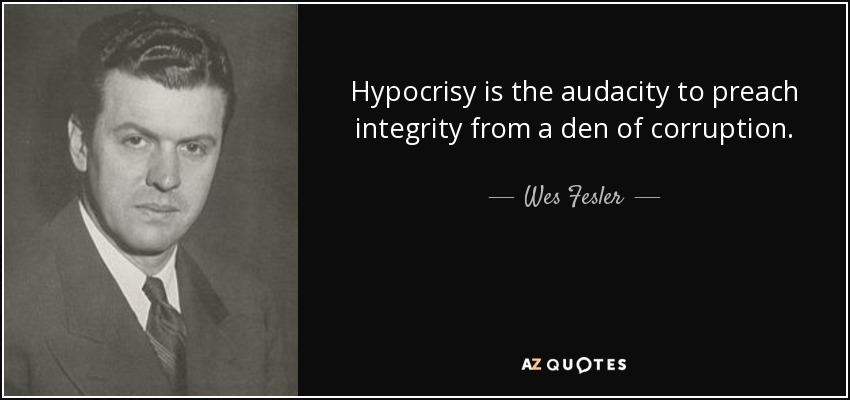
Hypocrisy is the audacity to preach integrity from a den of corruption. Wes Fesler
.
.
Click the link below for the article:
.
__________________________________________
April 16, 2025
Business, Food For Thought, Human Interest, Political, Science, Technical amazon, business, Business News, current-events, Future, Hotels, human-rights, medicine, mental-health, research, Science, Science News, technology, Technology News, travel, vacation Leave a comment

Click the link below the picture
.
Sometimes, being a leader means making tough calls—ones that aren’t popular, and sometimes even get misunderstood. You’ve probably heard the saying, “If everyone likes you, you’re not really leading.” Fair enough. But what do you do when you hear that no one wants to work with you?
Maybe it comes up in passing from a colleague, or maybe it hits harder in a 360 review. Either way, that kind of feedback can sting. It’s that gut-punch moment where you think, Wait . . . what? You’ve been putting in the work, prioritizing the team (at least in your mind), but somehow people aren’t seeing it. They don’t get the pressure you’re under, the decisions you’ve had to make, or why things played out the way they did.
Here’s the hard truth: Perception is reality. You might feel like you’re doing everything right, but if your team feels disconnected or frustrated, their experience is what matters most. It’s time to pause, reflect, and figure out how things veered off course.
No, it’s not fair. And no, you can’t fix it overnight. But you can make a plan to rebuild trust, reconnect with your team, and start turning things around—one step at a time.
Get the data
Yeah, this part’s going to be uncomfortable—but if you’ve heard that no one wants to work with you, it’s time to figure out why. You’ve got a couple of options. If you haven’t already done a 360 review, that’s a good place to start. Or you can reach out to a trusted advisor or mentor and ask for some honest feedback.
One thing you don’t want to do? March straight over to your team and start digging for answers. That’ll likely come off as defensive—or worse, accusatory—and it won’t help your case. Instead, talk to someone outside the situation. Ideally, someone who knows you well but isn’t directly impacted by your leadership style. You want perspective, not more tension.
I worked with one client who’s a strong, passionate leader, but sometimes that passion got the best of him. For instance, when his team would present him with ideas, my client would shout them down if he thought those ideas wouldn’t work. His team felt overwhelmed, and eventually, no one wanted to work with him. My client wasn’t aware of the pattern and had no idea his team felt so discouraged. His 360 revealed to him how much his reactions were demoralizing his team; my client learned to soften his delivery, slow down, and listen more.
.

[Photo: Monster Ztudio/Adobe Stock]
.
.
Click the link below for the complete article:
.
__________________________________________
April 16, 2025

The Man Who Made the World Laugh and Think Hello friends, I hope this blog finds you well. Today, April 16th, we celebrate the birthday of Sir Charlie Chaplin, a name known for laughter and cinematic brilliance. Born in 1889 in London, Chaplin became one of the most iconic figures in film history. Beyond the […]
# Remembering Charlie Chaplin #
April 16, 2025
April 15, 2025
Business, Food For Thought, Human Interest, Political, Science, Technical amazon, business, Business News, current-events, Future, Hotels, human-rights, medicine, mental-health, research, Science, Science News, technology, Technology News, travel, vacation 2 Comments
Click the link below the picture
.
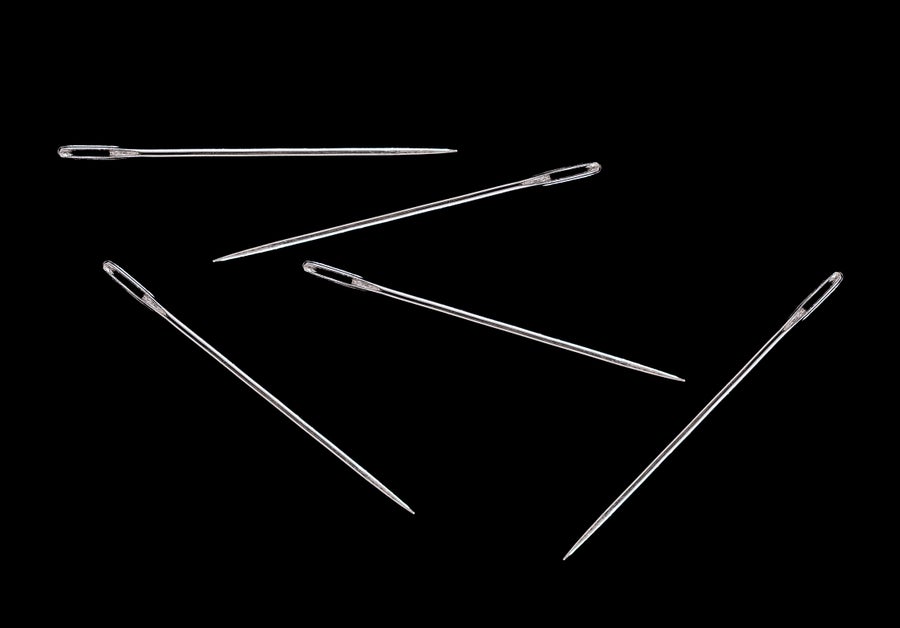
It is rare to read about “spectacular progress” or a “once-in-a-century” result in mathematics. That’s for good reason: if a problem has not had a solution for many years, then completely new approaches and ideas are usually needed to tackle it. This is also the case with the innocent-looking “Kakeya conjecture,” which relates to the question of how to rotate a needle in such a way that it takes up as little space as possible.
Experts have been racking their brains over the associated problems since 1917. But in a preprint paper posted in February, mathematician Hong Wang of New York University and her colleague Joshua Zahl of the University of British Columbia finally proved the three-dimensional version of the Kakeya conjecture. “It stands as one of the top mathematical achievements of the 21st century,” said mathematician Eyal Lubetzky of N.Y.U. in a recent press release.
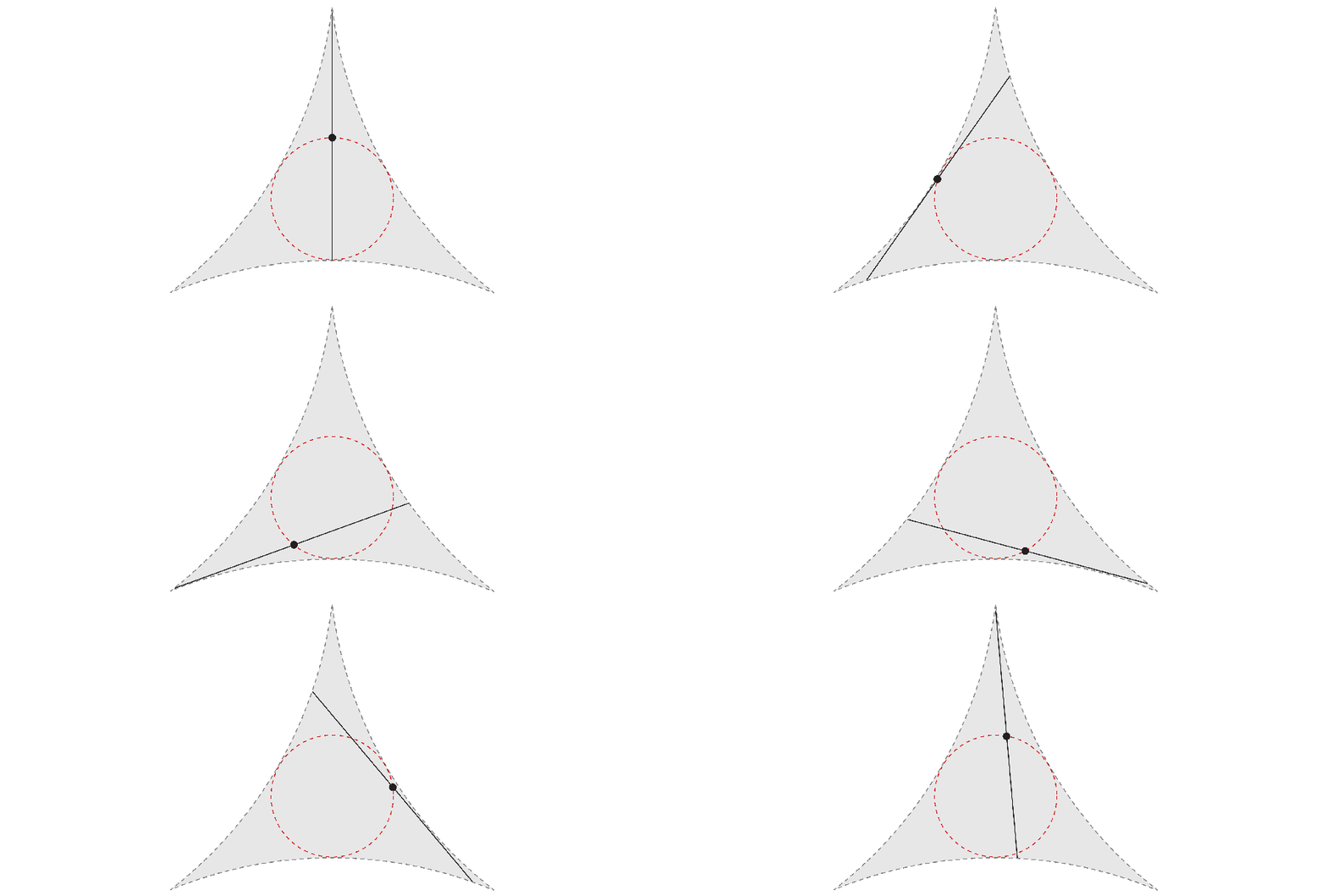
Suppose there is an infinitely narrow needle on a table. Now you want to rotate it 360 degrees so that the tip of the needle points once in each direction of the plane. To do this, you can hold the needle in the middle and rotate it. As it rotates, the needle then covers the surface of a circle.
But if you are clever, the needle can make its 360-degree journey while taking less space. In 1917, mathematician Sōichi Kakeya wanted to investigate the smallest area required to rotate the needle. For example, by rotating not only the outer end of the needle but also its center, you can obtain an area that corresponds to a triangle with curved sides.Years later, mathematician Abram Besicovitch made an unexpected discovery. If you keep moving the needle back and forth like a complex parallel parking maneuver, the surface that the infinitely narrow needle covers can actually have a total area of zero.
The Dimension of an Area of Zero?
From there, experts began to wonder what dimension this “Kakeya surface” has. Usually surfaces in a plane, such as a rectangle or a circle, are two-dimensional. But there are exceptions: fractals, for example, can also have fractional dimensions, meaning they can be 1.5-dimensional, for instance.
Because the Kakeya surfaces can look very jagged, the question of dimensionality is an obvious one. In fact, it has implications for many other areas of mathematics, including harmonic analysis, which breaks down complicated mathematical curves into sums of simpler functions, and geometric measure theory.
In fact, in 1971 mathematician Roy Davies was able to prove that the Kakeya surface is always two-dimensional, even if its area vanishes. But in mathematics, people are interested in general results. The experts wanted to solve the problem in n dimensions—does a needle that is rotated along all n spatial directions always cover an n-dimensional volume? This hypothesis is now known as the Kakeya conjecture.
.
 Sean Gladwell/Getty Images

Amanda Montañez
Amanda Montañez
.
.
Click the link below for the complete article:
.
__________________________________________
Faith saved us from the savages that we were, losing faith makes us savages again
Where Trends Meet Truth
https://www.tangietwoods
Freelance poetry writing
Zalai Betti
INOVATION BLOG PEOPLE AND NEWS
Németh György
Konsultan Lingkungan Hidup di Lombok - NTB
Lea Krasznai (LeaArt21) – Idezetek (Idézetek) WordPress (Budapest, Hungary)
Appunti, spunti e passioni in liberta'
Gyorgy Nemeth
تعنى بتقديم نصائح للمعلمين المبتدئين، والطلبة الممتحنين، ومشاركة الاخرين تجربة الادخار في المال، بترشيد الاستهلاك المنزلي، وترتيب البيت، والحفاظ على البيئة، وتشجيع السيارات صديقةالبيئة، والسياحة والاسفار، ونماء رؤوس الاموال، والطب البديل وتشجيع التعليم الرقمي والذكاء الاصطناعي، والعناية بالنحل وتربية الاسماك، والاسثمار في رؤوس الاموال، الزراعة العضوية، والعناية باسنان الرضع، و صحة الحوامل، وتفسير القران
apprendre pour évoluer
Thoughts on books, language, meaning, and the culture around it.
Outdoor Recreation & Adventure in the Great Lakes Region
News, Info, Bio, Articles, Reviews, Lyrics, Technology, Science, Inspiration, Motivation, Philosphy and many more...
Christian Lifestyle Blogger
CEO and president of The Mullins Companies
Two Cultures. One Life. Endless Stories
Real Estate Development Specialist
¡Bienvenido de vuelta viajero!
so looking to the sky ¡ sing and from my heart to YOU ¡ bring...
CEO and Founder of Nsight Health
Catholic News, Prayers, HD Images, Rosary, Music, Videos, Holy Mass, Homily, Saints, Lyrics, Novenas, Retreats, Talks, Devotionals and Many More
Decoding Power. Defying Narratives.
A creative collaboration introducing the art of nature and nature's art.
The Home Of Entertainment News, Reviews and Reactions
•Whenever you are confronted with an opponent, conquer him with love.(Gandhi)
Algotrader at TRADING-CLUBS.COM
Film and Writing Festival for Comedy. Showcasing best of comedy short films at the FEEDBACK Film Festival. Plus, showcasing best of comedy novels, short stories, poems, screenplays (TV, short, feature) at the festival performed by professional actors.
Peace. Tranquility. Insanity.
Take a ride on the wild side
Découvre des musiques prometteuses (principalement) dans la sphère musicale française.
No tiene que Ser una Pesadilla.
Life in Kana-text (er... CONtext)
Where feelings meet metaphors and make questionable choices.
Finding hope and peace through writing, art, photography, and faith in Jesus.
Eyasu
Eyasu The Wonderful
A former medical student's journey through healthcare challenges and personal growth
love each other like you're the lyric to their music

