
On This Day: June 08, 1958
Assorted human interest posts.
June 7, 2025
Business, Food For Thought, Human Interest, Political, Science, Technical amazon, business, Business News, current-events, Future, Hotels, human-rights, medicine, mental-health, research, Science, Science News, technology, Technology News, travel, vacation Leave a comment

Click the link below the picture
.
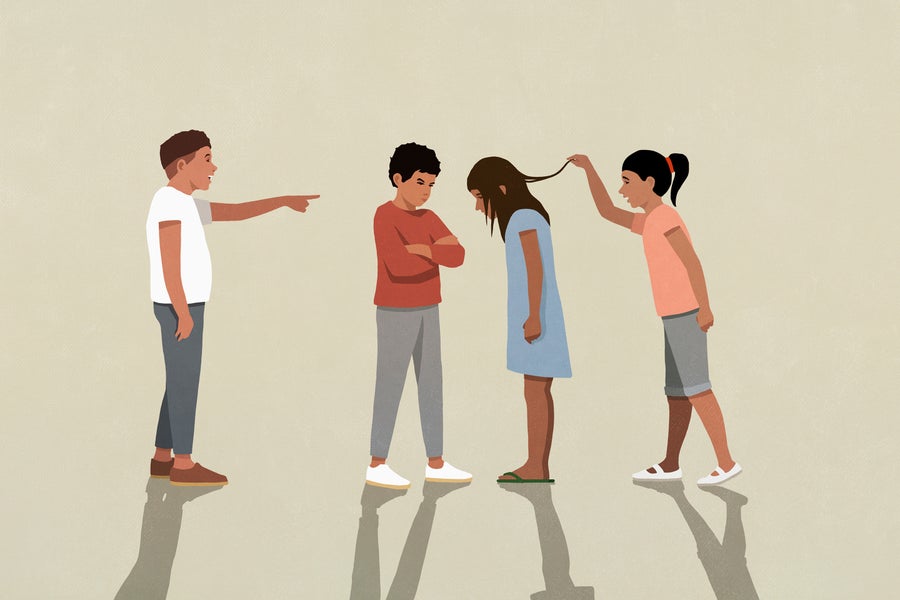
Is it ever okay—or at least, understandable—for one child to bully another?
I spend a lot of time speaking to parent groups and students about bullying, and it’s common for parents to approach me after a talk with questions about their personal situation. A mother once asked for my thoughts about a situation in which her eight-year-old son had been accused of bullying another boy.
In my experience, parents often have a hard time believing that their child could ever engage in bullying; this mother clearly accepted that the behavior had happened, yet she just as clearly felt that there were extenuating circumstances. She pointed out that the target had the annoying habit of picking his nose, and this had bothered her son, who had lashed out.
She hedged; surely, she thought, there could be circumstances under which it’s acceptable for one child to bully another.
If your child is being accused of bullying another, it can be surprising and upsetting. Beyond those understandable emotions, as a parent, you have many options to help your child understand their behavior and why it was seen as bullying.
Let’s first define what it is we are talking about: bullying means that someone repeatedly and deliberately hurts a less powerful person. Bullying is a very unhealthy and potentially damaging behavior, for both the target and the bully. Research tells us that children who bully carry mental health consequences like depression and anxiety into adulthood. This is especially true for kids who are both bullies and victims.
I think most people would agree that bullying sometimes calls for punishment, and often calls for interventions, but is bullying ever a behavior that calls for understanding? If your child is being aggressive once (which doesn’t meet the definition of bullying), and in self-defense, that may indeed be excusable. On the other hand, if your child is bullying, that repeated torment is not excusable. I reminded the mother whose son bullied the nose-picking child that bullying is harmful to both individuals, so even when it happens because of a provocation, it shouldn’t be shrugged off.
What’s interesting is that generally, children don’t excuse bullying. In a study in which scientists interviewed elementary school children (both those involved and uninvolved in bullying) in Sweden to understand how kids view bullying, the students tended to think that bullies were either psychologically troubled, or alternatively, attention seekers—bullying to gain social status (in other words, that they wanted other children to see their power and admire it).
Kids who bully others, however, tend to have justifications for their behavior. In my study of more than 2,200 teens, about 62 percent of those who admitted bullying others offered one or more of the following explanations: “People didn’t try to understand my point of view,” or “I needed to show I wasn’t intimidated or afraid,” or “My behavior was taken way too seriously; I never meant it.”
It’s important to understand that kids can engage in bullying for a variety of reasons. Parents may think of bullying as a behavior reserved for only truly disturbed kids. The research, however, shows that some youth who bully are otherwise doing well socially, while others, who tend to be both bullies and targets, struggle more with making friends and being social. It can be difficult to believe that a child who does well in school and has friends could actually be a bully.
What should parents do when their children are accused of bullying? How should they handle their child’s protests that they were justifiably provoked? Should they believe their child and accept the reasons for the bullying? Should the response be punishment, intervention or understanding—or all three?
The word bullying tends to be overused, and is sometimes applied to any situation (repeated, deliberate or not) when someone hurts someone else. How you approach the situation may be completely different if the aggression in question only happened once, or between two children with relatively equal social and physical power, which likely would not be bullying.
If the power dynamic is unequal, and it appears to be a bullying situation, talk to everyone to determine the facts. Make it clear to everyone involved that you’re approaching this with an open mind. The school’s perspective is almost certain to be different from your child’s. It’s not hard to imagine a situation where a school counselor explains that your child has bullied another student, but your son or daughter claims they were just mad and not thinking. Bullying is a behavior that is planned out. It is not an impulsive, one-time response to someone else’s provocation. A target may have engaged in nose-picking, and that may have been genuinely irritating, but repeated aggression against them isn’t impulsive or thoughtless.
.
 Malte Mueller/Getty Images
.
.
Click the link below for the complete article:
.
__________________________________________
June 7, 2025
Business, Food For Thought, Human Interest, Political, Science, Technical amazon, business, Business News, current-events, Future, Hotels, human-rights, medicine, mental-health, research, Science, Science News, technology, Technology News, travel, vacation Leave a comment

Click the link below the picture
.
In 2015, I was teaching a class on estate planning at a local continuing care retirement community. During the audience-participation section, I asked the attendees if they had recently updated their documents. A woman in a wheelchair who’d appeared to be asleep for the entire class, yelled, “None of your (bleeping) business.”
She may have had a point, but it was the last time I raised my hand to teach at that community.
Between 2015 and 2020, I spent many a day teaching financial planning classes for retirees at continuing care retirement communities (CCRCs). I could tell you which communities leaned young, old, left, and right. In Washington, D.C., that left or right leaning is often a dealmaker or breaker.
The point is that these retirement communities are all different. The same person may love one and hate another, which is where we will land in this article. Whether a CCRC makes sense depends on you, your priorities, and how aligned they are with a specific community.
Below, I will highlight major pros and cons as you consider your next move, literally.
PROS OF CCRCS
1. The care will be there when you need it
If you pick the right community, this will be your last move. Residents can move along the spectrum from independent living to nursing care. You may change locations within your community, but you will not be moving furniture up and down stairs right when you start to need help.
2. You’ll have a ready-made community
According to that often-cited Harvard study on happiness, two of the greatest drivers of happiness in retirement are health and social connections. Hopefully, the continuum of care helps with the former. The built-in community of a CCRC should help with the latter. Having friends in a community is a real bonus, as this can shorten the friend-making curve.
3. Your home will be turn-key, maintenance-free
The general advice for when to move into a CCRC is when you are still active and independent. That means you’re still going places.
You don’t want to have to worry about a pipe bursting when you’re skiing the Rockies. You don’t want the call telling you your HVAC is broken during your summer trip to Europe.
These communities, even if they are not really rentals, carry many of the benefits of being a tenant. And as you age, those benefits become even more important.
CONS OF CCRCS
1. Get ready for hefty entrance fees and monthly fees
The financial structures of these communities come in all shapes and sizes. For the purpose of this column, we are excluding rental communities, and we are not differentiating between A-, B-, and C-level plans.
The expense of a CCRC comes in the form of a buy-in and an ongoing monthly fee. You can think of this as a down payment and a mortgage payment.
The buy-ins can be large, often at $100,000 to $500,000 or more, which is one reason they are on the “cons” list. On top of that, monthly fees for those in independent living can be in the neighborhood of $2,500 to $5,000.
Another con: Entrance fees are often touted as, at least partially, refundable. While this is the case, even a 100% refundable buy-in doesn’t adjust for inflation.
So, if all goes according to plan and you spend your 20 greatest years in the community, the amount refunded to your estate may be worth half what you put in, when you account for inflation.
2. Expect rising costs
It’s 2025, and we are all used to living with rising prices. It’s easy to forget that the decade between 2010 and 2020 had almost no inflation, despite the Fed’s best efforts.
During this period, advisers in my firm got into hot water telling a few of our clients they couldn’t afford a particular community. We received some unhappy calls from the community’s sales office.
The thing that made this community unaffordable was not the buy-in fee. In the D.C. metro area, clients can usually cover large buy-ins with the equity realized from the sale of their forever home.
It was the 4% COLA, which caused the monthly fees to increase every year on a compounding basis, regardless of the inflation rate.
Even very secure financial plans can get a little iffy when you change inflation from 3% to 4%. If you’re considering a move, I’d encourage you to build out a plan in the free version of the software we use.
3. Prepare for a lifestyle adjustment
Earlier, I cited the conventional wisdom of moving into a CCRC while you’re still active and independent. The problem with this is that you’ll likely be one of the youngest in the community. You don’t want to do water aerobics if you can still swim laps. You’re unlikely to take the shuttle to the zoo if you can walk there.
It’s easy to age up quickly, though. Pretty soon, you’ll be yelling at me from a wheelchair.
.
 (Image credit: Getty Images)
.
.
Click the link below for the complete article:
.
__________________________________________
June 7, 2025
Karate Kid: Legends is a martial arts drama. It is the sixth film in The Karate Kid franchise, serving as a continuation of The Karate Kid (2010) and the television series Cobra Kai (2018–2025). It is the first film in the series not to be produced by Jerry Weintraub, who passed away in 2015. The […]
KARATE KID: LEGENDS (2025) – My rating: 7/10
June 6, 2025
Business, Food For Thought, Human Interest, Political, Science, Technical amazon, business, Business News, current-events, Future, Hotels, human-rights, medicine, mental-health, research, Science, Science News, technology, Technology News, travel, vacation 8 Comments
.
__________________________________________
June 6, 2025
Business, Food For Thought, Human Interest, Political, Science, Technical amazon, business, Business News, current-events, Future, Hotels, human-rights, medicine, mental-health, research, Science, Science News, technology, Technology News, travel, vacation Leave a comment
Click the link below the picture
.
Scientific research over the past 30 years has revealed a patchwork of potential causes of autism. Most of them are genetic—the condition is between 60 and 90 percent heritable—and some involve nongenetic risk factors that might impact development during pregnancy.
“We’ve found a great deal of the underlying [causes],” says Helen Tager-Flusberg, an autism researcher and a professor emerita at Boston University. But how these different risk factors come together as the brain develops remains a challenge to piece together. “Autism is not a simple disorder,” she says. “There are no simple answers. There are no so-called smoking guns.”
Even so, Robert F. Kennedy, Jr., the U.S. secretary of health and human services, talks about autism in a way that suggests he thinks there are simple and direct causes. He often refers to the steady rise in autism prevalence (which is likely due to improved screening and diagnosis) as an indicator that we’re in the middle of an “autism epidemic” driven by “environmental toxins.” He has also refused to disavow the long-debunked idea that vaccines cause autism. This month, as part of Kennedy’s effort to find “the root causes of autism,” the National Institutes of Health and the Centers for Medicare & Medicaid Services announced that they will create a “data platform” to study the condition. In April, NIH Director Jay Bhattacharya had described plans for “national disease registries, including a new one for autism.” The plan involved collecting “comprehensive” private health data on autism that would represent “broad coverage” of the U.S. population, leading autism advocacy organizations, civil rights groups, and research scientists to warn of medical privacy concerns. (Shortly after outlets reported on Bhattacharya’s statements in April, HHS denied that it planned to create an “autism registry.”)
In a budget hearing on Wednesday, Kennedy called for an end to genetic research into autism. “I don’t think we should be funding that genetic work anymore,” he said. “What we really need to do now is to identify the environmental toxins.”
In response to this dismissal of well-established science, Tager-Flusberg has organized a coalition of scientists to push back. The Coalition of Autism Scientists now has 258 members and is still growing.
Scientific American spoke with Tager-Flusberg about Kennedy’s statements this week and how the autism community is responding.
In a Congressional budget hearing Wednesday afternoon, Robert F. Kennedy, Jr., said: “Autism is an epidemic, and the genes do not cause epidemics. They can contribute a vulnerability, but you need an environmental toxin. It’s like cigarettes and smoking.” What was your reaction to that?
There is no reason that we need to refer to the increased prevalence rates, which have been rising steadily for many years now, as an epidemic. This is not the definition of an epidemic, so I take issue with highlighting that.
Second of all, genetics are the primary contributing factor to autism. We know specific genes and variants confer increased risk, even in cases where there aren’t any clear environmental contributions. If anything, it’s the other way around—it’s the environmental factors that add to or interact with the genetic risk for autism.
Take one of the very well-regulated nongenetic factors: parental age, particularly paternal age. What we think is going on is that, as parents age, their germ cells [which develop into eggs or sperm] are changing, and so this is leading to alterations in the DNA that then confer risk for autism.
.

Secretary of Health and Human Services Robert F. Kennedy, Jr., speaks during a news conference at the Department of Health and Human Services on April 16, 2025, in Washington, D.C. Alex Wong/Getty Images
.
.
Click the link below for the complete article:
.
__________________________________________
June 6, 2025
Business, Food For Thought, Human Interest, Political, Science, Technical amazon, business, Business News, current-events, Future, Hotels, human-rights, medicine, mental-health, research, Science, Science News, technology, Technology News, travel, vacation Leave a comment

Click the link below the picture
.
A federal judge has halted President Donald Trump’s latest attempt to block international students from coming to Harvard University.
The temporary restraining order issued late Thursday by US District Judge Allison Burroughs comes hours after the university urged the judge to step in on an emergency basis to block a proclamation Trump signed a day earlier that suspends international visas for new students at the nation’s oldest and wealthiest university. Foreign students make up roughly a quarter of the school’s student body.
The brief order from Burroughs said if she didn’t intervene now, the school would “sustain immediate and irreparable injury before there is an opportunity to hear from all parties” over the challenge to Trump’s edict. The judge said her order “shall remain in effect until further order of this Court.”
Burroughs, an appointee of former President Barack Obama, set a hearing for mid-June to hear arguments over whether she should block Trump’s proclamation indefinitely.
Harvard’s request to block Trump’s ban amended an existing lawsuit over the administration’s move to end Harvard’s ability to enroll international students, which initially prompted the judge to stop the administration from revoking Harvard’s student visa program.
The amended lawsuit claimed Trump’s proclamation violated the First Amendment by temporarily blocking the entry of nearly all new international Harvard students under visas most use to study at US universities or participate in academic exchange programs.
Trump’s proclamation directed the Secretary of State “to consider revoking” the visas – known as F, M, and J visas – for current Harvard students who meet the proclamation’s “criteria,” the White House said in a statement.
“With the stroke of a pen, the DHS Secretary and the President have sought to erase a quarter of Harvard’s student body, international students who contribute significantly to the University and its mission and the country,” the amended complaint reads.
“Without its international students, Harvard is not Harvard,” it says.
The visa program, which allows international students “to enter the United States on nonimmigrant visas to enroll at Harvard and thousands of other schools, have boosted America’s academic, scientific, and economic success and its global standing,” the lawsuit says.
.
 Harvard University in Cambridge, Massachusetts, U.S. Fairth Ninivaggi/Reuters/File
.
.
Click the link below for the complete article:
.
__________________________________________
Faith saved us from the savages that we were, losing faith makes us savages again
Where Trends Meet Truth
https://www.tangietwoods
Freelance poetry writing
Zalai Betti
INOVATION BLOG PEOPLE AND NEWS
Németh György
Konsultan Lingkungan Hidup di Lombok - NTB
Lea Krasznai (LeaArt21) – Idezetek (Idézetek) WordPress (Budapest, Hungary)
Appunti, spunti e passioni in liberta'
Gyorgy Nemeth
تعنى بتقديم نصائح للمعلمين المبتدئين، والطلبة الممتحنين، ومشاركة الاخرين تجربة الادخار في المال، بترشيد الاستهلاك المنزلي، وترتيب البيت، والحفاظ على البيئة، وتشجيع السيارات صديقةالبيئة، والسياحة والاسفار، ونماء رؤوس الاموال، والطب البديل وتشجيع التعليم الرقمي والذكاء الاصطناعي، والعناية بالنحل وتربية الاسماك، والاسثمار في رؤوس الاموال، الزراعة العضوية، والعناية باسنان الرضع، و صحة الحوامل، وتفسير القران
apprendre pour évoluer
Thoughts on books, language, meaning, and the culture around it.
Outdoor Recreation & Adventure in the Great Lakes Region
News, Info, Bio, Articles, Reviews, Lyrics, Technology, Science, Inspiration, Motivation, Philosphy and many more...
Christian Lifestyle Blogger
CEO and president of The Mullins Companies
Two Cultures. One Life. Endless Stories
Real Estate Development Specialist
¡Bienvenido de vuelta viajero!
so looking to the sky ¡ sing and from my heart to YOU ¡ bring...
CEO and Founder of Nsight Health
Catholic News, Prayers, HD Images, Rosary, Music, Videos, Holy Mass, Homily, Saints, Lyrics, Novenas, Retreats, Talks, Devotionals and Many More
Decoding Power. Defying Narratives.
A creative collaboration introducing the art of nature and nature's art.
The Home Of Entertainment News, Reviews and Reactions
•Whenever you are confronted with an opponent, conquer him with love.(Gandhi)
Algotrader at TRADING-CLUBS.COM
Film and Writing Festival for Comedy. Showcasing best of comedy short films at the FEEDBACK Film Festival. Plus, showcasing best of comedy novels, short stories, poems, screenplays (TV, short, feature) at the festival performed by professional actors.
Peace. Tranquility. Insanity.
Take a ride on the wild side
Découvre des musiques prometteuses (principalement) dans la sphère musicale française.
No tiene que Ser una Pesadilla.
Life in Kana-text (er... CONtext)
Where feelings meet metaphors and make questionable choices.
Finding hope and peace through writing, art, photography, and faith in Jesus.
Eyasu
Eyasu The Wonderful
A former medical student's journey through healthcare challenges and personal growth
love each other like you're the lyric to their music

