Ukraine’s mineral wealth has been a key factor in its negotiations with the U.S. as the two countries work out details for a ceasefire agreement in Ukraine’s war with Russia.
After a rocky start to those negotiations, officials from the U.S. and Ukraine announced an agreement on March 11, 2025. The U.S. would resume support and intelligence sharing with Ukraine, with some conditions, and both agreed to work toward “a comprehensive agreement for developing Ukraine’s critical mineral resources to expand Ukraine’s economy and guarantee Ukraine’s long-term prosperity and security.”
The initial announcement from Ukraine’s government stated that critical minerals would also “offset the cost of American assistance,” but that line was removed from the joint statement. Getting Russia to agree to a ceasefire would be the next step.
There’s no doubt that Ukraine has an abundance of critical minerals, or that these resources will be essential to its postwar reconstruction. But what exactly do those resources include, and how abundant and accessible are they?
The war has severely limited access to data about Ukraine’s natural resources. However, as a geoscientist with experience in resource evaluation, I have been reading technical reports, many of them behind paywalls, to understand what’s at stake. Here’s what we know.
Ukraine’s minerals fuel industries and militaries
Ukraine’s mineral resources are concentrated in two geologic provinces. The larger of these, known as the Ukrainian Shield, is a wide belt running through the center of the country, from the northwest to the southeast. It consists of very old, metamorphic and granitic rocks.
A multibillion-year history of fault movement and volcanic activity created a diversity of minerals concentrated in local sites and across some larger regions.
A second province, close to Ukraine’s border with Russia in the east, includes a rift basin known as the Dnipro-Donets Depression. It is filled with sedimentary rocks containing coal, oil, and natural gas.
Before Ukraine’s independence in 1991, both areas supplied the Soviet Union with materials for its industrialization and military. A massive industrial area centered on steelmaking grew in the southeast, where iron, manganese and coal are especially plentiful.
By the 2000s, Ukraine was a significant producer and exporter of these and other minerals. It also mines uranium, used for nuclear power.
In addition, Soviet and Ukrainian geoscientists identified deposits of lithium and rare earth metals that remain undeveloped.
However, technical reports suggest that assessments of these and some other critical minerals are based on outdated geologic data, that a significant number of mines are inactive due to the war, and that many employ older, inefficient technology.
That suggests critical mineral production could be increased by peacetime foreign investment, and that these minerals could provide even greater value than they do today to whomever controls them.
.
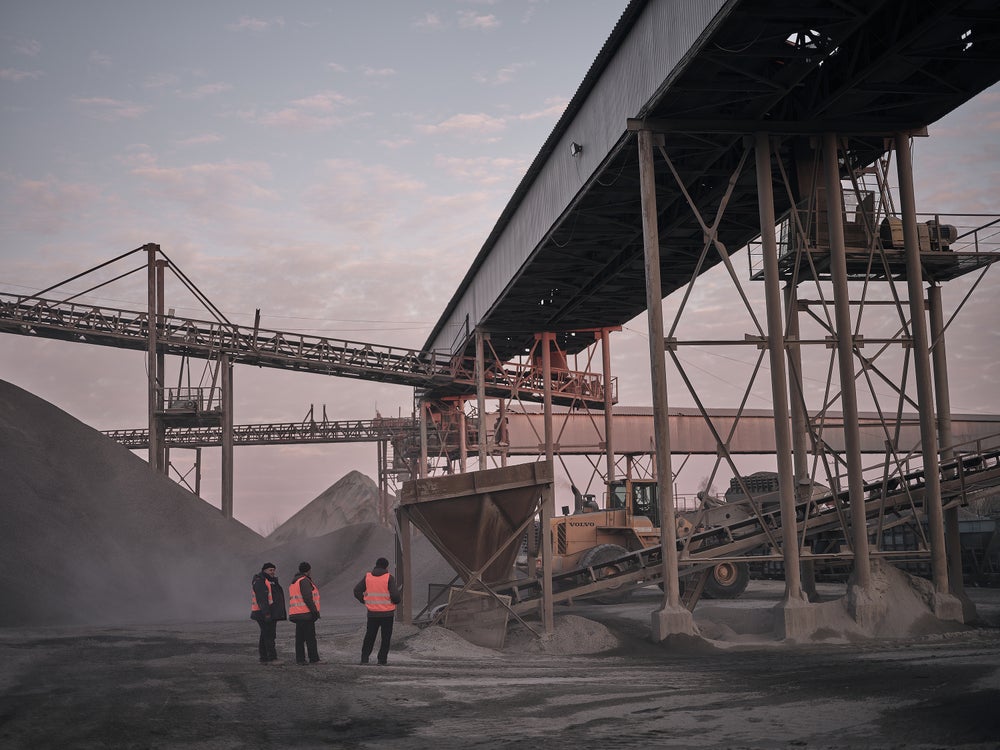
Granite being mined on February 26, 2025, in the Zhytomyr region of Ukraine. Despite the ongoing war, many mining companies across the country have continued their operations, extracting resources such as titanium, graphite, and beryllium. bKostiantyn Liberov/Libkos/Getty Images
Erin knows her three children haven’t had an easy time. When they were growing up, her partner was abusive towards her and the children witnessed violence and coercion at home before she found the strength to end the relationship. A few years later, her child Jay – then in their early teens – disclosed that a trusted adult had sexually abused them.
Erin, a successful businesswoman, has always believed Jay. She reported the abuse to police and severed ties with the alleged perpetrator. But Jay’s behaviour began to change. They threw knives at Erin. They set fires in the house. “They would use anything as a weapon to cause injury and harm,” Erin says. Often, Erin was forced to barricade herself inside her bedroom when Jay tried to attack her, while the other children fled the house. In many ways, she felt as if she was living with her abusive ex again.
When Erin was with her ex, she knew there was help available for victims of domestic abuse. But when she sought support for Jay’s behaviour, she felt as if she was hitting a brick wall. A mental health assessment concluded that Jay was not struggling with any psychological conditions. Social workers focused on how Erin could improve her parenting and downplayed the severity of Jay’s behaviour. Eventually, afraid that Jay would kill her, or one of her other children, Erin begged her local authority to take Jay into care. It wasn’t until Jay made a credible attempt to kill one of their siblings that she succeeded.
Erin didn’t know it at the time, but Jay’s behaviour towards her had a name – or rather, lots of names. Among other terms, it is called filial violence, child-to-parent abuse or child-against-parent aggression. There is no legal definition but the national domestic abuse charity Respect uses the acronym Capva (Child and Adolescent to Parent Violence and Abuse) as a term to describe a person aged between eight and 18 who engages in “harmful and repeated” abusive behaviour. This might include physical violence, sexual and economic abuse or “emotional, coercive or controlling behaviour”.
Over the last two decades, interest in Capva has risen steadily among academics, social workers and practitioners in sectors including domestic abuse, adoption and mental health services. The pandemic saw a surge in reported cases and today, specialist services working to address child-to-parent abuse report that they cannot keep up with demand. A storyline about this issue even featured in EastEnders in 2024, as Kat Slater struggled to cope with the increasingly violent behaviour of her teenage son Tommy. A new report by Femicide Census on more than 170 UK mothers killed by their sons (of all ages) in the past 15 years observed that mothers were sometimes considered a “safe space” for children to mete out violence.
Parents will reach out to their family and friends and get a response that’s quite shaming.
But this gradual growth in awareness has yet to translate into families getting the support they need. In a landmark survey by Respect, British parents shared their experiences of Capva. The survey report paints a picture of desperate parents punched in the face so they need stitches; attacked with knives and other weapons; suffering heart attacks due to the stress of their situations. It also highlights the silence, stigma and lack of understanding that surround child-to-parent abuse. More than half of parents experiencing Capva told Respect they had not sought support at all; of these, 68% said this was because they were ashamed or worried about the stigma or judgment from professionals.
.
Composite: Guardian Design; Laura Fay; Justin Paget/Getty Images
Film and Writing Festival for Comedy. Showcasing best of comedy short films at the FEEDBACK Film Festival. Plus, showcasing best of comedy novels, short stories, poems, screenplays (TV, short, feature) at the festival performed by professional actors.



 Composite: Guardian Design; Laura Fay; Justin Paget/Getty Images
 James' World 2