
Black Planter and Slave Owner in Florida: Anna Madgigine Jai Kingsley
Assorted human interest posts.
April 4, 2025
Business, Food For Thought, Human Interest, Political, Science, Technical amazon, business, Business News, current-events, Future, Hotels, human-rights, medicine, mental-health, research, Science, Science News, technology, Technology News, travel, vacation Leave a comment

Click the link below the picture
.
Temporary pacemakers can be used as a stopgap measure to regulate the heartbeat after surgery and in emergency situations. But the fact that they need to be surgically installed and removed also brings risk: moon walker Neil Armstrong famously developed fatal bleeding when surgeons removed his temporary pacemaker’s wires in 2012. Now researchers have developed a tiny temporary pacemaker that could eliminate some of that risk. Their device, just a few millimeters long, has no wires and needs minimally invasive placement. It can be injected into the body with a needle. And when its work is done, it simply dissolves.
Conventionally, temporary pacemakers comprise electrodes that are implanted in the heart muscle. These electrodes are connected to an external battery that delivers a pulse to control the heart’s rhythm and correct slow or irregular heartbeats. The new, less invasive pacemaker, which could be particularly useful in a newborn baby’s tiny heart, “consists of two electrodes—conducting metal pads—that are designed to do two things,” says Northwestern University biomedical engineer John A. Rogers, one of the co-authors of an April 2 paper in Nature that describes the device. “One is that they inject current into the cardiac tissue to stimulate contractions that lead to an overall cardiac cycle…. [The other is that they] provide a power source for driving the operation of the pacemaker.”
The mini pacemaker device does not have a separate battery. Instead, its body functions as a simple type of battery called a galvanic cell—the two electrodes, made of different combinations of magnesium, zinc, and molybdenum, react with the naturally occurring electrolytes in bodily fluids to produce an electric current.
On the side opposite of the electrodes lies a tiny light-activated switch that controls the battery’s operation. In the switch’s “on” position, an electrical pulse is delivered to the cardiac tissue; in its “off” state, nothing happens. The pacemaker is paired with a soft, flexible skin patch above the heart that monitors heart rate. When it senses an irregular or slow heartbeat, it flashes a light on and off to dictate the correct pacing. The pacemaker responds to near-infrared light—wavelengths that can penetrate deeply into biological tissues.
When the pacemaker’s job is done, it simply dissolves into the body. The device has a finite operating time of between a few days and about three weeks, Rogers says, depending on the choice of metals for the electrodes.
The current study is an advance on an earlier dissolvable pacemaker by the same team. The previous iteration used a technology called near-field communication instead of a galvanic cell; it ran on power beamed to an antenna, which made it much bigger. The extreme miniaturization is one of the advances in the new model, Rogers says. “What follows from that is that we can use multiple of these millimeter-scale pacemakers simultaneously at different locations of the heart [with the devices] operating in different wavelengths.”
The researchers are also looking at the possibility of integrating the devices with medical implants, such as replacement heart valves, that currently don’t have any kind of cardiac control mechanisms.
Thanh Nho Do, a biomedical engineer at the University of New South Wales in Australia, who wasn’t involved with the study, calls this pacemaker a breakthrough in miniaturization. It gives reliable and sustained pacing without external energy inputs, he says, and could significantly reduce procedural risks and patient discomfort.
Virginia Tech researcher Xiaoting Jia, who was also not involved in the project, says it has great potential for practical use in humans. “The team has performed comprehensive tests in animal models and in ex vivo settings [experiments outside the body]. The next important step would be to thoroughly evaluate the safety for application in humans and obtain [Food and Drug Administration] approvals for clinical use.” The researchers are working toward this via a new start-up company.
One key challenge, Do adds, is selecting suitable materials to balance functionality and safe degradation without triggering excessive immune reactions such as inflammation.
.
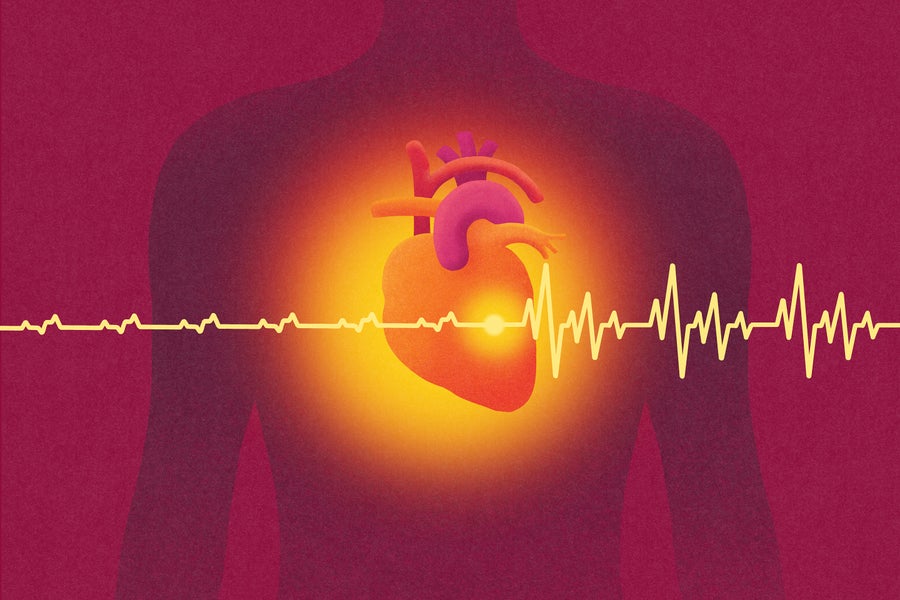
A pacemaker uses electricity to regulate heartbeats. Eugene Mymrin/Getty Images
.
.
Click the link below for the complete article:
.
__________________________________________
April 4, 2025
Business, Food For Thought, Human Interest, Political, Science, Technical amazon, business, Business News, current-events, Future, Hotels, human-rights, medicine, mental-health, research, Science, Science News, technology, Technology News, travel, vacation Leave a comment
Some content on this page was disabled on April 15, 2025 as a result of a DMCA takedown notice from Guardian Media Group. You can learn more about the DMCA here:
April 3, 2025
Business, Food For Thought, Human Interest, Political, Science, Technical amazon, business, Business News, current-events, Future, Hotels, human-rights, medicine, mental-health, research, Science, Science News, technology, Technology News, travel, vacation Leave a comment
Click the link below the picture
.
As anyone seeking to lose weight knows, diets come in and out of fashion. The Sexy Pineapple diet, launched by a Danish psychologist in 1970, never really took off. Kellogg’s no longer promotes the Special K diet, which swaps out two meals a day for a bowl of the breakfast cereal of that name. These days, you don’t hear much about eating according to blood type, cutting out acidic foods, or following the potato diet.
Intermittent fasting has, however, had unusual staying power for more than a decade—and has grown even more popular in the past few years. One survey found that almost one in eight adults in the United States had tried it in 2023.
The enduring popularity of intermittent fasting has been fed by celebrity endorsements, news coverage, and a growing number of books, including several written by researchers in the field. More than 100 clinical trials in the past decade suggest that it is an effective strategy for weight loss. And weight loss generally comes with related health improvements, including a reduced risk of heart disease and diabetes. What is less clear is whether there are distinct benefits that come from limiting food intake to particular windows of time. Does it protect against neurodegenerative diseases such as Alzheimer’s disease, enhance cognitive function, suppress tumours, and even extend lifespan? Or are there no benefits apart from those related to cutting back on calories? And what are the potential risks?
Neuroscientist Mark Mattson at the Johns Hopkins School of Medicine in Baltimore, Maryland, and author of the 2022 book The Intermittent Fasting Revolution, has been studying fasting for 30 years. He argues that, because ancient humans went for long periods without food as hunter-gatherers, we have evolved to benefit from taking breaks from eating. “We’re adapted to function very well, perhaps optimally, in a fasted state,” he says.
Fasting’s deep roots
Fasting is far from new. Periodic abstentions from food have long been practised in many religions. In the fifth century bc, the Greek physician and philosopher Hippocrates prescribed it for a range of medical conditions.
Recent scientific interest in fasting has its roots in questions raised by research on calorie restriction. Since the 1930s, studies have shown that putting rodents on low-calorie diets can increase their lifespans. Hypotheses proposed to explain this effect include that calorie restriction slows growth, lowers fat intake or reduces cellular damage caused by unstable free radicals.
But an observation made in 1990 by researcher Ronald Hart, who was then studying ageing, nutrition and health at the US National Center for Toxicological Research in Jefferson, Arkansas, highlighted another intriguing possibility. Calorie-restricted rodents fed once daily consumed all their food in a few hours. Perhaps the calorie-restricted rodents lived longer because they repeatedly went for 20 or so hours without eating.
In the immediate aftermath of a meal, cells use glucose from carbohydrates in food as fuel, either straight away or following storage in the liver and muscles as glycogen. Once these sources are depleted—in humans, typically around 12 hours after the last meal—the body enters a fasted state during which fat stored in adipose tissue is converted to ketone bodies for use as an alternative energy source.
‘Intermittent fasting’ generally refers to various diets that include repeated periods of zero- or very low-calorie intake that are long enough to stimulate the production of ketone bodies. The most common are time-restricted eating (TRE), which involves consuming all food in a 4- to 12-hour window, usually without calorie counting; alternate-day fasting (ADF), whereby people either abstain from food every other day or eat no more than around 500 calories on that day; and the 5:2 diet, which stipulates a 500-calorie limit on 2 days per week (see ‘Three forms of fasting’).
.
 TanyaJoy/Getty Images
.
.
Click the link below for the complete article:
.
__________________________________________
April 3, 2025
Business, Food For Thought, Human Interest, Political, Science, Technical amazon, business, Business News, current-events, Future, Hotels, human-rights, medicine, mental-health, research, Science, Science News, technology, Technology News, travel, vacation Leave a comment

Click the link below the picture
.
When it was all over, Amanda Cruz felt like a phoenix, a new person rising from what had been. First, though, she had to go through the fire.
Pre-caregiving Amanda was a talker. When she was 2 years old, she always waved to everyone on the bus. In her 20s, she moved to Denmark for graduate school knowing nobody and loved it. Later, she worked for city government in a job connecting with constituents. She learned to speak Spanish so she could chat with more people.
In 2023, her mom was dealing with a cancer relapse that had progressed into her spine. That July, right before Cruz’s parents moved to her neighborhood in South Carolina to be near her, her mom also had a stroke.
Cruz helped all along, but in early 2024, she took on a lot more — meal prep, meds, following up on appointments, trips to water aerobics. She still worked at a small construction company, she still went to the YMCA for yoga and Pilates. But as she became more involved in her mother’s life, Cruz began to change.
She became quieter, and she began to listen more. She was learning to hear beyond the words her mother said to understand what she really meant. Listening to judge whether her mother needed more pain meds, or to figure out what she really wanted at that moment, even if it was just a soda from the gas station. Her own words were saved for the daily rituals of bathing, medicine, questions about pain, and gently encouraging her mother to start saying her goodbyes.” I must pull myself back to put her forward,” she said to herself.
They sheltered together in this pool of quiet while the world seemed to accelerate around them. There was another stroke in November. Afterward, on the way home from the hospital, her mother fell silent. She did not speak at all during dinner that night. Cruz knew in her gut that the words were not coming back.
Now listening became a whole-body experience, to gauge her mom’s expressions and anticipate her needs. At times, her mother screamed in pain, and she had to listen to that too.
Along the way, she lost herself. “I was erased from myself by caring for this person,” she says. “I wasn’t my personality. I didn’t do things I liked anymore.” She was a people person, but there wasn’t time or space to engage with anyone besides her mother. To tell the truth, she wasn’t even interested. She found it hard to eat. The world seemed to be monochrome.
It’s well-known that family caregiving for sick or elderly adults can bring on stress, anxiety, and depression. It can also turn you into someone you don’t even recognize. Caregivers say it scrambles old habits and patterns, rearranges intimate relationships, and forces you to confront your limits. It can excavate and reorganize the soul, what one caregiver calls mind and body fracking.
Amanda Cruz felt her whole identity was shifting. She felt entwined with her mother, body and soul, but mostly all she could do is watch her suffer. She says now that God was pressing her through her fear. Only after her mother died in December would she find out what was on the other side.
The c-word
In 2009, two researchers proposed an explanation for why caregiving for an adult who is ill or disabled can be so profound. Their argument, simply called “caregiver identity theory,” is now widely accepted among psychologists and social workers who study and help caregivers.
.

Amanda Cruz took care of her mother, who died of cancer late last year. The experience changed her sense of identity. She is still sorting through what that means. Laura Bilson for NPR
.
.
Click the link below for the complete article:
.
__________________________________________
https://www.tangietwoods
¡Bienvenido de vuelta viajero!
so looking to the sky ¡ will sing and from my heart to YOU ¡ bring...
CEO and Founder of Nsight Health
Catholic News, Prayers, HD Images, Rosary, Music, Videos, Holy Mass, Homily, Saints, Lyrics, Novenas, Retreats, Talks, Devotionals and Many More
Decoding Power. Defying Narratives.
A creative collaboration introducing the art of nature and nature's art.
The Home Of Entertainment News, Reviews and Reactions
Hollow Earth Society
•Whenever you are confronted with an opponent, conquer him with love.(Gandhi)
Algotrader at TRADING-CLUBS.COM
Film and Writing Festival for Comedy. Showcasing best of comedy short films at the FEEDBACK Film Festival. Plus, showcasing best of comedy novels, short stories, poems, screenplays (TV, short, feature) at the festival performed by professional actors.
Peace. Tranquility. Insanity.
Take a ride on the wild side
Découvre des musiques prometteuses (principalement) dans la sphère musicale française.
No tiene que Ser una Pesadilla.
Life in Kana-text (er... CONtext)
Where feelings meet metaphors and make questionable choices.
Finding hope and peace through writing, art, photography, and faith in Jesus.
Eyasu
The Community for Wounded Healers: Former Medical Students, Disabled Nurses, and Faith-Fueled Pivots
love each other like you're the lyric to their music
Comprendere il mondo per cambiarlo.
Mid-Life Ponderings
Travel,Tourism, Life style "Now in hundreds of languages for you."
I speak the honest truth. I share my honest opinions. I share my thoughts. A platform to grow and get surprised.
User-generated ratings for ethical consumerism
Travel and Lifestyle Blog
Questo è un piccolo angolo di poesie, canzoni, immagini, video che raccontano le nostre emozioni
“Log your journey to success.” “Where goals turn into progress.”
scrivo per dare forma ai silenzi e anima alle storie che il mondo dimentica.
“Dream deeper. Believe bolder. Live transformed.”
Vichar, Motivation, Kadwi Baat ( विचार दर्शनम्)
Traum zur Realität
Savor. Style. See the world.
معا نحو النجاح
Best Forex Broker Ratings & Reviews
art, writing and music by James McFarlane and other musicians
living life in conscious reality
Freelance poetry writing
Peace 🕊️ | Spiritual 🌠 | 📚 Non-fiction | Motivation🔥 | Self-Love💕
Reiseberichte & Naturfotografie
 James' World 2