Home

My Kid Is Begging For A Pet. Is It Worth The Risk To My Sanity?

Leave a comment

Click the link below the picture

.

I have a photographic memory of the Christmas morning when a 10-year-old me was given the gift she’d been begging for — a Chinese box turtle we named Ping — carried down to the living room in his then-squeaky-clean glass enclosure like a little prince on parade. Despite Ping later being set free by the well-meaning people who had graciously inherited him (and likely killed within five minutes of freedom), Ping had a good life. He ate his lettuce pieces and chicken bits, swam in his plastic pool, occasionally scuttled across our kitchen floor. But, looking back, it’s not like my life was necessarily greatly enhanced by Ping — or by Dandelion the rabbit, or the pair of newts who lived in our bathroom, or Mei Li, the cat who hated people. Which is probably why, as an adult, I have never thought of pets as more than a nuisance.

Given my early cat trauma, I have often cited some combination of landlord restrictions and vague allergies whenever my kids brought up pets. But when we moved out of our two-bedroom apartment into a larger house last fall, I began to run out of excuses. I also began to wonder if I was missing out on something. We had been a little family, not stable by any means but at least consistent, for years now. Couldn’t we stand growing a bit? Around Christmas, I indulged myself in looking at the available cats at the local animal shelter. I imagined something simpler than my kids but more rewarding than my Peloton. In January, we brought home a 6-month-old tuxedo cat we named Midnight. (Sorry, shelter volunteers, but “Jerry” is not a cat name.) I am almost embarrassed to tell you how much I love this cat.

And when I asked my son, who gets easily anxious and dysregulated easily, why he was seeming so chill lately, he answered immediately: “Midnight.” Far from ruining our lives, our kitty does provide the company you are speculating a dog might — he snuggles with the kids when they are upset, provides me with the maternal adoration my children are slowly losing, and regularly serves as a peace offering when we hurt each other. I don’t know that the leopard gecko we tried to talk our kids down to would have achieved all this. With all due respect to goldfish, my experience tells me that they mostly just swim in circles.

But every family is different, and our experience is just our own, I surveyed a few dozen parents, with and without pets, to see what was going on in their households. Plenty of parents are ambivalent about family pets or fully against getting them. Angela, a mom of two, put it like this: “the last thing I need is another dependent!” Other parents who have said no to pets cited being at the limits of caretaking already (“Aren’t kids enough unpaid labor??”), as well as space issues, the expense and logistics of caring for them when traveling, and for one mom, the smell. (After 30 years, I can still perform olfactory teleportation and conjure the rankness of Ping’s cage.) One mother, Kate, admitted that she regrets adopting a cat for her kids: Like Mei Li, the cat’s love language is attacking humans, and Kate’s kids are now begging for a dog instead.

More of the parents I spoke to, however, believed that their animals, and what their animals meant to their children, were well worth it.

When Margaret and Brent, parents to 5-year-old Tycho, first started dating, a central component of their courtship was texting each other pictures of pit bull puppies. But after they had their son, Margaret felt overwhelmed by the idea of taking on another responsibility. “What if we end up with a dog who has medical complications or serious behavioral issues?” she wondered. When she pushed through her worries and adopted Phoebe, a sweet brown pit bull mix, they gained an essential family member. Tycho, who is autistic, took to Phoebe instantly, running alongside her at the beach and adding her name as one of his first spoken words. Phoebe is not only like a sibling to Tycho, whose older half-brothers are out of the house, but she helps him through transitions, something that can often cause him great distress. “If he gets to hold the leash,” Margaret admits, “he’ll kind of go anywhere.”

Several of the parents I surveyed used the terms “sibling” or “best friend” to describe their kids’ relationship with their pets (usually dogs or cats), in all the good and challenging ways, the latter often leading to growth, especially for only children. As one parent of a 19-month-old put it: “Sometimes she wants to smother [the dog] in love, other times she is frustrated by his presence. But he is teaching her to tolerate the existence of another being in our family that requires attention, care, and love.” Another parent referred to their dog as “screen-free entertainment.”

As far as having another dependent, for us, a cat feels like a good balance. Do the kids actually help? Studies are inconclusive, but my anecdotal experience is don’t count on it. While I was surprised to hear from my mom that I was actually a dutiful cleaner of Ping’s cage and attender of his vet appointments, my kids have been a real disappointment in terms of practical help with Midnight. Despite having had a democratic chore-picking session when we first got him, they have pretty much done zero daily feeding or cleaning. But they do care for him on their own unhelpful but sweet timelines, brushing him when they’re in the mood or clearing out his litter box when it feels like a game.

But other kids, it seems, are better than mine! Kim, father to Oscar, 7, and dog-father to Zazzie, claims that Oscar completes dog-related chores each morning. Darina’s 8-year-old actually walks one of their dogs! And Joy’s 9-year-old daughter not only feeds the dogs twice a day (“90% of the time, and only complains/drags her feet some of the time”) but also feeds and cleans the cage of her bearded dragon.

Of course, we couldn’t have had Midnight in our old apartment (there’s the space thing), and he’s already set us back a few hundred bucks. (Margaret told me, unapologetically, that she’s spent at least $10,000 on Phoebe’s medical bills.) But we were gifted a feeder by my sister, we bought some very cheap secondhand toys, and we are hoping keeping him inside will help.

.

https://imgix.bustle.com/uploads/image/2025/4/2/5dbe4776/template_header.jpg?w=720&h=810&fit=crop&crop=facesRomper

.

.

Click the link below for the complete article:

https://www.romper.com/parenting/my-kid-wants-a-pet?utm_source=pocket_discover_parenting

.

__________________________________________

First African American Minnesota Supreme Court Justice: Honorable Alan Page

Leave a comment

First African American Minnesota Supreme Court Justice: Honorable Alan Page

On This Day: April 23, 1963

Leave a comment

On This Day: April 23, 1963

Edward Brooke, First African American Elected to the US Senate by Popular Vote

Leave a comment

Edward Brooke, First African American Elected to the US Senate by Popular Vote

Suddenly Miners Are Tearing Up the Seafloor for Critical Metals

Leave a comment

Click the link below the picture

.

In hindsight, I am still not sure why the operators of the Danish-flagged MV Coco allowed me onboard. By the time I arrived last June, the vessel had been sailing for several weeks in the Bismarck Sea, a part of Papua New Guinea’s territorial waters, digging chunks of metal-rich deposits out of the ocean floor with a 12-ton hydraulic claw. The crew was testing the feasibility of mining seafloor deposits full of copper and some gold. It was probably the closest thing in the world to an operational deep-sea mining site. And the more I learned about the endeavor, the more surprised I became about the project’s very existence.

On that summer morning, I arrived on a red catamaran after rolling over six-foot swells in the South Pacific for two hours, and I clambered up a metal ladder hanging down on the Coco’s starboard side. The 270-foot, 4,000-ton vessel towers at its prow, its vast aft deck full of cranes, winches, and a remotely operated submersible. I was there at the invitation of Richard Parkinson, who founded Magellan, a company that specializes in deep-sea operations. At the top of the ladder, two crew members hauled me onboard the ship, which was roughly 20 miles from the closest shore, and a British manager for Magellan named James Holt greeted me, his smile sun-creased from more than two decades at sea. After a safety briefing, he ushered me through a heavy door into a dark, windowless shipping container on the rear deck that served as a control room.

Inside the hushed cabin was a young Brazilian named Afhonso Perseguin, his face lit by screens displaying digital readings and colorful topographic charts. Gripping a joystick with his right hand, he delicately maneuvered a big, boxy remotely operated vehicle, or ROV, over a patch of seafloor a mile below. I watched on monitors as a robotic arm protruded from the ROV toward a monstrous set of clamshell jaws suspended from a cable that rose all the way up to the ship. Perseguin used the ROV’s arm to steer the jaws as a colleague beside him radioed instructions to a winch operator on deck.

Hydraulics drove the open clamshell into a gray chunk of flat seafloor ringed by rocky mounds and jagged slopes. The opposing teeth dug in, throwing up clouds of silt that filled the video feeds from the ROV. The robotic arm released, and the winch started hauling the jaws, clamped shut around their rocky cargo, on an hour-long journey up to the ship.

Within minutes, Perseguin reversed the ROV to survey the wider scene, revealing chimneys of rock looming up from the seafloor, pale yellow and gray in the submersible’s powerful lights. Small mollusk shells dotted their surface; a crab scuttled out of frame. “Quite amazing, really, isn’t it?” murmured John Matheson, a shaven-headed Scot supervising the ROV team. As Perseguin steered the ROV slowly around a column, the cameras suddenly captured a glassy plume of unmistakably warmer water spewing up from a hidden crevice.

Hydraulics drove the monstrous clamshell jaws into a gray chunk of seafloor, throwing up clouds of silt that filled the video feeds from the remotely operated vehicle.

That hydrothermal vent marked the edge of a tectonic plate in the Bismarck Sea. The metal-rich magma ejected over millennia from several such vents—some dormant, some still active like this one—was Magellan’s prize. The teams on the ship, hired by a company called Deep Sea Mining Finance (DSMF), were conducting bulk seafloor mining tests under a 2011 mining license issued by the Papua New Guinea (PNG) mining regulator. I was the only reporter onboard to witness the operation. 

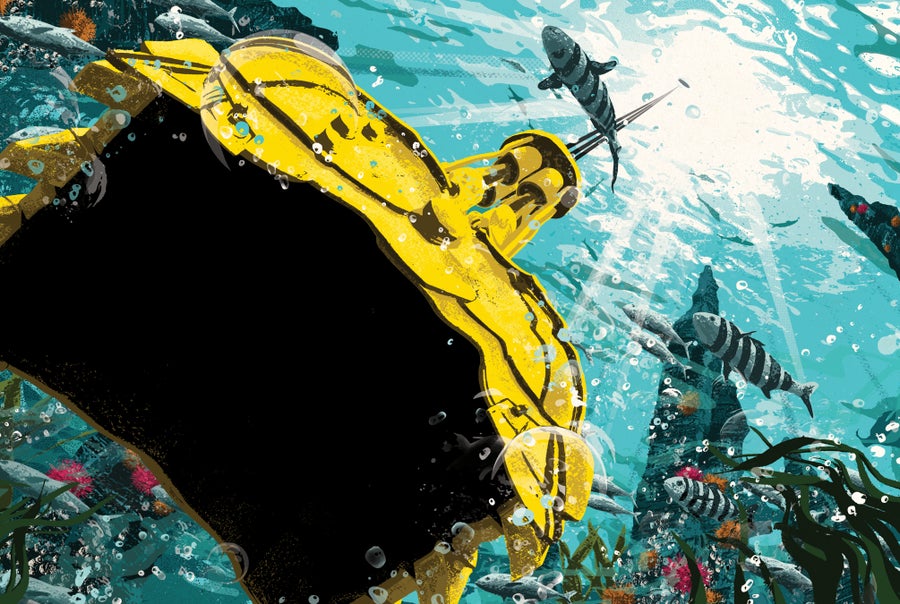
Worldwide, oceanographers have found three distinct types of mineral deposits on the deep seafloor. Manganese crust is an inches-thick, metal-rich pavement that builds up over millions of years as dissolved metallic compounds in seawater gradually precipitate on certain seafloor regions. Polymetallic nodules are softball-size, metal-rich rocks strewn across enormous seafloor fields. And massive sulfide deposits, such as the ones being mined by the crew of the Coco, are big mounds and stacks of rock formed around hydrothermal vents. Over the past decade, several companies have developed detailed but still hypothetical plans to profit from these deposits, hoping to help meet the world’s surging demand for the valuable metals necessary for batteries, electric cars, electronics, and many other products. Scientists have warned that these efforts risk destroying unique deep-sea habitats that we do not yet fully understand, and governments have been reluctant to grant exploration licenses in their territorial waters. But from what I saw during my two days and one night onboard the Coco, DSMF was digging in, and a new era of deep-sea mining had all but begun. 

Holt, one of Magellan’s offshore managers, said the aim was to test the physical requirements and environmental impacts of pulling up sulfide deposits. What would soon become unclear, however, was why the operators were stockpiling mounds of excavated rock on the seabed, and who in PNG knew the Coco was there.

.

https://static.scientificamerican.com/dam/m/5550a95dd9d4e8ce/original/sa0525Marx01.jpg?m=1744040578.643&w=900Mark Smith

.

.

Click the link below for the complete article:

https://www.scientificamerican.com/article/miners-are-pulling-valuable-metals-from-the-seafloor-and-almost-no-one-knows/

.

__________________________________________

Magnitude 6.2 earthquake strikes near Istanbul as scores injured in panic

Leave a comment

Click the link below the picture

.

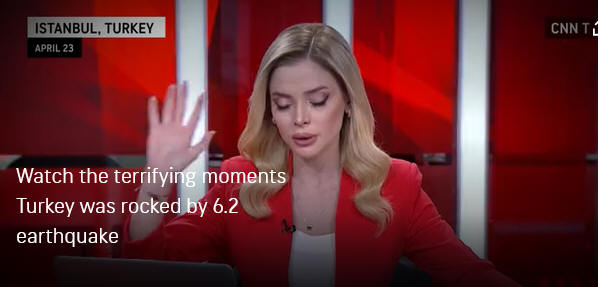
A 6.2-magnitude earthquake struck off the coast of Istanbul on Wednesday, leading to scenes of panic in the Turkish metropolis, officials said.

The quake occurred in the Sea of Marmara close to Silivri, which lies around 70 kilometers (40 miles) to the west of the city, and aftershocks are continuing, according to Turkey’s Disaster and Emergency Management Agency (AFAD).

Istanbul authorities said there had been no loss of life but that 151 people were injured after “jumping from heights due to panic.”

No residential buildings were damaged, the authorities added, but one abandoned building collapsed in the central Fatih District.

Turkey’s interior minister, Ali Yerlikaya, said the quake lasted a total of 13 seconds at a depth of seven kilometers, with 51 aftershocks recorded so far, the largest of which was of 5.9 magnitude.

“Let’s not let down our guard against possible aftershocks,” Yerlikaya said on X.

Some 6,100 emergency calls were received, he added, most of which were information inquiries.

CNN Turk anchor Meltem Bozbeyoğlu was live on air when the quake struck, with the studio visibly shaking on camera.

In February 2023, Turkey experienced one of its deadliest earthquakes in the last century, when a 7.8 magnitude quake struck 23 kilometers (14.2 miles) east of Nurdagi, in the southern Gaziantep province, at a depth of 24.1 kilometers (14.9 miles).

That quake also hit northern Syria, killing more 50,000 people across both countries.

With two key fault lines in its vicinity – the North Anatolian and the East Anatolian – Turkey is one of the most seismically active regions in the world, a reality that has amplified concern over Istanbul’s earthquake preparedness.

.

.

.

Click the link below for the complete article:

https://www.accuweather.com/en/weather-news/earthquake-strikes-off-coast-of-istanbul-turkish-officials-say/1768066

.

__________________________________________
I Already Knew I Was Fragile

Leave a comment

Click the link below the picture

.

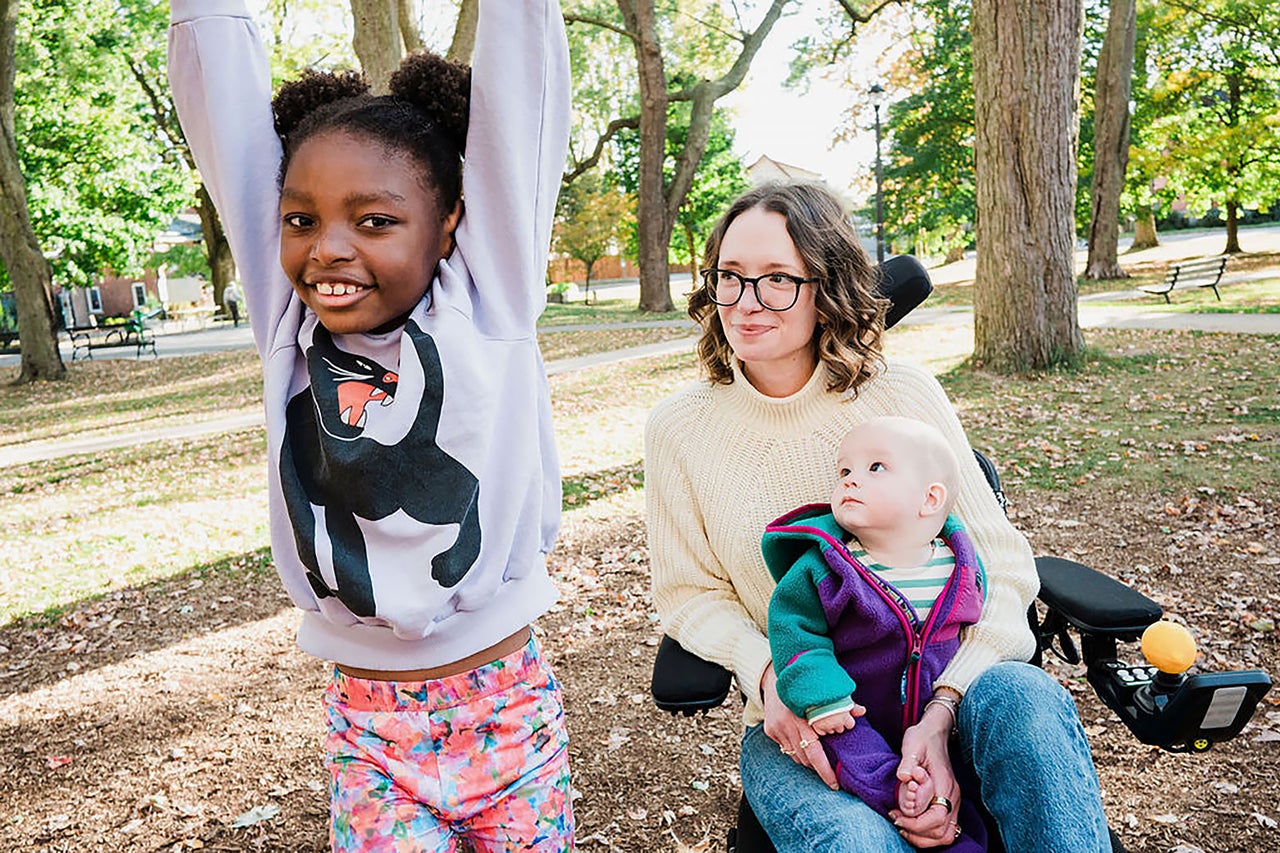
Most of K’s newborn clothes arrived inside a white trash bag left outside our two-bedroom Oakland house. We bought her bite-marked crib on Craigslist. I meant to take monthly photos to show her growth, but when I look back, there is only one, from 3 months. I’ve scribbled “3” in ballpoint pen on a piece of paper torn from a spiral notebook. It looks like a ransom note.

I was 34 when I became K’s foster mom. We got the call at bedtime on a Tuesday; a newborn needed a place to stay. The next morning, I went to the hospital to meet her in the NICU. She was home with me by noon. We weren’t expecting a newborn, and while she slept on my chest, I started a list of what we needed: supplies, a schedule, help.

If (and only if) K was touching me or my husband, David, she was content. And so, I held her. For six months, I moved from my bed to the sofa and back again. She napped on me and babbled on me, and played on me. In one day, I transitioned from a childless grad student to someone who never stopped cuddling, feeding, and changing a newborn. By the time she was a few weeks old, it was clear she might be with us long-term. When she was 1, we adopted her.

While our home life during K’s early days was not social-media polished, our joy and connection felt like a miracle. I have never been as at ease in my body and life as when I was parenting her during those first months.

Meeting K wasn’t the first time my life shifted over the course of a day. One August, when I was 28, I woke up a runner and went to bed disabled. I co-owned a real estate firm at the time and, through relentless professional effort, was flush with cash. My then-husband and I decided to take a luxury trip to Greece. This was pre-Instagram, but you’d never know it from our perfectly orchestrated itinerary. Linen halter-dresses and straw hats, and beers in the ocean. My young body was toned and tan. We were committed to having the best vacation. It probably goes without saying: I was profoundly unhappy.

While hiking on the island of Santorini, we encountered a pack of wild dogs baring their teeth. The sun was more punishing than we had anticipated, and we had run out of water. We scrambled up the hillside, away from the dogs, shins scraping on the brush. The detour led to heat exhaustion, which led to an electrolyte imbalance, which activated a latent neurological condition. The day after the hike, I could hardly stand and spent the day wracked with nausea, dizziness, and pain. It’s been 14 years, and my health has not measurably improved.

It took me a year to admit I was sick and two to get diagnosed. I didn’t accept my diagnosis for another year, and it was longer still before I would call myself disabled. During that time, I had to stop working, ended my long-term relationship, and moved into a tiny one-bedroom apartment. Instead of wild parties at our sprawling loft, I watched Lifetime shows with my little sister. My life shrank. My body suffered.

Inside the agony, I found my way to something true within myself. The pursuit of perfection in my 20s had been caustic. Of course, I didn’t invent the framework in which I operated at that time. Thinking that beauty and wealth will make our lives good is an edict of capitalism. Our economic system reinforces that our worth is directly related to our ability to work and produce. It’s no coincidence that this manically attractive life was very expensive.

Admitting to the inevitability of suffering and fragility in my 30s was a salve. Pretending that my own performance could insulate me from pain had caused me far more harm than the actual limitations of my body.

.

https://compote.slate.com/images/15a59aa2-8d80-404e-8fa9-40a439d12456.jpeg?crop=1560%2C1040%2Cx0%2Cy0&width=1280Liz Cooper

.

.

Click the link below for the complete article:

https://slate.com/life/2025/04/newborn-sleep-parenting-schedule-mental-health.html?utm_source=pocket_discover_parenting

.

__________________________________________

First Woman and First African American Elected to State Senate, Illinois: Carol M. Braun

Leave a comment

First Woman and First African American Elected to State Senate, Illinois: Carol M. Braun

On This Day: April 22, 1987

Leave a comment

On This Day: April 22, 1987

The Nontoxic Cleaner That Kills Germs Better Than Bleach—And You Can Use It on Your Skin

Leave a comment

Click the link below the picture

.

As norovirus surged across the U.S. last winter, the only thing more horrifying than descriptions of the highly contagious illness—violent projectile vomiting!—was learning that nothing seemed to kill the microbe that causes it. Hand sanitizers made with alcohol are useless. Water needs to be above 150 degrees Fahrenheit to kill the virus, which is too hot for handwashing. Rubbing with soapy water and rinsing can physically remove the virus from your hands and send it down the drain, but won’t effectively kill it. Bleach dismantles norovirus, but you can’t spray bleach on skin or food or many other things, and norovirus can live on surfaces for weeks.

During the early days of the COVID pandemic, however, I had learned about a disinfecting agent called hypochlorous acid, or HOCl. My dad, a now retired otolaryngologist, had been wondering whether there was something he might put up patients’ noses—and his own—to reduce viral load and decrease the chance of COVID infection without, of course, irritating the mucosa or otherwise doing harm. He was imagining a preventive tool, another layer of protection for health-care workers in addition to masks and face shields.

Hypochlorous acid is a weak acid with a pH slightly below neutral. It should not be confused with sodium hypochlorite (NaClO), the main active ingredient in household bleach products, even though they both involve chlorine. Chemically, they are not the same. Sodium hypochlorite is a strong base with a pH of 11 to 13, and when added to water for consumer products, it can be irritating and toxic. Hypochlorous acid, in contrast, is safe on skin.

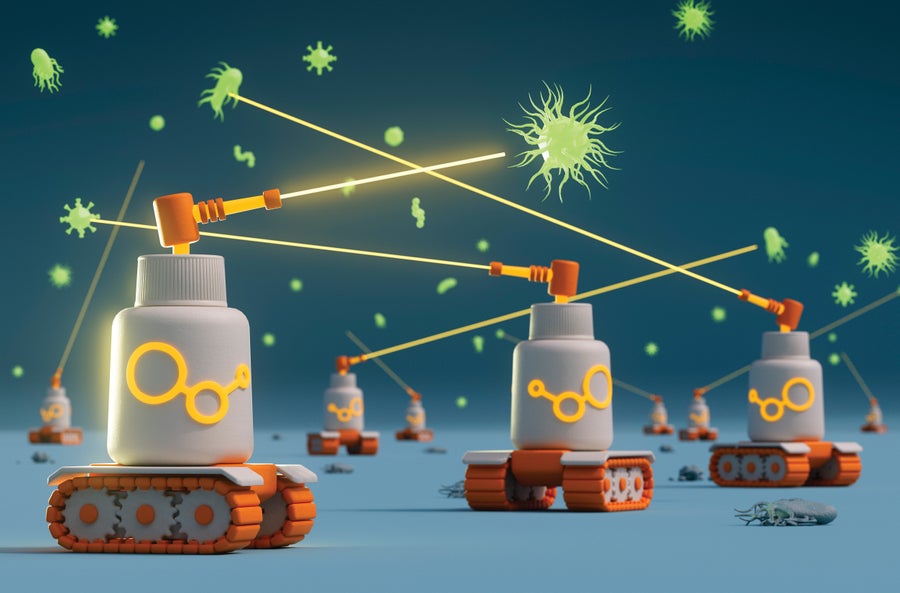
All mammals naturally make hypochlorous acid to fight infection. When you cut yourself, for instance, white blood cells known as neutrophils go to the site of injury, capturing any invading pathogens. Once the pathogen is engulfed, the cell releases biocides, including hypochlorous acid, a powerful oxidant that kills invading microbes within milliseconds by tearing apart their cell membranes and breaking strands of their DNA.

Hypochlorous acid is a well-studied disinfectant that appears to be extremely effective and safe, so why isn’t it a household name? The synthetic form of hypochlorous acid destroys a broad spectrum of harmful microbes, including highly resistant spores and viruses such as norovirus. Like most disinfectants, it kills pathogens by penetrating their cell walls. But compared with bleach, hypochlorous acid has been shown to be more than 100 times more effective at much lower concentrations, and it works much faster.

Hypochlorous acid isn’t new. It’s listed as one of the World Health Organization’s essential medicines and is approved by the U.S. Food and Drug Administration for use on food products and in certain clinical applications. It’s increasingly used in industrial and commercial settings, such as water-treatment plants, hospitals, and nursing homes. It doesn’t irritate the skin, eyes, or lungs. In fact, optometrists use it to clean eyes before procedures, and people have been treating wounds with it for more than a century. It breaks down quickly, doesn’t produce toxic waste, and isn’t harmful to animals or the environment. The U.S. Environmental Protection Agency lists it as a surface disinfectant for the COVID-causing virus SARS-CoV-2.

Hypochlorous acid is a well-studied disinfectant that appears to be extremely effective and safe, so why isn’t it a household name?

.

https://static.scientificamerican.com/dam/m/75e1f06d911fff11/original/sa0525Schw01.jpg?m=1744124289.697&w=900Richard Borge

.

.

Click the link below for the complete article:

https://www.scientificamerican.com/article/hypochlorous-acid-is-trending-in-skin-care-and-cleaning-but-does-it-work/

.

__________________________________________

Older Entries Newer Entries

MRS. T’S CORNER

https://www.tangietwoods

Amor Entre Estrellas

¡Bienvenido de vuelta viajero!

Heart of Loia `'.,°~

so looking to the sky ¡ will sing and from my heart to YOU ¡ bring...

Michael Ciullo

CEO and Founder of Nsight Health

Nelson MCBS

Catholic News, Prayers, HD Images, Rosary, Music, Videos, Holy Mass, Homily, Saints, Lyrics, Novenas, Retreats, Talks, Devotionals and Many More

Global geopolitics

Decoding Power. Defying Narratives.

Talk Photo

A creative collaboration introducing the art of nature and nature's art.

Movie Burner Entertainment

The Home Of Entertainment News, Reviews and Reactions

Le Notti di Agarthi

Hollow Earth Society

C r i s t i a n a' s Fine Arts ⛄️

•Whenever you are confronted with an opponent, conquer him with love.(Gandhi)

TradingClubsMan

Algotrader at TRADING-CLUBS.COM

Comedy FESTIVAL

Film and Writing Festival for Comedy. Showcasing best of comedy short films at the FEEDBACK Film Festival. Plus, showcasing best of comedy novels, short stories, poems, screenplays (TV, short, feature) at the festival performed by professional actors.

Bonnywood Manor

Peace. Tranquility. Insanity.

Warum ich Rad fahre

Take a ride on the wild side

Madame-Radio

Découvre des musiques prometteuses (principalement) dans la sphère musicale française.

Ir de Compras Online

No tiene que Ser una Pesadilla.

Kana's Chronicles

Life in Kana-text (er... CONtext)

Jam Writes

Where feelings meet metaphors and make questionable choices.

emotionalpeace

Finding hope and peace through writing, art, photography, and faith in Jesus.

WearingTwoGowns.COM

The Community for Wounded Healers: Former Medical Students, Disabled Nurses, and Faith-Fueled Pivots

...

love each other like you're the lyric to their music

Luca nel laboratorio di Dexter

Comprendere il mondo per cambiarlo.

Tales from a Mid-Lifer

Mid-Life Ponderings

Creative

Travel,Tourism, Life style "Now in hundreds of languages for you."

freedomdailywriting

I speak the honest truth. I share my honest opinions. I share my thoughts. A platform to grow and get surprised.

The Green Stars Project

User-generated ratings for ethical consumerism

Cherryl's Blog

Travel and Lifestyle Blog

Sogni e poesie di una donna qualunque

Questo è un piccolo angolo di poesie, canzoni, immagini, video che raccontano le nostre emozioni

My Awesome Blog

“Log your journey to success.” “Where goals turn into progress.”

pierobarbato.com

scrivo per dare forma ai silenzi e anima alle storie che il mondo dimentica.

Thinkbigwithbukonla

“Dream deeper. Believe bolder. Live transformed.”

Vichar Darshanam

Vichar, Motivation, Kadwi Baat ( विचार दर्शनम्)

Komfort bad heizung

Traum zur Realität

Chic Bites and Flights

Savor. Style. See the world.

ومضات في تطوير الذات

معا نحو النجاح

Broker True Ratings

Best Forex Broker Ratings & Reviews

Blog by ThE NoThInG DrOnEs

art, writing and music by James McFarlane and other musicians

fauxcroft

living life in conscious reality

Srikanth’s poetry

Freelance poetry writing

JupiterPlanet

Peace 🕊️ | Spiritual 🌠 | 📚 Non-fiction | Motivation🔥 | Self-Love💕

Sehnsuchtsbummler

Reiseberichte & Naturfotografie