April 27, 2025
Mohenjo
Business, Food For Thought, Human Interest, Political, Science, Technical
amazon, business, Business News, current-events, Future, Hotels, human-rights, medicine, mental-health, research, Science, Science News, technology, Technology News, travel, vacation

.
Hmmmmm…
.
Isaiah 65:13-16
New Living Translation
13 Therefore, this is what the Sovereign Lord says:
“My servants will eat,
but you will starve.
My servants will drink,
but you will be thirsty.
My servants will rejoice,
but you will be sad and ashamed.
14 My servants will sing for joy,
but you will cry in sorrow and despair.
15 Your name will be a curse word among my people,
for the Sovereign Lord will destroy you
and will call his true servants by another name.
16 All who invoke a blessing or take an oath
will do so by the God of truth.
For I will put aside my anger
and forget the evil of earlier days.
.
__________________________________________
April 27, 2025
Mohenjo
Business, Food For Thought, Human Interest, Political, Science, Technical
amazon, business, Business News, current-events, Future, Hotels, human-rights, medicine, mental-health, research, Science, Science News, technology, Technology News, travel, vacation

Click the link below the picture
.
CLIMATEWIRE | Climate-warming carbon dioxide concentrations in the atmosphere grew at a record-breaking speed in 2024, surging by 3.7 parts per million, a recent NOAA data analysis has found.
It’s one of the agency’s biggest scientific findings of the year — yet the research largely has flown under the radar after NOAA officials took steps to minimize the announcement.
Instead of publishing a press release or a featured article online, the agency described the findings only in social media posts on Facebook and on X. And the posts failed to highlight the dataset’s most important finding: that last year’s CO₂ concentrations jumped by an unprecedented amount.
That’s a departure from the agency’s historical approach to public communication. NOAA typically releases a public report each spring, prominently featured on its website, describing the previous year’s greenhouse gas concentrations. It also usually sends a press release to members of the media.
Last year’s report, for instance, noted that carbon dioxide, methane and nitrous oxide concentrations all continued to climb in the atmosphere in 2023.
According to a source with knowledge of the 2024 analysis, NOAA staff prepared a public web story this year as usual. But officials nixed the report at the last minute, instead releasing the findings only on social media. The source was granted anonymity because they feared reprisal from the Trump administration.
A NOAA communications officer did not respond to a request for comment.
The move is part of a broader assault on NOAA science and public communications by the new administration.
Last month, the agency confirmed it was ending its regular monthly climate briefings, in which NOAA scientists presented climate and weather data to the media. That’s on top of widespread layoffs this year at the agency. And a recent proposal from the White House Office of Management and Budget would dramatically reorganize the agency and terminate much of its climate work — eliminating its entire Office of Oceanic and Atmospheric Research.
A NOAA official suggested that downplaying the new CO₂ data has dampened media attention on what otherwise would have been a major climate headline. The scientific findings were reported earlier this month by The Washington Post, and the suppressed web story was reported by CNN earlier this week. There’s otherwise been little news reported on the subject.
But scientists say it’s a finding that’s worth more attention — and more worry. Some researchers believe last year’s CO₂ spike is evidence that the Earth system itself is becoming more vulnerable to the impacts of rising temperatures.
Natural landscapes, such as forests and wetlands, historically have acted as a carbon sink — soaking up excess CO₂ emissions and helping to offset some of the impacts of climate change. But some of these ecosystems may be breaking down under the stress of continued warming, with the added side effects of droughts and wildfires. And they’re storing less carbon in the process.
.

Volumetric visualization of the total carbon dioxide (CO₂) on a global scale added on Earth’s atmosphere over the course of the year 2021. NASA’s Scientific Visualization Studio
.
.
Click the link below for the complete article:
.
__________________________________________
April 27, 2025
Mohenjo
Business, Food For Thought, Human Interest, Political, Science, Technical
amazon, business, Business News, current-events, Future, Hotels, human-rights, medicine, mental-health, research, Science, Science News, technology, Technology News, travel, vacation

Click the link below the picture
.
A California research collective known as Noah’s Ark Scan says it will begin the first controlled excavation of the Durupınar Site on Mount Ararat’s southern flank once a preservation framework is in place with local universities.
“After securing additional information in cooperation with local universities in Turkey, we will establish a site-preservation plan and confirm whether the structures discovered through radar scans are artificial or natural,” the team told the Korean outlet FN News.
Soil samples taken during earlier seasons by Turkish and American geologists contained clay, marine sediments and mollusk fragments dated to between 3,500 and 5,000 years ago. Those results, published last year, placed the material in the Copper Age, a horizon some historians link to large flood traditions.
The Durupınar hill first drew attention in May 1948, after earthquakes and torrential rains stripped away overburden. Turkish Army Captain İlhan Durupınar re-examined the site in 1959 while mapping the region for NATO and forwarded his photographs to Ankara, giving the outcrop its current name.
Many geologists who visited in the 1960s called the feature an unusually eroded rock formation, yet the ark hypothesis has persisted. The new project marks the first attempt to open trenches at the locality since systematic sampling began in 2021.
Mount Ararat, a dormant volcano topping 5,137 m, dominates a border zone shared by Turkey, Iran and Armenia. A small visitor centre stands a few hundred metres from the site, but guides advise foreign travellers to use caution in the politically sensitive area.
Excavation permits are still pending. Noah’s Ark Scan says fieldwork will not begin until protective measures are agreed with Turkish authorities and regional universities.
.
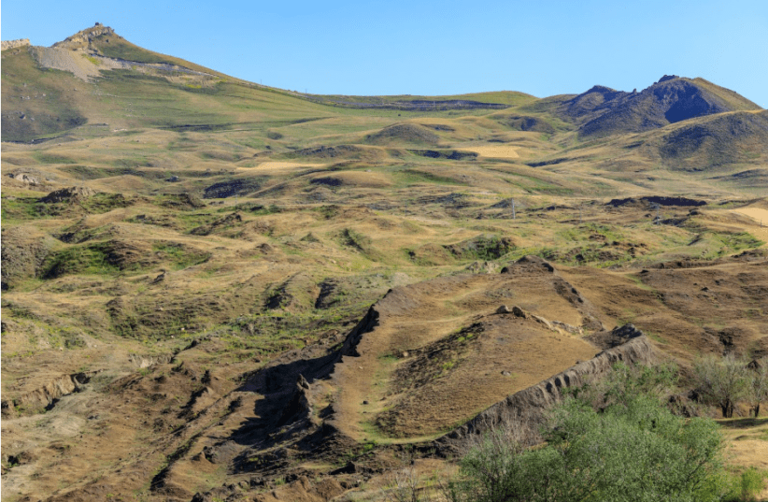 The Durupınar hill. © (photo credit: Kasbah. Via Shutterstock)
.
.
Click the link below for the complete article:
.
__________________________________________
April 27, 2025
Mohenjo
Business, Food For Thought, Human Interest, Political, Science, Technical
amazon, business, Business News, current-events, Future, Hotels, human-rights, medicine, mental-health, research, Science, Science News, technology, Technology News, travel, vacation

Click the link below the picture
.
Our bodies produce all kinds of substances, and people have different tolerance levels for them. One that can be really bothersome is earwax. But believe it or not, this substance actually serves a purpose ― and you need to be careful when it comes to removing it. Below, experts break down what you need to know about dealing with earwax and cleaning out your ears.
First of all, you probably don’t need to clean out your ears
“Most people do not need to remove their ear wax,” said Dr. Erich P. Voigt, an associate professor in Otolaryngology-Head & Neck Surgery at NYU Grossman School of Medicine. “It is a protective coating of the ear canal. It is a waterproofing agent and has anti-microbial properties. It helps prevent outer ear infections.”
In addition to protecting your ears from water damage and infection, earwax also lubricates the ears, preventing the area from feeling dry and itchy. And like other parts of the body, ears are “self-cleaning,” so you don’t really need to wash the inside area.
“Think from an evolutionary standpoint,” said Dr. Lawrence R. Lustig, chair of the Department of Otolaryngology-Head & Neck Surgery at Columbia University Vagelos College of Physicians and Surgeons. “If Mother Nature designed an ear that had to be cleaned, that would be a poor design. We didn’t have ear cleaners 500,000 years ago.”
He described the system as a “conveyer belt of skin.”
“Earwax is a combination of skin and oil,” Lustig said. “Skin migrates out from the eardrum to the outside of the ear canal, and as those migrating dead skin cells mix with the oil glands of the ear canal on the way out, that’s where you get earwax.”
Some people have a migration problem, produce too much wax or wax of an abnormal consistency. They might be prone to wax infections and require medical intervention to remove their earwax, which can block the ear and impair hearing. But for most of us, the wax clears out naturally as we go about our daily lives.
“The body has a system for creating wax and pushing it out,” said Dr. Bradley B. Block, an otolaryngologist-head and neck surgeon and host of the “Physician’s Guide to Doctoring” podcast. “As you chew and talk, the ear canal skin moves, and this pushes the wax out. Interfering with this system can lead to wax getting pushed in and accumulating, clogging the ear canal, so cleaning the ears can have the paradoxical effect of clogging the ear.”
But if you insist on doing it, don’t use Q-tips
When you ask people what Q-tips are meant for, their answers will likely include cleaning out earwax. This practice has become so commonplace that Kevin James’ character in “Hitch” has a dance move that mimics cleaning out the ears with a Q-tip.
But pop culture fans might also remember that brutal scene from “Girls” when Hannah inserts a Q-tip too far into her ear and accidentally punctures her eardrum. The packaging for Q-tip products today even contains a clear warning: “Do not insert inside the ear canal.”
.

Your ears naturally clean themselves. .Jonathan Kitchen via Getty Images
.
Click the link below for the complete article:
.
__________________________________________
April 26, 2025
Mohenjo
Business, Food For Thought, Human Interest, Political, Science, Technical
amazon, business, Business News, current-events, Future, Hotels, human-rights, medicine, mental-health, research, Science, Science News, technology, Technology News, travel, vacation
Click the link below the picture
.
For more than half a century planetary exploration and space science have been a hallmark of American achievement and excellence. From Mercury to Pluto and beyond, we have gained enormous understanding about planetary origins and evolution. We have learned about the atmospheric, surface and interior dynamics of other worlds. All those discoveries have carried implications for what’s happening here on Earth. In classrooms around the world, exploring new worlds and probing the mysteries of the universe is an emblem of America.
But that may now end; the Trump administration is poised to take the chainsaw to space science, just as it has to almost everything else in the U.S. science portfolio. Trump officials are planning huge, destructive cuts for space science, according to news reports, likely killing all new mission plans for this decade, including the long-sought, all-important Mars Sample Return mission. This flight was meant to return now-waiting samples from the red planet.
China is already leading the way to the moon and Mars with robotic vehiclelike rovers and sample returns and is also likely to do so with human missions. The U.S. human space program, meanwhile, is bogged down with a stumbling Artemis program, built with a convoluted architecture marked so far by failures and delays in nearly every major component. The latest is the repeated failure of SpaceX’s Starship, which twice now has exploded in flight. Reminiscent of the 1980s, when we paused planetary exploration after the success of Viking and launch of Voyager 1 and 2, the U.S. has iced new Mars missions, with plans to cancel Mars Sample Return, and redirected our once great lunar capability to small experimental landers built by inexperienced new companies. Beyond specific missions, the loss of space science research capability will be a generational calamity.
So what? Does it matter if the U.S. is No. 2 on other worlds? Space is a pretty distant arena—even more distant if it is the moon, Mars and beyond you are thinking of. Compared with the “America First” emphasis on AI chips, rare earth metals, tariffs and trade wars, promoting Teslas and cutting foreign aid, space is a minor political and economic player. But we are becoming No. 2 in such areas of focus too (see China’s advances in DeepSeek AI, BYD electric cars and developing hydropower in Africa). Our failures on Earth are not unrelated to our narrow and shortsighted vision for the moon and Mars, and the broader dismissal of science.
Focusing inward is what China’s Ming dynasty did in the 15th century and the Portuguese and Dutch did in the 18th. Our step back from exploration of new worlds is one deep into mediocrity or even obscurity. It’s tied together—the Apollo program was not about a race to the moon; it was about a race between geopolitical powers to prove their economic and technological superiority to the world. So too now. Africans will feel the U.S. retreat as we withdraw humanitarian and infrastructure aid. They will also feel the U.S. retreat from science and exploration just as China goes forward with theirs.
I don’t think it matters to Africans if it is Chinese or Americans there, engaged and helping them. I also don’t think it matters to the moon or Mars whether it is China or the U.S. building things there. But if we accept mediocrity and turn our focus inward, it will matter to us, especially to our children. The isolationist or island mentality expresses to our children and to the world that we have given up on ambition and growth and understanding the universe, that we will be satisfied with being less than we can be.
.
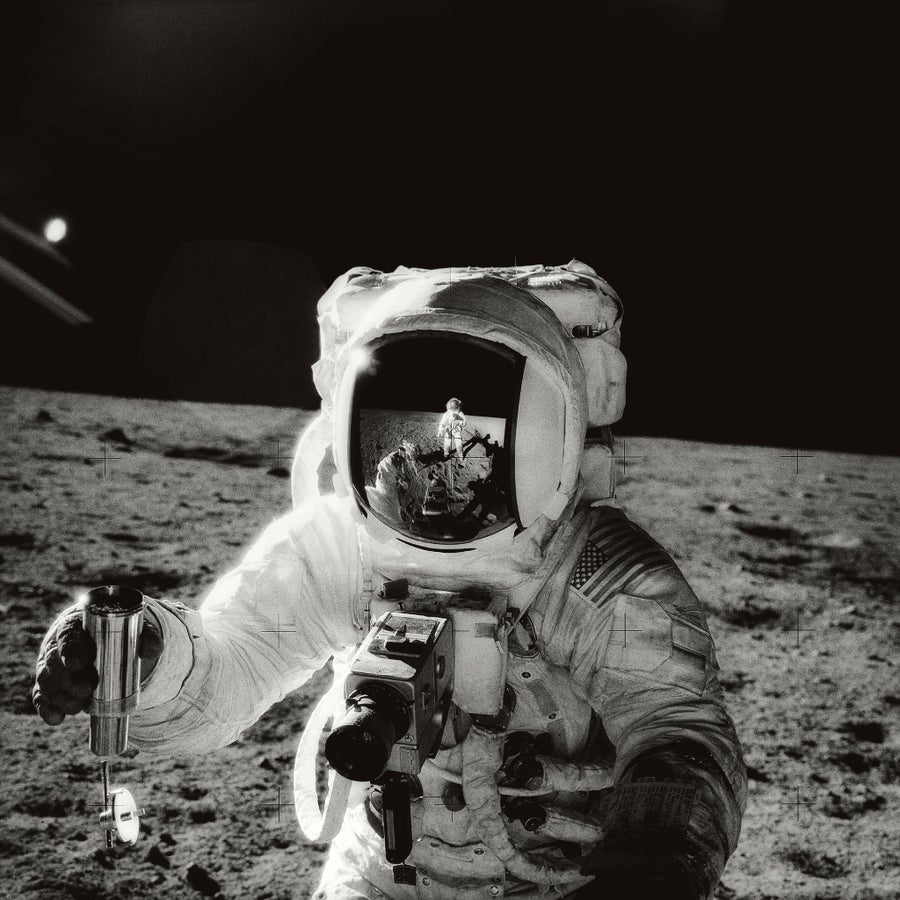
Apollo 12 astronaut Alan Bean during the second moonwalk EVA. NASA/Recall Pictures/Alamy Stock Photo
.
.
Click the link below for the complete article:
.
__________________________________________
April 26, 2025
Mohenjo
Business, Food For Thought, Human Interest, Political, Science, Technical
amazon, business, Business News, current-events, Future, Hotels, human-rights, medicine, mental-health, research, Science, Science News, technology, Technology News, travel, vacation

Click the link below the picture
.
Hmmmm…
As the famous saying goes, “The brightest flame burns the quickest“. There are plenty of successful entrepreneurs who quickly rise to financial success, only to lose everything just as abruptly.
Life in the fast lane is not without its speed bumps, and here are some of the people who went from rags to riches – and then vice-versa.
The Millionaires & Billionaires Who Lost It All
1. Jordan Belfort
The once was Multi-Millionaire stockbroker had it all. Yachts, planes, women, midget throwing parties & drugs where just a few of the high life activities on Jordans agenda. Jordan was reported to be making $250 Million at the age of 25 through his stockbroking firm Stratton Oakmont which functioned like a boiler room and later served as inspiration for the creation of the film also known as ‘Boiler Room‘, starring Vin Diesel & Giovanni Ribisi. Jordan Belfort’s multi millions where stripped from him when the FBI pinned him for securities fraud and money laundering.
After Jordan Belforts release from jail and paying back the 100 millions of dollars he owed other stock brokers Jordan decided to turn his life around releasing the New York Best Seller ‘Catching The Wolf Of Wall Street‘ which was written by Jordan himself about his Wall Street sagas and his run ins with the law. This Book has been developed into a movie which will be directed by Martin Scorsese starring Leonardo DiCaprio as Jordan Belfort. Jordan also has toured the world discussing how to achieve success without sacrificing integrity and ethics.
The lesson here is that there is always room for change, if Jordan can change his life for the good, you can too.
2. Kim Dotcom
This German internet millionaire is most popularly known as the founder of Megaupload, an online file sharing service. Kim Dotcom’s fall from grace isn’t really because of bad business decisions as much as he was involved in a lot of suspected criminal activities. While his website is being accused of copyright infringement, he’s also been charged with insider trading, embezzlement, and computer fraud. The problem with Kim is not only that he couldn’t handle his rock star lifestyle, but also the fact that he amassed his fortune through suspected illegal means.
UPDATE: Kim Dotcom has returned with a more legit way of sharing with his new online company MEGA. We will keep you updated with his progress. Good on you Kim for having another go and doing things right.
3. Allen Stanford
Currently in jail and awaiting trial, this former billionaire was charged with running a multi-billion dollar Ponzi Scheme. Having acted as the Chairman of Stanford Financial Group, he’s been accused of masterminding a financial conspiracy to rob investors out of their hard-earned money and misused their funds to sustain his extravagant lifestyle. Like Kim Dotcom, he tried living the good life at the expense of others and is now reaping the consequences of his actions. As of today, Allen Stanford is taking a number of medications for his depression and is even partially blind after an inmate assaulted him.
4. M.C. Hammer
MC Hammer rose to fame in the 1990s and earned around $30 Million during the peak of his musical career. Shortly after his success, M.C. Hammer wasted no time squandering his fortune on mansions, sharing money with friends and expensive toys. Before the decade was over, he filed for bankruptcy due to an enormous debt. He’s a classic example of someone earning his wealth too fast and too soon, which made it hard for him to handle his finances. Now living as a pastor in California, he learned the hard way that one should learn from their mistakes and consider the consequences of a decision before making it.
5. Sean Quinn
Only a few years ago, this Irish businessman was worth $6 Billion. However, he quickly lost it all after he invested twenty five percent (25%) in Anglo Irish Bank. However, his mistake was to use money he borrowed from his own insurance company. When a financial crisis swept his country, his Anglo Irish shares suffered and caused him billions in debt. What people can learn from Sean Quinn’s example is that itís alright to take risks only if youíve done your homework to avoid getting burned after taking the plunge.
.
 mage Credit: Unsplash
.
.
Click the link below for the complete article:
.
__________________________________________
Older Entries
Newer Entries

 James' World 2