
On This Day: May 16, 1956
Assorted human interest posts.
May 15, 2025
Business, Food For Thought, Human Interest, Political, Science, Technical amazon, business, Business News, current-events, Future, Hotels, human-rights, medicine, mental-health, research, Science, Science News, technology, Technology News, travel, vacation Leave a comment

Click the link below the picture
.
A bomb from a black hole would probably be the most destructive weapon in the universe. Hypothetically, it could be created by wrapping one of these cosmic monsters in mirrors and waiting for it to go “boom.” Now Hendrik Ulbricht of the University of Southampton in England and his colleagues have demonstrated this principle, called superradiance, in the lab using a rotating metal cylinder instead of a black hole. They submitted their results, which have not yet been peer-reviewed, to the preprint server arXiv.org in late March.
“This work shows that a ‘black hole bomb’ can actually be built in the laboratory,” says physicist Vitor Cardoso of the Niels Bohr Institute in Denmark, who was not involved in the study. “It thus provides a solid basis for studying the entire physics of black holes.”
Among the strangest objects in the universe, black holes pack so much mass into such a small space that they can radically warp spacetime. A black hole’s gravitational pull is so strong that within a certain distance, nothing can escape it, not even light. Theorist Roger Penrose is one of the pioneers who first studied black holes mathematically in detail, work for which he shared the Nobel Prize in Physics in 2020. And amid that early work, he realized something surprising.
As Penrose knew, nothing stands still in our cosmos, not even black holes. These massive monsters can spin, distorting spacetime in the process to form a kind of vortex. An approaching object can be caught up in this vortex and spiral around the spinning black hole. Even before the object passes the event horizon, beyond which not even light can escape gravity’s clutches, it reaches an area that physicists call the “ergosphere.” There, the object would have to move faster than light to escape the rotation around the black hole.
This ergosphere is a strange place, as Penrose noted, because objects there can possess negative energy. A particle, for example, could split into two equal-but-opposite parts: one with negative energy and another with positive energy. The former would then crash into the black hole (thus reducing the black hole’s energy), allowing the latter to escape the cosmic behemoth’s mighty grip. An external observer would see a particle with a certain energy falling toward the black hole, only to apparently rebound outward with higher energy. The black hole loses part of its rotational energy in the process.
Black Hole Mining and Superradiance
In principle, this would allow black holes to serve as gigantic sources of energy. The process could not only imbue massive objects with more energy but also amplify electromagnetic waves in a phenomenon called superradiance. This realization spurred some physicists to even imagine how advanced alien civilizations might use superradiance to generate energy. But despite how relatively simple it is to describe on paper, no one knew how the signal of superradiance could be observed in real black holes. Thus, the concept initially remained mere speculation.
This ergosphere is a strange place, as Penrose noted, because objects there can possess negative energy. A particle, for example, could split into two equal-but-opposite parts: one with negative energy and another with positive energy. The former would then crash into the black hole (thus reducing the black hole’s energy), allowing the latter to escape the cosmic behemoth’s mighty grip. An external observer would see a particle with a certain energy falling toward the black hole, only to apparently rebound outward with higher energy. The black hole loses part of its rotational energy in the process.
Black Hole Mining and Superradiance
In principle, this would allow black holes to serve as gigantic sources of energy. The process could not only imbue massive objects with more energy but also amplify electromagnetic waves in a phenomenon called superradiance. This realization spurred some physicists to even imagine how advanced alien civilizations might use superradiance to generate energy. But despite how relatively simple it is to describe on paper, no one knew how the signal of superradiance could be observed in real black holes. Thus, the concept initially remained mere speculation.
In 1971, however, two years after Penrose first described this phenomenon, physicist Yakov Zel’dovich published research that suggested that black holes aren’t the only objects that can be tapped as superradiant energy sources. Any rotating, axially symmetrical body that absorbs electromagnetic radiation, such as a metal cylinder, can also exhibit superradiance under certain circumstances. “Roughly speaking, the rotating absorber must rotate faster
than the phase rotation of the incident radiation,” explains physicist Maria Chiara Braidotti of the University of Glasgow in Scotland, who was involved in the latest work. “If this condition is met, the absorption coefficient of the cylinder changes sign, thus amplifying the radiation.”
Zel’dovich even went one step further by showing that superradiance could also take place in a vacuum and wouldn’t require an incoming electromagnetic wave. That’s because on quantum scales, the vacuum is anything but empty. At any time, pairs of virtual particles and antiparticles can pop into existence, although they typically immediately annihilate each other again. The phenomenon is known as vacuum fluctuation. And these fluctuations could also be amplified in the vicinity of black holes, or a rotating metal cylinder. “Stephen Hawking didn’t believe this idea and tried to refute it,” explains Marion Cromb, a researcher in Ulbricht’s group at the University of Southampton and a contributor to the new work. “Not only did [Hawking] admit that Zel’dovich was right, but he was also able to prove that even nonrotating black holes—without an ergosphere—spontaneously emit radiation.” This realization led to the discovery of Hawking radiation.
.
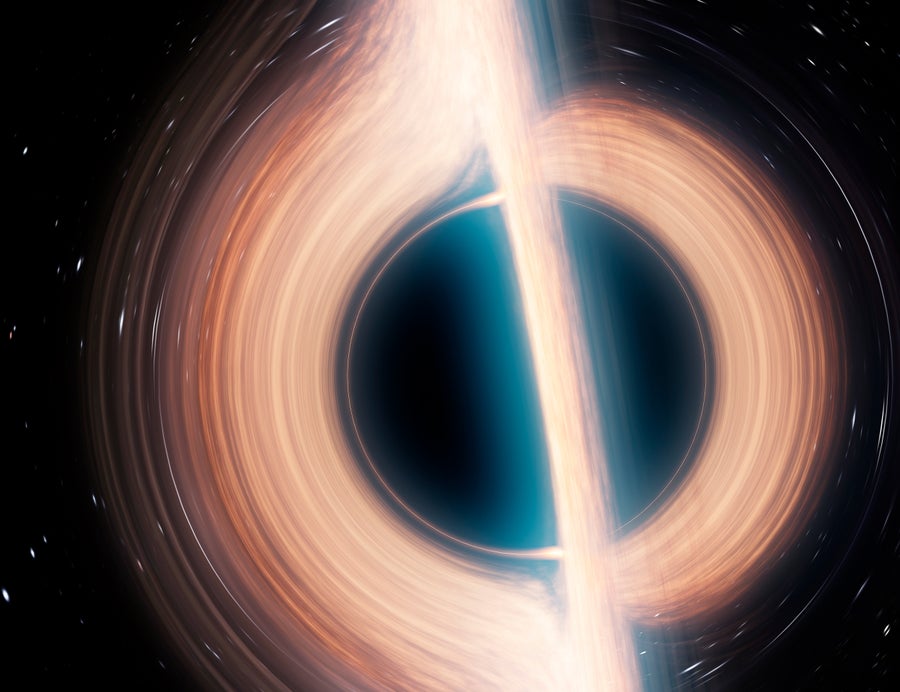
An artist’s rendition of a black hole surrounded by a glowing accretion disc of material, the light from which is warped by the strong gravity. In principle, energy could be harvested from a spinning black hole, and lab-based demonstrations are beginning to show physicists how this could occur. Mark Garlick/Science Photo Library/Getty Images
.
.
Click the link below for the complete article:
.
__________________________________________
May 15, 2025
Business, Food For Thought, Human Interest, Political, Science, Technical amazon, business, Business News, current-events, Future, Hotels, human-rights, medicine, mental-health, research, Science, Science News, technology, Technology News, travel, vacation Leave a comment

Click the link below the picture
.
A few years ago, I decided to retrain as a neuroscientist. It was a leap into the unknown — no roadmap, just a desire to grow. I chose to approach this time of change with curiosity, and I started a weekly newsletter to document what I learned. Suddenly, my doubts became fuel for discovery.
What I didn’t know at the time was that this systematic curiosity was actively reshaping my brain in ways that would build resilience for navigating future changes.
Curiosity is often treated as a personality quirk — something childlike and playful, maybe even optional. But neuroscience paints a different picture. When we’re curious, the brain’s dopaminergic system — the same one that lights up when we anticipate a reward — kicks into gear. Simply put, curiosity makes us feel good about the prospect of discovering something new.
It also helps us learn more efficiently, enhancing hippocampal activity and boosting our capacity to form and retain new memories. Studies show that when people are curious about a topic, they not only remember the specific information they were interested in but also retain unrelated material better.
Perhaps most importantly, curiosity promotes neuroplasticity, the brain’s ability to rewire itself in response to new experiences. This makes it an ideal cognitive state for those inevitable moments of change when we need to break established neural patterns and form new connections.
Curiosity in times of change
Change, by nature, introduces uncertainty. And the human brain typically responds to uncertainty by activating the amygdala, triggering the same stress responses as physical danger.
What curiosity does is transform that uncertainty from a threat into an invitation.
First, curiosity increases our tolerance for prediction error: the gap between what we expect and what we actually experience. This makes us more flexible in our thinking, less reactive, and better at updating our mental models.
There’s also a balancing act happening between two major brain networks: The default mode network (associated with imagination and introspection) and the executive control network (responsible for goal-oriented behavior) often take turns.
Curiosity helps synchronize these networks, allowing us to envision possibilities while also taking action — the exact balance needed to navigate change.
Emotionally, curiosity can also act as a buffer. When we view an unexpected situation through a curious lens (“what can I learn from this?”), we are less likely to spiral into anxiety or avoidance. This cognitive reframe can dramatically alter how we experience the inherent uncertainty of change.
5 ways to navigate change with curiosity
Curiosity isn’t a fixed trait you either have or lack — it’s a cognitive skill that can be developed. Here are five ways to cultivate it, especially during times of change:
1. Ask “what if?” instead of “what now?”
Reframe fear-based responses with questions that invite exploration. Instead of “I don’t know how to handle this new role,” try “What if I approached this role as a learning opportunity?” This simple shift activates your prefrontal cortex rather than your amygdala, which will help minimize stress in times of change.
 Credit: Sergey Novikov / Adobe Stock / Big Think
.
.
Click the link below for the complete article:
.
__________________________________________
May 14, 2025
Business, Food For Thought, Human Interest, Political, Science, Technical amazon, business, Business News, current-events, Future, Hotels, human-rights, medicine, mental-health, research, Science, Science News, technology, Technology News, travel, vacation 2 Comments
Click the link below the picture
.
A year ago this weekend, the sun’s activity created some of the most spectacular auroras on record, with displays visible as far south as Florida.
The incredible spectacles last May (and another auroral outburst last October) were partly a matter of luck because several factors, some of them serendipitous, affect the appearance of aurora. But the sun had been primed to put on a show as it approached the maximum phase of its 11-year activity cycle—and that high activity continues today. This solar cycle still has the potential to cause more celestial spectacles before activity calms down. And scientists say that the coming solar cycles may be even more eventful. But it remains quite difficult to predict the sun’s behavior.
“Solar storms—it’s a probabilistic thing, so sometimes they don’t always do what you would expect,” says Lisa Upton, a heliophysicist at the Southwest Research Institute.
The Sun Right Now
The sun is essentially a massive liquid magnet. Heliophysicists gauge our star’s activity by tallying the number of sunspots—relatively “cold” knots of its magnetic field that are often the source of radiation and plasma outbursts—on its surface. (Scientists monitor this tally in real time, but they evaluate the solar cycle’s stages based on smoothed averages over many months. So the formal declaration of a cycle’s solar maximum and minimum always happens after the fact.)
The number of sunspots naturally rises and falls over about 11 years, during which the sun’s magnetic poles first strengthen, then weaken and finally flip. When the sun’s magnetic field is calmest, with one pole that is firmly positive and one that is firmly negative, activity is at its minimum, as it was most recently around December 2019, and the star is sometimes entirely free of blemishes.
For more than a year now, the sun has been in the opposite phase—the solar maximum—with a messy magnetic field, plenty of sunspots and regular outbursts. August 2024 produced the most sunspots of any recent month, with more than 200 such storms.
Sunspots have since become less numerous, but it’s still unclear whether the solar maximum is truly on its way out. “We’ve had a little bit of a slowdown in activity [during] the last couple months. That’s not too surprising,” Upton says. “A question at this point, which will be interesting, is whether or not we’re going to have another little spike in activity.”
She says that if such a spike were to happen, it would likely come within about three months, mirroring a small spike that occurred in June and July 2023. “But the sun likes to surprise us,” Upton adds, “so we’ll see if that happens.”
Long-Term Cycles
Even as scientists watch the current solar cycle unfold, they’re also working to understand what future cycles might bring.
That’s a difficult task, given that modern science is only in the 25th activity cycle, in which researchers have made plentiful sunspot observations. More sophisticated observations that help scientists understand the sun in detail, such as space-based observations and magnetic data, are even newer, with some offering insight into only a couple of solar cycles thus far. Scientists can study tree rings and ice cores to get a basic sense of solar activity before observations began, but these data are less detailed and don’t provide precise sunspot counts.
One hypothesis suggests that the sun displays a longer-term variability called the Gleissberg cycle, named for astronomer Wolfgang Gleissberg, who posited such 80-year cycles in the 1960s. (Other proposed longer-duration cycles in solar behavior include the Suess–de Vries cycle, lasting 195 to 235 years, and the Hallstatt cycle, stretching over some 2,400 years.) And a new analysis of protons trapped in the inner radiation belt that surrounds Earth suggests a new Gleissberg cycle may be beginning.
Not all heliophysicists are sold on the Gleissberg cycle, however, given the scant data scientists have to work with. “It’s kind of debatable whether or not this is a physical phenomenon versus a statistical phenomenon,” Upton says.
.

Massive solar flares, graceful eruptions of solar material, and an enormous sunspot make up some of the imagery captured by NASA’s Solar Dynamics Observatory in 2013 and 2014. NASA’s Goddard Space Flight Center/SDO/S. Wiessinger
.
.
Click the link below for the complete article:
.
__________________________________________
May 14, 2025
Business, Food For Thought, Human Interest, Political, Science, Technical amazon, business, Business News, current-events, Future, Hotels, human-rights, medicine, mental-health, research, Science, Science News, technology, Technology News, travel, vacation Leave a comment

Click the link below the picture
.
Ambition is one of the most defining forces in human affairs—a psychological engine that propels individuals beyond the realm of survival into the arena of creation, disruption, and transformation, and significantly predicts educational attainment, career success, job performance, and income.
At its core, ambition is the refusal to accept the status quo, the internal pressure to stretch personal limits and societal boundaries. In a way, the best way to understand ambition is as the inability to be satisfied with one’s accomplishments. Ambition fuels leadership by pushing individuals to take responsibility, imagine alternatives, and mobilize others toward a vision. Ambition underwrites entrepreneurship as the catalyst for risk-taking, persistence, and the stubborn belief that a better way is not only possible but necessary. Without ambition, innovation stalls; with it, people challenge orthodoxy, break conventions, and solve problems that others resign to fate. Across disciplines, from science to art to politics, history’s breakthroughs are seldom the product of complacency—they are the residue of restless, ambitious minds.
The world, to a large extent, is the output of ambitious people. It is shaped by those who couldn’t sit still, who weren’t content with inherited limitations, and who felt compelled to act on their ideas, no matter how unlikely or unpopular. From the first controlled fire to the latest generative AI models, progress has never been evenly distributed—it has been driven by individuals and groups with an outsized appetite to leave a mark. Ambition transforms dissatisfaction into momentum, and imagination into infrastructure. It explains not just who rises to lead or invent, but why civilizations expand, technologies leap forward, and cultures evolve. While it must be tempered by ethics and collective concern, ambition remains an irreplaceable force in the story of human progress.
Everything in moderation
And yet, like all powerful traits, ambition is best expressed in moderation. Too little, and individuals drift—untethered from purpose, passive in the face of opportunity. Too much, and ambition can metastasize into obsession, crowding out humility, collaboration, and even moral judgment. When ambition becomes unbounded, it stops serving the individual and begins demanding sacrifice of relationships, values, and long-term well-being. It can distort self-perception, encouraging people to see themselves not as contributors to a shared cause, but as lone heroes in a zero-sum contest. Teams suffer when ambition eclipses empathy: the pursuit of personal achievement starts to undermine trust, cooperation, and psychological safety. A competitive drive that ignores others’ needs doesn’t just alienate colleagues—it weakens the very foundation of high-functioning organizations.
Unchecked ambition often bleeds into greed, an insatiable hunger not just to succeed, but to dominate. As Gordon Gekko infamously said, “Greed is good”—a provocative mantra for the high-octane world of finance, but a dangerous philosophy when applied indiscriminately. Greed erodes the social contract. It justifies exploitation, tolerates unethical shortcuts, and treats people as a means to an end. In leadership, this can result in toxic cultures, short-term thinking, and spectacular failures. Companies driven solely by ambition without constraint may grow fast, but they often implode faster, toppling under the weight of hubris, burnout, and scandal.
The WeWork Case
Adam Neumann, cofounder and former CEO of WeWork, is a textbook example of how unbridled ambition can lead to spectacular collapse. Neumann started with a compelling vision: to “elevate the world’s consciousness” through a coworking space company that promised to redefine the way people live and work. His charisma and relentless ambition helped WeWork grow at breakneck speed, attracting billions in venture capital and inflating its valuation to nearly $47 billion at its peak. But Neumann’s ambition quickly outpaced operational reality. He expanded into housing (WeLive), education (WeGrow), and other ventures with little strategic coherence. Reports surfaced of erratic behavior, conflicts of interest, and a corporate culture driven more by Neumann’s personal mythos than sound governance.
In 2019, when WeWork attempted to go public, its financial inconsistencies and Neumann’s questionable leadership style came under scrutiny. The IPO failed, Neumann was forced to resign, and the company’s valuation plummeted. His ambition wasn’t the problem in itself—it was that it became delusional, detached from execution, and ultimately corrosive to the company’s sustainability. Neumann exemplifies how visionary drive, without discipline or humility, can become a liability rather than an asset.
In short, the healthiest ambition is grounded in purpose, tempered by self-awareness, and balanced by a commitment to collective success. It lifts everyone, not just the one climbing the fastest.
So, while it’s generally better to have than to lack ambition, here are three proven ways in which an excess of drive or motivation can harm your career and negatively impact others.
1. Ambition can inhibit people’s prosocial drive
When the desire to “get ahead” outweighs the instinct to “get along,” ambition can corrode social cohesion. In team environments, overly ambitious individuals may hoard credit, prioritize visibility over contribution, and treat colleagues as competitors rather than collaborators. This undermines trust and psychological safety—two bedrocks of effective teamwork. For example, a rising executive who constantly angles for the spotlight may alienate peers and demoralize subordinates, even if their individual output is impressive. Over time, the cost of such interpersonal friction outweighs the benefits of raw performance. In the long run, organizations thrive not on lone stars but on networks of mutual respect and cooperation, both of which ambition can quietly erode if left unchecked.
.
 [Source photo: ILYA AKINSHIN/Adobe Stock]
.
.
Click the link below for the complete article:
.
__________________________________________
https://www.tangietwoods
¡Bienvenido de vuelta viajero!
so looking to the sky ¡ will sing and from my heart to YOU ¡ bring...
CEO and Founder of Nsight Health
Catholic News, Prayers, HD Images, Rosary, Music, Videos, Holy Mass, Homily, Saints, Lyrics, Novenas, Retreats, Talks, Devotionals and Many More
Decoding Power. Defying Narratives.
A creative collaboration introducing the art of nature and nature's art.
The Home Of Entertainment News, Reviews and Reactions
Hollow Earth Society
•Whenever you are confronted with an opponent, conquer him with love.(Gandhi)
Algotrader at TRADING-CLUBS.COM
Film and Writing Festival for Comedy. Showcasing best of comedy short films at the FEEDBACK Film Festival. Plus, showcasing best of comedy novels, short stories, poems, screenplays (TV, short, feature) at the festival performed by professional actors.
Peace. Tranquility. Insanity.
Take a ride on the wild side
Découvre des musiques prometteuses (principalement) dans la sphère musicale française.
No tiene que Ser una Pesadilla.
Life in Kana-text (er... CONtext)
Where feelings meet metaphors and make questionable choices.
Finding hope and peace through writing, art, photography, and faith in Jesus.
Eyasu
The Community for Wounded Healers: Former Medical Students, Disabled Nurses, and Faith-Fueled Pivots
love each other like you're the lyric to their music
Comprendere il mondo per cambiarlo.
Mid-Life Ponderings
Travel,Tourism, Life style "Now in hundreds of languages for you."
I speak the honest truth. I share my honest opinions. I share my thoughts. A platform to grow and get surprised.
User-generated ratings for ethical consumerism
Travel and Lifestyle Blog
Questo è un piccolo angolo di poesie, canzoni, immagini, video che raccontano le nostre emozioni
“Log your journey to success.” “Where goals turn into progress.”
scrivo per dare forma ai silenzi e anima alle storie che il mondo dimentica.
“Dream deeper. Believe bolder. Live transformed.”
Vichar, Motivation, Kadwi Baat ( विचार दर्शनम्)
Traum zur Realität
Savor. Style. See the world.
معا نحو النجاح
Best Forex Broker Ratings & Reviews
art, writing and music by James McFarlane and other musicians
living life in conscious reality
Freelance poetry writing
Peace 🕊️ | Spiritual 🌠 | 📚 Non-fiction | Motivation🔥 | Self-Love💕
Reiseberichte & Naturfotografie
 James' World 2