Fight or Flight is an action comedy directed by James Madigan. The film is written by Brooks McLaren and D.J. Cotrona. A disgraced Secret Service Agent and former mercenary takes on the job of tracking a high-value asset known only as “The Ghost”. Fight or Flight seemed like a fun film in the trailers. It turned […]
FIGHT OR FLIGHT (2025) – My rating: 7/10
FIGHT OR FLIGHT (2025) – My rating: 7/10
May 22, 2025

A Good Workout Gets Your Helpful Gut Microbes in Shape, Too
May 22, 2025
Business, Food For Thought, Human Interest, Political, Science, Technical amazon, business, Business News, current-events, Future, Hotels, human-rights, medicine, mental-health, research, Science, Science News, technology, Technology News, travel, vacation Leave a comment

Click the link below the picture
.
The idea that our workouts could benefit the trillions of microbes that live in our guts—bacteria and viruses that help our immune systems, metabolism, digestion, and other key bodily functions—isn’t obvious. At least it’s not as obvious as the connection between diet and the gut microbiome, as these microbes are called. But evidence is growing that an aerobic workout, such as jogging, can improve the health of the gut microbes, which in turn improves overall physical health. There are early indications that the relationship works the other way, too: a healthy gut microbiome seems to increase exercise capacity.
“When people think about the gut, they default to diet and probiotics,” says Sara Campbell, an exercise physiologist at Rutgers University who specializes in gut microbiota. But now many scientists are “moving toward the reality that exercise can be beneficial for the intestines,” she says.
A “healthy” microbiome usually means gut bacteria are abundant and diverse; exercise appears to affect both these qualities. The gut microbes of an elite athlete are more diverse than those of nonathletes or recreational athletes. But a more pertinent issue for health, says Jacob Allen, an exercise physiologist at the University of Illinois Urbana-Champaign, is “what the microbe is actually doing.”
Aerobic exercise encourages activity in bacteria that produce short-chain fatty acids, which provide essential support for physiological processes.
One important finding is that aerobic exercise encourages activity in bacteria that produce short-chain fatty acids, which provide essential support for physiological processes. Most fatty acid molecules consist of 16 or 18 carbons, but—as the name suggests—short-chain fatty acids range from just one to six.
Of these smaller molecules, butyrate has emerged as an especially important link between exercise and the gut. It supplies energy for a variety of tissues, including the epithelial cells lining the gut, and it can reduce inflammation and improve the ability of cells to take in insulin. Our bodies naturally make a little bit of butyrate, but most is produced by microbes, and its output is boosted by aerobic exercise. (Very few studies have looked at the connection between strength training and butyrate levels, and those that have didn’t find the same effect.)
This link between exercise and the gut was barely a glimmer in scientists’ eyes some 15 years ago, when exercise immunologist Marc Cook was a graduate student at the Urbana-Champaign campus. He knew exercise improved symptoms of inflammatory bowel disease, particularly the type called ulcerative colitis. But scientists didn’t understand why. Cook turned to mice to investigate and found that if they ran on a wheel, they were protected against a mouse version of colitis. In addition, there was a sevenfold increase in beneficial bacteria in the lining of the rodents’ colons.
In a 2018 study, Allen, Cook (who is now at North Carolina A&T State University), and others tested a gut-health exercise intervention in humans for the first time. They trained both lean and obese people, all of whom were sedentary, to exercise on a treadmill or bike. Everyone started at moderate intensity three days a week and increased to one hour of high-intensity exercise per session.
After six weeks, all participants showed increases in butyrate and two other short-chain fatty acids, acetate and propionate. They also got the expected benefits of exercise, such as reductions in fat mass and improvements in cardiorespiratory fitness. (All the effects were greater in lean people, a finding that the researchers don’t yet understand.) After a further six weeks in which everyone stopped exercising, microbes in the gut returned to baseline levels, and health benefits decreased.
Researchers haven’t fully teased out which effects of exercise can be directly attributed to microbiota versus the other changes brought on by physical activity, but there is a clear difference in gut environment. “We know there’s a slight shunting of blood toward the muscles and away from the gastrointestinal tract during exercise,” Allen says. That causes a small decrease in oxygen in gut tissue. There are changes in pH and temperature within the GI tract as well. Each of these shifts could affect which microbes survive.
Studies in humans are complicated by the enormous diversity of microbiomes
from person to person and from group to group. Researchers are now trying to account for differences in response. Campbell is investigating variations by sex. Cook is studying the effects of short-chain-fatty-acid-producing bacteria in Black people, who have a high rate of hypertension. In a pilot study, he and his colleagues identified bacteria associated with high blood pressure in Black athletes, and they hope to identify a target for intervention.
As for the effects of microbiota on exercise capacity, most of that evidence comes from mice. Animals dosed with antibiotics to kill off their microbiomes exercise less than mice with healthy microbiomes and reach exhaustion faster. Research has also shown that an intact gut microbiota contributes to more muscle development.
This evolving research doesn’t change the standard recommendation for human exercise, which is to engage in at least 150 minutes of moderate physical activity a week. But it adds strength to the arguments for doing such activity and may ultimately help explain why people respond to exercise differently. Someday there may even be a way boost the microbiome so that it responds better to time in the gym. Already, though, the science gives new meaning to the idea of gutting out your workout.
.
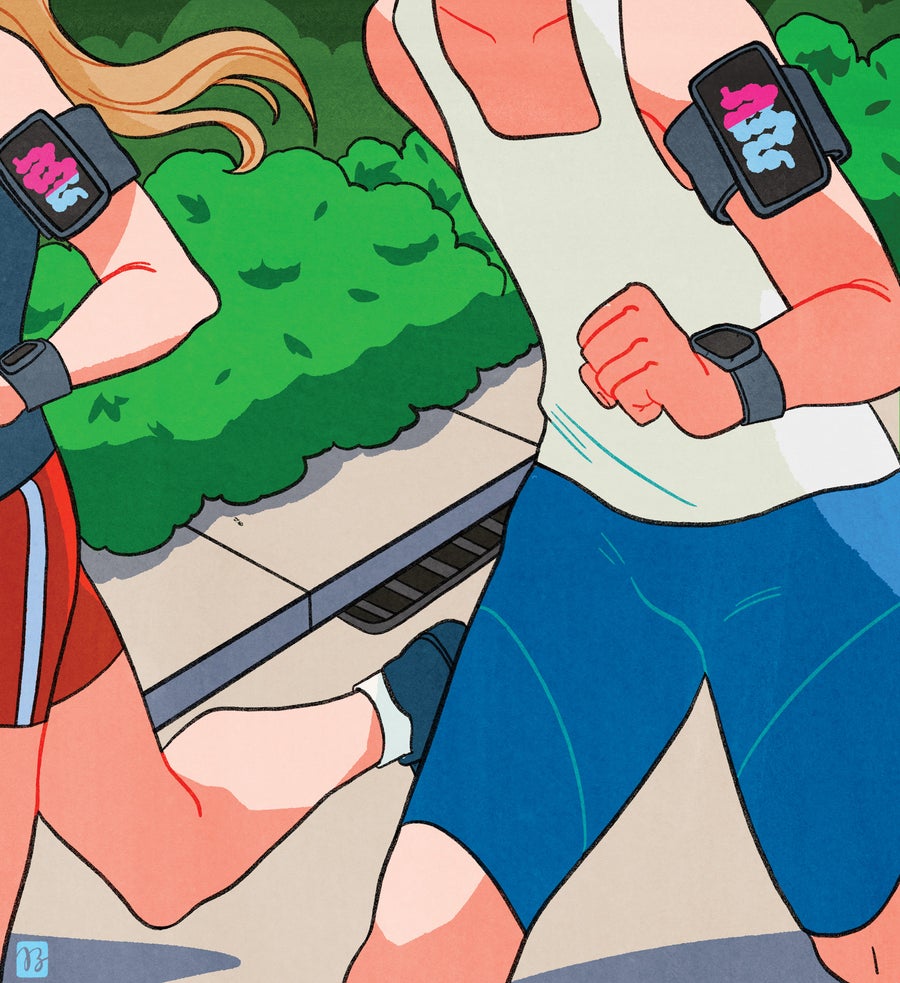 Jay Bendt
.
.
Click the link below for the complete article:
.
__________________________________________
Thoughts
May 22, 2025
Business, Food For Thought, Human Interest, Political, Science, Technical amazon, business, Business News, current-events, Future, Hotels, human-rights, medicine, mental-health, research, Science, Science News, technology, Technology News, travel, vacation Leave a comment

.
Stupid People
They are here represented as the most stupid, senseless people in the world, that would not be made wise by all the methods that Infinite Wisdom took to bring them to themselves and their right mind, and so to prevent the ruin that was coming upon them.
Idols
Whatever we make a god of but the true God only, it will stand us in no stead on the other side death and the grave, nor for the body, much less for the soul.
ref. Matthew Henry
.
__________________________________________
This Form Of Midlife Dementia Is Often Mistaken For Depression. Now, Doctors Finally Have Answers
May 22, 2025
Business, Food For Thought, Human Interest, Political, Science, Technical amazon, business, Business News, current-events, Future, Hotels, human-rights, medicine, mental-health, research, Science, Science News, technology, Technology News, travel, vacation Leave a comment

Click the link below the picture
.
- Contrary to popular belief, there are many different kinds of dementia, each with its own unique symptom list.
- One of the most common forms of dementia that surfaces in midlife is called frontotemporal dementia (FTD); this is the form that Bruce Willis was diagnosed with.
- In a new study published in Nature Aging, researchers used spinal tap fluid to identify potential new biomarkers for FTD, which could lead personalized treatments.
While most people lump dementia into one general group, the truth is that there are different forms of the disease, each with their own symptoms.
The most common form of dementia that surfaces in midlife (generally talking 40s and 50s here) is called frontotemporal dementia (or FTD), and it tends to get confused with depression, schizophrenia, or Parkinson’s disease before people are properly diagnosed.
While Bruce Willis’ diagnosis with frontotemporal dementia has put a spotlight on this form of the devastating disease, there still aren’t any reliable biomarkers to detect or even monitor the condition.
But now, new research has helped to pinpoint certain changes that happen in the body due to frontotemporal dementia, and the findings could eventually lead to diagnostic testing for the condition. Here’s what the study found, plus what neurologists want you to know about early-onset dementia.
Meet the experts: Rowan Saloner, PhD, is a study co-author and professor in the UC San Francisco Memory and Aging Center; Clifford Segil, DO, is a neurologist at Providence Saint John’s Health Center in Santa Monica, CA; Amit Sachdev, MD, is the medical director in the Department of Neurology at Michigan State University
What did the study find?
The study, which was published in the journal Nature Aging, analyzed more than 4,000 proteins in spinal tap fluid from 116 patients with frontotemporal dementia. The researchers compared those proteins to ones from 39 of the patients’ healthy relatives.
The researchers discovered that patients with frontotemporal dementia had changes in the proteins that suggest they have problems with RNA regulation, which is required for the correct gene expression in the brain. (Gene expression can impact how your brain works.) These patients also had certain changes that impacted connections in their brains.
These proteins could be the first markers for frontotemporal dementia that surface when people develop the disease, according to the researchers.
Why are these proteins so important?
There are a few reasons. First, “frontotemporal dementia can be caused by several very different types of brain pathology, making it very difficult to provide an accurate diagnosis to patients,” explains Rowan Saloner, PhD, study co-author and professor in the UC San Francisco Memory and Aging Center. “Right now, we have no way to tell which pathology someone has while they’re alive, especially in non-inherited cases, which make up the majority of frontotemporal dementia.”
But by IDing changes in spinal fluid protein, doctors can detect the disease and track its progression. “That will hopefully lead to more accurate diagnoses and personalized treatments,” Saloner says.
That’s crucial, given that this form of dementia tends to be missed early on, says Clifford Segil, DO, a neurologist at Providence Saint John’s Health Center in Santa Monica, CA. But genetic testing could help give patients and their doctors a better sense of what might be behind their symptoms, he says.
One thing to keep in mind: This study focused on people with an inherited or genetic form of frontotemporal dementia. “We do not know if genetic frontotemporal dementia and sporadic frontotemporal dementia just look the same in the end but have different paths to development,” says Amit Sachdev, MD, MS, is the medical director in the Department of Neurology at Michigan State University. “If they have different paths, then this study has helped us learn about genetic frontotemporal dementia. That is useful but not as broadly applicable.”
What else do we know about early-onset dementia?
Early-onset dementias like frontotemporal dementia usually impact people in their 40s or 50s, Saloner says. “They can be difficult to diagnose, as early symptoms are often misattributed to stress or psychiatric disorders,” he says. “Compared to Alzheimer’s disease, which now has biomarkers and FDA-approved treatments, frontotemporal dementia remains behind.”
Segil says that early-onset dementia should be considered “if someone loses the ability to talk or express themselves and other neurological conditions like a stroke, seizure, or infection have been ruled out.”
Ultimately, Sachdev says that more information is better with the disease. “It is important to know as much as possible about how these diseases arise,” he says. “It gives us something to work from in everyone else.”
.

There May Soon Be A Way To Diagnose Early Dementia Yaorusheng – Getty Images
.
.
Click the link below for the complete article:
.
__________________________________________
What Makes Stars Twinkle?
May 21, 2025
Business, Food For Thought, Human Interest, Political, Science, Technical amazon, business, Business News, current-events, Future, Hotels, human-rights, medicine, mental-health, research, Science, Science News, technology, Technology News, travel, vacation Leave a comment
Click the link below the picture
.
Ah, it’s a lovely night for enjoying the outdoors. You go outside in the warm summer air to listen to the crickets and breathe in the scents of verdant life, and then turn your head to the heavens. You see hundreds of stars in the sky, and the brightest are conspicuously twinkling and gleaming.
Some are even shifting their colors across the rainbow, delighting your eyes and mind—unless you’re out there to do some observing with a telescope. That twinkling is lovely for any average stargazer to behold, but scientifically, it’s a pain in the astronomer.
Twinkling is the apparent rapid variation of brightness and color of the stars. It’s technically called scintillation, from the Latin for “sparkle,” which is apt. While it is admittedly lovely, it’s still the bane of astronomers across the world.
For millennia, twinkling was misunderstood. As with so many scientific principles, it was misdiagnosed by ancient Greeks such as Aristotle, who attributed it to human vision. At that time, he and his peers believed that the eye actively created vision by sending out beams that illuminated objects and allowed us to see them. But these beams were imperfect, so the belief went, and the farther away an object was, the more the beam would be distorted; stars, being very far away, suffered this flaw greatly, causing them to twinkle. It was Isaac Newton, through his studies of optics, who finally determined the true cause.
A fundamental property of light—true of all waves, in fact—is that it bends when it goes from one medium to another. You’re familiar with this: a spoon sitting in a glass of water looks bent at the top of the liquid. This is called refraction, and in the case of the spoon, it happens when the light goes from the water in the glass to the air on its way to your eye, distorting the shape of the otherwise unbent spoon. The amount of refraction depends on the properties of the materials through which the light travels. Density, for instance, can dictate the degree of refraction for light moving through gas—so light traveling through air alone will still bend if the air has different densities from one spot to the next.
If Earth’s atmosphere were perfectly static and homogeneous, then the refraction of starlight would be minimal. Our air is always in motion, however, and far from smooth. Winds far above the planet’s surface stir the air, creating turbulence. This roils the gases, creating small air packets of different densities that move to and fro.
Starlight passing through one such parcel of air will bend slightly. From our point of view on Earth, the position of the star will shift slightly when that happens. The air is also in motion, so from moment to moment, the starlight will pass through different parcels on its way to your eye or your detector, shifting position each time, usually randomly because of the air’s turbulent motion. What you see on the ground, then, is the star rapidly shifting left, right, up and down, and all directions in between, several times per second—in other words, twinkling.
The amount of the shift is confusingly called “seeing” by astronomers, and it’s actually quite small. It’s usually only a few arcseconds, a very small angle on the sky—the full moon, for example, is about 1,800 arcseconds wide. Stars, though, are so far away from us that they appear to be a minuscule fraction of an arcsecond wide, a tiny point of light to the eye, so even this minuscule arcsecond-scale shifting makes them appear to dance around.
.
 ESA/Hubble/NASA (CC BY 4.0)
.
.
Click the link below for the complete article:
.
__________________________________________
What I’ve Learned From 10 Years of Therapy—and Why It’s Time to Stop
May 21, 2025
Business, Food For Thought, Human Interest, Political, Science, Technical amazon, business, Business News, current-events, Future, Hotels, human-rights, medicine, mental-health, research, Science, Science News, technology, Technology News, travel, vacation Leave a comment

Click the link below the picture
.
I am standing outside an ordinary house in a tree-lined street on a midsummer afternoon, about to change my life. I glance through a window and see the reassuring domestic ephemera of books, a computer monitor, a child’s drawing. Next to the front door is a small, typed sign with the details of a psychotherapist. I draw myself up, feeling both grown up and childishly nervous, and ring the buzzer.
It is June 2012, and I am nearing 38. The country is preoccupied with whether the Olympics will be ready on time and if England might crash out of the Euros. I have other things on my mind. A few weeks earlier, I made a call. The woman on the end of the line was polite, warm, and to the point, and we agreed to meet. Waiting for her to answer the door, I start to sweat: will I like her? Will she think I am a time-waster? What am I going to say?
I feel like an outlier: in 2012, therapy carries something of a stigma. Beyond one or two close friends, I haven’t told anyone I’m here. The open conversations we have today around mental health weren’t happening. Now, Covid has sharpened everyone’s awareness of their own mental health struggles: according to a report by Mind last November, over a third of Britons say they don’t have the support or tools to deal with the ups and downs of life. Ten million people will need support for their mental health as
a direct result of the pandemic, according to the Centre for Mental Health. Demand for therapy is outstripping supply. A study by the New York Times in December 2021 revealed that therapists in the US, where it has always been more accepted, are turning away patients. Even in the UK, demand for mental health advice has soared since the start of the pandemic.
It hasn’t taken a crisis for me to seek help. I’m doing so because I feel stuck: at work, in life, and certainly in love. I feel there is a braver, happier, more fulfilled person inside me trying to get out, but I don’t know how to reach her. I am existing with a low-level frustration, without being able to pinpoint what I am frustrated with, let alone find the tools to address it.
I have been wondering for a while if talking to a professional might help. But something has always stopped me: who am I, with a loving family, good friends, a roof over my head, and food on the table, to need therapy? I don’t come from a family of therapy-seekers. My Yorkshire-born parents, from working-class homes, would no sooner have sought out something so self-indulgent than joined a circus. In the world I’ve grown up in, therapy is seen as a rather shameful last resort for someone in need of help, not for someone with a functioning life who’s feeling a bit directionless. Just cheer up and get on with it was the message I learned.
As a result, it has taken me a long time to convince myself that, even though I am not suffering from what my friend (and also a therapist), Ellen, calls “capital T trauma”, it could be helpful. As Stephen Grosz writes in his 2013 book The Examined Life: “At one time or another, most of us have felt trapped by things we find ourselves thinking or doing, caught by our own impulses or foolish choices; ensnared in some unhappiness or fear; imprisoned by our own history. We feel unable to go forward, and yet we believe that there must be a way.”
I want to change. In fact, I want to be a different person altogether. I am like an old house whose electrics keep shorting in the same place, and I want someone to rewire me. I have a very strong sense that unless I do something, I’ll be stuck here for ever. So here I am, sweating on a doorstep, asking for help. I am about to learn a huge amount.
Tears Are Useful
As I sit down for my first session, I notice a box of tissues on a table within arm’s reach. I get through a lot of them that afternoon. The release of talking, of being listened to, is an emotional experience.
We sit in a book-filled room; I am on a comfy sofa, my therapist is on a chair. Light pours in. Over the years, I can almost memorise the titles behind her, so long will I spend gazing at them when stuck for words. Likewise, the tree outside her window becomes as familiar as the view from my own flat: I will witness its full cycle – from summer fullness to bare winter branches – many times over.
In these early weeks, I do a lot of talking as my therapist gets to know me. When she speaks, it is often to affirm what I’ve said: “It sounds like you’ve always … ” or, “It’s OK to feel … ” At first, I sit upright; as I start to feel more comfortable, I sometimes curl my legs under me.
.
 Photo by Ponomariova_Maria/Getty Images
.
.
Click the link below for the complete article:
.
__________________________________________
 James' World 2