Home

Math Is Quietly in Crisis over NSF Funding Cuts

Leave a comment

Hmmmm… As usual, this administration is shortsighted and will put our country further behind the world!

Click the link below the picture

.

Mathematics research typically requires few materials. To explore the secrets of prime numbers, investigate unimaginable shapes or elucidate other fundamental mysteries of our universe, mathematicians don’t usually need special labs and equipment or to pay participants in clinical trials. Instead, funding for mathematicians goes toward meetings of the mind—conferences, workshops, and institutes where they gather for intensive sessions to work out math’s knottiest problems. Funding also supports the stipends of research fellows, postdoctoral scholars, and promising early-career mathematicians.

But under the Trump administration’s National Science Foundation, much of this funding is being revoked or cut, which, according to experts, could be catastrophic for the present and future of the field. In one recent example, the NSF canceled funding for the Association for Women in Mathematics’ research symposium in Wisconsin just four business days before the event was set to begin in May. The threat to this event catalyzed the American Mathematical Society to offer $1 million in backstop grants to support programs whose federal funding has been cut or remains in limbo. These grants are meant to provide a financial safety net that will temporarily allow math programs, researchers, and departments to continue operating—but it’s not a permanent solution. (Disclosure: The author of this article currently has a AAAS Mass Media Fellowship at Scientific American that is sponsored by the American Mathematical Society.)

“The funding cut is severe, and all of mathematics will be impacted,” says Raegan Higgins, president of the Association for Women in Mathematics and a mathematician at Texas Tech University.

Movies and television shows often portray mathematicians scribbling on chalkboards in seclusion, but that picture is often far from accurate. “None of us work in isolation,” Higgins says. In fact, mathematicians rely heavily on their ability to gather and discuss ideas with their peers—perhaps even more than researchers in other fields do. For mathematicians, conferences, workshops, and research talks are not just opportunities to share research and network but also crucial moments to work out tough problems together with colleagues, pose field-propelling questions, and generate new ideas.

“It’s a thinking science, [and] it’s a communication science, so we rely on being together to share ideas and to move the needle forward,” says Darla Kremer, executive director of the Association for Women in Mathematics. According to John Meier, CEO of the American Mathematical Society, “the ability of mathematicians to gather and talk with each other is absolutely central to the vitality of the field.”

Federal dollars, largely through the NSF, are responsible for a significant portion of math funding. But a lot of that funding is disappearing under the Trump administration. In April, NSF staff members were instructed to “stop awarding all funding actions until further notice.” Over the past 10 years, on average, the NSF has awarded $113 million in grants to mathematics by May 21 of each year. This year, the NSF has awarded only $32 million, representing a 72 percent reduction. By this metric, mathematics is one of the most deeply affected subjects, second only to physics, which has seen an 85 percent reduction. 

The administration is also canceling and freezing funding that it had previously promised to researchers. More than $14 million of funding already promised to mathematics programs was revoked earlier this year, according to an analysis by Scientific American. In response to a request for comment, the National Science Foundation told Scientific American that “the agency has determined that termination of certain awards is necessary because they are not in alignment with current NSF priorities and/or programmatic goals.”

This withdrawal of grants is eroding trust and seeding uncertainty, experts say, and it comes with long-term consequences. Even if funding gets renewed again later, it can be very difficult for halted programs to recover. “If you have to shut down a lab and mothball it, that actually takes time and effort,” Meier says. “You can’t just walk in two weeks later, flip a switch, and have everything running again. You’ve got to rebuild it.” Even in mathematics, that process of rebuilding is time-intensive and not always possible if the space has been reallocated or the people have moved on.

American Mathematical Society leadership fears these cuts will hurt young mathematicians the most. Like in the sciences, the funding cuts are eliminating research experiences and supportive programming for undergraduates, fellowships for graduate students and positions for postdoctoral researchers. Travel funding for conferences is also disappearing, which leaves young researchers to choose between shelling out for airfare and lodging they can’t really afford and forgoing major career and research-building opportunities. As these opportunities disappear, young mathematicians are beginning to look elsewhere—either to more lucrative jobs in the private sector or to more supportive countries. “We worry about diminishing opportunities in the United States and people early in their career deciding that maybe there’s a more profitable venue for them to pursue mathematics in another country,” Meier says. “We love good mathematics wherever it arises, but we’d really like to see a lot of it arising in the United States. We think that’s very, very important.”

 The $1 million in backstop grants can’t fill the hole left by the more than $14 million in promised funding that has been denied or the more than $80 million in reduced funding so far this year. But it might be enough to keep many projects afloat simply by offering guaranteed access to funds in a turbulent time. “I think one of the great difficulties that we’re dealing with right now is the high level of uncertainty,” Meier says. Some mathematicians, for example, simply don’t know whether their projects are still being funded or not. In some applications for the backstop grants, researchers “basically talk about being ghosted,” Meier explains. “They say, ‘I can’t actually verify that we no longer have funding. I can only tell you my program officer [at the NSF] isn’t replying to my request for information.’” 

.

https://static.scientificamerican.com/dam/m/5f16f1cf224369be/original/math_on_crumpled_paper.jpg?m=1752848869.215&w=1200

The U.S. National Science Foundation has made devastating cuts to mathematics funding.  Vlajko611/Getty Images

.

.

Click the link below for the complete article:

https://www.scientificamerican.com/article/can-u-s-math-research-survive-nsf-funding-cuts/

.

__________________________________________

Kiplinger Business Costs Outlook: Uncertainty Lower, Costs Higher

Leave a comment

Click the link below the picture

.

Measures of business uncertainty have begun to ease recently, with tariff deals being announced with Japan and the European Union. The National Federation of Independent Business (NFIB) Uncertainty Index declined in June and will likely come down further in July. When uncertainty declines, businesses tend to be more willing to invest and expand. Perhaps related to the decline in uncertainty is that bank lending for commercial and industrial purposes has bumped up in June and July after staying flat for two years. However, businesses are still showing their caution by limiting their hiring plans.

Labor costs continue to ease slowly at the mid-year mark. Annual wage growth has dipped from 3.9% at the beginning of the year to 3.7% now, and should hit 3.5% by the end of 2025. However, production worker/blue collar wage growth should stay a bit higher, at 3.7%, as slowing immigration reduces labor supply for these jobs. Of course, the construction, agriculture, retail, leisure, and hospitality industries will be most affected by possible labor shortages because of their reliance on immigrants.

Tariffs will add about 15% to the cost of most imports, on average. Businesses will face the decision of whether to pass that cost along to end-users or customers. Some will accept reduced profit margins in order to maintain current customer relationships. As more trade deals are made and the future landscape turns more predictable, businesses can project pricing decisions better. But the prices of raw materials like steel, aluminum, copper, and graphite could jump, given special tariff rates of 50% or more. Commerce Department investigations are continuing for semiconductors, pharmaceuticals, and lumber. A lumber import tariff of 35% is expected when that investigation concludes in the next month or two.

Other tariffs that have been implemented include an additional 20% on imports from China, bringing the rate to 30%; 25% on imported motor vehicles; 25% on imports from Canada and Mexico that were not covered under the previous USMCA agreement (which is up for renegotiation in July 2026); and 10% on energy imports from Canada. Recent trade agreements include 15% tariffs on Japan and the European Union, and 10% on the United Kingdom. Important for foreign automakers is that these trade deals mean a reduction from the original tariff of 25% imposed on auto imports back in April.

The cost of shipping by truck will follow the seasonal pattern of the past two years. Rates have fluctuated in a narrow band for a while, and won’t pick up appreciably until demand for manufactured goods and home construction improves. However, UPS and FedEx rates have spiked this year as earlier surcharges appear to be permanent. As a result, shippers are looking to slower, cheaper services like FedEx Ground Economy, UPS Ground Saver, and, of course, the U.S. Postal Service.

.

Kiplinger video

.

.

Click the link below for the complete article (video -sound on):

https://www.kiplinger.com/economic-forecasts/business-spending

.

__________________________________________

The game-changing new missile that could halt China

Leave a comment

Click the link below the picture

.

A frantic arms race between the US and China is underway in the Pacific while the fate of Taiwan hangs in the balance.

Washington and its allies are trying to stay ahead of Chinese capabilities, shaking Beijing off-balance as it considers whether it can launch a successful invasion of Taiwan.

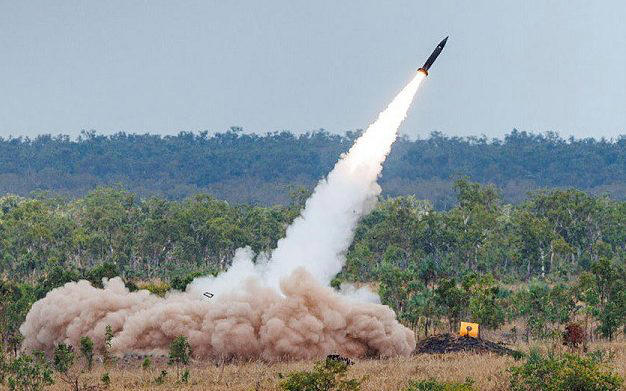
At the heart of the US strategy is a new technology that has the ability to inflict devastating losses on the Chinese navy: precision strike missiles (PrSMs, pronounced “prisms”).

The missile has just been tested in Australia, where it struck a target more than 190 miles away, marking the first time the Lockheed Martin-manufactured weapon has been used by a US ally.

It can be fired with either American-made HIMARS or British MLRS artillery systems: missile launchers that were recently used by Ukraine to launch counter-offensives on invading Russian forces and strike deep inside enemy territory, blunting Moscow’s advances.

Game-changing firepower

To date, those launchers have been used with Atacms missiles, which have been in service for more than three decades with a top range of some 190 miles.

But PrSMs reportedly have a range of more than 300 miles, with the potential for this to improve in future variants. And at the recent test flight in Australia, the missile reached speeds of 4,000kmph, beating the Atacms by some 300kmph.

Each launch pod will be able to hold two of the precision missiles, compared to just a single Atacm, according to Alex Miller, the US Army’s chief technology officer. It is also said to be less susceptible to jamming.

The PrSMs combine those next-generation improvements with the advantages of the Himars and MLRS systems, which are quick, agile and relatively easy to disguise – and could wreak havoc on Chinese ships attempting an invasion.

Brad Bowman, a senior director at the Foundation for Defence of Democracies, said: “It really creates a challenge for our adversaries, because where that system is now, it may not be there in 30 seconds or five minutes… That’s a real detection and targeting dilemma.”

Both the US and China are ramping up their military capabilities in the Pacific and particularly around Taiwan, which Beijing regards as part of its territory even though it has effectively been independent since the 1940s.

Taiwan under threat

Earlier this year, Xi Jinping, the Chinese premier, said “reunification” with China was inevitable, and that those on either side of the Taiwan Strait were “one family”.

China has regularly threatened Taiwan with fighter jet and warship incursions, but has always stopped short of a direct confrontation.

At a security conference in May, Pete Hegseth, the US defence secretary, warned that a Chinese invasion of Taiwan “could be imminent”.

The stakes couldn’t be higher, for both sides.

If the US’s military capabilities are outstripped by China, it would prove fatal to Taiwan, which relies on Washington to provide a credible deterrent. And if the island nation falls, it means the loss of a key strategic buffer against Beijing expansionism.

But failing to take the island would inflict a stunning blow on China, and almost certainly lead to the fall of Xi’s regime.

“There’s always a constant battle with both sides to try to respond to whatever advances the other side has,” said Doug Bandow, a senior fellow with the Cato Institute.

“But I’d say these [PrSMs] have the potential for dramatically increasing the risk factor for a Chinese fleet. So that’s substantial.”

China’s military will be only too aware of the damage Ukraine has managed to inflict on Russia using Himars since they were first provided by the US in June 2022, and will be warily eyeing the upgraded precision missiles.

Taiwan already has 11 HIMARS from previous arms sales with the US, and it is expected to receive more in 2026.

Mr Bandow said the PrSMs will have inflicted an important psychological blow on China without any shots even being fired, and could convince its leadership to delay its imperial ambitions.

“The most important advantage of a weapons advance like this is it simply encourages the Chinese to say, ‘No… we don’t have to do it now’,” he told The Telegraph.

“In my view, the best chance of getting through this is to simply have that happen a lot. And hopefully we can get to a point, whatever that point is, where everyone agrees war is really stupid and this won’t happen.”

Credit: Taiwan Military News Agency

Real damage could be inflicted on the Chinese fleet, both in ports and moving out to a potential invasion, if PRSs are deployed throughout Taiwan and the rest of the first island chain, which includes Japan, Indonesia and parts of the Philippines.

Australia aligns with US

Elsewhere in the Pacific, Australia signed a $310m deal with the US to join the missile programme in June.

“This is all about extending deterrence in the Indo-Pacific, all about signalling to any potential adversary that pain can be inflicted,” Pat Conroy, Australia’s defence industry minister, said at the test flight this month.

But China is also moving quickly to innovate, and earlier this year appeared to be constructing D-Day style barges for an invasion that would allow it to bypass rocky or soft beaches unsuitable for tanks, providing multiple fronts for an invasion.

Some experts are concerned the US is too slow to procure PrSMs. The Pentagon’s recent funding request to Congress shows the army intends to buy 44 of the missiles from Lockheed Martin.

“There’s very rarely a decisive game changer by itself… but this is a key capability for the United States and our allies to have,” Mr Bowman said.

“That is the ability to sink Chinese naval vessels in large quantities from ground-based mobile platforms. That’s why I think we need a whole lot of them, fast.”

.

https://img-s-msn-com.akamaized.net/tenant/amp/entityid/AA1JuZ5W.img?w=626&h=391&m=6An Australian Army HIMARS fires a Precision Strike Missile (PrSM) in the Northern Territory during Exercise Talisman Sabre 2025 – CPL Cameron Pegg

.

.

Click the link below for the complete article:

https://www.msn.com/en-ca/news/world/the-game-changing-new-missile-that-could-halt-china/ar-AA1Jv8XU?ocid=hpmsn&cvid=c87fbb7047304ed8a4f472ba1abe377c&ei=32

.

__________________________________________

Theodore R. Newman Jr., First Black Chief Judge, Washington DC Court of Appeals

Leave a comment

Theodore R. Newman Jr., First Black Chief Judge, Washington DC Court of Appeals

On This Day: July 30, 1866

Leave a comment

On This Day: July 30, 1866

China Is Putting Data Centers in the Ocean to Keep Them Cool

9 Comments

Click the link below the picture

.

To grow its economy, China is betting big on artificial intelligence, cloud computing, and other digital technology—and a big part of that bet involves rapidly building data centers to boost computing power. But these massive collections of servers gobble up growing amounts of energy, and each one cycles through hundreds of thousands of gallons of water a day to carry away the heat they generate.

That means these facilities—in China and beyond—will increasingly compete with water demand linked directly to human survival, from agriculture to daily drinking. Many companies have sited their data centers in some of the driest regions of the world, including Arizona, parts of Spain, and the Middle East, because dry air reduces the risks of damage to the equipment from humidity, according to an investigation by the nonprofit journalist organization SourceMaterial and the Guardian. Partly to address water concerns, China is now putting a data center in the wettest place there is: the ocean. This June construction began on a wind-powered underwater data center about six miles off the coast of Shanghai, one of China’s AI hubs. [Read more: What Do Google’s AI Answers Cost the Environment?]

“China’s ambitious approach signals a bold shift toward low-carbon digital infrastructure, and it could influence global norms in sustainable computing,” says Shabrina Nadhila, an analyst at energy-focused think tank Ember, who has researched data centers.

Keeping Data Centers Cool

Data centers store information and perform complex calculations for businesses, whose increasing automation is steadily ramping up such needs. These facilities consume vast amounts of electricity and water because their servers work nonstop and in close proximity—and they generate waste heat as a by-product, which can damage equipment and destroy data. So they need to be constantly cooled.

Instead, undersea data centers use pipes to pump seawater through a radiator on the back of server racks to absorb heat and carry it away. Hailanyun—the company sometimes referred to as HiCloud, that is behind the Shanghai data center—says an assessment conducted with the China Academy of Information and Communications Technology shows its project uses at least 30 percent less electricity than on-land data centers, thanks to natural cooling.

The Shanghai center will also be connected to a nearby offshore wind farm that is set to supply 97 percent of its energy, says Hailanyun spokesperson Li Langping.

The project’s first phase is designed to contain 198 server racks—enough to hold 396 to 792 AI-capable servers—and is slated to begin operation in September, Li says. It is expected to provide enough computing power to complete the equivalent of training GPT-3.5—the large language model that OpenAI released in 2022 and used to fine-tune ChatGPT—in the space of a day, he adds. Yet Hailanyun’s Shanghai center is small compared with a typical land-based one: a medium-scale data center in China normally has up to 3,000 standard racks, while a superscale version can contain more than 10,000.

Leapfrogging the U.S.

At the core of Hailanyun’s $223-million Shanghai gambit is a technology that Microsoft pioneered more than a decade ago under an effort called Project Natick, in which the company sank a shipping-container-sized capsule holding more than 800 servers 117 feet below the surface off the coast of Scotland. After hauling up the pod two years later, Microsoft found that underwater data centers “are reliable, practical and use energy sustainably.”

The experiment also resulted in fewer broken servers compared with on-land data centers because the vessel was sealed off and filled with nitrogen, which is less corrosive than oxygen, Microsoft said in a 2020 press release. The lack of people also meant that the equipment avoided physical contacts or movements that may otherwise cause them damage in an on-land center, the company said.

But Microsoft has reportedly shelved Project Natick. A company spokesperson did not answer questions about whether or not the project was terminated. Instead, they provided a statement: “While we don’t currently have data centers in the water, we will continue to use Project Natick as a research platform to explore, test, and validate new concepts around data center reliability and sustainability.”

Hailanyun aims to leapfrog American companies: if the Shanghai project is successful, Li expects his company to springboard toward large-scale deployments of offshore, wind-powered undersea data centers with the support of the Chinese government.

Zhang Ning, a postdoctoral researcher at the University of California, Davis, who specializes in next-generation low-carbon infrastructure, notes that Hailanyun has moved from a pilot project conducted in Hainan in December 2022 to commercial rollouts in less than 30 months—“something Microsoft’s Project Natick never attempted.”

Environmental Concerns

In spite of the apparent benefits of underwater data centers, some concerns remain—especially over potential environmental impacts. Microsoft researchers found their pod had caused some localized warming in the sea, though the impact was limited. “The water just meters downstream of a Natick vessel would get a few thousandths of a degree warmer at most,” they wrote.

.

https://static.scientificamerican.com/dam/m/28e3d08deebfe963/original/Data-center-1.jpg?m=1753199196.259&w=1200

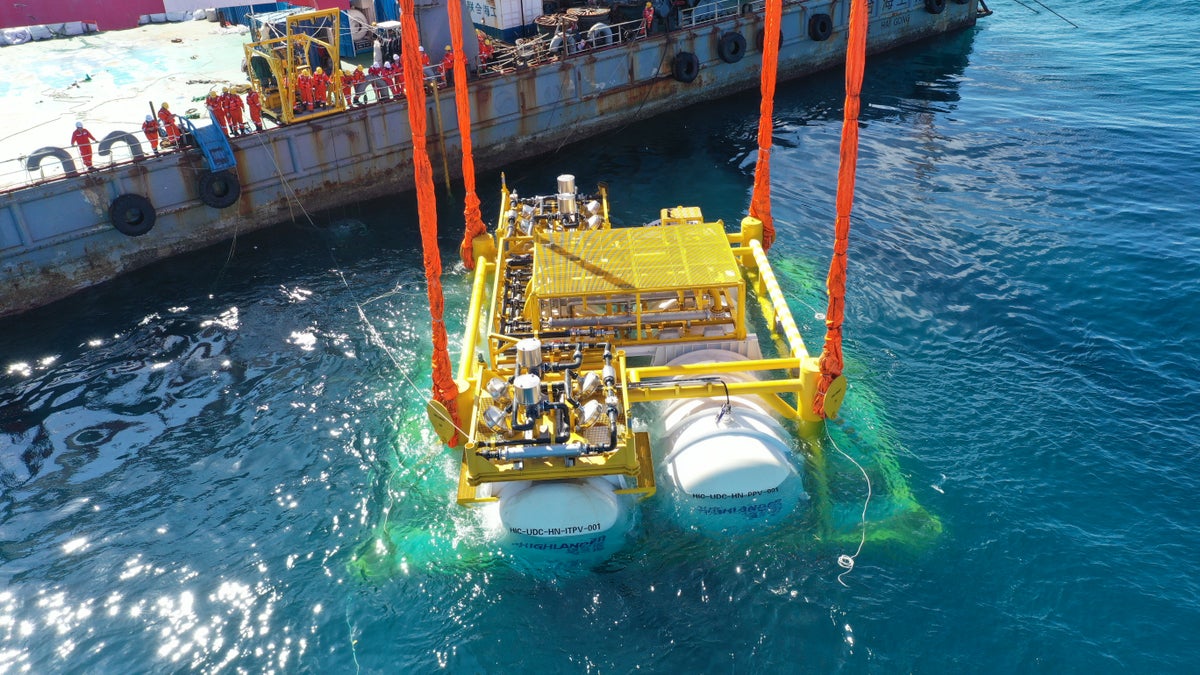
The underwater data center pictured here was a pilot project off the coast of Hainan. Another, more advanced, one is now being built off Shanghai.  Shanghai Hailanyun Technology

.

.

Click the link below for the complete article:

https://www.scientificamerican.com/article/china-powers-ai-boom-with-undersea-data-centers/

.

__________________________________________

Trump’s trade war victory is already under siege

Leave a comment

Click the link below the picture

.

The economy was supposed to crumble. The trade war was expected to escalate out of control. Markets were forecast to plunge.

None of that happened – at least, not yet.

President Donald Trump has pulled off what few outside the White House predicted: A trade war victory of sorts that sets America’s taxes on imported goods higher than the infamous Smoot-Hawley era, without any of the damaging fallout so far. Customs revenue has increased sharply while inflation remains reasonably low. And America’s trading partners, for the most part, have been willing to accept the higher tariffs without significant retaliation.

Multiple framework agreements between the United States and other trading partners have jacked up tariffs on foreign goods imported to America while setting levies on US exports at or near zero. Overseas trading partners have agreed to open previously closed markets to some US goods, pledged increased investments in the United States and dropped some of what the Trump administration has lambasted as non-trade barriers, like taxes on digital services.

But Trump’s early trade victory may be short-lived. In fact, it is already showing signs that it may not last.

EU is already turning against its deal

The European Union, fresh off its 11th-hour compromise to get a trade agreement done before Trump’s self-imposed August 1 deadline, is already in revolt.

French Prime Minister François Bayrou called Sunday a “dark day.” Hungarian Prime Minister and Trump ally Viktor Orban said Trump steamrolled the EU. Belgium’s Prime Minister Bart De Wever lambasted the Trump administration’s “delusion of protectionism.” And Bernd Lange, chair of the European Parliament’s trade committee, said the deal is “not satisfactory.”

The 27-member bloc has to hammer out key aspects of its framework, and the fragile trade truce between two of the world’s largest economies could quickly break apart if sentiment turns against the arrangement.

Canada’s not playing ball

The Trump administration’s trade talks with its northern neighbor and one of its largest trading partners have been effectively shut down. Despite Canada relenting on its digital services tax that the president has lambasted, Trump continued to threaten higher tariffs on some Canadian goods, including lumber.

Although many goods imported from Canada continue to be tariff-free because of the US-Mexico-Canada free trade agreement, the USMCA only covers just about half of Canadian goods. So higher tariffs on Canada could raise some costs for American consumers down the road.

And the fact that America is even embroiled in a trade spat with Canada in the first place is a sign that the recent cooling off in the trade war may not last: Trump negotiated and signed the United States’ current trade agreement with Canada during his first term. At any time, even after an agreement is inked, Trump could turn around and decide to raise tariffs again.

Elusive China deal

A third round of talks between China and the United States’ trade negotiators is expected to result in a continued pause of their historically high tariffs on one another. But it’s unclear what else might come from the discussions, and the Trump administration has grown frustrated by what it has described as China’s slow-walking of its previous agreements.

Both sides have aimed to reduce more regulatory barriers on shipments of key technologies. China has sought more access to critical semiconductors, and the United States wants the flow of rare earth magnets to increase further.

But the Trump administration has tried repeatedly to speed up China’s slow progress, claiming the country has failed to live up to its agreement to approve the critical materials for crucial electronics. Trump has also said he wants China to open up its market to more US goods – a desire that Chinese Premier Xi Jinping is unlikely to give in to significantly.

Trump’s rhetoric against China has cooled in recent months, but the truce appears to be on a knife’s edge.

Key court decision

A crucial appeals court hearing Thursday could determine whether most of Trump’s tariffs are legal at all.

For most of his tariffs, Trump has cited powers listed in the International Emergency Economic Powers Act. But a federal court in May ruled that Trump overstepped his authority to levy tariffs on that basis.

An appeals court paused that ruling from taking effect and will hear oral arguments Thursday. It’s not clear when the court will rule, and the White House would likely appeal to the Supreme Court if it loses.

If Trump ultimately loses his ability to levy tariffs using emergency powers, he has plenty of other options – but legal experts have said those alternatives could limit his ability to set tariffs without Congress. For example, Trump may be able to impose some tariffs as high as just 15% but only for 150 days, potentially taking some of the bite out of his tariff regime.

Economy is flashing some warning signs

Although the US economy remains strong, with rebounding retail sales, a still-robust labor market, and rising consumer confidence, there is some evidence that inflation in key areas is starting to creep higher – slowly – because of tariffs. That’s a potential warning sign as the tariffs take full effect.

The Bureau of Labor Statistics’ Consumer Price Index, earlier this month, showed that some tariff-affected goods have started to gain in price. Clothing, appliances, computers, sporting goods, toys, video equipment, hardware, and tools prices have been on the rise. And it’s starting to become a trend – in many of those categories, the rise has been happening for a few months.

Many major retailers, including Walmart, have said they will raise prices because of tariffs. Procter & Gamble, which makes Tide and a host of consumer goods, said Tuesday it will raise prices in part because of tariffs. And GM, Volkswagen, and Stellantis all reported tariff charges of $1 billion or more over the past quarter.

Economists widely expect inflation to pick up in the late summer and throughout the rest of the year as retailers work through the inventories of goods they had stockpiled before tariffs went into effect. No one expects anything close to the inflation crisis of a few years ago. But with consumers still dealing with price-hike PTSD, that won’t be a welcome change from the return to healthy inflation levels over the past year.

.

https://media.cnn.com/api/v1/images/stellar/prod/gettyimages-2208184612-20250729115436654.jpg?c=original&q=w_860,c_fill/f_avif

.

.

Click the link below for the complete article:

https://edition.cnn.com/2025/07/29/business/trade-war-trump

.

__________________________________________

I Asked ChatGPT What Would Happen If Billionaires Paid Taxes at the Same Rate as the Middle Class

2 Comments

Click the link below the picture

.

Taxes can get you thinking about fairness. For instance, when I’m calculating deductions on my salary and watching a decent chunk go to Uncle Sam, I can’t help but wonder: What if the ultra-wealthy paid the same percentage of their income in taxes that regular people do? So I decided to ask ChatGPT a simple question: “What would happen if billionaires paid taxes at the same rate as the middle class?” The AI’s response was more nuanced than I expected — and revealed some surprising truths about how our tax system really works.

Setting the Record Straight

First, ChatGPT corrected a common misconception I had. Based on actual data from PolitiFact and ProPublica investigations, the 25 wealthiest Americans currently pay an average federal income tax rate of 16% under existing law.

Meanwhile, households earning $50,000-$100,000 (where most teachers, firefighters, and other middle-class workers fall) typically pay an effective tax rate between 0% and 15%.

So contrary to what I’d heard, billionaires don’t actually pay less than teachers under current tax law. But here’s where it gets interesting.

How Wealth Grows vs. How Wages Work

ChatGPT explained that the issue isn’t necessarily the tax rates themselves, but how different types of income get taxed. This is where the system becomes genuinely unfair.

“Billionaires benefit from tax strategies that lower their effective tax burden compared to what ordinary income earners face on wages,” the AI explained. “The current system taxes work more than wealth.”

Here’s what that means in practice: When I get my salary, taxes come out immediately. When a billionaire’s stock portfolio increases in value by millions, they don’t pay taxes on that growth until (or unless) they sell those stocks.

The ‘Buy-Borrow-Die’ Strategy

ChatGPT broke down something called the “buy-borrow-die” strategy that wealthy people use to minimize taxes. It sounds like financial wizardry because, honestly, it kind of is.

Here’s how it works: Billionaires borrow money against their stock holdings (which isn’t taxed), live off those loans, and then pass their assets to heirs largely tax-free when they die. Meanwhile, regular people like me can’t defer taxes on our paychecks or borrow against our retirement accounts without major penalties.

The AI used ProPublica data to illustrate this: “The top 25 billionaires saw their wealth grow by $401 billion from 2014-2018, but paid just $13.6 billion in federal income taxes — an effective rate of 3.4% on wealth growth.”

That 3.4% figure is what really stung. While they’re paying their legal tax obligations on realized income, their actual wealth is growing at a rate that’s taxed far below what middle-class workers pay on their salaries.

What If We Changed the Rules?

ChatGPT ran the numbers on what would happen if billionaires paid taxes at the same rate middle-class families do — around 15%-22%.

Using the ProPublica data, if those top 25 billionaires had been taxed at a 20% rate on their wealth growth, they would have paid around $80 billion instead of $13.6 billion. 

“Extrapolate that across approximately 1,000 billionaires?” the AI asked. “You’re talking hundreds of billions in added revenue annually.”

Where That Money Could Go

The AI outlined several ways this massive revenue increase could transform government services:

  • Healthcare: We could expand Medicare and Medicaid, potentially moving toward universal coverage.
  • Education: Fund universal pre-K or make community college free for everyone.
  • Infrastructure and climate: Invest seriously in clean energy projects and fix our crumbling roads and bridges.
  • Debt reduction: Actually pay down the national debt instead of adding to it every year.

ChatGPT noted that this extra revenue could “stabilize the economy by boosting the spending power of everyday Americans.” Basically, reducing inequality in a way that helps everyone, not just those at the bottom.

What Surprised Me Most

The most eye-opening part was learning that the problem isn’t necessarily that billionaires are breaking the law or even paying lower rates on their taxable income. The issue is that our entire tax system is designed around taxing work rather than wealth.

“Middle-class families can’t defer taxes on wages or borrow against stocks tax-free,” ChatGPT pointed out. This creates a fundamental unfairness where people who work for their money get taxed immediately, while people whose money grows through investments can delay or even avoid those taxes entirely.

What We Need To Think About

After diving into ChatGPT’s analysis, I realized the conversation about billionaire taxes is more complicated than simple rate comparisons. Under current law, wealthy Americans do pay their required taxes. But the system allows their wealth to grow in ways that are largely untaxed, while regular workers pay taxes on every dollar they earn.

The AI concluded that if we could successfully tax billionaires more like middle-class workers, the results would mean hundreds of billions in additional revenue annually and potentially better funding for health, education, and climate programs. What’s more, it could have the power to reduce inequality and improve public trust in the tax system. 

Maybe the real question isn’t whether billionaires should pay more taxes, but whether our entire approach to taxing work versus wealth makes sense in an economy where most billionaires’ fortunes come from asset appreciation rather than traditional income.

.

https://img-s-msn-com.akamaized.net/tenant/amp/entityid/AA1wbPzF.img?w=768&h=432&m=6&x=482&y=398&s=346&d=346

Trump Meets US House Republicans Following the US Election, Washington, District of Columbia, USA – 13 Nov 2024 © / Shutterstock / / Shutterstock

.

.

Click the link below for the complete article:

https://www.msn.com/en-us/money/personalfinance/i-asked-chatgpt-what-would-happen-if-billionaires-paid-taxes-at-the-same-rate-as-the-middle-class/ar-AA1I2aW5?ocid=winp2fptaskbarhover&cvid=b979f3cdb45f42b4b84e09d2288a189d&ei=19

.

__________________________________________

First Black Male Judge in South (Florida) Since Reconstruction: Lawson E. Thomas

Leave a comment

First Black Male Judge in South (Florida) Since Reconstruction: Lawson E. Thomas

On this Day: July 29, 1910

Leave a comment

On this Day: July 29, 1910

Older Entries Newer Entries

MRS. T’S CORNER

https://www.tangietwoods

Amor Entre Estrellas

¡Bienvenido de vuelta viajero!

Heart of Loia `'.,°~

so looking to the sky ¡ will sing and from my heart to YOU ¡ bring...

Michael Ciullo

CEO and Founder of Nsight Health

Nelson MCBS

Catholic News, Prayers, HD Images, Rosary, Music, Videos, Holy Mass, Homily, Saints, Lyrics, Novenas, Retreats, Talks, Devotionals and Many More

Global geopolitics

Decoding Power. Defying Narratives.

Talk Photo

A creative collaboration introducing the art of nature and nature's art.

Movie Burner Entertainment

The Home Of Entertainment News, Reviews and Reactions

Le Notti di Agarthi

Hollow Earth Society

C r i s t i a n a' s Fine Arts ⛄️

•Whenever you are confronted with an opponent, conquer him with love.(Gandhi)

TradingClubsMan

Algotrader at TRADING-CLUBS.COM

Comedy FESTIVAL

Film and Writing Festival for Comedy. Showcasing best of comedy short films at the FEEDBACK Film Festival. Plus, showcasing best of comedy novels, short stories, poems, screenplays (TV, short, feature) at the festival performed by professional actors.

Bonnywood Manor

Peace. Tranquility. Insanity.

Warum ich Rad fahre

Take a ride on the wild side

Madame-Radio

Découvre des musiques prometteuses (principalement) dans la sphère musicale française.

Ir de Compras Online

No tiene que Ser una Pesadilla.

Kana's Chronicles

Life in Kana-text (er... CONtext)

Jam Writes

Where feelings meet metaphors and make questionable choices.

emotionalpeace

Finding hope and peace through writing, art, photography, and faith in Jesus.

WearingTwoGowns.COM

The Community for Wounded Healers: Former Medical Students, Disabled Nurses, and Faith-Fueled Pivots

...

love each other like you're the lyric to their music

Luca nel laboratorio di Dexter

Comprendere il mondo per cambiarlo.

Tales from a Mid-Lifer

Mid-Life Ponderings

Creative

Travel,Tourism, Life style "Now in hundreds of languages for you."

freedomdailywriting

I speak the honest truth. I share my honest opinions. I share my thoughts. A platform to grow and get surprised.

The Green Stars Project

User-generated ratings for ethical consumerism

Cherryl's Blog

Travel and Lifestyle Blog

Sogni e poesie di una donna qualunque

Questo è un piccolo angolo di poesie, canzoni, immagini, video che raccontano le nostre emozioni

My Awesome Blog

“Log your journey to success.” “Where goals turn into progress.”

pierobarbato.com

scrivo per dare forma ai silenzi e anima alle storie che il mondo dimentica.

Thinkbigwithbukonla

“Dream deeper. Believe bolder. Live transformed.”

Vichar Darshanam

Vichar, Motivation, Kadwi Baat ( विचार दर्शनम्)

Komfort bad heizung

Traum zur Realität

Chic Bites and Flights

Savor. Style. See the world.

ومضات في تطوير الذات

معا نحو النجاح

Broker True Ratings

Best Forex Broker Ratings & Reviews

Blog by ThE NoThInG DrOnEs

art, writing and music by James McFarlane and other musicians

fauxcroft

living life in conscious reality

Srikanth’s poetry

Freelance poetry writing

JupiterPlanet

Peace 🕊️ | Spiritual 🌠 | 📚 Non-fiction | Motivation🔥 | Self-Love💕

Sehnsuchtsbummler

Reiseberichte & Naturfotografie