
Henry McKinley “Mickey” Michaux Jr., American Civil Rights Activist
Assorted human interest posts.
August 17, 2025

Gout is a painful and often misunderstood form of inflammatory arthritis that can strike suddenly, leaving joints swollen, red, and throbbing with pain. While it’s commonly associated with the big toe, gout can also affect the fingers and hands, making everyday tasks like gripping, typing, or even buttoning a shirt excruciating. If you’ve ever woken […]
High Uric Acid Levels in Fingers and Hands: Know Its Symptoms and Ways to Prevent
August 16, 2025
Business, Food For Thought, Human Interest, Political, Science, Technical amazon, business, Business News, current-events, Future, Hotels, human-rights, medicine, mental-health, research, Science, Science News, technology, Technology News, travel, vacation Leave a comment

Click the link below the picture
.
Researchers have captured the very first real-time, three-dimensional images and videos of a human embryo implanting into collagen designed to mimic uterine tissue —a key stage in reproduction. The resulting footage, which shows how embryos push and pull to anchor themselves in the uterus in vivid detail, could lead to improvements for in vitro fertilization (IVF) techniques, the scientists say.
“This will allow us to develop treatments specifically targeting implantation, which is the biggest roadblock in human reproduction,” says Samuel Ojosnegros, a bioengineer at the Barcelona Institute of Science and Technology in Spain and a co-author of the new study, which was published in Science Advances.
Five days after an embryo is fertilized artificially, fertility doctors must implant it into the body so it can continue to grow. “What happens between the transfer and the first ultrasound weeks later is a black box,” says Ojosnegros, who is also co-founder of the biotech company Serabiotics. Implantation failure is one of the main causes of infertility —up to 60 percent of miscarriages occur during this process.
The first successful culture of human embryos beyond implantation was demonstrated in a petri dish in a lab in 2016, but Ojosnegros and his team wanted to see what this process would look like in 3D tissue that was more similar to that of the uterus.
To do this, the team designed a special ex vivo system made of gel and collagen—a protein found in the uterine lining—and used embryos donated by people who had completed an assisted reproduction process. The system works, Ojosnegros says, because the network of collagen fibers signals to the embryo at a molecular level that this is a natural matrix.
By using advanced 3D microscopes, the researchers recorded the action over time. Tracking tiny movements in the gel’s fibers allowed them to map exactly where and how strongly the embryos were pulling. The researchers did the same with mouse embryos to compare movement patterns.
The footage showed that human embryos generate a network of tiny pulling forces that ripple through the womb. They burrow into the surrounding tissue from one side, creating multiple small traction points that tug the lining in all directions. Mouse embryos, on the other hand, spread out more across the surface and pull mainly along two or three strong lines.
When the researchers applied external tension to the matrix, tugging it with tiny forceps, they noticed the embryos reoriented toward those areas. The scientists suggest micro contractions might be guiding the embryo to implant in the optimal direction in the uterus. “We believe these micro contractions are what the embryo uses to guide itself toward the blood vessels and the nutrients it needs,” Ojosnegros explains, adding that more studies are needed to confirm this hypothesis.
In both mouse and human experiments, the strength and pattern of these forces were linked to the embryo’s health, meaning embryos that pulled less were less likely to successfully invade the tissue. Observing implantation in real-time in a 3D model is a “quantum leap” compared with the two-dimensional observations that already exist, says developmental biologist Claudia Spits of the Free University of Brussels, who was not involved in the research. Keeping an embryo alive under these conditions is extremely difficult, she says. “What you see in a 10-second video is years of setting these [conditions] up so that the embryo can survive,” Spits adds.
.
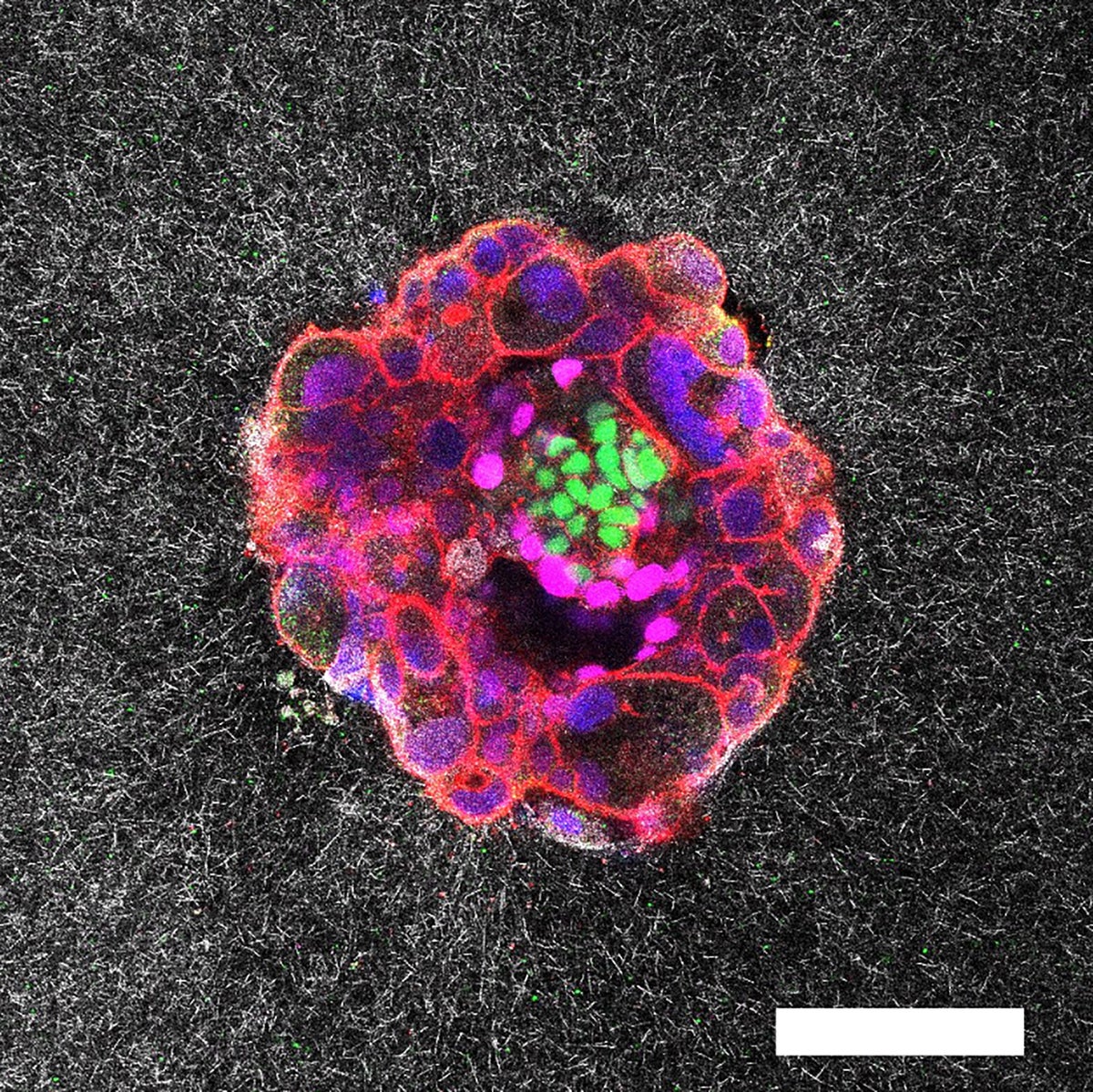
Confocal microscopy image of a nine-day-old human embryo. Specific proteins and cellular structures have been coloured in the image: OCT4 (green), which is related to embryonic stem cells; GATA6 (magenta), which is associated with early tissue formation; DAPI (blue), which marks the DNA in the nuclei; and phalloidin (red), which reveals the actin cytoskeleton. The scale bar corresponds to 100 µm. Institute for Bioengineering of Catalonia (IBEC)
.
.
Click the link below for the complete article:
.
__________________________________________
August 16, 2025
Business, Food For Thought, Human Interest, Political, Science, Technical amazon, business, Business News, current-events, Future, Hotels, human-rights, medicine, mental-health, research, Science, Science News, technology, Technology News, travel, vacation Leave a comment

Click the link below the picture
.
Sadie Salazar,
Therapist and COO of Sage Therapy, considers herself to be a Type-A, recovering perfectionist who can be prone to anxiety. To have the best day possible, she uses her mornings to ground herself.
“What I found that really works well for me is making sure that I’m getting up early so that it actually feels like I have time to myself,” Salazar tells CNBC Make It.
“If I don’t wake up on time, it will throw everything off, and then it just compresses the morning so that I feel rushed and chaotic. I think that’s the biggest ritual. No matter what, I’m getting up when the alarm goes off.”
Salazar likes to use the additional time she builds into her mornings for activities that are unrelated to work or household chores. “Maybe it’s reading a chapter of a book or listening to a little bit of a podcast, or taking some extra time to walk my dog,” she says.
As a mom with a new baby, Salazar finds that waking up at 7 a.m. affords her time to prioritize self-care.
But to avoid putting too much pressure on herself, she doesn’t try to stick to a routine that makes each morning look the same.
No matter what, I’m getting up when the alarm goes off.
“A big thing is giving permission for other routines and rituals to ebb and flow. I would love to be the kind of person that does a workout every morning or listens to a podcast or a book or something, but I personally find it hard sometimes to stick with routine,” Salazar says.
“No one wants to start their day feeling like you’ve already failed at something.”
Her only commitment is getting up early, and then Salazar decides how she would like to spend her creative hour, in the moment.
“It’s less structured. It gives me the opportunity to really generate creativity and just have a part of my day that feels rejuvenating, instead of that routine I rush through to get on with, like all of the other tasks of the day,” she says.
She also aims to get dressed for work to help her stay focused, even though she works from home.
“There’s so much temptation to wear our comfy clothes and just kind of lounge about, and I found very quickly that I was just not feeling as
motivated or creative,” Salazar says.
“I try to resist the temptation to stay in pajama bottoms, and really get myself ready for the day [to] feel like I’m actually going to work. [And] actually getting out of the house is really helpful, especially for those days where maybe I’m working remotely back to back.”
.

.
.
Click the link below for the complete article:
.
__________________________________________
August 16, 2025
Business, Food For Thought, Human Interest, Political, Science, Technical amazon, business, Business News, current-events, Future, Hotels, human-rights, medicine, mental-health, research, Science, Science News, technology, Technology News, travel, vacation Leave a comment

Click the link below the picture
.
Here’s the latest.
President Trump on Saturday split from Ukraine and key European allies after his summit with President Vladimir V. Putin of Russia, backing Mr. Putin’s plan for a sweeping peace agreement based on Ukraine ceding unoccupied territory to Russia, instead of the urgent cease-fire Mr. Trump had said he wanted before the meeting.
Skipping cease-fire discussions would give Russia an advantage in the talks, which are expected to continue on Monday when President Volodymyr Zelensky of Ukraine visits Mr. Trump at the White House. It breaks from a strategy Mr. Trump and European allies, as well as Mr. Zelensky, had agreed to before the U.S.-Russia summit in Alaska.
Mr. Trump told European leaders that he believed a rapid peace deal could be negotiated if Mr. Zelensky agreed to give up the rest of the Donbas region to Russia, even those areas not occupied by Russian troops, according to two senior European officials briefed on the call.
In return, Mr. Putin offered a cease-fire in the rest of Ukraine at current battle lines and a written promise not to attack Ukraine or any European country again, the senior officials said. He has broken similar promises before.
Mr. Trump had threatened stark economic penalties if Mr. Putin left the meeting without a deal to end the war, but he has suspended those threats in the wake of the summit.
The American president’s moves got a chilly reception in Europe, where leaders have time and again seen Mr. Trump reverse positions on Ukraine after speaking with Mr. Putin.
Mr. Trump wrote on Truth Social early on Saturday that he had spoken by phone to Mr. Zelensky and European leaders after his meeting with Mr. Putin. He claimed “it was determined by all” that it was better to go directly to negotiating a peace agreement without first implementing a cease-fire.
European leaders, publicly and privately, made clear that was not the case. They issued a statement that did not echo Mr. Trump’s claim that peace talks were preferable to a cease-fire. Britain, France, Germany, and others threatened to increase economic penalties on Russia “as long as the killing in Ukraine continues.”
Mr. Zelensky, who was left out of the Alaska summit, said in a statement that he and Mr. Trump would on Monday “discuss all of the details regarding ending the killing and the war.”
Here’s what else to know:
Zelensky’s challenge: Ukraine was left scrambling to piece together what Mr. Trump and Mr. Putin had discussed and striving to avoid being sidelined. Mr. Zelensky is heading to Washington on Monday. An official briefed on his call with Mr. Trump and Mr. Zelensky said Kyiv does not understand why the American president suddenly dropped the demand that a cease-fire precede negotiations. Read more ›
European response: European leaders moved to support Ukraine and voice caution of Russia. They neither endorsed Mr. Trump’s changed stance on how to achieve peace nor openly contradicted it. A virtual meeting between the leaders of France, Britain, and Germany is due on Sunday.
Russia’s advantage: Mr. Trump’s swing into alignment with Russia’s vision of ending the war came as Moscow’s forces have the upper hand on the battlefield. Discarding the prospect of a cease-fire allows Russia to press that advantage further.
.
 Doug Mills/ The New York Times
.
.
Click the link below for the complete article:
.
__________________________________________
August 16, 2025
August 16, 2025
August 15, 2025
Business, Food For Thought, Human Interest, Political, Science, Technical amazon, business, Business News, current-events, Future, Hotels, human-rights, medicine, mental-health, research, Science, Science News, technology, Technology News, travel, vacation Leave a comment
Click the link below the picture
.
After a brain stem stroke left him almost entirely paralyzed in the 1990s, French journalist Jean-Dominique Bauby wrote a book about his experiences—letter by letter, blinking his left eye in response to a helper who repeatedly recited the alphabet. Today, people with similar conditions often have far more communication options. Some devices, for example, track eye movements or other small muscle twitches to let users select words from a screen.
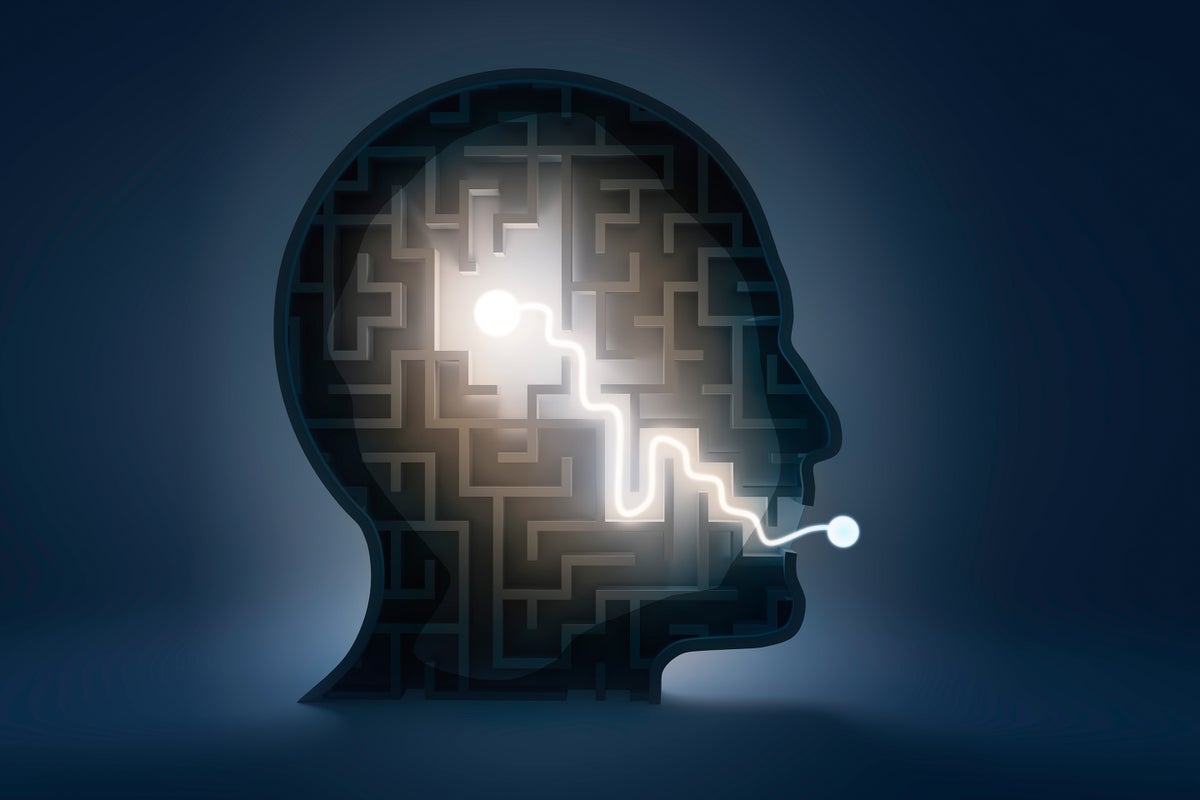
And on the cutting edge of this field, neuroscientists have more recently developed brain implants that can turn neural signals directly into whole words. These brain-computer interfaces (BCIs) largely require users to physically attempt to speak, however, and that can be a slow and tiring process. But now a new development in neural prosthetics changes that, allowing users to communicate by simply thinking what they want to say.
The new system relies on much of the same technology as the more common “attempted speech” devices. Both use sensors implanted in a part of the brain called the motor cortex, which sends motion commands to the vocal tract. The brain activation detected by these sensors is then fed into a machine-learning model to interpret which brain signals correspond to which sounds for an individual user. It then uses those data to predict which word the user is attempting to say.
But the motor cortex doesn’t only light up when we attempt to speak; it’s also involved, to a lesser extent, in imagined speech. The researchers took advantage of this to develop their “inner speech” decoding device and published the results on Thursday in Cell. The team studied three people with amyotrophic lateral sclerosis (ALS) and one with a brain stem stroke, all of whom had previously had the sensors implanted. Using this new “inner speech” system, the participants needed only to think a sentence they wanted to say, and it would appear on a screen in real time. While previous inner speech decoders were limited to only a handful of words, the new device allowed participants to draw from a dictionary of 125,000 words.“As researchers, our goal is to find a system that is comfortable [for the user] and ideally reaches a naturalistic ability,” says lead author Erin Kunz, a postdoctoral researcher who is developing neural prostheses at Stanford University.
Previous research found that “physically attempting to speak was tiring and that there were inherent speed limitations with it, too,” she says. Attempted speech devices, such as the one used in the study, require users to inhale as if they are actually saying the words. But because of impaired breathing, many users need multiple breaths to complete a single word with that method. Attempting to speak can also produce distracting noises and facial expressions that users find undesirable. With the new technology, the study’s participants could communicate at a comfortable conversational rate of about 120 to 150 words per minute, with no more effort than it took to think of what they wanted to say.
Like most BCIs that translate brain activation into speech, the new technology only works if people are able to convert the general idea of what they want to say into a plan for how to say it. Alexander Huth, who researches BCIs at the University of California, Berkeley, and wasn’t involved in the new study, explains that in typical speech, “you start with an idea of what you want to say. That idea gets translated into a plan for how to move your [vocal] articulators. That plan gets sent to the actual muscles, and then they carry it out.” But in many cases, people with impaired speech aren’t able to complete that first step. “This technology only works in cases where the ‘idea to plan’ part is functional but the ‘plan to movement’ part is broken,”—a collection of conditions called dysarthria, Huth says.
According to Kunz, the four research participants are eager about the new technology. “Largely, [there was] a lot of excitement about potentially being able to communicate fast again,” she says—adding that one participant was particularly thrilled by his newfound potential to interrupt a conversation—something he couldn’t do with the slower pace of an attempted speech device.
To ensure private thoughts remained private, the researchers implemented a code phrase: “chitty chitty bang bang.” When internally spoken by participants, this would prompt the BCI to start or stop transcribing.
Brain-reading implants inevitably raise concerns about mental privacy. For now, Huth isn’t concerned about the technology being misused or developed recklessly, speaking to the integrity of the research groups involved in neural prosthetics research. “I think they’re doing great work; they’re led by doctors; they’re very patient-focused. A lot of what they do is really trying to solve problems for the patients,” he says, “even when those problems aren’t necessarily things that we might think of,” such as being able to interrupt a conversation or “making a voice that sounds more like them.”
For Kunz, this research is particularly close to home. “My father actually had ALS and lost the ability to speak,” she says, adding that this is why she got into her field of research. “I kind of became his own personal speech translator toward the end of his life, since I was kind of the only one that could understand him. That’s why I personally know the importance and the impact this sort of research can have.”
The contribution and willingness of the research participants are crucial in studies like this, Kunz notes. “The participants that we have are truly incredible individuals who volunteered to be in the study, not necessarily to get a benefit to themselves but to help develop this technology for people with paralysis down the line. And I think that they deserve all the credit in the world for that.”
.
Andrzej Wojcicki/Science Photo Library/Getty Images
.
.
Click the link below for the complete article:
.
__________________________________________
https://www.tangietwoods
¡Bienvenido de vuelta viajero!
so looking to the sky ¡ will sing and from my heart to YOU ¡ bring...
CEO and Founder of Nsight Health
Catholic News, Prayers, HD Images, Rosary, Music, Videos, Holy Mass, Homily, Saints, Lyrics, Novenas, Retreats, Talks, Devotionals and Many More
Decoding Power. Defying Narratives.
A creative collaboration introducing the art of nature and nature's art.
The Home Of Entertainment News, Reviews and Reactions
Hollow Earth Society
•Whenever you are confronted with an opponent, conquer him with love.(Gandhi)
Algotrader at TRADING-CLUBS.COM
Film and Writing Festival for Comedy. Showcasing best of comedy short films at the FEEDBACK Film Festival. Plus, showcasing best of comedy novels, short stories, poems, screenplays (TV, short, feature) at the festival performed by professional actors.
Peace. Tranquility. Insanity.
Take a ride on the wild side
Découvre des musiques prometteuses (principalement) dans la sphère musicale française.
No tiene que Ser una Pesadilla.
Life in Kana-text (er... CONtext)
Where feelings meet metaphors and make questionable choices.
Finding hope and peace through writing, art, photography, and faith in Jesus.
Eyasu
The Community for Wounded Healers: Former Medical Students, Disabled Nurses, and Faith-Fueled Pivots
love each other like you're the lyric to their music
Comprendere il mondo per cambiarlo.
Mid-Life Ponderings
Travel,Tourism, Life style "Now in hundreds of languages for you."
I speak the honest truth. I share my honest opinions. I share my thoughts. A platform to grow and get surprised.
User-generated ratings for ethical consumerism
Travel and Lifestyle Blog
Questo è un piccolo angolo di poesie, canzoni, immagini, video che raccontano le nostre emozioni
“Log your journey to success.” “Where goals turn into progress.”
scrivo per dare forma ai silenzi e anima alle storie che il mondo dimentica.
“Dream deeper. Believe bolder. Live transformed.”
Vichar, Motivation, Kadwi Baat ( विचार दर्शनम्)
Traum zur Realität
Savor. Style. See the world.
معا نحو النجاح
Best Forex Broker Ratings & Reviews
art, writing and music by James McFarlane and other musicians
living life in conscious reality
Freelance poetry writing
Peace 🕊️ | Spiritual 🌠 | 📚 Non-fiction | Motivation🔥 | Self-Love💕
Reiseberichte & Naturfotografie
 James' World 2