Weapons is a mystery horror film directed, written, co-produced, and co-composed by Zach Cregger. Its plot follows the seemingly inexplicable case of seventeen children from the same classroom who mysteriously run away on the same night at the same time, having been apparently abducted by an unseen force. This film is presented in a nonlinear […]
WEAPONS (2025) – My rating: 7/10
WEAPONS (2025) – My rating: 7/10
August 21, 2025
Living Longer, Aging Smarter
August 20, 2025
Business, Food For Thought, Human Interest, Political, Science, Technical amazon, business, Business News, current-events, Future, Hotels, human-rights, medicine, mental-health, research, Science, Science News, technology, Technology News, travel, vacation 2 Comments

Click the link below the picture
.
April Reese: Aging isn’t what it used to be—for one thing, we’re living longer than ever. Back in 1900, the average life expectancy in the United States was just 47 years. Today, it’s 78 years, with women living about five years longer than men. We’ve eradicated many of the infectious diseases that took so many lives a century ago, and heart disease is now treatable. But with so many of us sticking around for longer, we’ve just begun to understand why our bodies change as we age. It turns out that the skin can tell us a lot about how well we’re aging, and we’re not talking about wrinkles here. Thanks to major advances in longevity research, we now have a whole new toolbox for analyzing the skin, and no matter what age we are, we can use that information to take better care of not just our skin, but our overall health as we grow older.
Scientific American Custom Media recently sat down with Andrea Maier, a
professor of medicine and director of the Academy for Healthy Longevity at the National University of Singapore, and collaborator with L’Oreal, the beauty company, to learn more about her work. Andrea, we all know that skin changes as we grow older, but what can it tell us about how well we’re aging?
Andrea Maier: So, skin health is a key biomarker of overall longevity, and skin is the largest organ we have. We very often forget how large it is and how important it is. It’s really reflecting how well we are aging from the inside.
April Reese: There seems to be a lot of attention and investment in longevity research right now. Why do you think that is?
Andrea Maier: The investment in longevity is huge at this moment in time. We see a huge consumer drive and asking for products and for interventions to be healthier for longer. So, it is not only that we have major discoveries in research, but there’s also the consumer drive to really ask to get innovative products to the market, but also to advance medicine. And that’s the reason why we coined a new term, and that’s precision geromedicine. And what does it mean? It’s healthy longevity medicine to really optimize the health of aging individuals, not only the 70 and 80 year olds, but especially the 30- to 50-year-old who are at the moment aging.
April Reese: Well, I’m 57, so I definitely identify with that. I think a lot of people, when they think of longevity and advances in the science, like personalized data, they’re focusing on, okay, I can use this to look better. But longevity science is about far more than that, right? Why is this new ability to make individualized skin assessments so important for our health?
Andrea Maier: This is a very, very important trend. We now know that the aging process is very different between individuals. So, if you are looking at individuals of your same chronological age, they might have a very different biological age, which means they can, or you can, age faster or slower compared to your peers. And that’s not only occurring at the inner side, but especially also in the skin. And we can now measure changes in the skin
during the chronological aging process, so think about skin elasticity, hydration state or the barrier function. So, while measuring that, we can also adapt on what kind of products to use, so the first thing is always, where do you stand in the aging process? What is your need to then find an intervention?
April Reese: Okay. So, L’Oreal has developed a tool that can read your skin to reveal your biological age. It’s about the size of a portable speaker. The idea is that you can then use that information to create a science-based skincare plan and choose the right products for your skin. I asked Vania Lacascade, the company’s chief innovation officer, how it works.
Vania Lacascade: It is called L’Oreal Cell BioPrint. So, this device is, it uses advanced proteomics to analyze your skin, and it takes only just five minutes. We’ve created it in partnership with the Korean startup, NanoEnTek, and it literally decodes your skin biology like a cellular fingerprint. So, it provides you with your biological skin age, with your skin’s reactivity to ingredients like retinol, for example, and also it provides you with personalized predictive insights to anticipate your future skin concerns.
April Reese: We’ve seen several of these advances in longevity science and technology in recent years. How do you see longevity research influencing the world of health and beauty in the future?
Vania Lacascade: 20 percent of the global population is projected to be over 60 by 2040, and longevity is only meaningful if those added years are lived in robust health. And we’re entering an era where the pursuit of health, well-being, and beauty are converging and this across age, gender and origin. So, we know that research on longevity has truly revolutionized medicine and healthcare, and we’re shifting from a reactive to a truly proactive and preventive approach. So, longevity is really a movement that is profoundly transforming our relationship to beauty. It’s truly a mindset shift, and frankly, it concerns all of us because we all have this desire to age well, right?
We have 4,000 researchers who have used all the data we have accumulated on skin biology over the 100 years of beauty expertise we have, and we’ve powered all the science with our beauty tech teams worldwide to build our own science for longevity and beauty, powered by AI. And we call it Longevity Integrative Science. So, we’re not just striving to extend the lifespan of our skin cells; we are aiming to truly enhance their health span, and for that, we’re targeting truly the root cause of biological aging.
April Reese: Your science team just created something called the wheel of longevity for beauty, which, from what I understand, allows you to get a detailed, individualized picture of those root causes. Can you describe how that works?
Vania Lacascade: So, this one is decoding skin aging at cellular, molecular, and tissue levels. So, this will combine nine hallmarks of aging, spanning from DNA damage or microbiome, mitochondria dysfunction, or cell senescence, for example. And then, our AI and tech teams have developed a proprietary longevity AI cloud. So, what is it? It’s an AI algorithm that is able to analyze 267 skin biomarkers to really help us to target super precisely the biological changes that are invisible to the naked eye. So, it’s really a powerful new way to deal with this arena of longevity when it comes to skin health. What we believe actually is that you can choose your skin health journey now, throughout life. We truly think that it’ll become possible.
April Reese: And how might these advances in longevity research influence the way we view aging in beauty?
Vania Lacascade: This longevity revolution offers a remarkable opportunity for us to redefine how we perceive age and beauty. It’s replacing ageist beauty standards with a positive, optimistic message, embracing longevity as a way of life, but with this philosophy of lifelong beauty, we can even open a more inclusive and empowering view of beauty.
April Reese: Vania Lacascade is the chief innovation officer at L’Oreal. Andrea Maier is a professor of medicine at the Academy for Healthy Longevity at the National University of Singapore. For over 110 years, L’Oreal has devoted itself to fulfilling the beauty aspirations of consumers around the world.
.
 Getty Images/Katsiaryna Shautsova
.
.
Click the link below for the complete article:
.
__________________________________________
Anker Says Its New Portable Power Station Can Charge to 100% in Just 49 Minutes
August 20, 2025
Business, Food For Thought, Human Interest, Political, Science, Technical amazon, business, Business News, current-events, Future, Hotels, human-rights, medicine, mental-health, research, Science, Science News, technology, Technology News, travel, vacation Leave a comment

Click the link below the picture
.
Here at CNET, we’ve tested nearly 140 portable power stations and counting in our Louisville, Kentucky, testing lab. Some of the qualifications we use to help us determine the best portable power stations are capacity, charging time and and charging options. The Anker Solix C1000 Gen 2 is the latest model from Anker to attempt to tick all three boxes.
The standout feature here is Anker’s HyperFlash technology, which it says allows the power station to do a full recharge to 100% in 49 minutes while plugged into a standard wall outlet. This works as long as UltraFast Charge Mode is enabled in the app. If true, this is significantly faster than the first-generation C1000 and notably even better than the EcoFlow River 3, our best small portable power station, which managed to charge to full in 1 hour during our testing, and the Bluetti AC70 (full charge in 1.5 hours). It also beats out the DJI Power 500 (100% charge in 70 minutes) and the Bluetti HandsFree 2 backpack power station (80% in 45 minutes).
The battery itself has a 1,024-watt-hour capacity (2,000 watts), putting it on par with some of our other top picks, including the Jackery Explorer 1000 Plus, though we’ll actually have to put it through its paces in the lab to see how it fares for sure. It comes with UL-1778 certification and has less than 10 milliseconds UPS switchover, so it should work for CPAPs, Wi-Fi, and more sensitive electronics.
In other specs, you’re looking at 2,000-watt AC output and support up to 3,000 watts with SurgePad. Anker says it’s capable of powering laptops and refrigerators, running a fridge for 4.7 hours, a microwave for 1.3 hours, and a TV for 7.5 hours. You get LifePo4 cells that should be good for 4,000 discharge cycles, which Anker estimates should last a decade.
The entire unit weighs 24.9 pounds and is 14% smaller and 11% lighter than Anker’s previous generation. It also comes with tons of input and output options. You can find 2,000-watt AC plugs, two 140-watt USB-C ports, one 15-watt USB-C port, one 12-watt USB-A, and one 120-watt car cigarette output. It supports 600-watt solar input to recharge off-grid. The one downside is that there isn’t a battery capacity expansion as many other portable power stations offer, including our favorites from EcoFlow.
Price and availability
The Solix C1000 Gen 2 will be available on Anker Solix’s website starting Tuesday. At full price, it’ll cost $799, but at launch, you can get it for $429 if you register by Sept. 8.
.

The Solix C1000 can recharge to 100% in 49 minutes.
.
.
Click the link below for the complete article:
.
__________________________________________
‘I Want to Try and Get to Heaven’: Trump Gets Reflective on ‘Fox & Friends’
August 20, 2025
Business, Food For Thought, Human Interest, Political, Science, Technical amazon, business, Business News, current-events, Future, Hotels, human-rights, medicine, mental-health, research, Science, Science News, technology, Technology News, travel, vacation Leave a comment

Click the link below the picture
.
President Trump dialed into “Fox & Friends” on Tuesday morning and revealed his newest and truest motivation for brokering an end to the war in Ukraine: He’s worried he might not get into heaven after he dies.
“I want to try and get to heaven, if possible,” he explained. “I’m hearing I’m not doing well. I am really at the bottom of the totem pole. But if I can get to heaven, this will be one of the reasons.”
Holy mother of God! What a thing to say at 8 o’clock in the morning.
This would have been a highly unusual admission from any president, but it seemed especially out of character coming from this one. The man who is regarded as a messiah by many of his own supporters — a belief he has encouraged at every turn — says now that he knows he’s no saint.
This fear of perdition raised some questions. Chief among them: Who, exactly, has been informing the president that he is “not doing well” with regard to kingdom come? Did Michael the Archangel somehow get Mr. Trump’s cellphone number?
It is rare to hear Mr. Trump say something so soul-searchingly self-deprecating, which this surely was. Rarer still is any acknowledgment from him of his own mortality. He is old — 79, to be exact — and does not ever want to be reminded of that fact. “You know, there’s a certain point at which you don’t want to hear ‘Happy Birthday,’” he said when he turned 78. “You just want to pretend the day doesn’t exist.”
He also said then: “My father lived a long time, my mother lived a long time, and they were happy, and they were great. So maybe we’re going to live a long time. I hope so.”
Mr. Trump’s memories of his parents have stirred thoughts of heaven and hell in him in the past. After he was convicted on 34 felony counts, he talked at rallies about what his parents must be thinking. “Now my beautiful parents are up in heaven, I think they are,” he said at one rally. “They’re up there, looking down. They say, ‘How did this happen to my son?’”
But other times, he confessed he was not so sure his father made it past the pearly gates.
“I know my mother’s in heaven,” he said at a Madison Square Garden rally in October. “I’m not 100 percent sure about my father, but it’s close.”
At the White House briefing later on Tuesday, Karoline Leavitt, the press secretary, was asked if Mr. Trump was joking when he talked about going to heaven, or if “there was a spiritual motivation behind his peace deals.”“I think the president was serious,” Ms. Leavitt said. “I think the president wants to get to heaven — as I hope we all do in this room as well.”
.

.
.
Click the link below for the complete article:
.
__________________________________________

Traffickers Bring First Enslaved Africans to Jamestown, Virginia
August 20, 2025
The Math Trick Hidden in Your Credit Card Number
August 19, 2025
Business, Food For Thought, Human Interest, Political, Science, Technical amazon, business, Business News, current-events, Future, Hotels, human-rights, medicine, mental-health, research, Science, Science News, technology, Technology News, travel, vacation 1 Comment
Click the link below the picture
.
You’re at the checkout screen after an online shopping spree, ready to enter your credit card number. You type it in and instantly see a red error message: “Please enter a valid credit card number.” Annoyed, you scan back through each digit and spot the culprit: you tapped the 6 key where a 5 belonged. Typo corrected; purchase complete. But how did the website detect your error so quickly? Does the online platform keep a master list of every valid credit card number to compare your entry against? Did it ping your bank in a split second? The explanation is much cleverer.
All mainstream credit card numbers obey a mathematical trick designed to catch the most common typos. It’s called the Luhn algorithm, named after IBM researcher Hans Peter Luhn, who patented it in 1960. Similar error-checking schemes lurk in many of the numbers you encounter daily: barcodes, package tracking numbers, bank account numbers, and even ISBNs on books.
Grab a credit card from your wallet, and you’ll find it contains more structure than first glance suggests. The anatomy of a credit card number includes four main parts. To demonstrate, I’ll use my personal Visa. [Stretch your math muscles with these puzzles]
The first digit is the major industry identifier. Visas always begin with a 4, and Discover always start with a 6. The next five to seven digits pinpoint the bank or institution that issued the card. What remains (sans the final digit) is your specific account number within that bank. The final digit, sometimes called the “check digit,” has nothing to do with financial institutions. Issuers tack it on so that the whole card number will satisfy a specific mathematical test—the Luhn algorithm. Here’s how the algorithm works:
- Write out all but the last digit of the card number.
- Double every other number starting at the right.
- Sum the resulting digits (not numbers). E.g., if you doubled a 7 to become a 14 in Step 2, this will become 1 + 4 = 5 in this step.
- Add the check digit to the sum. If the result is not a multiple of 10, then the credit card number is invalid.
I’ll show the Luhn algorithm in action on my Visa, but you should try it with your credit card, too.
The number crunching culminates in 75, which is not a multiple of 10. So this cannot be my real credit card number; I must have mistyped it.
Credit card issuers first assign the account numbers and then compute steps one through three of the Luhn algorithm to determine the appropriate check digit. In this case, the card number should have ended in a 3 because 67 + 3 = 70, a multiple of 10.
This particular dance of digits has come to dominate credit card verification because of its simplicity and powerful set of features. If you mess up any single digit when entering your card number, the Luhn algorithm will detect it. If you accidentally swap adjacent card digits while inputting, it will detect that, too (with the one exception of flipping 09 to 90, or vice versa).
.
 Isabel Pavia/Getty Images
.
.
Click the link below for the complete article:
.
__________________________________________
Suze Orman Tells Us the Biggest Retirement Mistake You Can Make
August 19, 2025
Business, Food For Thought, Human Interest, Political, Science, Technical amazon, business, Business News, current-events, Future, Hotels, human-rights, medicine, mental-health, research, Science, Science News, technology, Technology News, travel, vacation Leave a comment

Click the link below the picture
.
Suze Orman, the New York Times best-selling author of “The Ultimate Retirement Guide for 50+,” podcaster, finance guru and motivational speaker, has seen it all when it comes to retirement mistakes.
In her nearly forty years as a financial adviser, people have come to her when they’ve spent too much money, paid too much in taxes, or made hasty decisions that lost them too much money.
But the biggest mistake, the one that Orman sees all the time, the one that people lose thousands of dollars over, is claiming Social Security early.
What constitutes early for Orman? Claiming anytime before at least your full retirement age, which is 67 for anyone born after 1960.
“Everybody thinks Social Security isn’t going to be there. Everybody is scared to death, but I wouldn’t be,” says Orman. By claiming early, “you’re passing up an 8% increase each year in your Social Security from your full retirement age all the way to 70.”
You may not think delaying filing for Social Security makes that big a difference in terms of your benefit amount, but it could add up to a lot more money than you realize. The maximum a 62-year-old can receive monthly in 2025 is $2,831. If that person waits until they turn age 66/67 to file for benefits, their monthly check increases to $4,018. If they hold off until age 70, their check increases to $5,108.
Don’t let fear cost you money
Many people collect Social Security early out of fear it won’t be around for much longer. But Orman doesn’t think that’s a viable reason to claim benefits. While it’s true that the Old-Age and Survivors Insurance Trust Fund, which pays Social Security retiree benefits, is projected to become insolvent in the first quarter of 2033, that doesn’t mean it will collapse. If nothing is done by then, benefits would face a 23% cut, and beneficiaries would then receive 77% of their benefits.
Sure, if you have a serious illness or need the money to get by, then you may have to collect Social Security early. But otherwise, collecting Social Security before you’ve at least reached your full retirement age can backfire, leaving you short on cash over your lifetime. Retirement can last 20 years or more for many people.
“They find out it’s a lot more expensive in retirement than they thought,” says Orman. They are spending the same, if not more, and they are dealing with inflation. At the same time, they are withdrawing from their retirement accounts and depleting their savings. Their Social Security payment is already locked in at a lower rate, and it’s not enough. As a result, they are now either forced to change their lifestyle or return to work, she says.
“Where else are you going to make that money? You’re not,” says Orman. “Claiming Social Security before full retirement age is one of the biggest mistakes you could possibly make.”
Second place: ignoring the Roth option
In wanting to be generous with Orman’s advice, we are also sharing her second-place all-time mistake — and this one is geared toward pre-retirees.
Ignoring the Roth conversion
“You don’t want to be partners with Uncle Sam,” says Orman. “A big mistake everybody is making leading up to retirement is not taking advantage of the Roth 401(k), 403(b), or Roth IRA.”
Pre-retirees and retirees like traditional 401(k)s, funded by pre-tax dollars, because they get a tax break now while they’re still working and potentially are in a higher tax bracket than when they retire. They figure their income tax bracket will be lower when they are retired and start withdrawing from their retirement accounts.
But what some people don’t take into account are required minimum distributions or RMDs, says Orman. RMDs kick in when you turn 73 and require you to withdraw a percentage of your 401(k) or IRA each year. The withdrawal is treated as ordinary income, which can be a big tax hit if the RMD is large enough.
“The money in your retirement account is compounding and growing and it’s growing and it’s growing for you and Uncle Sam,” says Orman. “Why do you think Uncle Sam is allowing you that long (before RMDs). Because the more time it’s in there, the larger it grows, the more they are going to get in income taxes.”
.
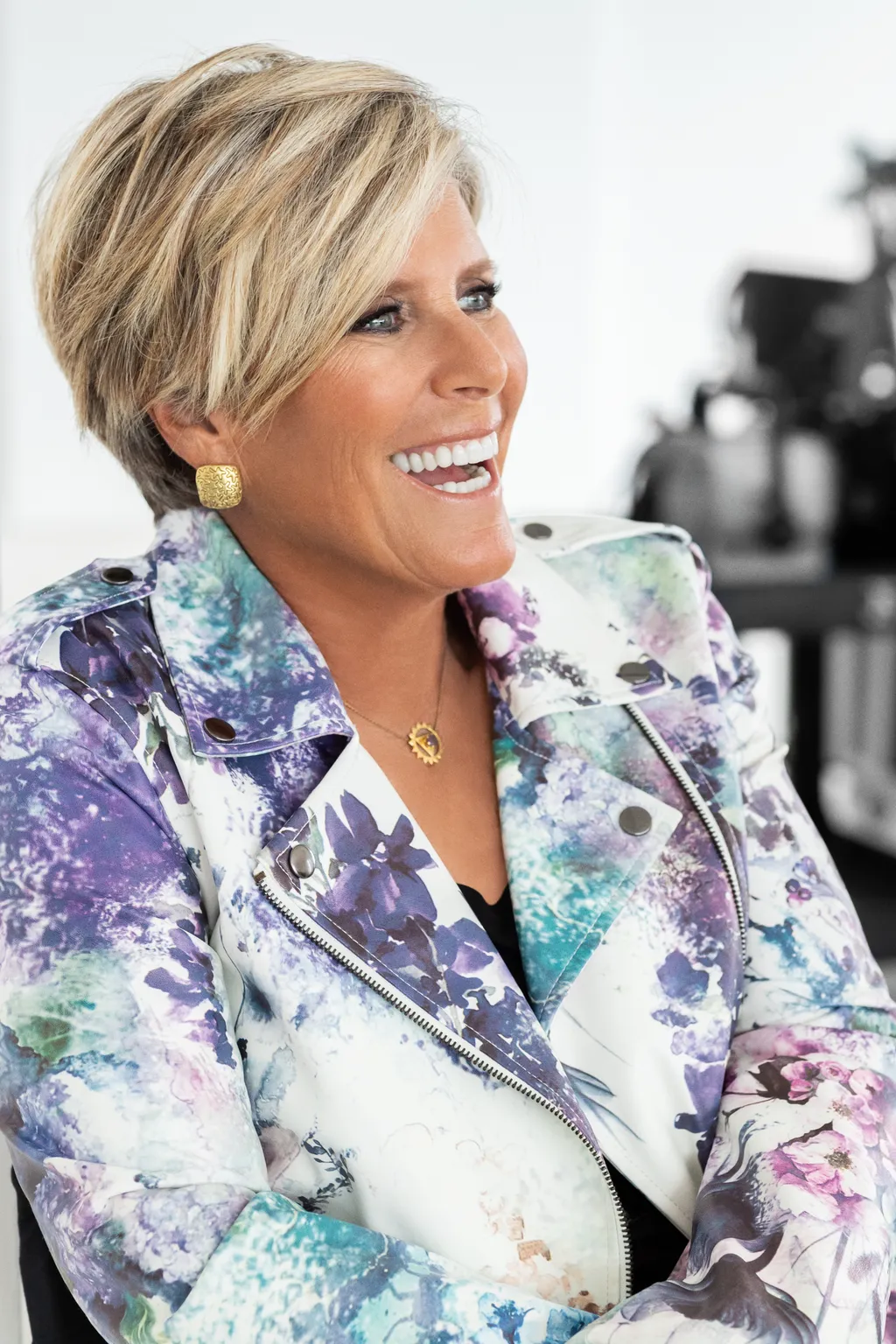 (Image credit: MARC ROYCE)
.
.
Click the link below for the complete article:
.
__________________________________________
Top Republican Says Justice Dept. Will Begin Sharing Epstein Files
August 19, 2025
Business, Food For Thought, Human Interest, Political, Science, Technical amazon, business, Business News, current-events, Future, Hotels, human-rights, medicine, mental-health, research, Science, Science News, technology, Technology News, travel, vacation Leave a comment

Click the link below the picture
.
The chairman of the House’s chief investigative committee said on Monday that the Justice Department would miss his panel’s Tuesday subpoena deadline for providing files related to the accused sex trafficker Jeffrey Epstein, but would begin sharing some records starting Friday.
Representative James R. Comer, the Kentucky Republican who leads the Oversight Committee, issued the subpoena to Attorney General Pam Bondi this month after a few G.O.P. lawmakers on the panel teamed with Democrats to force his hand. It set an Aug. 19 deadline for the Justice Department to give the committee all of its files related to Mr. Epstein, the disgraced financier who died in federal prison while awaiting trial in 2019.
But ahead of his announcement on Monday, Mr. Comer signaled to reporters at the Capitol that he did not expect the Justice Department to meet the deadline, chalking it up to the sheer volume of records it had on Mr. Epstein and Ghislaine Maxwell, a longtime associate who is serving a 20-year sentence on sex trafficking charges.
“There are many records in D.O.J.’s custody, and it will take the Department time to produce all the records and ensure the identification of victims and any child sexual abuse material are redacted,” Mr. Comer said in a statement.
Mr. Comer did not provide any details about the timeline for the full release of the files requested by the subpoena, which included material related to the criminal cases against Mr. Epstein and Ms. Maxwell and the investigation into Mr. Epstein’s death.
The Justice Department did not respond to a request for comment. But it is expected to provide documents on a rolling basis, which will likely force Republican lawmakers to confront continued questions about the Epstein files that have already plagued them for months.
Democrats on the Oversight Committee expressed skepticism about Mr. Comer’s announcement. “Late or partial disclosures won’t cut it,” they wrote on social media. “Our committee wants transparency, and we can’t trust the DOJ to be honest.”
The House Oversight Committee was required to send a subpoena for the Epstein files after Democrats forced a vote in a key oversight subcommittee last month. A small group of Republicans joined them to back the subpoena, including Representative Nancy Mace of South Carolina, who pushed for a provision that required the Justice Department to redact information about Mr. Epstein’s victims and remove any material that depicted children being sexually abused.
.
 Representative James R. Comer, the Kentucky Republican who leads the Oversight Committee, at the Capitol in Washington on Monday for a deposition with former Attorney General Bill Barr.Credit…J. Scott Applewhite/Associated Press
.
.
Click the link below for the complete article:
.
__________________________________________
 James' World 2