Home

Trump Administration Live Updates: House Rejects D.H.S. Funding as White House Orders Pay for T.S.A. Workers

Leave a comment

Click the link below the picture

.

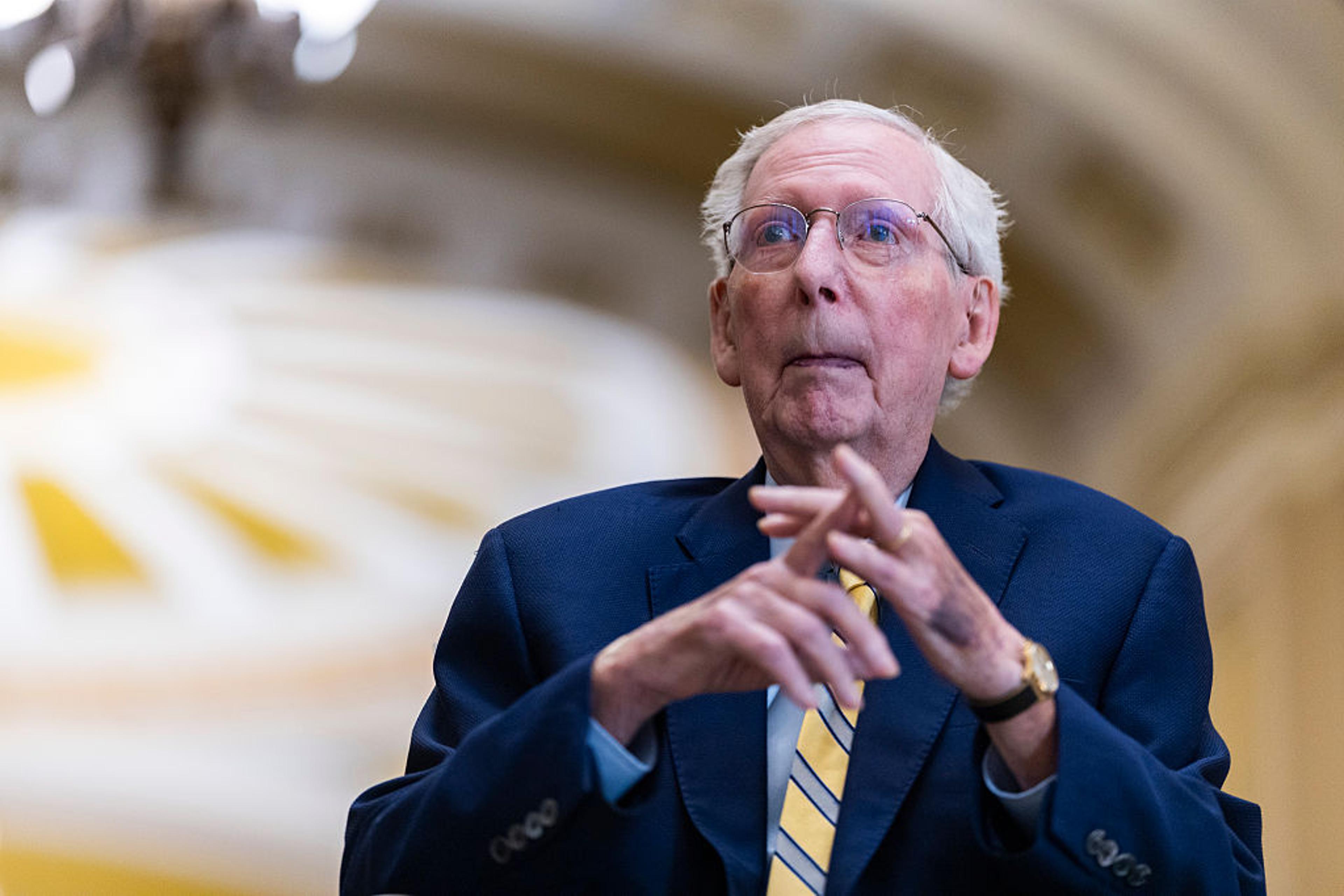
  • D.H.S. Shutdown: House Republicans angrily rejected a measure passed by their Senate counterparts early Friday that would have restored most funding for the Department of Homeland Security, deepening an intraparty feud that will most likely extend a partial shutdown of the agency. In a move to address weeks of long lines at airport security checkpoints, the White House said that it had ordered the Department of Homeland Security to pay employees of the Transportation Security Administration out of existing funds.

  • Patel Hack: Emails and photographs stolen from a personal email account of Kash Patel before his time as the director of the F.B.I. circulated online on Friday. But there were questions about who had carried out the cyberattack and when the intrusion had taken place.

House Republicans revolt over bill to reopen D.H.S., deepening shutdown rift.

House Republicans on Friday angrily rejected a Senate-passed deal to reopen the Department of Homeland Security, threatening to extend the agency shutdown that has crippled airports in a fit of outrage over the agreement their own party struck with Senate Democrats to end the crisis.

After quickly assessing the compromise that passed the Senate early Friday, conservative House Republicans tore into it in harsh terms. They derided it for hewing too closely to the Democratic position by omitting money for Immigration and Customs Enforcement and Border Patrol, the two agencies responsible for carrying out President Trump’s immigration crackdown, which are operating under previously approved funds.

Representative Katherine Clark of Massachusetts, the No. 2 Democrat, just hit on the logistical hurdle facing any bill that House Republicans try to pass to temporarily fund all of the Homeland Security Department, including ICE and Border Patrol: “The Senate is gone.” House members “know fully well what they’re doing” is continuing the shutdown, she added.

Even if he could pass the stopgap bill, and senators abandoned their spring break plans to hurry back to Washington, Senate Democrats would likely reject the House bill.

Representative Hakeem Jeffries of New York, the minority leader, said House Democrats would vote to pass the Senate-approved bill to partly fund the Department of Homeland Security if Speaker Mike Johnson were to put the measure on the floor. Jeffries added: “This should end, and could end today.”

House Republicans are gearing up to vote on a different measure that would fund the entire agency though May 22, and a majority of Democrats are expected to oppose it. It would need to be voted on by the Senate.

President Trump criticized the Senate-passed Homeland Security funding bill, saying it “wasn’t good” and “wasn’t appropriate” in a call with Fox News. Trump said it was unacceptable that the bill advanced out of the Senate and was delivered to the House without funding for Immigration and Customs Enforcement: “In my opinion, you can’t have a bill that’s not going to fund ICE.”

The Department of Homeland Security said Transportation Security Administration officers should begin receiving paychecks as early as Monday. “Today, at the direction of President Trump and the Secretary of Homeland Security Markwayne Mullin, TSA has immediately begun the process of paying its workforce,” a department spokesperson said in a statement.

Megan Mineiro

Speaker Mike Johnson said President Trump supported the plan to pass a short-term funding bill for the Department of Homeland Security. “He understands exactly what we’re doing and why,” Johnson added.

Johnson said House Republicans would vote to send the measure to fully fund the agency to the Senate “as soon as possible,” when asked if his chamber would take up the stopgap bill on Friday.

Hacked files of Kash Patel, before his time as F.B.I. director, circulate online.

Emails and photographs stolen from a personal email account of Kash Patel, the director of the F.B.I., circulated online on Friday, as hackers who claimed to be part of a group affiliated with Iranian intelligence took responsibility for the release.

The release of materials from before Mr. Patel’s time as F.B.I. chief appeared to be an effort to embarrass him as the war in Iran nears its first month. But there were questions about who had carried out the cyberattack, and it remained unclear when the intrusion had taken place.

A performer being sued by the Kennedy Center asked the judge to toss the case, calling it ‘retaliatory.’

Lawyers for a jazz musician who was sued by President Trump’s allies at the Kennedy Center asked a judge on Friday to toss out the lawsuit, calling it an attempt to stifle his protest of the organization’s takeover.

In December, Richard Grenell — at the time, the center’s president and a close ally of Mr. Trump’s — threatened to sue Chuck Redd, a jazz percussionist, for $1 million after Mr. Redd said he would not hold an annual Christmas Eve concert at the facility. Mr. Redd cited his opposition to renaming the performing arts center in honor of Mr. Trump.

The Defense Department argued in a court filing today that media rules it released this week did not defy a court order. The filing is the latest volley in a lawsuit filed by The New York Times in December, which claims that restrictions on journalists that the department adopted in October 2025 are unconstitutional.

The judge in the case, Judge Paul Friedman of the U.S. District Court of the District of Columbia, sided with The Times last week. On Monday, the Defense Department issued a revised policy and also announced the closure of journalists’ work space inside the Pentagon. The Times has argued that the moves violate the judge’s order.

In its filing on Friday, the Pentagon laid out why it believed the department was in compliance with the order. Judge Friedman has scheduled a hearing in the case on Monday.

Another senior House Republican will retire as a midterm exodus grows.

Representative Sam Graves, the 13-term Missouri Republican who leads the Transportation and Infrastructure Committee, said on Friday that he would retire in January, the latest powerful member of his party to leave Congress ahead of midterm elections in which it is bracing for big losses.

“It’s time to pass the torch and allow a new guard of conservative leaders to step forward and chart a path forward for Missourians,” he said in a statement announcing his decision to depart Washington at the end of his term. “This wasn’t an easy decision, but it’s the right one. I believe in making room for the next generation.”

A federal judge in Rhode Island sided with a union of Veterans Affairs workers, finding that the Trump administration had ignored her previous order to reinstate a contract with the workers it had canceled last year. Judge Melissa R. DuBose gave the government until Tuesday to show it had taken concrete steps to reimplement the agreement.

The House Ethics Committee said it had found violations in 25 of the 27 counts against Representative Sheila Cherfilus-McCormick, the Florida Democrat accused of embezzling $5 million of federal disaster money to support her congressional campaign.

The bipartisan vote came after a rare public hearing yesterday that lasted well into the night. Cherfilus-McCormick’s ethics trial was the first time in 16 years that the typically secretive panel had held a public hearing regarding the actions of a sitting lawmaker.

The adjudicatory panel will now schedule a hearing of the full panel to determine its recommendations for sanctions or expulsion. After that, the entire House will vote on the recommendation on the floor.

Hegseth strikes two Black and two female officers from a promotion list.

Defense Secretary Pete Hegseth is blocking the promotion of four Army officers to be one-star generals, a highly unusual move that has prompted some senior military officials to question whether the officers are being singled out because of their race or gender.

Two of the officers targeted by Mr. Hegseth are Black and two are women on a promotion list that consists of about three dozen officers, most of whom are white men, senior military officials said.

Trump’s signature is set to appear on U.S. currency.

President Trump’s signature will appear on U.S. dollars later this year, the Treasury Department said on Thursday. The decision to have Mr. Trump’s John Hancock on America’s paper currency represented an unprecedented change, one that the department said was being made in honor of the United States’ 250th anniversary.

Mr. Trump is set to become the first sitting U.S. president to have his signature on the greenback. His name will appear alongside that of Treasury Secretary Scott Bessent. As a result, the U.S. treasurer, whose name has been on the currency for more than a century, will not appear on the currency.

The Latest on the Trump Administration


  • Standoff With Iran: President Trump’s war with Iran is testing the limits of his unorthodox diplomatic style as he grasps for a deal to end the conflict, relying on a jumble of emissaries that reflect his improvisational approach.

  • Army Promotions Blocked: Defense Secretary Pete Hegseth is blocking the promotions of two Black officers and two women to be one-star generals, a highly unusual move that has prompted some officials to question whether the officers are being singled out because of their race or gender.

  • Pentagon-Anthropic Dispute: A federal judge temporarily stopped the Department of Defense from labeling Anthropic as a security risk, in a reprieve for the start-up that has been in a dispute with the Pentagon over the use of A.I. in warfare.

  • Brazilian Gangs: The Trump administration is weighing designating Brazil’s two biggest drug gangs as terrorist groups, after lobbying by two sons of former

  • ‘No Kings’ Protests: More than 3,000 demonstrations are scheduled across the country on Saturday to condemn an array of Trump’s policies and to express general discontent toward the president, whom the protesters view as acting like a monarch.

  • Signature on Currency: Trump will become the first sitting president with his signature on the U.S. dollar, the Treasury Department said, in honor of the United States’ 250th anniversary this year.

.

https://static01.nyt.com/images/2026/03/27/multimedia/27trump-news-mike-cqwg/27trump-news-mike-cqwg-jumbo.jpg?quality=75&auto=webpSpeaker Mike Johnson dismissed the Senate bill as “a joke” and said House Republicans would instead advance a measure to fully fund the agency. Credit…Eric Lee for The New York Times

.

.

Click the link below for the complete article:

https://www.nytimes.com

.

__________________________________________

#27 Black History Photo (Between 1863-1865)

Leave a comment

#27 Black History Photo (Between 1863-1865)

Richard Lee Davis (1951? -) First Assistant Professor of History at Middlebury College

Leave a comment

Richard Lee Davis (1951? -) First Assistant Professor of History at Middlebury College

Friday JohnKu – AKA – TGIF – Fri-Yay/Good News

3 Comments

Today’s good news story comes from Protect All Wildlife. @Protect_Wldlife Thanks to Noelle Granger for sending it to me. A ROOF TILE THAT’S GIVING LITTLE OWLS THEIR HOMES BACK In rural Spain, a clever design is helping thousands of nocturnal birds reclaim what modern construction quietly took away. The Little Owl once nested in old […]

Friday JohnKu – AKA – TGIF – Fri-Yay/Good News

Jury finds Meta and YouTube negligent in landmark social media addiction case

Leave a comment

Click the link below the picture

.

Meta and YouTube are liable for operating apps that are addictive and damaging to young people’s mental health, a jury found in the first-ever trial of its kind to weigh social media’s harms.

The legal arguments presented by the plaintiffs echoed some of those brought against big tobacco in the 1990s, which ultimately led to restrictions against tobacco companies targeting ads or products toward young people, among other remedies to restrict their influence.

The jury ordered the companies to pay $3 million to the plaintiff, a 20-year-old woman identified in court as Kaley G.M. Meta was ordered to pay 70 percent of the damages, and YouTube was ordered to pay 30 percent. During the trial, Kaley G.M. testified that using social media as a child and as a teenager gave her anxiety and made her feel insecure about her looks. Her lawyers alleged that the features and design of social media apps are intentionally addictive, while “like” buttons feed teens’ need for social validation.

The case is one of several that are being brought against the social media companies Meta, TikTok, YouTube, and Snap on behalf of 1,600 plaintiffs, including hundreds of families and 250 school districts. It is a “bellwether trial,” meaning its outcome could affect how other lawsuits against social media companies play out.

Before the trial began, TikTok and Snap reached an undisclosed settlement with the plaintiffs involved in the case. Over the course of the seven-week trial, lawyers for Meta and YouTube, which is owned by Google, argued that their platforms are safe for the majority of young users.

“For years, social media companies have profited from targeting children while concealing their addictive and dangerous design features,” said the plaintiff’s lawyers in a statement released to the media. “Today’s verdict is a referendum—from a jury, to an entire industry—that accountability has arrived.”

“We disagree with the verdict and plan to appeal. This case misunderstands YouTube, which is a responsibly built streaming platform, not a social media site,” said Google spokesperson José Castañeda in a statement.

Meta provided a separate statement to the media in which it said, “We respectfully disagree with the verdict and are evaluating our legal options.” The company did not immediately respond to a request for comment from Scientific American.

.

https://static.scientificamerican.com/dam/m/1d997f181136bd0c/original/social-media.jpg?m=1774460661.816&w=900Photo by Anna Barclay/Getty Images

.

.

Click the link below for the complete article:

https://www.scientificamerican.com/article/jury-finds-meta-and-youtube-negligent-in-landmark-federal-social-media/

.

__________________________________________

At Age 24, He Ditched Becoming a Lawyer to Open a Coffee Shop. Last Year It Brought In $40 Million.

Leave a comment

Click the link below the picture

.

Key Takeaways

  • Gregorys Coffee has grown from one small Park Avenue bar in 2006 to 53 locations nationwide, with typical stores now doing over $1 million in annual sales.
  • Revenue reached about $40 million last year and is projected to hit roughly $45 million this year.
  • Gregorys Coffee founder and CEO Gregory Zamfotis attributes the growth to quality coffee, roasted in-house.

Two decades ago, Gregory Zamfotis was at a crossroads. He was a second-year law student at Brooklyn Law School and had just been offered a full-time position at a real estate law firm. The only problem was that Zamfotis wanted to open his own business. 

“I grew up in the food business,” he explains in a new interview with Entrepreneur. “My father operated a number of concepts in New York City, so I grew up working with him.”

Zamfotis worked at his father’s sandwich shop during his time in law school. By the end of his education, he was effectively running the place. He wound up “really enjoying” the work and considering it as a potential career. He knew he wanted to start a business of his own one day, separate from his father’s endeavors. So after graduating from law school, he took his interest and passion for coffee and his experience working in food service, and decided to open his own coffee shop. He was 24 years old. 

“If you were in the Midtown Financial District, the areas where the majority of New Yorkers are spending their time working, the only options for coffee really were Starbucks or Dunkin,” Zamfotis says. “I thought that was a huge opportunity because I grew up working there. I wanted to take what I had learned, apply it to the coffee industry, and do it in a part of the city that was extremely underserved at the time.”

Zamfotis started by opening one coffee bar on Park Avenue and decided it would simply be better than anything around it. The plan was to obsess over the drinks, the ingredients and the feel of the place until it earned a permanent slot in New Yorkers’ daily routines.

Day after day, cup after cup, that little shop turned into a magnet for regulars who didn’t just like the coffee; they were loyal to the brand. The identity sharpened around bold, playful branding and a menu that refused to cut corners. 

“We wanted to do a quality specialty coffee operation in a volume setting,” Zamfotis says, describing early days when he put in “70 to 80 hours a week” at the store to make sure it ran exactly as he envisioned.

What surprised him

What Zamfotis didn’t fully understand at the time was how hard it would be to do coffee exceptionally well at scale. “I guess I was surprised at just how complex doing coffee really well was,” he says. “The only way we were gonna win is if we could differentiate ourselves from the national players or the other people doing coffee around the block.”

That realization pushed him into a kind of self-imposed coffee bootcamp. He visited shops, attended conferences, and immersed himself in the craft. “I had to spend a lot of time and energy not only visiting other coffee shops, traveling, going to conferences, listening to speakers, and just pouring myself literally into all things coffee, to make myself an expert,” he says.

That work changed the culture and the product. “There’s a difference between doing things well and doing things great,” he explains. As he elevated the coffee program and training standards, customers began noticing the difference — and kept their daily habit. “Customers, maybe in the beginning, were coming because of all the other things…great service, fast, good-looking store…then once I started to elevate the coffee program higher and higher, while also keeping all those other elements so strong, that’s when we really started to make things better,” he says. 

Today, Gregorys roasts its own beans in Long Island City, bakes fresh pastries, and emphasizes personalization — from milk choices to syrup levels — while still moving fast. The goal, Zamfotis says, is that customers should feel like they’re sacrificing nothing: not time, not quality, not options.

Scaling from one store to 53 — and to $45 million

Zamfotis estimates the first shop took 12 to 18 months to find consistency; the company hit the $1 million annual sales mark around year two or three. That traction gave him the confidence to open a second location roughly two and a half years after the first — and it was an instant hit. 

“When the first location may have taken 12 to 18 months to stabilize, the second location was stable from the get-go…very busy from the day we opened,” he says.

From there, growth became a function of systems and people. “I’ve always said you can only grow as fast as the people [you have] to help execute,” Zamfotis says. For about 12 years, every single person in a position of authority at Gregorys was promoted from within, often starting as baristas.

That philosophy helped the company expand from two stores to 53 across New York, New Jersey, Washington, D.C., Florida, California, Arizona, and Tennessee. The financials now reflect that footprint. “Last year we did just around $40 million,” Zamfotis says. “This year, I believe the projection is closer to like $45 million.”

Exploring franchising

At some point, Gregorys hit a crossroads: keep grinding out corporate stores one by one, or admit that the “incredible box” they’d built was strong enough to share with other operators and scale faster than a single team ever could. That’s when Craveworthy Brands and its CEO Gregg Majewski stepped in as managing partner and corporate operator in August 2025, bringing a platform built for franchising, from training to shared services that could support a national push.

“We knew that if we wanted to continue to grow the brand at the speed that was necessary, the only way was to attach to franchising,” Majewski tells Entrepreneur in a new interview. 

Now, with a 20-year track record and a typical store pulling in roughly $1 million in annual revenue (with high performers around $1.6 million and drive-thru models at about $1.4 million), Gregorys is no longer just the underdog Park Avenue café. It’s a New York–forged coffee brand stepping into the franchise spotlight, aiming to sell 50 to 75 locations in its first year of franchising this year and inviting operators to go toe-to-toe with the biggest coffee players in America.

“Any brand that’s been around the industry as long as that and has been successful in as many markets as it has over the 20-year timeframe is perfect for franchising — especially when you built your reputation in one of the hardest cities in the world to operate in, New York,” Majewski says. Gregorys has “a group of regulars that absolutely live and die [for] this brand,” Majewski explains. 

Craveworthy Brands brings scale muscle to franchising ambition. The firm has 21 brands in its portfolio, eight of which are already franchising, and it provides the infrastructure that early franchisees often lack: training, shared services, construction support, and operational systems built to replicate performance across stores. Craveworthy’s portfolio includes brands like Big Chicken, Taffer’s Taver,n and Genghis Grill. 

For would-be franchisees, Gregorys is now pitching itself as a way into a coveted segment that can otherwise be hard to access. Majewski notes that “some of the bigger players are sold out or aren’t accepting.” Gregorys offers a build-out cost “anywhere from $200,000 to $700,000,” he says.  

Why franchising works

Majewski is clear about why he believes franchising works, not just for Gregorys but across Craveworthy’s portfolio. On the franchisor side, the hurdle is ensuring systems and procedures are in place so the company can train effectively and execute the product consistently. 

On the franchisee side, the challenge is more psychological: “following the systems and procedures and reminding yourself that you bought into a system,” he says. The promise is that if the system is well designed and properly followed, it exists “for a reason so you can be successful.”

Majewski insists that culture is the differentiator in a successful franchise. He says success comes from “establishing an incredible culture in the system” and making sure operations are simple enough to replicate. “If any concept is ever too complicated, you can’t have the consistency,” he explains. 

The goal is that “when you walk into a store in Indiana or a store in California, you get the same experience,” he says. For Gregorys, that means protecting not only the coffee quality and menu but also the feel of a brand born on Park Avenue and refined in New York City’s daily grind.

.

https://www.entrepreneur.com/wp-content/uploads/sites/2/2026/03/Gregory-Zamfotis-1.jpeg?resize=1024,868Gregory Zamfotis. Credit: Gregorys Coffee

.

.

Click the link below for the complete article:

https://www.entrepreneur.com/franchise-profile/how-he-grew-gregorys-coffee-to-45-million-in-revenue

.

__________________________________________

Why Are So Many Democratic Politicians So Far Out of Touch?

Leave a comment

Click the link below the picture

.

In January 2025, when the U.S. House took up legislation to bar trans women’s participation on women’s sports teams, all but two Democratic representatives — Henry Cuellar and Vicente Gonzalez — voted against the bill.

When the Senate took up a similar proposal three days ago, every Democrat present voted against it.

Why don’t more Democrats explicitly moderate their stands on transgender rights, immigration, and other issues? Those who maintain far-out positions are well to the left of the electorate and its emblematic median voter. The trans issue clearly weakened Kamala Harris’s presidential campaign, leaving her open to devastating pro-Trump ads.

In the case of one of the most disputed rights claimed by some parts of the transgender activist community — transgender women’s participation on women’s sports teams — Democrats have clear liberal grounds to challenge that claim, by asserting that they are protecting a woman’s right from unfair competition.

But this phenomenon — drifting far from the median voter — is hardly limited to the left. There are many factors behind the reluctance of both Democrats and Republicans to shift to the center.

For one thing, donors, especially the growing legions of small donors, prefer more extreme candidates. Adding additional pressure, what have come to be known as “the groups” — advocacy organizations on the left and the right — demand fealty to policies that are sometimes politically costly; they threaten to support primary challengers to run against those who defy their authority. On a psychological level, Democrats and liberals are morally committed to protecting marginalized groups from harm and defending racial and sexual minorities.

Before exploring these pressures, let’s go to the dominant political fact of life working against moderation, which is that there are decisive majorities in both the House and the Senate that have no interest in abandoning more extreme stands. Many Democrats and Republicans won their seats with the promise to fight the partisan opposition until hell freezes over.

The combination of partisan gerrymandering, the deepening of affective polarization — smoldering hatred of partisan adversaries — and the steadily growing number of safe seats has created a calculus encouraging, nurturing, and fostering political positioning far to the left or right of the median voter.

The key piece of evidence: Of the 435 House districts, The Cook Political Report identifies 36 as competitive, broken down as 17 tossups, 15 leaning Democratic, and four leaning Republican. Adding the eight likely Democratic and 17 likely Republican districts, which are much less likely to be competitive, brings the total to 61, or a measly 14 percent of all 435 members.

In this one-seventh of House districts that are at least somewhat competitive, there is a real payoff on Election Day for a candidate to moderate more extreme stands.

That is decidedly not the case in the remaining 86 percent of House districts — 374 of them, 189 solid Democratic and 185 solid Republican — that are not competitive, with the winner chosen in the primary and the general election a formality.

Candidates in these safe districts are under no pressure to moderate in order to win a general election, and primary voters are free to vote ideologically instead of strategically.

Senate races are less preordained, but still a majority are foregone conclusions, party-wise: Nine to 11 states are considered battlegrounds, or “purple,” while 39 to 41, depending on who is doing the analysis, fall into the solid red or blue camp.

For a decisive majority of House members and a slightly less commanding majority of senators, then, the cost of adopting more extreme and intensely partisan stands drops close to zero, with a payoff in added voters in ideologically driven primaries.

What this comes down to is that in the calculations of incumbents in safe districts, adopting the hard-nosed position leaves no ideological space for challengers in the primaries.

In fact, among polarized primary electorates in these districts, the successful nominee is very likely to be naturally comfortable

positioning himself or herself at the further end of the political spectrum, deeply hostile to the opposition party, opposed in principle to compromise.

What does this mean for moderation and bipartisanship? Many if not most members of the House and Senate reject them as a threat to their political future and as contrary to what they believe in.

This conclusion is based not only on extensive political research but also on actual voting patterns.

Michael Bailey, a political scientist at Georgetown, has found that moderation lifts candidates in competitive districts but penalizes those in noncompetitive districts.

In an email, Bailey explained, “The primary election systems in most states strongly encourage and reward more ideologically extreme behavior.” In an October 2025 paper, “Ideology, Party and Policy-Oriented Voting,” Bailey put it this way:

When control of the national legislature (Congress) is closely contested — as it is in the U.S. in recent years — extreme candidates win primary and general elections under a broad range of contexts, especially when the parties are highly polarized. Many districts will nominate and elect legislators who are more extreme than even the party median.

“When control of the legislature is closely contested and the policy impact of a single legislator is modest,” he wrote,

because party nominators know that the district median will prefer electing an extremist from a favored party than a moderate from a disfavored party.

For example, a moderately conservative district median voter will prefer the policy outcomes under Republican control, even if their individual legislator is very conservative, over the policy outcomes under Democratic control, with a moderate Democrat representing their district.

The ideological patterns in Congress are evident in state legislative contests, Bailey wrote, citing a May 2025 paper, “Polarization and State Legislative Elections,” by three political scientists, Cassandra Handan-Nader of N.Y.U., and Andrew C.W. Myers and Andrew B. Hall of Stanford. They wrote:

The polarization of the whole set of candidates seeking state legislative office has risen dramatically over the past two decades. The growing polarization of state legislators tracks the polarization of the set of candidates running for office quite tightly.

While “more moderate candidates enjoy a meaningful advantage in contested general elections, that advantage has declined somewhat in recent years. At the same time, more extreme candidates are favored in contested primary elections.”

The size of this advantage appears to be growing.

In an earlier version of their paper published four years ago in February 2022, Handan-Nader and her co-authors said:

In January 2025, when the U.S. House took up legislation to bar trans women’s participation on women’s sports teams, all but two Democratic representatives — Henry Cuellar and Vicente Gonzalez — voted against the bill.

When the Senate took up a similar proposal three days ago, every Democrat present voted against it.

Why don’t more Democrats explicitly moderate their stands on transgender rights, immigration, and other issues? Those who maintain far-out positions are well to the left of the electorate and its emblematic median voter. The trans issue clearly weakened Kamala Harris’s presidential campaign, leaving her open to devastating pro-Trump ads.

In the case of one of the most disputed rights claimed by some parts of the transgender activist community — transgender women’s participation on women’s sports teams — Democrats have clear liberal grounds to challenge that claim, by asserting that they are protecting a woman’s right from unfair competition.

But this phenomenon — drifting far from the median voter — is hardly limited to the left. There are many factors behind the reluctance of both Democrats and Republicans to shift to the center.

For one thing, donors, especially the growing legions of small donors, prefer more extreme candidates. Adding additional pressure, what have come to be known as “the groups” — advocacy organizations on the left and the right — demand fealty to policies that are sometimes politically costly; they threaten to support primary challengers to run against those who defy their authority. On a psychological level, Democrats and liberals are morally committed to protecting marginalized groups from harm and defending racial and sexual minorities.

Before exploring these pressures, let’s go to the dominant political fact of life working against moderation, which is that there are decisive majorities in both the House and the Senate that have no interest in abandoning more extreme stands. Many Democrats and Republicans won their seats with the promise to fight the partisan opposition until hell freezes over.

The combination of partisan gerrymandering, the deepening of affective polarization — smoldering hatred of partisan adversaries — and the steadily growing number of safe seats has created a calculus encouraging, nurturing, and fostering political positioning far to the left or right of the median voter.

The key piece of evidence: Of the 435 House districts, The Cook Political Report identifies 36 as competitive, broken down as 17 tossups, 15 leaning Democratic, and four leaning Republican. Adding the eight likely Democratic and 17 likely Republican districts, which are much less likely to be competitive, brings the total to 61, or a measly 14 percent of all 435 members.

In this one-seventh of House districts that are at least somewhat competitive, there is a real payoff on Election Day for a candidate to moderate more extreme stands.

That is decidedly not the case in the remaining 86 percent of House districts — 374 of them, 189 solid Democratic and 185 solid Republican — that are not competitive, with the winner chosen in the primary and the general election a formality.

Candidates in these safe districts are under no pressure to moderate in order to win a general election, and primary voters are free to vote ideologically instead of strategically.

Senate races are less preordained, but still a majority are foregone conclusions, partywise: Nine to 11 states are considered battlegrounds, or “purple,” while 39 to 41, depending on who is doing the analysis, fall into the solid red or blue camp.

For a decisive majority of House members and a slightly less commanding majority of senators, then, the cost of adopting more extreme and intensely partisan stands drops close to zero, with a payoff in added voters in ideologically driven primaries.

What this comes down to is that in the calculations of incumbents in safe districts, adopting the hard-nosed position leaves no ideological space for challengers in the primaries.

In fact, among polarized primary electorates in these districts, the successful nominee is very likely to be naturally comfortable

positioning himself or herself at the further end of the political spectrum, deeply hostile to the opposition party, opposed in principle to compromise.

What does this mean for moderation and bipartisanship? Many if not most members of the House and Senate reject them as a threat to their political future and as contrary to what they believe in.

This conclusion is based not only on extensive political research but also on actual voting patterns.

Michael Bailey, a political scientist at Georgetown, has found that moderation lifts candidates in competitive districts but penalizes those in noncompetitive districts.

In an email, Bailey explained, “The primary election systems in most states strongly encourage and reward more ideologically extreme behavior.” In an October 2025 paper, “Ideology, Party and Policy-Oriented Voting,” Bailey put it this way:

When control of the national legislature (Congress) is closely contested — as it is in the U.S. in recent years — extreme candidates win primary and general elections under a broad range of contexts, especially when the parties are highly polarized. Many districts will nominate and elect legislators who are more extreme than even the party median.

“When control of the legislature is closely contested, and the policy impact of a single legislator is modest,” he wrote,

because party nominators know that the district median will prefer electing an extremist from a favored party than a moderate from a disfavored party.

For example, a moderately conservative district median voter will prefer the policy outcomes under Republican control, even if their individual legislator is very conservative, over the policy outcomes under Democratic control, with a moderate Democrat representing their district.

The ideological patterns in Congress are evident in state legislative contests, Bailey wrote, citing a May 2025 paper, “Polarization and State Legislative Elections,” by three political scientists, Cassandra Handan-Nader of N.Y.U., and Andrew C.W. Myers and Andrew B. Hall of Stanford. They wrote:

The polarization of the whole set of candidates seeking state legislative office has risen dramatically over the past two decades. The growing polarization of state legislators tracks the polarization of the set of candidates running for office quite tightly.

While “more moderate candidates enjoy a meaningful advantage in contested general elections, that advantage has declined somewhat in recent years. At the same time, more extreme candidates are favored in contested primary elections.”

The size of this advantage appears to be growing.

In an earlier version of their paper published four years ago in February 2022, Handan-Nader and her co-authors said:

On average, more extreme candidates receive higher vote share in primary elections, regardless of specification. The extremism variable is scaled to run from 0 to 1, and we estimate that shifting from the most moderate to the most extreme candidate predicts a seven or 10 percentage-point increase in vote share.

I asked Myers for the current estimate, and he emailed back:

We find that extreme candidates outperform moderates in primary elections. Specifically, we estimate that going from the most moderate to most extreme candidate in the primary predicts a 17 percentage point increase in vote share.

At the extreme, Ballotpedia found that in 2022, state legislative contests in 2,559 races (40.8 percent) were uncontested — that is, one of the two major parties didn’t even bother to nominate a candidate.

In other words, in four of every 10 state legislative contests, two-party competition, a foundation of American democracy, does not exist.

Another closely related force working against moderation is the rapid demographic changes taking place within the Democratic Party, particularly the growing strength and numbers of well-educated, very liberal voters.

Ruy Teixeira, a political analyst and senior fellow at the American Enterprise Institute, took a long look at this development in a March 12 posting on the Liberal Patriot Substack, “The Democrats’ White Liberal Problem”:

Cast your mind back to the beginning of the century. At that point, a mere 28 percent of Democrats described themselves as liberal and two-thirds were either moderate or conservative.

Fast forward to today and the liberal share has more than doubled, to 59 percent, while the moderate/conservative share has declined drastically. It’s the liberals’ party now. And especially, it’s the white liberals’ party now.

How have white liberals changed?

In 2000, white Democrats who were moderate or conservative outnumbered white liberal Democrats by about two to one. Today that relationship has been reversed. White liberal Democrats now outnumber moderate/conservative white Democrats by about two to one.

The result: The balance of power within the party has moved in a decisively leftward direction:

From being merely a voice, albeit an important one, in the Democratic choir, white liberals are now directing the choir and imposing their culture, preferences and priorities on the party as a whole.

Any Democrat seeking the presidential nomination, Teixeira continued,

has to reckon with this enormous bloc of Democrats, whose influence is enhanced beyond their considerable numbers by their dominance of the party’s infrastructure, allied NGOs and advocacy groups, and left-leaning media, foundations and academia. Not to mention the money — ambitious Democrats need money, and white liberals are a reliable source of cash for politicians who press the right buttons.

This clarifies why it is so difficult for Democratic politicians to carve out a truly moderate path.

What else pushes Democrats to the left? Cash.

In their July 23, 2025, Wall Street Journal article, “AOC, Mamdani and Progressives Rake In Cash as Democrats Remain Divided: Far Left’s Prolific Fund-Raising Shows Appeal to Party’s Base,” John McCormick and Anthony DeBarros wrote:

Among the 10 incumbent Democrats who raised the most from individual donors this year, six are members of the Congressional Progressive Caucus, a Wall Street Journal analysis of campaign finance disclosures shows. Three of the top four are progressives, with the exception of House Minority Leader Hakeem Jeffries (D., N.Y.).

The financial strength among progressives presents a challenge to party leaders trying to nudge the Democratic message closer to the middle, where they might stand a better chance of winning over independent voters who decide close elections.

The one issue that has rapidly gained salience in the Democratic debate over moderation is transgender rights.

There is overwhelming evidence from polling that strong majorities of the electorate oppose discrimination against trans men and women in employment and education, reinforced by a firm conviction that trans people should be treated as equal members of society.

At the same time, majorities of voters oppose allowing trans women to join women’s sports teams, to allow trans men and women to use bathrooms based on their gender identity, and to allow the assignment of criminally convicted trans women to women’s prisons.

Victor Kumar, a professor of philosophy at Boston University, argued in a July 2025 essay published on his Substack Open Questions that the backlash against the trans movement was

exacerbated by tactical errors. It was a mistake to insist that any concern about youth medical transition is transphobic. To habitually take the bait on marginal issues like trans-inclusive sport, particularly at elite levels. To deny that cis women can reasonably desire sex-segregated spaces in locker rooms, shelters and prisons. To adopt a maximalist politics of pronouns that shames people for honest mistakes.

Going into the midterm elections and the presidential contest two years from now, there is what can best be called a widespread churning in Democratic and liberal circles over transgender issues.

The Searchlight Institute, a centrist Democratic think tank founded last year, published “The Path Forward for Transgender Rights” on Thursday, a call for retrenchment on trans issues by Mara Keisling, the now-retired founding executive director of the National Center for Transgender Equality and a senior fellow at Searchlight. Keisling wrote:

There is broad support for protecting trans people from discrimination in housing, access to credit, employment and for ensuring that adults have access to the health care they need.

That said, Americans hold conservative attitudes where certain policies related to gender identity and transgender rights are concerned. Voters are especially focused on kids — from the bathrooms they use to the sports teams they may join, and access to hormone treatments and other forms of health care.

What, then, should the transgender movement do? Keisling:

We need to reset our approach to advocacy, public education and policy development regarding the rights and acceptance of transgender Americans. This means shifting our primary focus to education while continuing to try to enshrine core civil rights protections into statute.

On issues such as sports participation and kids’ access to health care, we should accept that we have more work to do to win hearts and minds, and focus on pursuing the smartest possible approach to bring more Americans over to our side

The intense desire among Democratic voters to win puts some wind behind Keisling’s views, especially in the 61 competitive (or at least somewhat competitive) House districts, 28 of which are currently held by Democrats. Those races will determine which party controls the House in 2027. But given the power of the forces against moderation in the 374 safe districts, her agenda will be easier to admire than enact.

From the comments

2021

  1. F
    Fredglad
    Ontario, Canada

    One thing Americans have always demanded is choice. There are choices everywhere in their life and society; from a dozen versions of Cheerios in the grocery store, to which charter school will they send their kids to. Unfortunately, in politics the choices are grim. On the right there is the oligarch owned Republican camp, uninterested in governance, peddling resentment and racism as reasons to vote for them. How hard can it be to present yourselves as a positive alternative to that?Apparently it’s very hard for the Democratic Party. On the left, at the first blush of a progressive idea, the Democrats bury it because a Republican might call them “socialists.” The notion that their party can live in the centre, leaves them looking like “Republicans lite”, same great taste, with fewer tax cuts.Democrats need to step up, and step out. Sell a vision of competence, determination, and empathy. Do it with grace and dignity for all. Suddenly, they just might be relevant again.

  2. J
    Joe
    Boston

    You hit the nail on the head: only two parties + primary system + gerrymandering = more extreme candidates. Having a general election with ranked choice voting would be one way to deal this.

.

https://static01.nyt.com/images/2026/03/24/multimedia/24edsall-vmlw/24edsall-vmlw-superJumbo.jpg?quality=75&auto=webpDamon Winter/The New York Times

.

.

Click the link below for the complete article:

https://www.nytimes.com

.

__________________________________________

Bride Jokes

Leave a comment

A light-hearted collection of bride jokes perfect for weddings, speeches, and celebrations. Featuring witty humour about wedding planning, big days, and bridal perfection, these jokes strike the perfect balance between funny and respectful, making them ideal for entertaining guests without crossing the line.

Bride Jokes

#26 Black History Photo (Between 1866- 1900)

Leave a comment

#26 Black History Photo (Between 1866- 1900)

Queen Nzinga (1583-1663) Fought Against Portuguese & Their Expanding Slave Trade

Leave a comment

Queen Nzinga (1583-1663) Fought Against Portuguese & Their Expanding Slave Trade

Older Entries Newer Entries

MRS. T’S CORNER

https://www.tangietwoods

Amor Entre Estrellas

¡Bienvenido de vuelta viajero!

Heart of Loia `'.,°~

so looking to the sky ¡ will sing and from my heart to YOU ¡ bring...

Michael Ciullo

CEO and Founder of Nsight Health

Nelson MCBS

Catholic News, Prayers, HD Images, Rosary, Music, Videos, Holy Mass, Homily, Saints, Lyrics, Novenas, Retreats, Talks, Devotionals and Many More

Global geopolitics

Decoding Power. Defying Narratives.

Talk Photo

A creative collaboration introducing the art of nature and nature's art.

Movie Burner Entertainment

The Home Of Entertainment News, Reviews and Reactions

Le Notti di Agarthi

Hollow Earth Society

C r i s t i a n a' s Fine Arts ⛄️

•Whenever you are confronted with an opponent, conquer him with love.(Gandhi)

TradingClubsMan

Algotrader at TRADING-CLUBS.COM

Comedy FESTIVAL

Film and Writing Festival for Comedy. Showcasing best of comedy short films at the FEEDBACK Film Festival. Plus, showcasing best of comedy novels, short stories, poems, screenplays (TV, short, feature) at the festival performed by professional actors.

Bonnywood Manor

Peace. Tranquility. Insanity.

Warum ich Rad fahre

Take a ride on the wild side

Madame-Radio

Découvre des musiques prometteuses (principalement) dans la sphère musicale française.

Ir de Compras Online

No tiene que Ser una Pesadilla.

Kana's Chronicles

Life in Kana-text (er... CONtext)

Jam Writes

Where feelings meet metaphors and make questionable choices.

emotionalpeace

Finding hope and peace through writing, art, photography, and faith in Jesus.

WearingTwoGowns.COM

The Community for Wounded Healers: Former Medical Students, Disabled Nurses, and Faith-Fueled Pivots

...

love each other like you're the lyric to their music

Luca nel laboratorio di Dexter

Comprendere il mondo per cambiarlo.

Tales from a Mid-Lifer

Mid-Life Ponderings

Creative

Travel,Tourism, Life style "Now in hundreds of languages for you."

freedomdailywriting

I speak the honest truth. I share my honest opinions. I share my thoughts. A platform to grow and get surprised.

The Green Stars Project

User-generated ratings for ethical consumerism

Cherryl's Blog

Travel and Lifestyle Blog

Sogni e poesie di una donna qualunque

Questo è un piccolo angolo di poesie, canzoni, immagini, video che raccontano le nostre emozioni

My Awesome Blog

“Log your journey to success.” “Where goals turn into progress.”

pierobarbato.com

scrivo per dare forma ai silenzi e anima alle storie che il mondo dimentica.

Thinkbigwithbukonla

“Dream deeper. Believe bolder. Live transformed.”

Vichar Darshanam

Vichar, Motivation, Kadwi Baat ( विचार दर्शनम्)

Komfort bad heizung

Traum zur Realität

Chic Bites and Flights

Savor. Style. See the world.

ومضات في تطوير الذات

معا نحو النجاح

Broker True Ratings

Best Forex Broker Ratings & Reviews

Blog by ThE NoThInG DrOnEs

art, writing and music by James McFarlane and other musicians

fauxcroft

living life in conscious reality

Srikanth’s poetry

Freelance poetry writing

JupiterPlanet

Peace 🕊️ | Spiritual 🌠 | 📚 Non-fiction | Motivation🔥 | Self-Love💕

Sehnsuchtsbummler

Reiseberichte & Naturfotografie