
Click link below picture
.
‘Predictive policing’ is a powerful new tool for law enforcement, but critics see big ethical problems.
Editor’s note: NBC News MACH has partnered with the American Museum of Natural History to present three documentary films at the Margaret Mead Film Festival, which will be held in New York City from Oct. 19-22. In “Pre-Crime,” filmmakers Monika Hielscher and
Matthias Heeder examine the rise of predictive policing, which aims to stop crime before it occurs. The film led MACH to explore this new tool for law enforcement — its power and potential peril.
We all know police officers respond to crimes after the fact. But what if cops could learn about crimes before they occur — and take steps to prevent them? That’s the promise of predictive policing, a high-tech approach to public safety that uses data about previous crimes to forecast new criminal acts.
It’s a bit like weather forecasting, only for crime: At the beginning of their shifts, officers review a map showing areas where crimes are expected to occur, based on arrest records and the dates and locations of recent crimes. The cops review the information and then head out on their beats, armed with information of where they should go at which times — and even who the bad guys are likely to be.
.
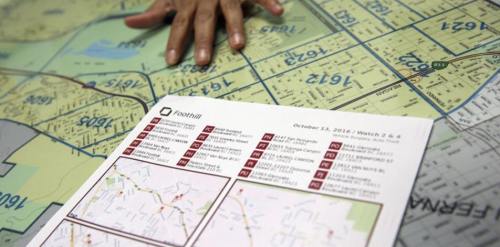 LAPD Captain Elizabeth Morales speaks during an interview about using predictive policing zone maps with the Los Angeles Police Department in the LAPD Foothill Division on October 24, 2016 in the Pacoima neighborhood of Los Angeles.Patrick T. Fallon / The Washington Post/Getty Images file
.
.
Click link below for article and video:
https://www.nbcnews.com/mach/science/how-science-helping-stop-crime-it-occurs-ncna805176
.
__________________________________________
 James' World 2
Leave a comment